ALAIN BLANCHARD – crimson-red historical Gallica rose - Coquerel & Vibert
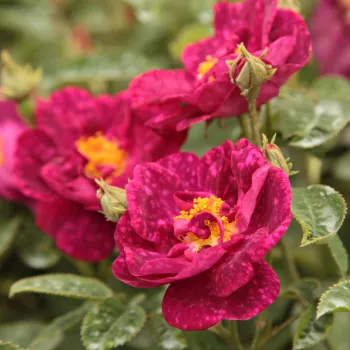
Step off the pavement into a front garden filled with fragrance, where the once-flowering Gallica rose ALAIN BLANCHARD offers a single, breathtaking summer display and then quietly supports wildlife for the rest of the year. Its open, pollen-rich blooms are genuinely pollinators friendly, making it a thoughtful choice for sustainable, rainwater-led London terraces and small urban plots that also cope well with breezy, damp spells and heavier soils in need of good drainage. The strong, spicy-fruity scent adds a sense of balance after wet weather, while the bushy, moderately tall habit creates a soft structure that works as a scented hedge or characterful specimen. On its own roots this historic rose offers reassuring longevity and the capacity to regenerate if cut back, so there is less worry about losing its unique marbled bloom character. With modest care and periodic pruning, you can enjoy a reliable display that matures steadily year by year in an easy-going family garden.
Usage options
| Target area | Reasoning |
|---|
| Pollinator-friendly front garden border |
The simple, open flowers with accessible stamens provide generous pollen during their main flowering window, drawing bees and other beneficial insects into even compact city front gardens where space is at a premium for wildlife-conscious beginners. |
| Scented seating area or path edge |
The strong, spicy-fruity perfume is concentrated in early summer, creating a richly aromatic backdrop around benches, narrow paths or front steps, enhancing that after-rain calm for busy urban homeowners. |
| Low-maintenance historic hedge |
The bushy, moderately tall habit and sparse prickles lend themselves to informal hedging that needs only occasional shaping, ideal where you want character and privacy without fussy clipping, especially appreciated by time-poor garden owners. |
| Long-term, own-root “heritage” feature |
As an own-root historical shrub, it establishes as a durable, stable feature that can be rejuvenated by harder pruning if ever neglected, a reassuring long-term investment for heritage-loving garden collectors. |
| Rainwater-conscious, clay-tolerant planting |
With sensible soil preparation and drainage, this rose copes reliably in typical British conditions where wetter spells and heavier ground meet small front gardens, supporting thoughtful, water-aware urban gardeners. |
| Mixed perennial border with classic partners |
Its once-a-year crimson-red display teams beautifully with catmint, larkspur or coneflower, giving a dramatic historic focal point that then recedes into a leafy backdrop, suiting design-minded planting enthusiasts. |
| Wildlife-friendly hip and foliage interest |
After flowering, the orange-red globose hips and olive-green foliage provide subtle late-season structure and naturalistic colour, supporting a more lived-in, wildlife-aware aesthetic valued by ecological gardeners. |
| Character shrub for partial shade spots |
Tolerating partial shade, it brings colour, scent and period charm to side returns or north-east facing front gardens that might otherwise feel flat, making use of awkward spaces for creative small-garden designers. |
Styling ideas
- TERRACE-ROMANTIC – Underplant with Nepeta and low lavender along a townhouse front path, letting the rose arch lightly over the route – ideal for urban romantics wanting scent and bees by the doorstep.
- HERITAGE-HEDGE – Plant a loose row at 110–120 cm spacing with interwoven sage and catmint for colour and fragrance – perfect for families seeking a characterful, low-clipping boundary.
- GIRLY-BORDER – Combine with soft pink perennials, airy grasses and pale nepeta for a feminine, marbled colour story – suited to first-time gardeners craving a charming, low-fuss front garden.
- PARKLAND-NOOK – Use as a specimen with Rudbeckia and tall delphiniums behind a bench for a secluded, storybook corner – appealing to history lovers who enjoy contemplative garden spaces.
- URBAN-WILDLIFE – Let hips develop among late-flowering perennials in a small, rainwater-fed bed to support insects and birds – great for sustainability-focused city gardeners maximising every square metre.
Technical cultivar profile
| Parameter | Data |
|---|
| Name and registration |
ALAIN BLANCHARD, historic Gallica Hybrid shrub rose; ARS exhibition name ALAIN BLANCHARD; trade name: Alain Blanchard Historic rose Coquerel & Vibert; unregistered cultivar in formal registers. |
| Origin and breeding |
Historic French Gallica Hybrid from Rosa centifolia × Rosa gallica, bred by Coquerel and Jean-Pierre Vibert; breeding around 1829, introduced 1839, representing classic early nineteenth-century shrub rose heritage. |
| Awards and recognition |
Recognised in American Rose Society shows as Dowager Rose Queen at Seattle Rose Society Show in 1999 and at Grosse Pointe Rose Society Show in 2001, underlining its enduring historic exhibition value. |
| Growth and structural characteristics |
Bushy shrub, roughly 120–160 cm high and 100–160 cm wide, with moderately dense, matt olive-green foliage, sparsely thorned stems and medium self-cleaning of spent blooms; suitable for hedges or specimen planting. |
| Flower morphology |
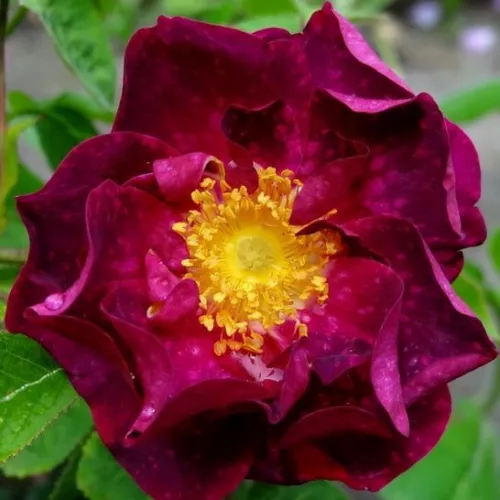
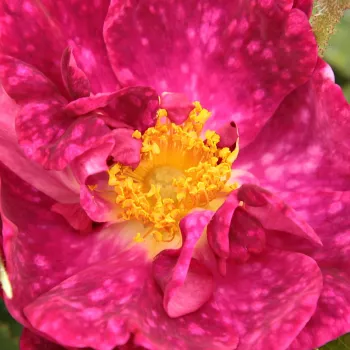
Single to semi-single blooms with 5–12 petals, medium-sized (about 4–7 cm), initially cup-shaped then opening flat, usually solitary on the stems, flowering once in early summer without remontant repeat later in the season. |
| Colour data and phenology |
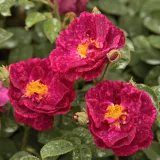
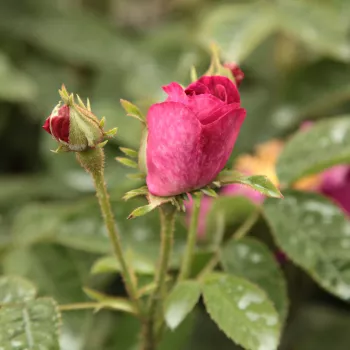
Closed buds are dark crimson with silvery sheen; flowers open vivid crimson-red with irregular pale pink speckles, ageing through dusky mauve-purple to cream-pink highlights, with some colour lightening in strong sun. |
| Fragrance and aroma |
Distinct strong, long-lasting perfume combining spicy and fruity notes, especially noticeable in still, humid air; ideal for scented paths and seating areas where the fragrance can be appreciated at close quarters. |
| Hip characteristics |
Produces moderate numbers of spherical orange-red hips about 16–24 mm across; they can add gentle ornamental and wildlife interest in late season if deadheading is reduced after the main flowering period. |
| Resistance and winter hardiness |
Rated hardy to approximately –26 to –23 °C (RHS H7, USDA 5b), with moderate resistance to powdery mildew, black spot and rust; tolerates heat and moderate drought but may flag during extended hot, dry spells. |
| Horticultural recommendations |
Best for flowerbeds, hedges, specimen and scented gardens at 110–200 cm spacing; tolerates partial shade; medium maintenance with occasional plant protection, plus routine pruning and deadheading according to flowering aims. |
ALAIN BLANCHARD offers richly scented historic blooms, strong pollinator appeal and long-term, rejuvenatable structure on its own roots, making it a discerning choice for those planning a lasting, characterful garden.