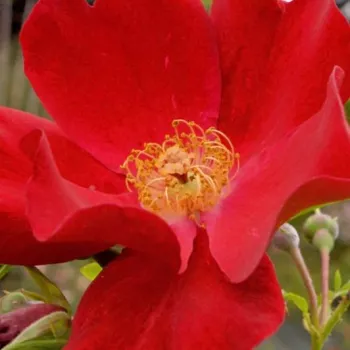
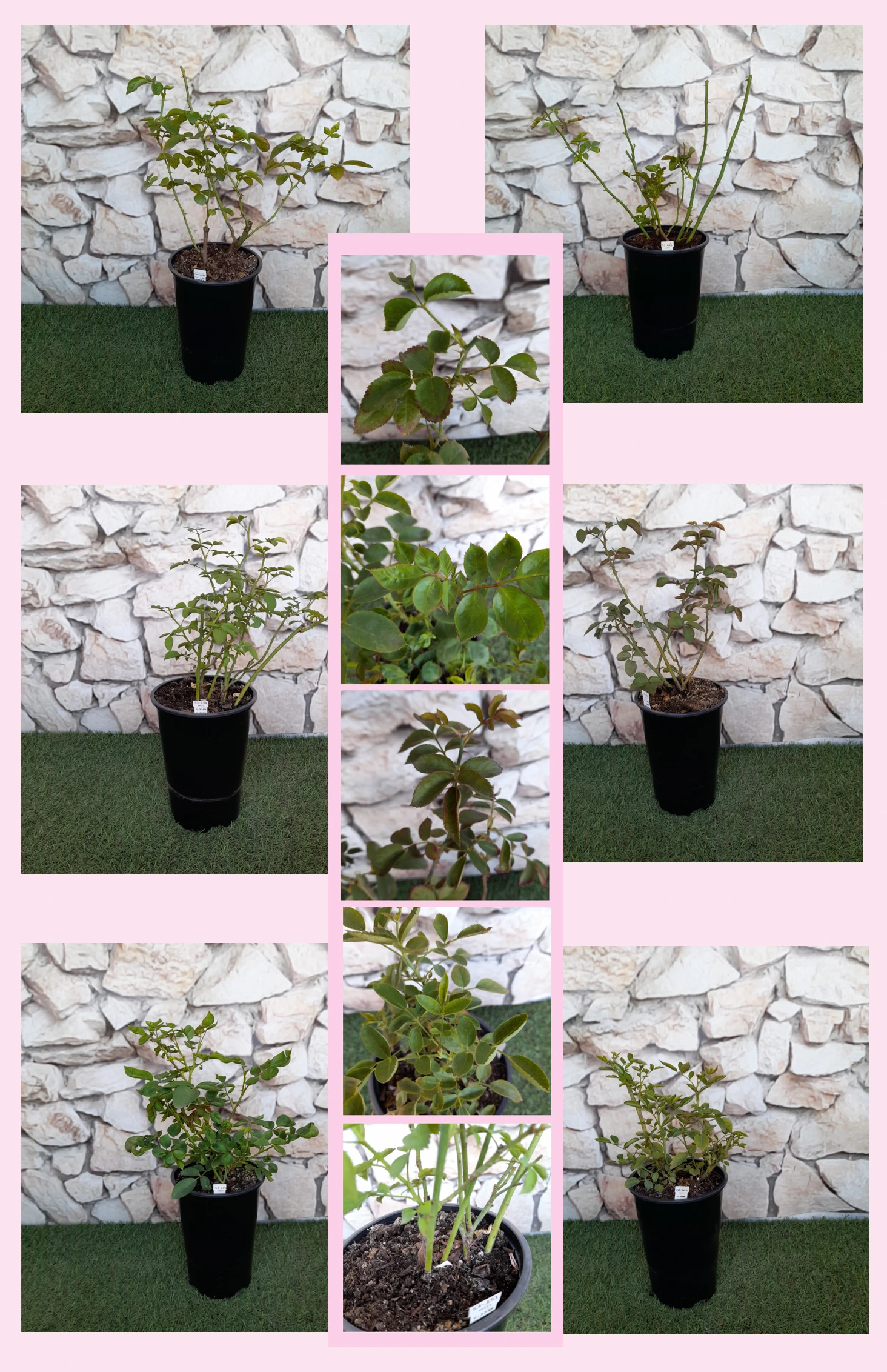
ALSACE – red landscape shrub rose – PEKtarampe
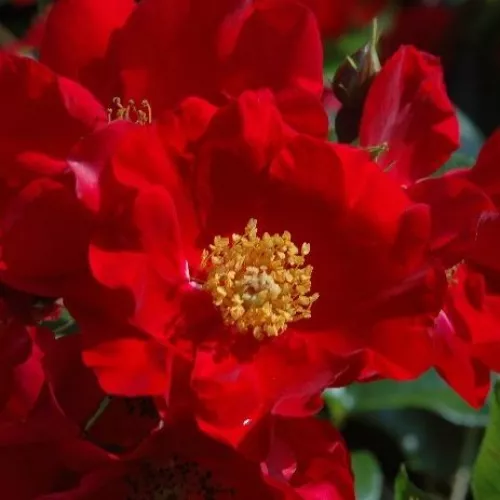
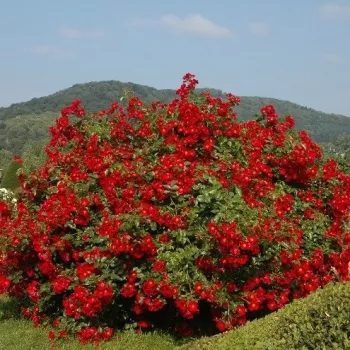
Step out to a front garden that feels naturally balanced and quietly vibrant: ALSACE brings waves of small, ruby-red single blooms that sit lightly over dense, dark-green foliage, creating a calm, cohesive structure even in compact London terraces. Its open flowers offer easy-access pollen for bees, supporting a more sustainable urban patch while you manage rain run-off with permeable gravel or planting that copes well with regular showers and breezy, changeable weather by the coast. In a roomy bed or 40–50 litre container, this shrub builds a rounded presence with minimal deadheading thanks to naturally self-cleaning blooms, giving you dependable colour from summer well into autumn. As an own-root rose it is grown for longevity and recovery – if winter or pruning ever knock it back, it regrows from its own wood rather than failing on a graft – so you can plant once and enjoy a stable display that becomes a familiar part of your everyday routine.
Usage options
| Target area | Reasoning |
|---|
| Small front garden bed |
Ideal where space is tight but you want a clear focal shrub that stays around 1 m, giving a tidy dome of foliage and continuous red flowers that read well from the pavement, particularly suited to time-poor beginners. |
| Pollinator-friendly city planting |
Single, open blooms with visible stamens provide easy foraging for bees and hoverflies, while regular colour makes a small space feel lively without constant work, especially appealing to sustainability-minded urbanites. |
| Low-maintenance edging or hedge |
Planted in a loose row at 55–65 cm, ALSACE knits into a bushy, visually unified line; self-cleaning flowers limit deadheading, so you mainly trim once or twice a year, a practical choice for busy homeowners. |
| Rainwater-conscious front garden |
Works well alongside gravel, permeable paving and mulched planting that slows and absorbs roof run-off, fitting designs where you divert rainwater into beds rather than drains, attractive for climate-aware gardeners. |
| Mixed border with perennials |
The rounded shrub form anchors airy companions like nepeta, sage or small scabious, with repeat red flushes threading colour through the planting so the border looks composed for much of the season, rewarding relaxed stylists. |
| Container on terrace or balcony |
In a 40–50 litre pot with good drainage, ALSACE offers long-season colour and structure with modest pruning; own-root resilience means it copes reliably with repotting and light root disturbance, reassuring cautious beginners. |
| Long-term family garden feature |
As an own-root shrub it builds a strong framework over time, regrowing from its own base if cut back hard and maintaining shape and flowering year after year, suiting families planning for long-lived plantings. |
| Year-by-year garden development |
Roots focus on establishing in the first season, top growth and flowering strengthen in the second, and by the third year ALSACE typically reaches its full ornamental presence, helpful for patient planners. |
Styling ideas
- Ruby-Ribbon – run a loose line of ALSACE along a short terrace front, underplanted with low thyme and gravel to keep maintenance light – for busy city homeowners wanting tidy kerb appeal.
- Bee-Arc – curve three shrubs around a small seating area and thread in nepeta and meadow sage to support pollinators – for sustainability-focused gardeners who enjoy watching wildlife.
- Container-Anchor – plant a single ALSACE in a 50 litre pot with free-draining compost, encircled by seasonal herbs for foliage contrast – for balcony owners seeking one reliable, long-term feature.
- Soft-Edge – alternate ALSACE with small scabious along a path so the low hedge feels airy yet defined – for families wanting clear boundaries without harsh formal hedging.
- Raspberry-Canvas – place ALSACE against pale gravel or light brick so the red flowers and dark foliage stand out cleanly – for design-conscious gardeners favouring simple, modern schemes.
Technical cultivar profile
| Parameter | Data |
|---|
| Name and registration |
Modern landscape shrub rose; registered as PEKtarampe, marketed as ALSACE (NIRPAYSAGE collection); own-root, 2-litre container-grown form for flexible use in beds or sizeable pots. |
| Origin and breeding |
Bred by Paul Pekmez for NIRP International in France; registered and first distributed in 1992; parentage not recorded, selected for landscape performance and repeat flowering habit. |
| Growth and structural characteristics |
Bushy, rounded shrub to around 85–115 cm in height and spread, with dense, slightly glossy dark-green foliage and moderate prickles, forming a compact, even mass suitable for groups or edging. |
| Flower morphology |
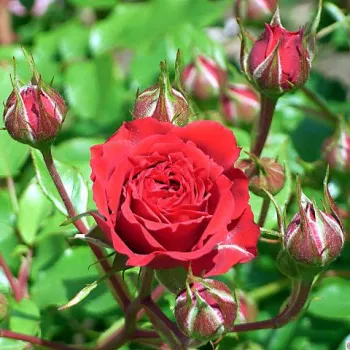
Small, cup-shaped single blooms, typically 5–12 petals, carried in clusters; remontant with particularly abundant second flush, creating a near-constant scattering of flowers over the shrub. |
| Colour data and phenology |
Ruby-red flowers (RHS 46A outer, 46B inner), opening vivid then mellowing to warm raspberry-red; good colour retention, with a softening rather than browning fade as blooms age on the plant. |
| Fragrance and aroma |
Fragrance is very weak, with only a light floral impression at close range; grown more for visual effect, structure and pollinator value than for scent-driven planting schemes or cut use. |
| Hip characteristics |
Produces small, spherical red hips around 8–12 mm, but overall hip set is usually sparse; any hips formed add modest seasonal interest without dominating the shrub’s late-season appearance. |
| Resistance and winter hardiness |
Hardy to approximately -21 to -18 °C (RHS H7, USDA 6b, Swedish zone 3); disease resistance is low so regular preventive care is recommended, especially against black spot, rust and powdery mildew. |
| Horticultural recommendations |
Prefers full sun and well-drained soil; water during prolonged drought and feed annually; monitor foliage and apply timely fungicide or organic measures to manage its high disease susceptibility. |
ALSACE NIRPAYSAGE PEKtarampe offers compact structure, repeat ruby-red flowering and pollinator-friendly single blooms on a resilient own-root shrub, making it a thoughtful long-term choice for small, modern gardens.