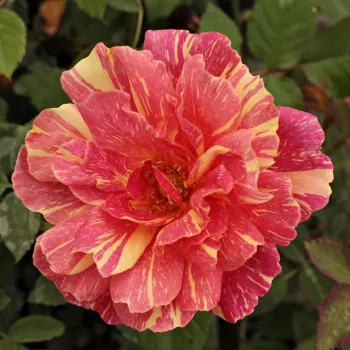
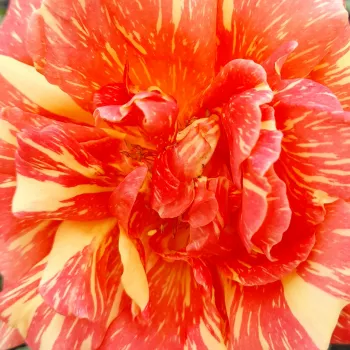
AMBOSSFUNKEN™ – red-yellow hybrid tea rose – Meyer
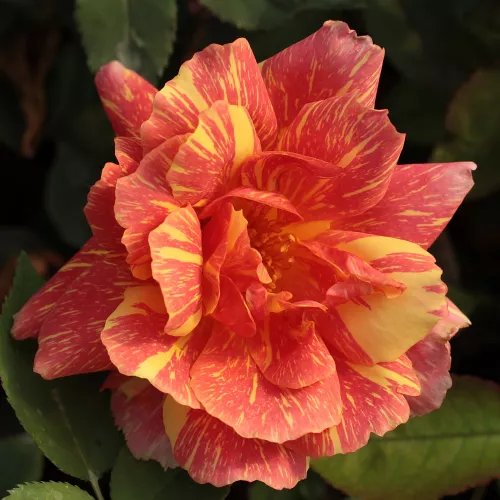
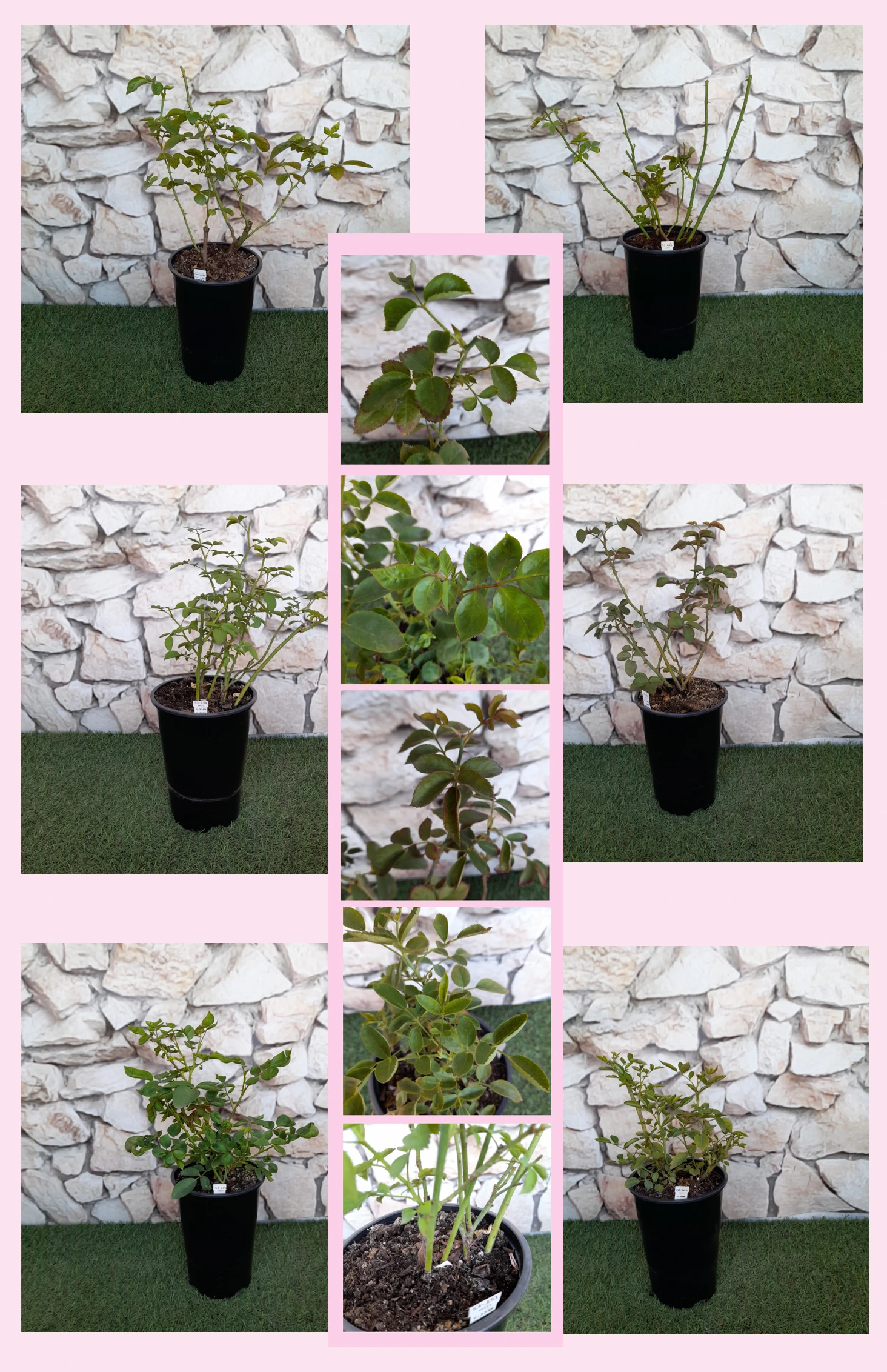
Like a path after summer rain, AMBOSSFUNKEN™ leads you through colour, balance and fragrance, its bi‑coloured blooms glowing in vivid coral red and golden yellow above neat, upright growth. This hybrid tea offers a surprisingly long season, remontant flowering carrying on from early summer well into autumn, with each semi‑double bloom clearly scented in a classic rose character. Bred for reliable health, it stands up well to damp, changeable British weather and heavier soils, coping steadily with wind and rain in exposed family plots. Own‑root planting in our 2‑litre pots supports a long‑lived, resilient lifespan, settling in gently over time – roots first in the first year, strong new shoots in the second, and full ornamental presence by the third.
Usage options
| Target area | Reasoning |
|---|
| Front garden focal point |
Use AMBOSSFUNKEN™ as a single specimen near the front door or gate where its bright, streaked blooms and strong scent can be appreciated on daily comings and goings, ideal for time‑poor town or suburban homeowners. |
| Cut‑flower corner |
Plant a small group in a sunny bed to provide straight, upright stems for cutting; the medium, goblet‑shaped flowers hold well in the vase and bring classic fragrance indoors for busy but style‑conscious gardeners. |
| Easy low‑intervention rose bed |
Combine with simple, low‑care perennials to create a border that needs little more than seasonal deadheading and winter tidy‑up, suiting newcomers who want reliable flowers without complex routines, especially urban beginners. |
| Resilient coastal or exposed site |
The robust framework, glossy foliage and strong disease resistance make this rose a good choice for more windswept, rain‑washed gardens where conditions can be blustery for much of the year, reassuring cautious planters. |
| Clay or chalk family garden bed |
Once established in improved soil, AMBOSSFUNKEN™ copes steadily with heavier clays or freer‑draining chalk, provided excess water is managed, offering dependable structure and colour for pragmatic, space‑aware families. |
| Sustainable, rainwater‑friendly planting |
Set this rose within a permeable, mulched bed that accepts downpipe run‑off, pairing it with drought‑tolerant companions so rain is captured where it falls, a practical solution for environmentally minded city residents. |
| Pollinator‑supporting mixed border |
The semi‑double blooms offer moderately accessible pollen, and when combined with herbs such as lavender or nepeta they contribute to a longer foraging season, appealing to eco‑conscious, wildlife‑aware gardeners. |
| Large container on patio or balcony |
Grow in a 40–50 litre pot with peat‑free compost to give enough root room for this upright hybrid tea; its long flowering season and scent reward those cultivating compact, paved spaces, including busy urban renters. |
Styling ideas
- LONDON-ENTRY – Flank a terraced‑house front step with two AMBOSSFUNKEN™ in generous pots, underplanted with trailing thyme for scent and softness – perfect for city homeowners wanting instant kerb appeal.
- GIRLY-GLOW – Mix its red‑yellow blooms with soft pink salvias and airy grasses in a narrow border to create a playful, feminine frontage – ideal for those refreshing a small front garden on a budget.
- SUNSET-RIBBON – Run a ribbon of AMBOSSFUNKEN™ through a bed of lavender and nepeta for a sunset palette with pollinator interest – suited to gardeners seeking low‑maintenance, fragrant colour all summer.
- FORGE-PATH – Line a short path with spaced specimens, filling between with groundcover euonymus and yellow yarrow to echo the fiery streaks – a good choice for families wanting a structured yet informal route.
- BALCONY-DRAMA – Use a single rose in a large container with purple heuchera at its feet for contrast, allowing the bicolour flowers to take centre stage – appealing to renters curating a compact, dramatic outdoor nook.
Technical cultivar profile
| Parameter | Data |
|---|
| Name and registration |
Ambossfunken (registered name Ambossfunken, ARS exhibition name Ambossfunken); hybrid tea rose in the Hybrid Tea group, marketed as AMBOSSFUNKEN™ – red-yellow hybrid tea rose – Meyer. |
| Origin and breeding |
Natural sport of ‘Signora Piero Puricelli’ hybrid tea, bred by E. H. F. Meyer in South Africa; introduced 1961 via W. Kordes’ Söhne in Germany and Vilmorin-Andrieux in France the same decade. |
| Growth and structural characteristics |
Upright, moderately dense bush 75–105 cm high and 100–140 cm wide, with dark glossy foliage and moderate prickles; forms a sturdy, balanced framework suitable for beds, hedging and specimen use. |
| Flower morphology |
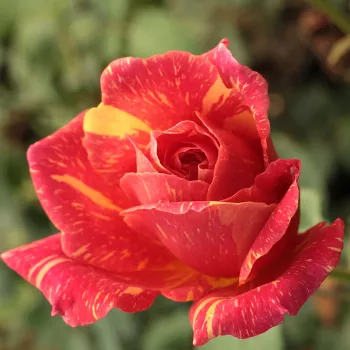
Semi-double, cup to goblet-shaped hybrid tea blooms with 13–25 petals on mostly solitary stems; medium-sized flowers provide clear form for exhibition-style display and regular cutting from summer onwards. |
| Colour data and phenology |
Red-yellow bicolour: coral-red base with irregular golden-yellow stripes and spots (RHS 42A outer, 14B inner); colour may pale slightly in strong sun, with long, remontant flowering into late season. |
| Fragrance and aroma |
Strong, clearly perceived scent with a classic rose character, noticeable at close range and in cut stems indoors; fragrance intensity is stable through most of the flowering period in typical garden conditions. |
| Hip characteristics |
Produces spherical orange-red hips 12–18 mm across when flowers are not deadheaded; hips add seasonal interest and modest wildlife value in late summer to autumn, though production is generally moderate. |
| Resistance and winter hardiness |
Good overall health with resistance to powdery mildew, black spot and rust; hardy to approximately −26 to −23 °C (RHS H7, USDA 5b, Swedish zone 4), performing reliably in most UK garden climates. |
| Horticultural recommendations |
Best in full sun with well-drained but moisture-retentive soil; deadhead to extend flowering; suitable for beds, low hedging, cutting and specimen planting at 110–200 cm spacing, in ground or large containers. |
AMBOSSFUNKEN™ offers vivid bicolour blooms, long fragrant flowering and robust health on a durable own-root framework that ages gracefully, making it a thoughtful choice for gardeners planning a reliable, characterful rose.