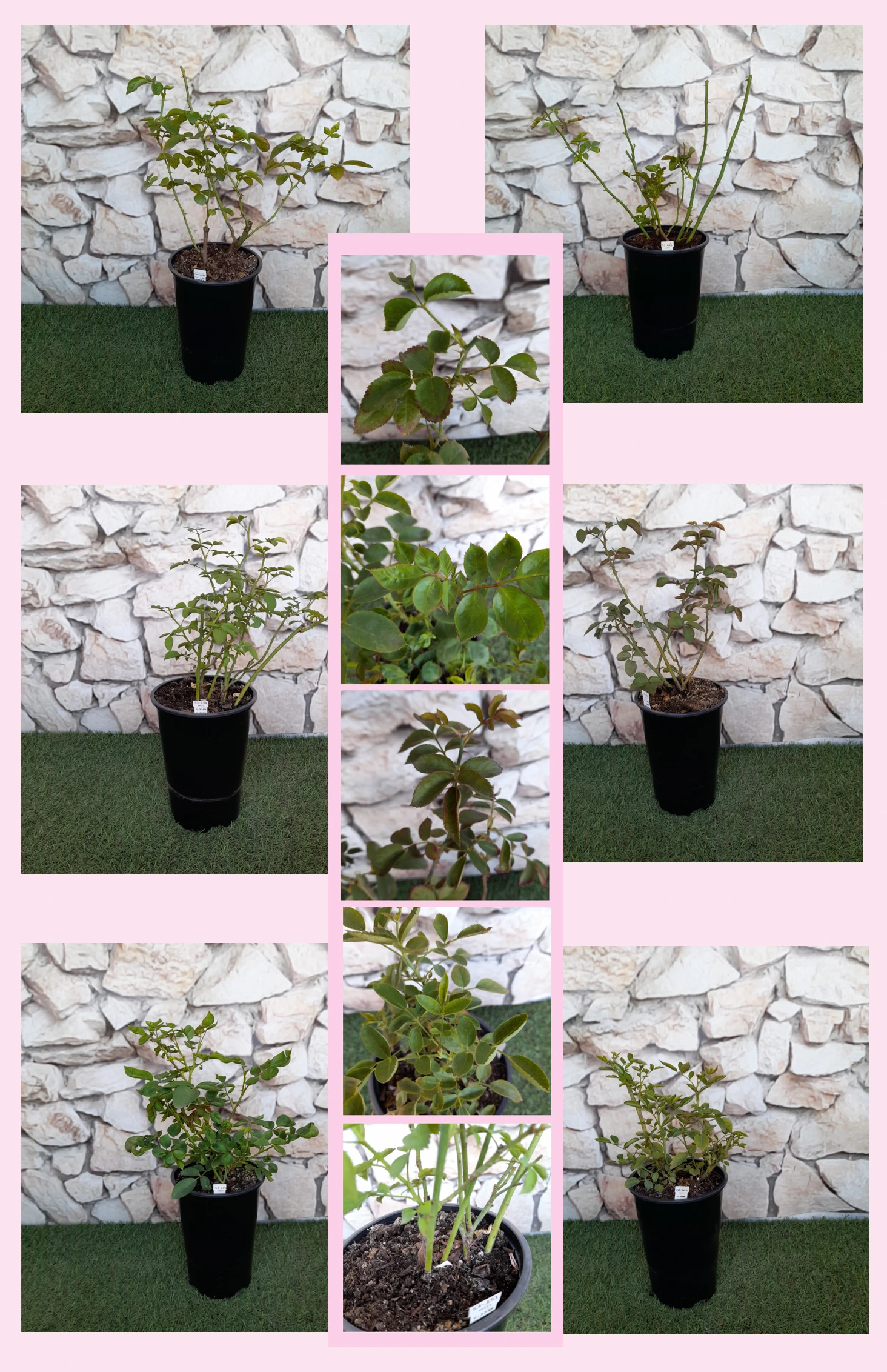
ASTERIA™ – pink dwarf mini rose - Tanjga
Inspired by the goddess of falling stars, ASTERIA™ brings a constellation of colour to compact spaces, forming a reliably neat habit that suits small London front gardens and balconies. Its mini clusters of mid-pink blooms repeat through summer, creating effortless balance along paths, in pots or edging steps, even where there is regular wind and rain and heavier soils demand thoughtful drainage. As an own-root plant, it offers reassuring longevity, quietly rebuilding after any setback and settling into a stable shape over time. In its first year it concentrates on roots, in the second on bushy shoots, and by the third you enjoy its full ornamental value with minimal intervention. Ideal for peat-free containers and rainwater-watering routines, this rose helps you keep a small garden feeling orderly, fresh and gently sustainable without complicated maintenance.
Usage options
| Target area |
Reasoning |
| Balcony or roof terrace in large containers |
The compact 20–30 cm height and 35–45 cm spread make ASTERIA™ easy to accommodate in generous 40–50 litre pots, where its bushy outline fills out without becoming leggy. Own-root vigour means the shrub rebuilds well after any winter damage, keeping its shape and performance over many seasons for the busy urban balcony owner. |
| London terraced-house front garden |
Its neat miniature shrub form and dense, glossy foliage create a tidy front-garden picture that stays in scale with narrow paths and small bays. Regular clusters of mid-pink blooms bring soft colour without dominating paving or railings, supporting a calm, ordered feel well suited to low-effort kerb appeal for the time-pressed homeowner. |
| Low edging along paths or driveways |
With planting distances of 25–30 cm and 6,3–7,2 plants/m², ASTERIA™ forms a continuous low ribbon of colour that frames paths without obstructing movement. Its compact, bushy habit reduces the need for frequent trimming, creating a structured line that remains attractive between flushes for the informal family gardener. |
| Ground-cover patches in small beds |
The dwarf, spreading habit allows it to knit together into a pink carpet over time, softening hard edges or filling awkward corners. Own-root growth ensures it thickens from the base rather than becoming bare-stemmed, holding ornamental value in the longer term for the long-range planner. |
| Rainwater-friendly container planting |
Suited to sunny sites where you can water with collected rain, ASTERIA™ responds well to consistent moisture in well-drained, peat-free compost. Its moderate maintenance needs mean simple checks for fungal issues are usually sufficient, even where regular wind and showers mirror coastal or exposed conditions for the sustainability-conscious gardener. |
| Family garden beds with children and pets |
The small stature makes this rose easy to place at the front of borders where children play, keeping thorns away from eye level. Its gentle, barely noticeable fragrance avoids overwhelming small spaces, while repeated flowering provides season-long interest for the family-focused household. |
| Urban mixed planting with perennials |
Clustered, mid-pink blooms pair elegantly with airy companions such as chives or other fine-textured perennials, creating a soft, “girly” look without visual clutter. The steady remontant flowering means these combinations keep working through summer for the design-aware city gardener. |
| Small sustainable flower beds and pocket parks |
Its moderate disease resistance and H7 hardiness support low-input plantings where routine spraying is not desired. As an own-root rose, it remains stable and regenerates well after pruning, helping maintain a coherent look in small community or streetside beds for the resource-conscious project manager. |
Styling ideas
- Terrace-border chic – Use a low ribbon of ASTERIA™ along a sunny terrace edge with loose grasses; the compact, repeating pink clusters keep lines clean – ideal for the style-led apartment owner
- Pixie-parterre – Arrange in a simple square or diamond pattern in a tiny front garden, using box or lavender at the corners to emphasise structure – perfect for fans of classic formality in miniature
- Starry-containers – Plant three ASTERIA™ in a 40–50 litre pot with a collar of soft nepeta for a “spilled stars” look – suited to balcony gardeners seeking maximum effect from few pots
- Edged-pathway – Line a narrow path with repeated plants at 25–30 cm, interspersed with low sage, to frame your route in pink and silver – attractive for families wanting orderly but relaxed access
- Pocket-meadow – Combine ASTERIA™ with airy companions like chives and delicate perennials in a small front bed, letting pink domes float above mixed textures – appealing to urban gardeners experimenting with naturalistic style
Technical cultivar profile
| Parameter |
Data |
| Name and registration |
Miniature dwarf rose from the Pixie® collection; registered as BOZastepix, marketed as Asteria™ Pixie® BOZastepix, verified for cultivar authenticity on 12 June 2025 for discerning home gardeners. |
| Origin and breeding |
Bred by Biljana Božanić Tanjga for PhenoGeno Roses, with introduction in 2020 after registration in 2019; developed in Serbia and the Netherlands for compact ornamental performance. |
| Growth and structural characteristics |
Dwarf, compact, bushy shrub reaching 20–30 cm high and 35–45 cm wide, with dense, glossy dark green foliage and moderate thorns; ideal for edging, containers and small-space plantings. |
| Flower morphology |
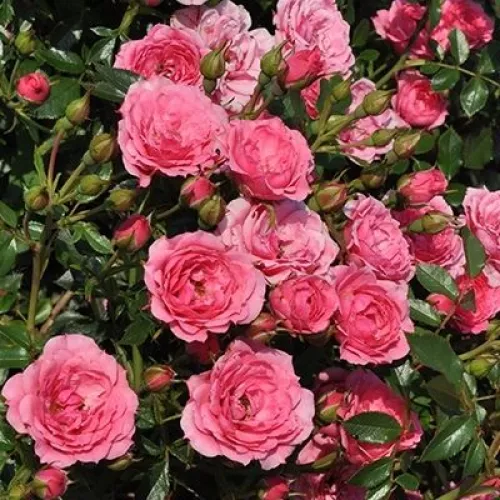
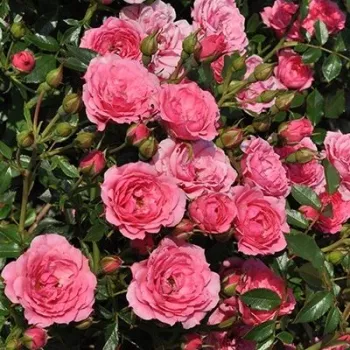
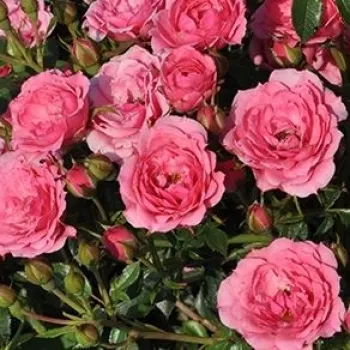
Small, double, cup-shaped blooms in clusters, 26–39 petals, freely repeating with a generous second flush; primarily decorative miniature flowers held above the foliage on short stems. |
| Colour data and phenology |
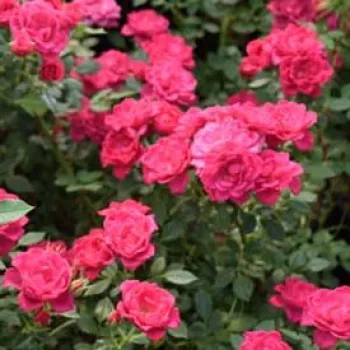
Clear mid-pink flowers with velvety texture; buds vivid pink, opening to softer pastel tones that gently fade to pale powder pink in strong sun, giving subtle tonal variation through each flowering phase. |
| Fragrance and aroma |
Very faint, delicately sweet scent, often barely noticeable in outdoor settings; chosen mainly for visual impact rather than fragrance, making it suitable for intimate urban seating areas. |
| Hip characteristics |
Occasionally sets small, spherical orange-red hips around 5–7 mm, adding discreet late-season interest without dominating the plant’s compact, floriferous appearance in containers or borders. |
| Resistance and winter hardiness |
Hardy to approximately -23 to -21 °C (H7; USDA 6a), with moderate resistance to black spot, powdery mildew and rust; benefits from basic good practice in damp, disease-prone seasons. |
| Horticultural recommendations |
Best in sunny positions with well-drained soil or containers; spacing 25–45 cm depending on use. Moderate maintenance, occasional plant protection; suitable for terraces, balconies, edging and urban plantings. |
ASTERIA™ Pixie® BOZastepix offers compact structure, long-term own-root reliability and abundant repeating pink clusters; it is a thoughtful choice if you seek an easy, enduring rose for small spaces.