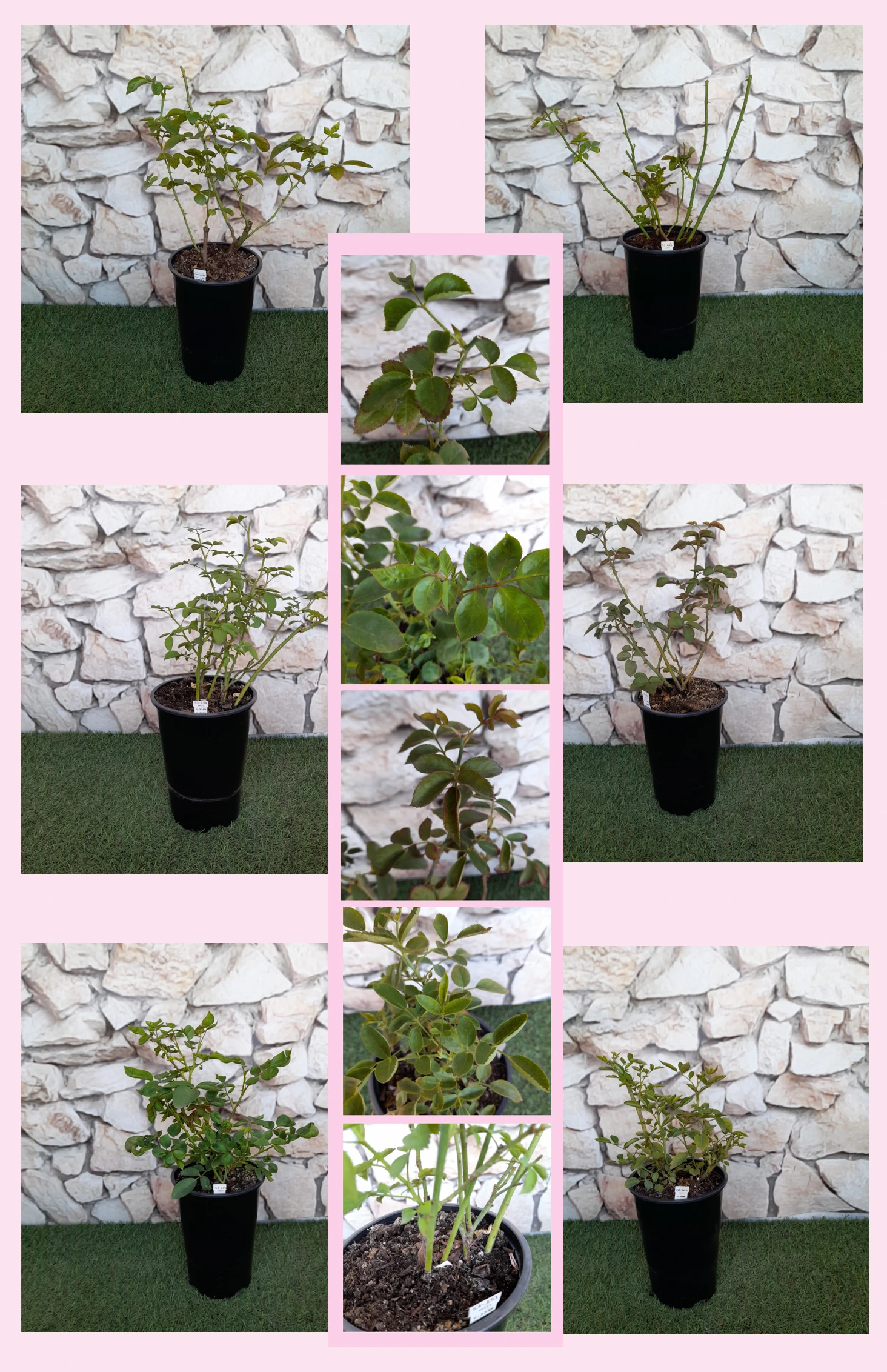
BAD BIRNBACH ® – pink bedding floribunda rose – Kordes
Step off the pavement into a quietly composed front garden where colour, balance and gentle structure make even a small London space feel calm. BAD BIRNBACH ® offers clusters of warm salmon-pink blooms from early summer well into autumn, its semi-double flowers giving useful access for visiting pollinators. As an own-root plant it settles reliably, building a long-lived framework that copes well with everyday family life and changeable UK weather, even where soil stays heavy after rain and needs thoughtful drainage. Compact, bushy growth keeps paths and neighbours happy, while dark, glossy foliage provides a refined green backdrop for your favourite lavender, sage or tall verbena. In a typical garden it concentrates first on roots, then on new shoots, and by the third year it reaches its full ornamental impact, rewarding low-effort care with lasting floribunda charm and sustainable planting options.
Usage options
| Target area | Reasoning |
|---|
| Front garden bedding in small urban plots |
Compact 40–60 cm growth keeps within typical front-garden boundaries while giving a generous, repeat-flowering display that reads clearly from the pavement, ideal for tidy, attractive entrances seeking understated charm for the busy urban gardener |
| Pollinator-friendly mixed borders |
Semi-double clusters with visible stamens provide useful forage, especially when interplanted with lavender, nepeta or sage to extend nectar availability, supporting bees and hoverflies through the main season for the wildlife-conscious beginner |
| Low-maintenance family beds |
Bushy, even growth and moderate disease resistance deliver a neat look with only light pruning and occasional checks, giving reliable flowers without demanding routines, a practical choice for the time-poor homeowner |
| Groundcover and edging along paths |
Dense foliage and branching help cover soil quickly, softening hard edges and limiting bare patches, useful where you want visual continuity and fewer weedy gaps, particularly suited to the low-effort gardener |
| Rainwater-conscious planting schemes |
Performs well in typical UK conditions where beds can stay heavy after showers, working with improved topsoil to slow runoff and knit planting together, supporting more permeable front gardens for the sustainability-focused owner |
| Own-root, long-term planting in family gardens |
Supplied on its own roots to build a resilient framework that can regenerate if cut back hard, helping maintain shape and flowering over many years with minimal intervention for the long-view gardener |
| Container use on patios and balconies |
Its modest height and bushy habit suit large pots of at least 40–50 litres, where consistent moisture and feed can be managed easily, bringing structured colour to hard surfaces for the small-space resident |
| Coastal and exposed sites |
Good heat tolerance and a sturdy, low growth habit help it cope with wind and open aspects, while repeated flowering keeps borders lively through variable summers, making it reassuring for the weather-aware planter |
Styling ideas
- Terrace-Romantic – Combine BAD BIRNBACH ® with lavender and nepeta in a narrow front bed for soft pink and blue layers – ideal for urban homeowners wanting easy elegance.
- Pollinator-Ribbon – Plant a low ribbon along a path with sage, achillea and this floribunda to guide visitors through gentle movement and bee activity – suited to sustainability-minded families.
- Clay-Courtyard – In improved heavy soil, weave it among tall verbena and ornamental grasses to break up runoff-prone ground – perfect for city gardeners retrofitting permeable front gardens.
- Balcony-Focus – Use a single rose in a 50-litre terracotta container with trailing thyme and dwarf campanula to frame a chair or doorway – designed for small-space renters seeking minimal care.
- Play-Safe – Edge a play-lawn with repeating groups of BAD BIRNBACH ® and oxeye daisy for a low, soft-flowering boundary – great for families wanting colour without fussy upkeep.
Technical cultivar profile
| Property | Data |
|---|
| Name and registration |
Floribunda bedding rose from the Kordes' Klima-Rosen® collection; registered as KORpancom, marketed as BAD BIRNBACH ®, with approved exhibition name Bad Birnbach in recognised rose trial systems. |
| Origin and breeding |
Bred by Reimer Kordes (W. Kordes’ Söhne, Germany) in 1983 from ‘Weisse Immensee’ × ‘Bella Rosa’; introduced 1999 after registration in 1998 under German plant variety protection ROS 1808. |
| Awards and recognition |
ADR award 2000 confirming strong garden performance; silver medal Madrid 1999 and Australian Certificate of Merit 2001 highlight consistent international trial success across differing climates and uses. |
| Growth and structural characteristics |
Compact, bushy shrub 40–60 cm high and wide with dark, glossy, dense foliage and moderate prickles; forms an even, ground-hugging canopy ideal for bedding, edging or low-hedge plantings. |
| Flower morphology |
Semi-double, flat, medium-sized blooms carried in clusters on floribunda stems; typically 13–25 petals, with remontant flowering that repeats strongly, providing abundant second flushes in season. |
| Colour data and phenology |
Warm salmon-pink flowers, deeper in bud and centre, lightening towards petal edges and in strong sun; colour can intensify slightly in cooler weather, maintaining an attractive pastel impression overall. |
| Fragrance and aroma |
Fragrance is very weak and barely noticeable, making it a good choice where scent sensitivity is a concern; visual impact and repeat flowering are the primary ornamental features rather than perfume. |
| Hip characteristics |
Produces moderate numbers of small, spherical red hips around 6–10 mm, adding fine-textured autumn interest when spent blooms are not removed, and subtly supporting wildlife-friendly garden schemes. |
| Resistance and winter hardiness |
Rated to approximately −26 to −23 °C (RHS H7, Swedish zone 4, USDA 5b); shows moderate resistance to black spot, powdery mildew and rust under normal care, with good heat tolerance in summer. |
| Horticultural recommendations |
Suited for beds, groundcover, parks, urban planting and larger containers; medium maintenance with occasional plant protection; tolerates partial shade; plant 40–75 cm apart depending on design purpose. |
BAD BIRNBACH ® combines compact floribunda colour, useful pollinator access and resilient, own-root longevity, making it a thoughtful choice for relaxed, sustainable family gardens and front spaces you wish to enjoy for years.