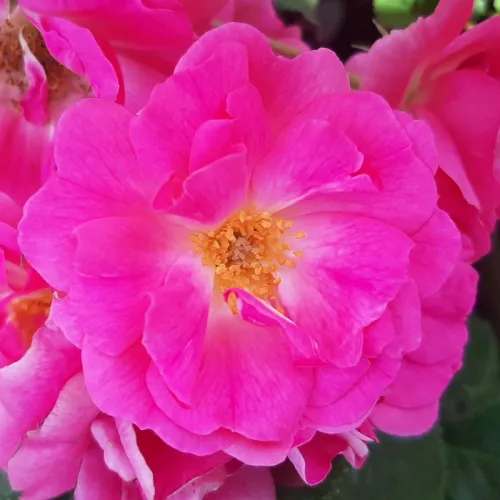
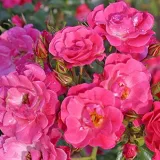
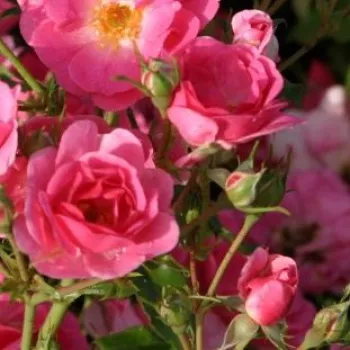
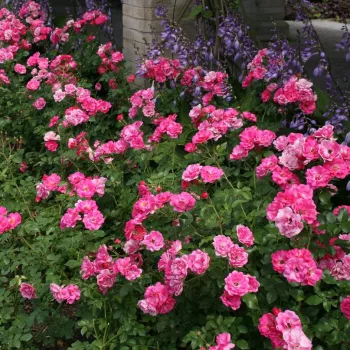
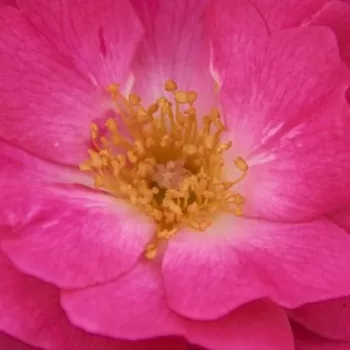
BAD WÖRISHOFEN ® – carmine-pink bedding floribunda rose – Kordes
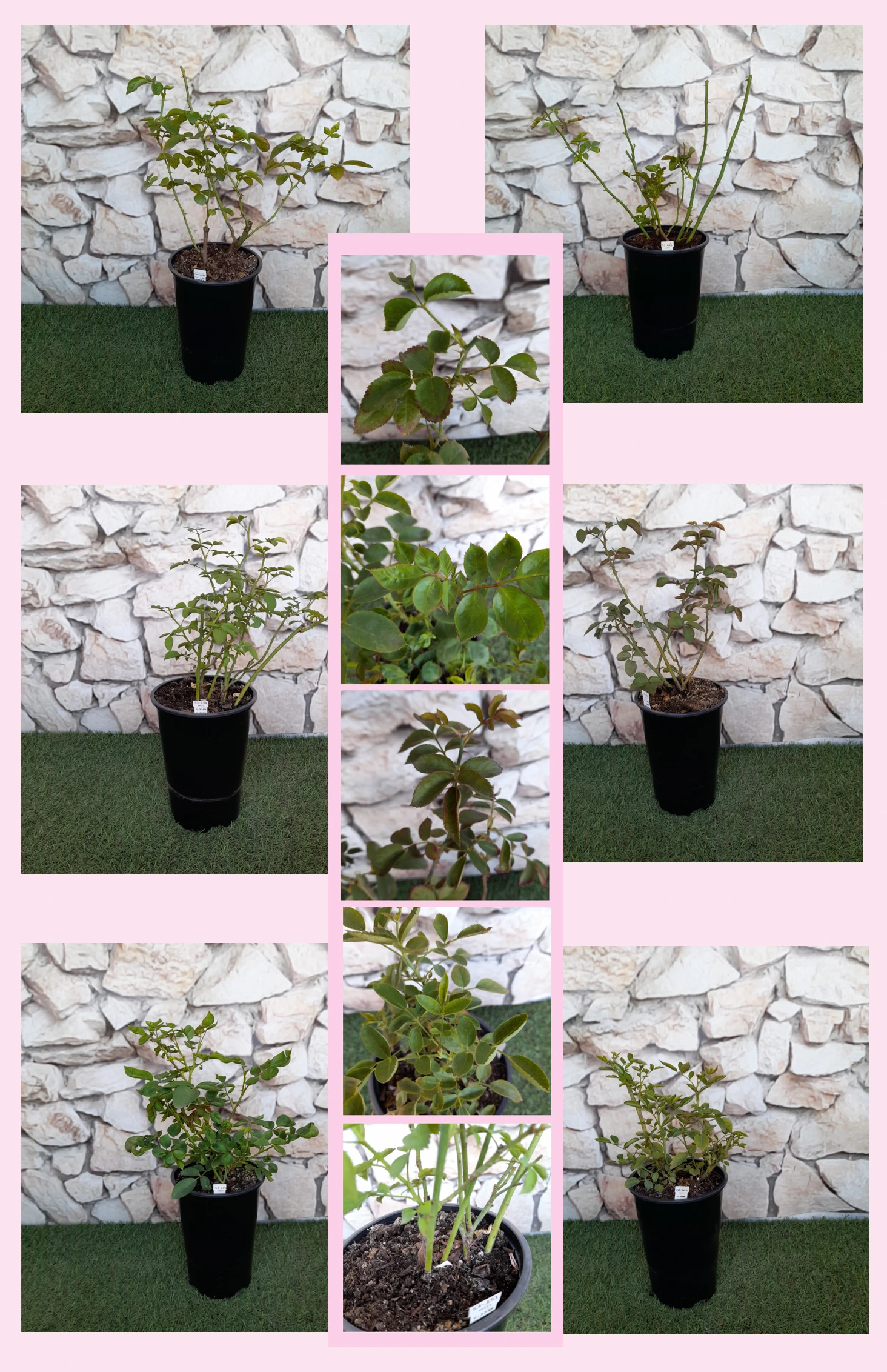
Step outside after rain and you can imagine a narrow garden path lined with carmine blooms and glossy foliage that shrug off damp, typical British summers with reliable resistance to common rose diseases, even where clay soils hold the moisture. BAD WÖRISHOFEN ® fits easily into compact London front gardens and small urban spaces, offering a bushy, rounded structure that needs little shaping yet produces generous clusters of flowers from early summer well into autumn. As an own-root shrub it builds strength steadily below ground, rewarding patience year by year as root, then shoot, then full ornamental impact develop into a long-lived feature. Its foliage stays attractively glossy, the growth habit remains neat without complex pruning, and it adapts well to sustainable planting schemes that favour rainfall and low-input care, making it a reassuring choice when you want enduring colour with minimal effort.
Usage options
| Target area |
Reasoning |
| Small front garden bed (terraced house) |
Compact height and spread keep this rose proportionate to narrow London front gardens while still delivering generous, vivid carmine-pink clusters visible from the pavement, suiting time-pressed homeowners and beginners. |
| Low-maintenance flowering hedge |
Bushy, even growth and dense dark-green foliage create an easy, low hedge that needs only light annual trimming, providing a long-lived, structured boundary for family gardens and busy-owners. |
| Rainwater-friendly urban planting strip |
Performs reliably in typical heavy, moisture-retentive garden soils, making it well suited to rain-fed, sustainable front-garden schemes along pavements for eco-conscious city households and urban-gardeners. |
| Mixed perennial and shrub border |
Season-long repeat flowering in rich carmine-pink stands out among perennials, offering reliable colour “pulses” through summer and autumn for those wanting impact without intricate border planning and hobby-gardeners. |
| Large container on balcony or patio |
The naturally rounded, shrub-like habit adapts well to a single feature rose in a large 40–50 litre pot, ideal where ground is limited but you still want a long-term, structural focal point and balcony-owners. |
| Family play garden with robust planting |
ADR-backed disease resistance and good hardiness reduce spraying and replacement, keeping the rose looking healthy around seating or play areas in typical family gardens for safety-minded parents. |
| Low-input municipal-style corner or driveway bed |
Bred for parks and public spaces, this variety copes well with urban pollution and modest care, giving reliable structure and colour beside drives or parking spaces for practical, budget-aware homeowners. |
| Long-term sustainable planting plan |
Own-root plants regenerate well from the base and maintain stable shape over many years, supporting a gradual, resilient design that matures with the garden for future-focused planners. |
Styling ideas
- Modern-edge – Line a slim front border with BAD WÖRISHOFEN ® and underplant with low Nepeta for a clean carmine-and-soft-blue contrast – ideal for style-conscious city terrace owners.
- Cottage-soft – Combine with lavender and pink or white hardy geraniums to soften a path edge, echoing traditional cottage gardens – suited to romantically inclined beginners.
- Clay-friendly – In moisture-retentive beds, pair with Heuchera and ornamental grasses to give texture and colour that cope with wet spells – perfect for practical urban gardeners.
- Patio-focus – Grow one shrub in a 50 litre terracotta pot with trailing thyme at the rim for a neat, fragrant seating-area focal point – good for balcony and courtyard users.
- Family-frame – Use several plants as a low, colourful outline around a lawn, weaving in spring bulbs to extend interest – attractive for families wanting structure without fuss.
Technical cultivar profile
| Parameter |
Data |
| Name and registration |
Floribunda bed rose, Collection Vigorosa®, registered as KORselary, traded as BAD WÖRISHOFEN ® Vigorosa®; ARS exhibition name Bad Wörishofen 2005, shrub rose exhibition category. |
| Origin and breeding |
Bred and introduced in Germany in 2005 by W. Kordes’ Söhne, with unknown parentage; developed as a robust floribunda shrub for bedding, hedging and urban landscape use. |
| Awards and recognition |
ADR-certified in 2003 for garden performance and health; awarded Gold Medals at Kortrijk in 2007 and Paris in 2008, confirming strong ornamental and landscape value. |
| Growth and structural characteristics |
Compact, bushy shrub habit 50–75 cm high and wide, moderately thorny, forming dense, dark glossy foliage; maintains a rounded outline that suits beds, low hedges and containers. |
| Flower morphology |
Semi-double, cupped blooms with 13–25 petals carried in clusters of medium-sized flowers; remontant with a strong, abundant second flush and further repeat through the season. |
| Colour data and phenology |
Carmine-pink, RHS 55B outer and 55C inner petals, intense and vivid; buds open deep carmine-pink, then lighten slightly, retaining very good colour until petals finally fade. |
| Fragrance and aroma |
Fragrance is very weak and of neutral character, making the rose more about clean colour and form than scent; suitable near seating where strong perfume is not desired. |
| Hip characteristics |
Hip set is generally limited due to the semi-double flower form; occasional small, spherical orange-red hips, 6–10 mm in diameter, may form late in the season. |
| Resistance and winter hardiness |
Good resistance to black spot, powdery mildew and rust; hardy to approximately –26 to –23 °C (RHS H7, Swedish Zone 4, USDA 5b), with good tolerance of typical urban conditions. |
| Horticultural recommendations |
Suited to beds, hedges, urban green spaces and large containers; plant 50–90 cm apart depending on use, in well-drained soil, with low maintenance needs and partial shade tolerance. |
BAD WÖRISHOFEN ® offers compact, glossy structure, long-season carmine colour and dependable disease resistance in an own-root form that matures into a durable feature, making it a thoughtful choice for a long-lived, low-effort garden.