BELLE DE LYRA – yellow hybrid tea rose – pharmaROSA®
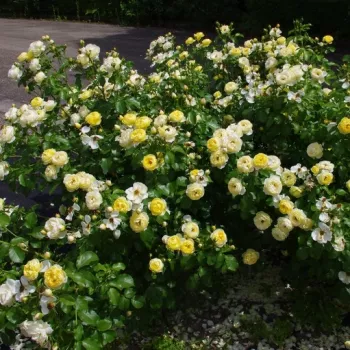
In a compact London front garden or balcony, BELLE de Lyra brings luminous, golden blooms that sit neatly above glossy foliage, creating an elegantly upright, bushy presence that suits narrow beds and containers. This hybrid tea’s medium maintenance needs stay manageable when you provide regular watering and good drainage that copes well with heavy clay and wet, windy spells, so routine care feels reassuringly simple. Grown on its own roots, it offers a quietly sustainable, long-lived structure that can regenerate from the base after stress, helping your planting feel more secure over time. Plant it as a sunny specimen or border accent and, over three seasons, you will notice roots settling in the first year, stronger shoots and branching in the second, and a fuller, more reliable display by the third, giving your space lasting balance and gently evolving colour with each passing summer. Well suited to urban plots that favour rainwater use and resilient, low-fuss choices, it supports a thoughtful, green approach to everyday family gardening.
Usage options
| Target area | Reasoning |
|---|
| Small front garden specimen |
The bushy, upright habit and moderate height allow Belle de Lyra to stand out as a focal point without overwhelming a narrow London-style front border, giving a clean, structured look for a low-effort specimen, ideal for the busy beginner. |
| Border planting with perennials |
Its recommended 60 cm spacing slots neatly into mixed borders alongside cranesbill or campanula, where the warm yellow flowers contrast with cooler tones and dense foliage helps fill gaps, suiting the family gardener. |
| Cut-flower corner in a sunny bed |
Medium-sized, double, clustered blooms on upright stems lend themselves to occasional cutting for the house, so you can enjoy golden-yellow flowers indoors while the plant continues to flower through the season, pleasing the home entertainer. |
| Rainwater-conscious urban planting |
Moderate drought tolerance and the need for regular watering pair well with collected rainwater, while good drainage helps the roots cope with prolonged wet spells in compacted city soils, supporting the sustainability-focused owner. |
| Own-root, long-term feature shrub |
The own-root form builds a stable framework that can reshoot from the base if stems are damaged, helping the shrub maintain its outline and ornamental value over many seasons with modest intervention, reassuring the long-term planner. |
| Clay or chalky soil family garden |
When planted into improved heavy clay or chalky ground with added organic matter and good drainage, its moderate disease resistance and hardy framework offer a dependable display in typical UK conditions, supporting the realistic gardener. |
| Large container on terrace or balcony |
In a 40–50 litre, well-drained, peat-free container, its compact spread and upright growth habit allow a smart, vertical accent by the front door or on a terrace, especially when underplanted with scented geranium, delighting the urban homeowner. |
| Structured, low-fuss hedge line |
Planted at around 50 cm intervals, its dense, mid-green foliage and repeated flowering create a tidy, semi-formal line that softens boundaries while requiring only occasional deadheading and routine checks, suiting the time-poor gardener. |
Styling ideas
- Sunlit Entrance – Frame a terraced-house doorway with a pair in large containers, underplanted with scented cranesbill for soft groundcover – perfect for the urban homeowner who wants instant structure.
- Golden Border – Thread Belle de Lyra through a mixed border with tall delphiniums behind and pale campanulas in front – ideal for gardeners seeking a calm, colour-coordinated family garden.
- Rainwise Ribbon – Line a narrow front path where paving meets permeable gravel, letting the rose catch downpiped rain and pairing it with drought-tolerant nepeta – suited to sustainability-focused city gardeners.
- Balcony Focus – Grow one plant in a 50 litre pot with peat-free compost and slow-release feed, adding trailing thyme at the rim – good for beginners wanting a single, manageable focal point.
- Soft Hedge – Create a low, semi-formal hedge along a front boundary, alternating Belle de Lyra with lavender for scent and pollinator support – fitting for families who like tidy but informal planting.
Technical cultivar profile
| Characteristic | Data |
|---|
| Name and registration |
Belle de Lyra is a hybrid tea rose from the Hybrid tea rose collection, marketed as BELLE DE LYRA – yellow hybrid tea rose – pharmaROSA®, with no separate registered exhibition or registration name listed. |
| Origin and breeding |
Discovered in France in 2014 and attributed to PharmaRosa®, with PharmaRosa® Ltd. (Hungary) as initial distributor; parentage and exact introduction or registration years are not currently documented. |
| Growth and structural characteristics |
Forms a bushy, upright shrub about 95–130 cm tall and 60–85 cm wide, with dense, glossy mid‑green foliage and moderate prickliness, giving a compact yet substantial presence in borders or containers. |
| Flower morphology |
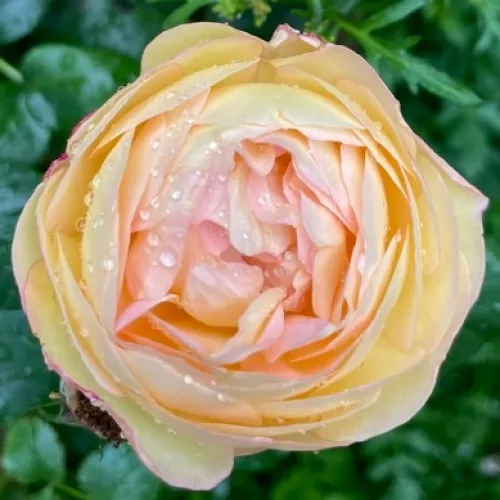
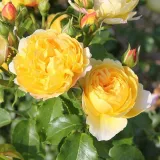
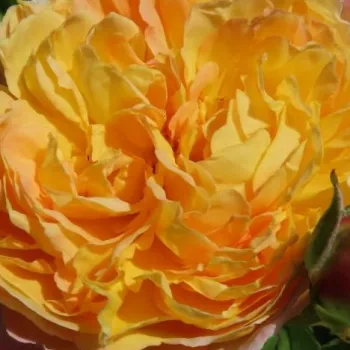
Produces medium-sized, double, cup-shaped flowers in clusters, typically with 26–39 petals, remontant with an abundant second flush that maintains decorative value across the warmer months in suitable conditions. |
| Colour data and phenology |
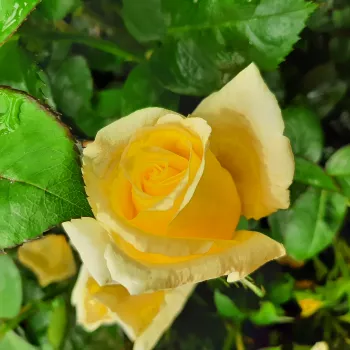
Warm golden-yellow buds open to deep golden centres with paler outer petals, then fade through buttery yellow to straw-cream; colour retention is moderate, with tones softening noticeably as each bloom ages. |
| Fragrance and aroma |
No reliable data on fragrance intensity or character is available; it is best chosen primarily for its colour effect and flower form rather than for a pronounced scent profile in the planting scheme. |
| Hip characteristics |
Sets small numbers of spherical orange-red hips about 8–12 mm across, adding a modest late-season accent; hips are usually secondary to its main role as a flowering, ornamental hybrid tea rose. |
| Resistance and winter hardiness |
Hardy to approximately −21 to −18 °C (RHS H7, Swedish zone 3, USDA 6b) with disease resistance rated moderate overall, showing resistance to black spot but only moderate tolerance of powdery mildew and rust. |
| Horticultural recommendations |
Best in sunny positions at 50–100 cm spacing depending on use; suited to borders, hedging and specimen planting, with medium maintenance needs including deadheading, regular watering and occasional plant protection. |
Belle de Lyra offers compact, upright structure, luminous golden flowers and durable own-root growth for long-term, low-fuss enjoyment in your garden; consider it if you value steady beauty over fleeting novelty.