BLACK FOREST ROSE® – red bedding floribunda rose - Kordes
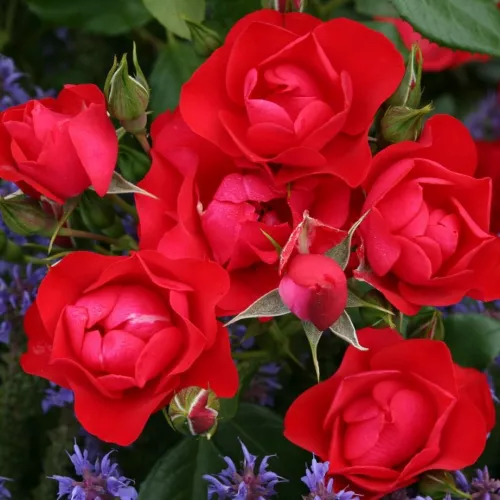
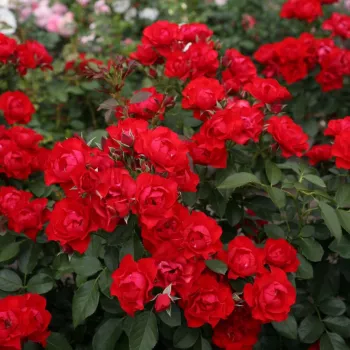
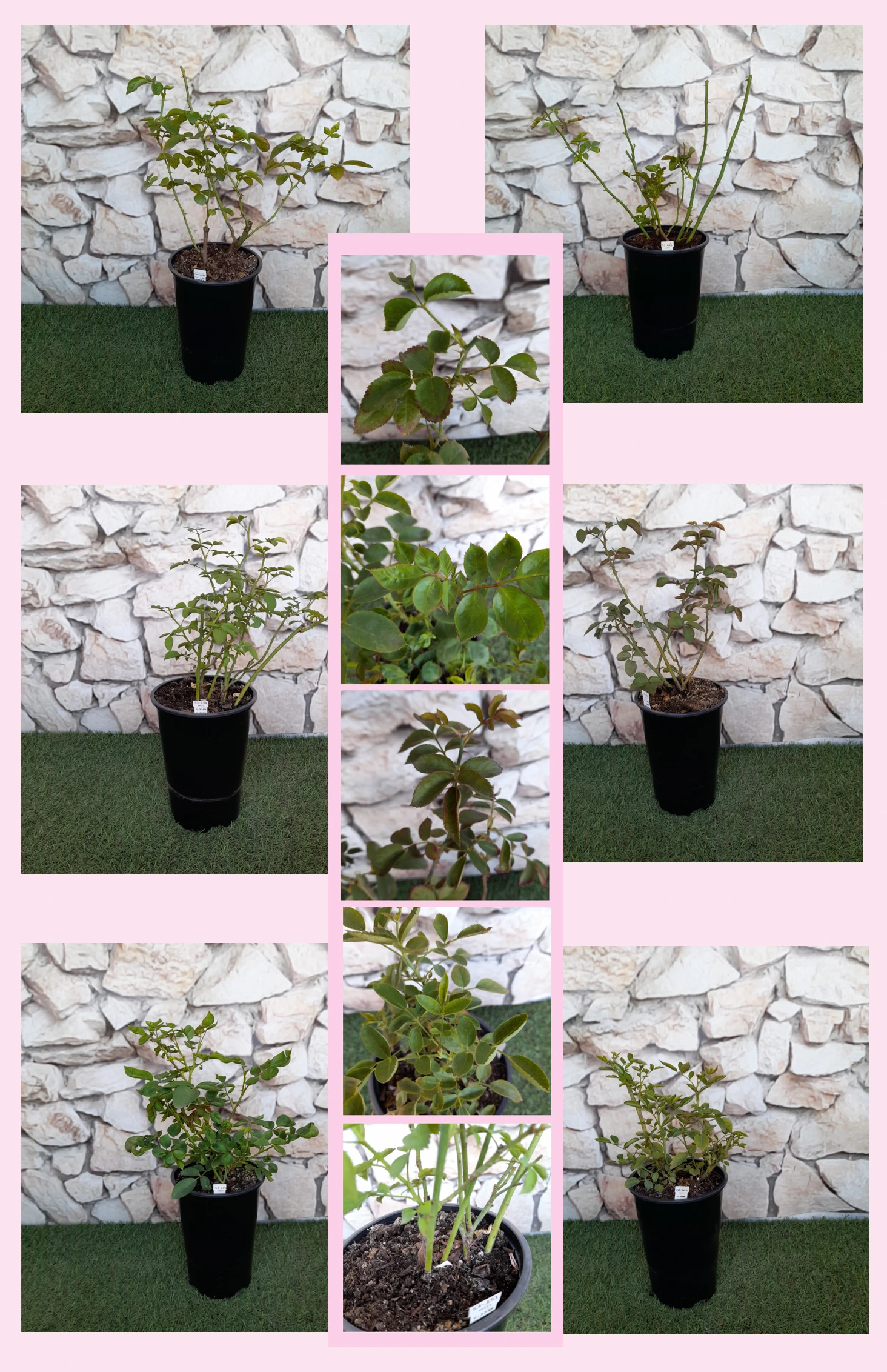
Step onto a narrow London front-garden path after rain and this compact, upright floribunda surrounds you with neat clusters of saturated red blooms, staying tidy even in showers and blustery weather typical of exposed, wetter British plots. The semi-double flowers open wide, offering easy access for bees and other pollinators, while the bush’s dense dark foliage creates an elegant, “girly” structure that softens paving and gravel. As an own-root plant, this rose is bred for resilience, settling in steadily and rewarding patient care as it moves from establishing roots to stronger top growth and ultimately a mature, full display over three seasons. Its excellent flowering rhythm runs from early summer well into autumn, the colour remaining rich red without fading, so your small city garden never looks washed out. Naturally good self-cleaning means most spent blooms drop away on their own, supporting an easy-care, rainwater-friendly planting where you simply top up mulch and enjoy the show. Thanks to proven hardiness and disease resistance, it is a reassuring choice for beginners and time-pressed households, delivering long-term impact without complicated pruning or feeding routines.
Usage options
| Target area |
Reasoning |
| Front garden bedding for terraced houses |
Compact height and bushy, upright growth make an ideal low bed along a narrow front path, giving a “dressed” look without blocking light or access. Self-cleaning clusters keep the space smart with minimal deadheading, perfect for the busy urban gardener. |
| Low, flowering hedge or path edging |
Planted at 50–60 cm intervals, the dense, glossy foliage knits into a continuous line of red blooms that reads as a soft hedge from June to autumn. Reliable repeat flowering gives long seasonal structure with simple once-a-year trimming, suited to the low-maintenance homeowner. |
| Pollinator-friendly mixed border in small gardens |
Semi-double flowers with exposed stamens invite bees to feed between showers, adding life and movement to compact borders. The open bloom form brings wildlife interest while still looking refined, helping beginners choose responsibly as a pollinator-conscious planter. |
| Sustainable, rainwater-managed front garden |
This variety tolerates typical British rain and wind, so it works well beside permeable drives, gravel strips and rainwater channels, where splashes and short dry spells alternate. It pairs neatly with low perennials in a climate-conscious layout for the eco-aware city dweller. |
| Season-long colour in family flowerbeds |
With remontant flowering and a plentiful second flush, children and adults enjoy fresh red blooms from early summer until the first frosts. The consistent colour and shape provide a reliable backdrop to changing perennials, ideal for the family-focused garden owner. |
| Small specimen shrub in large containers |
In a 40–50 litre pot with peat-free compost and good drainage, this upright rose becomes a compact focal point on balconies or steps. Own-root vigour and stable structure help it recover quickly if containers dry or are re-positioned, suiting the space-limited balcony gardener. |
| Long-lived, low-fuss planting schemes |
As an own-root rose, it regenerates well from the base after harsh winters or accidental damage, maintaining its original character year after year. Minimal specialist pruning is needed, making it a dependable choice for the time-poor hobby gardener. |
| Urban beds on heavier or challenging soils |
The robust root system and ADR-backed health mean it copes with less-than-ideal conditions once established, from compacted ground to exposed, rainy spots that test many roses; this suits the practical, results-oriented planter. |
Styling ideas
- Crimson-Ribbon Border – run a low line of BLACK FOREST ROSE® along a short front fence, underplanting with Nepeta or creeping thyme for a soft blue-green carpet – ideal for design-conscious city homeowners.
- Romantic Steps – place a single plant in a generous 40–50 litre terracotta pot by the front door, add trailing thyme and a small grass for movement – perfect for flat dwellers wanting a welcoming entrance.
- Bee-Favourite Patch – mix this rose with lavender and dwarf asters to create a pollinator-friendly strip that flowers from summer into autumn – suited to families encouraging children to notice garden wildlife.
- Red-Green Contrast – combine its dark foliage and bright red clusters with silver-leaved sage and ornamental grasses for a modern, low-maintenance scheme – appealing to busy professionals favouring clean lines.
- Storybook Front Garden – pair the rose with soft pink perennials and a small clematis over railings for a “girly”, cottage-style frontage – attractive to those who love classic romance in compact spaces.
Technical cultivar profile
| Parameter |
Data |
| Name and registration |
BLACK FOREST ROSE® (RigoRosen®), floribunda bed rose, registered as KORschwill; ARS exhibition name Black Forest Rose; member of the RigoRosen® landscape collection. |
| Origin and breeding |
Bred by Tim-Hermann Kordes at W. Kordes’ Söhne, Germany, from unnamed parents; introduced and registered in 2010 as a modern landscape floribunda for reliable garden use. |
| Awards and recognition |
ADR Germany 2010; 1st prize Baden bei Wien 2010; Gold medals Kortrijk/Courtrai 2011 and 2012; RNRS Trial Ground Certificate UK 2011; recognised in multiple international rose trials. |
| Growth and structural characteristics |
Bushy, upright habit reaching about 65–95 cm high and 55–85 cm wide, with dense, glossy dark green foliage and moderate prickles; forms a compact, well-branched shrub for bedding or edging. |
| Flower morphology |
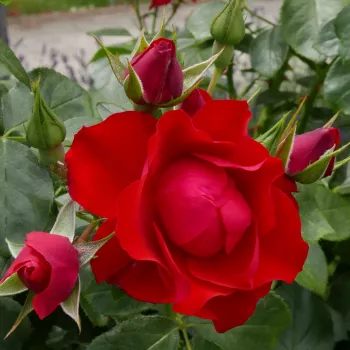
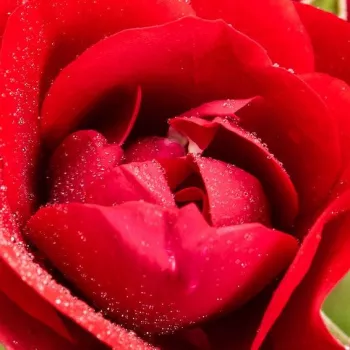
Medium-sized, semi-double cup-shaped blooms with 13–25 petals in clusters; reliably remontant with abundant first flowering and a strong second flush, on good self-cleaning trusses. |
| Colour data and phenology |
Rich, bright red (RHS 46A–46B, ARS MR) from bud to fall, with minimal fading; buds deep scarlet, opening vivid then slightly maroon before petals drop; colour retention rated excellent in trials. |
| Fragrance and aroma |
Classed as unscented with no noticeable traditional rose fragrance; visual impact and colour stability are prioritised over scent, suiting sites where strong perfume is not required. |
| Hip characteristics |
Occasionally forms small, 6–10 mm spherical orange-red hips (RHS 40A); crop is typically sparse because of good self-cleaning, so ornamental value is focused on the long flowering season. |
| Resistance and winter hardiness |
Very hardy to about −26 to −23 °C (RHS H7, USDA 5b; Swedish Zone 4); good overall disease resistance with strong black spot and rust resistance and moderate susceptibility to powdery mildew. |
| Horticultural recommendations |
Best in full sun with well-drained soil; space 50–100 cm depending on use. Plant in peat-free compost where possible and water deeply in dry spells; maintenance generally light, with occasional pest checks. |
BLACK FOREST ROSE® offers long-season red colour, dependable health and easy, self-cleaning flowering in a durable own-root form; a thoughtful choice if you prefer lasting structure with modest effort.