BLUE RIVER ® – purple hybrid tea rose - Kordes
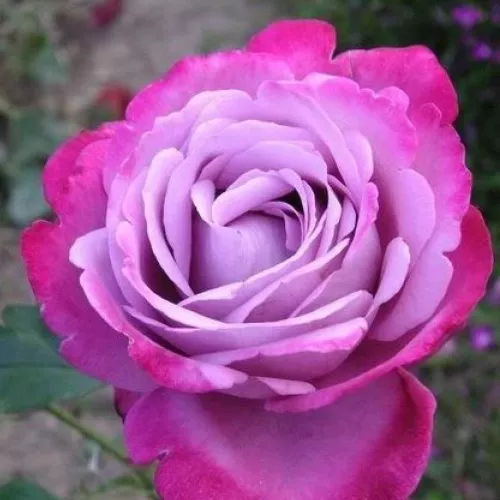
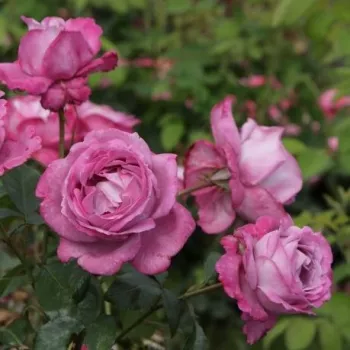
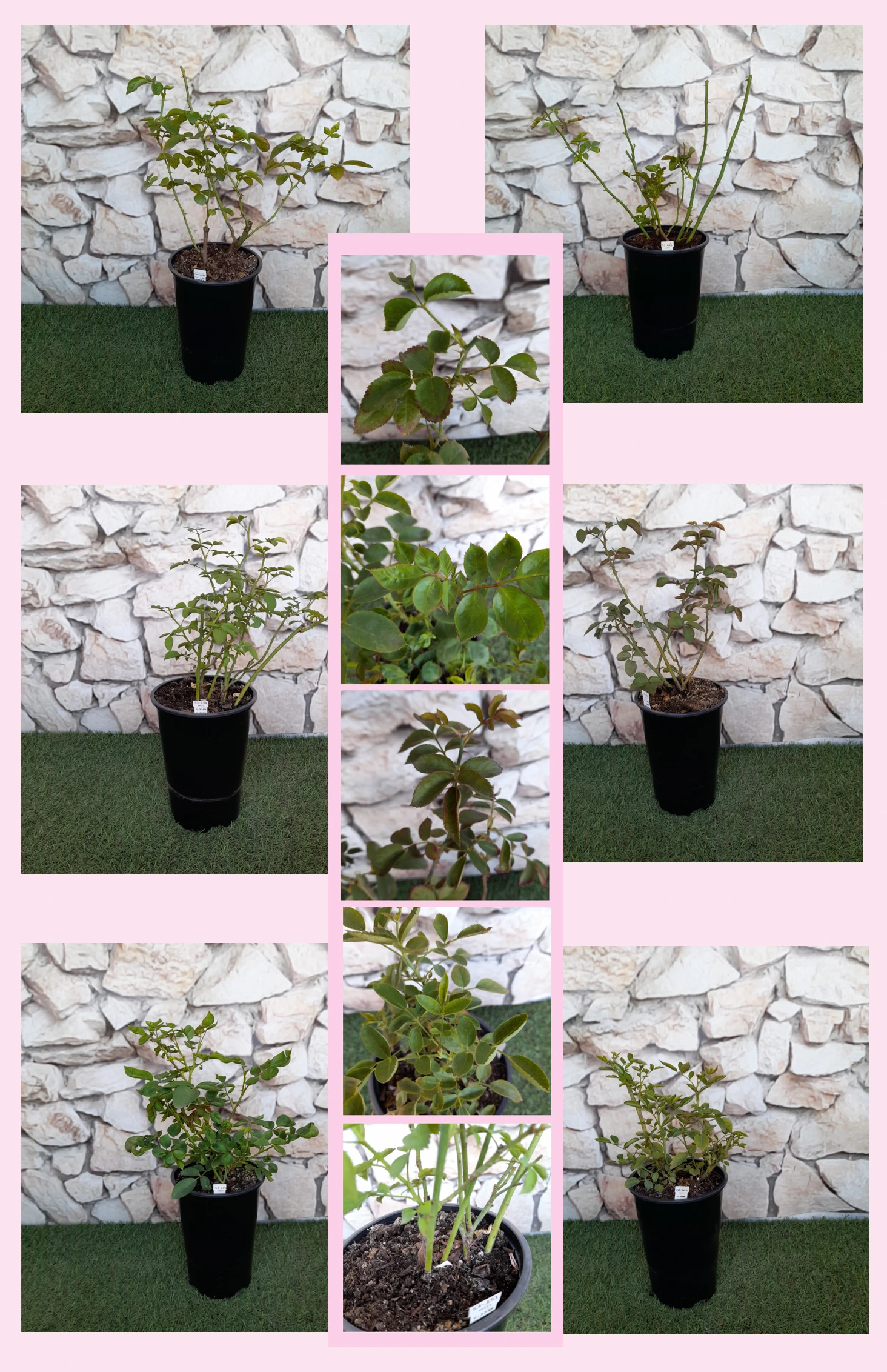
Step onto your front path after rain and BLUE RIVER ® greets you with cool, lilac-mauve blooms and a velvety, very strong fragrance that lingers in the damp evening air, while its upright, compact habit suits smaller city plots where winds and showers are softened by surrounding buildings and fences, naturally echoing gardens coping with heavier soil and frequent wet spells. Own-root plants build stability and long-term resilience, giving you a rose that regenerates well from the base and settles in for many seasons. In the first year it concentrates on roots, the second brings stronger shoots and repeat flushes, and by the third it reaches full presence as a scented, lilac focal point that fits effortlessly into low-input, rainwater-conscious London terraces and other urban gardens.
Usage options
| Target area | Reasoning |
|---|
| Front garden focal point |
The high-centred, lilac-purple blooms and upright habit create an immediate visual focus beside a path or doorway, ideal for modest London terraces where every shrub must earn its place with clear structure and colour for the beginner |
| Cutting patch or cutting row |
Classic hybrid tea form, medium-sized, long-stemmed flowers and very strong fragrance make this variety excellent for scented arrangements, while repeat flushes keep vases filled from early summer into autumn for the homeowner |
| Mixed border with perennials |
Plant singly or in a small group among lavender, sage or nepeta, where its rich lilac flowers contrast beautifully with soft blue and silver foliage, while own-root vigour sustains a reliable framework over many years for the urbanite |
| Rainwater-conscious front garden scheme |
Works well in beds designed to divert roof run-off into planting, as its medium maintenance needs and own-root durability suit gardens that rely on natural rainfall, provided the soil drains reasonably well for the sustainability-seeker |
| Large container on patio or balcony |
In a 40–50 litre or larger peat-free container, this upright rose offers structure, repeating colour and perfume close to seating, and can be underplanted with herbs for added texture and biodiversity for the balcony-gardener |
| Small informal hedge or line |
Planted at 50–60 cm intervals, the even growth and repeat flowering form a low, fragrant line along paths or drives, softening hard edges while remaining manageable in typical family gardens for the busy-family |
| Heat-tolerant sunny bed |
Good tolerance of sun and summer heat means it performs well in exposed, south-facing spots, provided prolonged dry spells are balanced by regular watering using collected rainwater where possible, easing water use for the eco-conscious |
| Long-term feature plant |
As an own-root rose it develops a stable, rejuvenating base that copes better with renewal pruning over time, keeping its ornamental value and structure without complex care routines for the time-poor |
Styling ideas
- Lilac Entrance – Flank a narrow front path with two BLUE RIVER ® roses underplanted with lavender for a softly scented, welcoming approach – ideal for scent-loving homeowners.
- Balcony Focus – Grow one plant in a 50 litre container with trailing nepeta and thyme to cool hard surfaces and attract passing pollinators – suited to balcony gardeners.
- Modern Border – Combine with silver foliage such as Artemisia and low grasses to create a contemporary lilac-and-steel palette – perfect for design-aware urbanites.
- Cutting Corner – Dedicate a sunny border section to three BLUE RIVER ® bushes for a steady supply of long-stemmed, fragrant blooms – great for home florists.
- Soft Hedge – Line a drive or front boundary with a repeating row, interspersed with sage and catmint to blend structure, colour and movement – ideal for family gardens.
Technical cultivar profile
| Property | Data |
|---|
| Name and registration |
Hybrid tea rose registered as KORsicht, marketed as BLUE RIVER ®, a purple hybrid tea exhibition and garden variety with classic form, suitable both for borders and high-quality cutting. |
| Origin and breeding |
Bred by Reimer Kordes of W. Kordes’ Söhne in Germany from ‘Blue Moon’ × ‘Zorina’, introduced and registered in 1984, combining lilac tonality with reliable hybrid tea garden performance. |
| Awards and recognition |
Gold Medal at the renowned Baden-Baden rose trials in 1985, recognising its ornamental value, flower quality and overall garden impact within the competitive hybrid tea class. |
| Growth and structural characteristics |
Compact, upright plants reaching around 75–105 cm in height and 60–80 cm spread, with moderately dense dark green foliage and moderate prickles, forming clear, easily integrated garden structure. |
| Flower morphology |
High-centred, pointed buds opening to double, 26–39 petalled, medium-sized blooms carried mainly singly on stems, remontant with an abundant second flush under normal garden conditions. |
| Colour data and phenology |
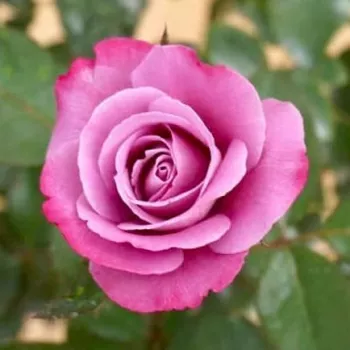
Deep purple buds open vivid purple with magenta edges, then shift to pale silvery blue-lilac with pink tones, finally fading to soft silvery-lilac; colour may lighten further in strong sunlight. |
| Fragrance and aroma |
Very strong, long-lasting fragrance of classic rose character, giving notable scent impact both in the garden and in cut arrangements, making positioning near seating or entrances especially rewarding. |
| Hip characteristics |
Moderate crop of small, 10–14 mm, ovoid orange-red hips in autumn, adding a discreet seasonal accent where deadheading is relaxed later in the year or on less formal plantings. |
| Resistance and winter hardiness |
Hardy to around −21 to −18 °C (RHS H7, USDA 6b), with good heat tolerance; black spot resistance is strong, while powdery mildew susceptibility means occasional protection may be advisable. |
| Horticultural recommendations |
Best in full sun with well-drained soil; space at 50–90 cm depending on use, water in drought, deadhead to encourage repeats, and consider integrated care where mildew pressure is regularly high. |
BLUE RIVER ® offers lilac hybrid tea elegance, very strong fragrance and a compact, long-lived own-root framework that settles in reliably, making it a thoughtful choice for enduring front gardens and patios.