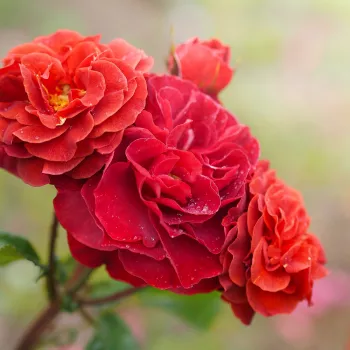
BROWN VELVET – rust-brown bedding floribunda rose - McGredy
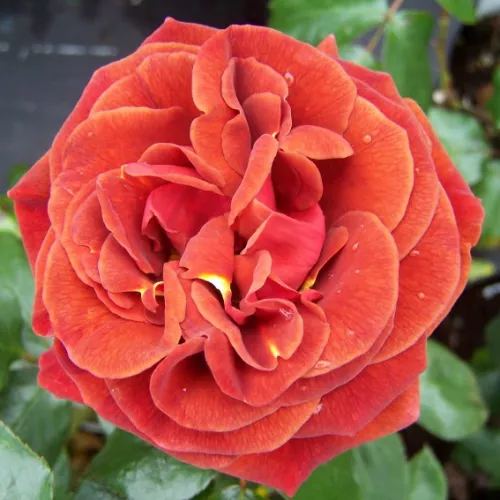
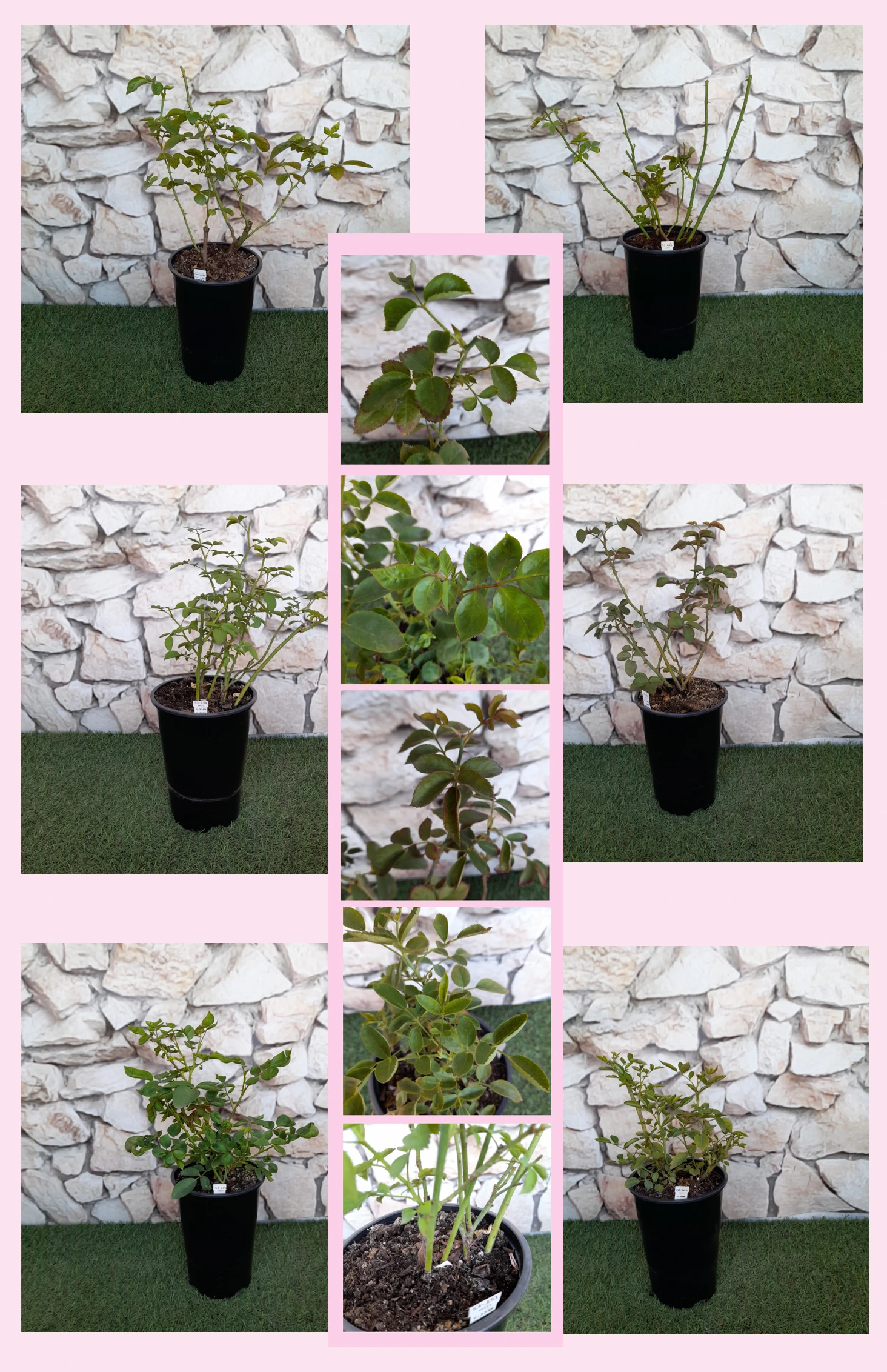
Step from your London pavement into a front garden of velvet colour and calm: BROWN VELVET brings an unusually deep rust-brown bloom to small, urban spaces while coping well with blustery, rain-soaked coastal days and the challenges of heavier soils. Its bushy, compact habit fits neatly into narrow beds and larger containers, giving structure without crowding the path. Clusters of cup-shaped flowers appear in generous waves from early summer, then repeat reliably as the season unfolds, the cool-weather tones deepening towards chocolate-brown drama. Grown on its own roots, this premium 2‑litre plant settles steadily and is bred for a long, resilient lifespan with consistent ornamental value. With straightforward planting, light seasonal care and a gradual build-up of roots, shoots and full garden impact over its first three years, it is an easy, sustainable choice for time-pressed city gardeners.
Usage options
| Target area |
Reasoning |
| Front garden focal bed |
Use as a compact focal shrub near a path or doorway, where its velvety rust-brown clusters show clearly against dark green foliage and provide a refined, long-lived feature with minimal fuss for the busy homeowner. |
| Small urban rose border |
Plant in a short row or gentle curve at 40 cm spacing to build a low, bushy hedge of repeated flowering, ideal for narrow London terraces that need structure and colour without dominating the space for the terraced-garden owner. |
| Large container on patio or balcony |
Grow in a 40–50 litre pot with peat-free compost, where its upright, dense habit stays stable and attractive for years, and regular watering is simple to manage in a hard-landscaped, space-limited setting for the balcony gardener. |
| Mixed planting with perennials |
Combine with airy salvias, lavender or nepeta to soften its strong colour, using the rose as a structural anchor while companion plants bring movement, fragrance and wildlife appeal around its formal flower clusters for the design-conscious beginner. |
| Rainwater-friendly front garden |
Set slightly raised over improved, free-draining soil so excess water from the downpipe can soak away, making the most of its reliable flowering while coping well with wet, breezy days common in UK streetside gardens for the sustainability-minded gardener. |
| Season-long bedding display |
Use in a small bed as a long-season performer, where remontant flowering provides repeated flushes from early summer to autumn, keeping the space colourful without frequent replanting or complex pruning for the time-poor planter. |
| Low-maintenance structural planting |
Rely on its bushy, medium-height framework and glossy foliage to structure a scheme that stays neat with light deadheading and occasional plant protection, avoiding the need for meticulous shaping or staking for the casual hobby-gardener. |
| Long-term own-root investment |
Choose this own-root form for resilience and regeneration, so the shrub ages evenly and recovers better from winter or accidental damage, supporting a stable ornamental display despite typical British wind and rain for the long-view gardener. |
Styling ideas
- Velvet-Entrance – flank a front path with two specimens underplanted with silvery nepeta, creating a warm, welcoming corridor – ideal for urban homeowners wanting quiet elegance.
- Chocolate-Border – weave BROWN VELVET through a low hedge of dwarf lavender to contrast brown blooms against cool mauve and grey foliage – suited to beginners chasing structure and scent.
- Balcony-Pot – site one plant in a 50 litre terracotta container with trailing thyme to soften edges and keep watering simple – perfect for city dwellers with only a balcony or roof terrace.
- Rain-Garden-Rim – position along the edge of a gravelled soakaway bed with sage and grasses, using the rose as a colour accent above permeable surfaces – designed for sustainability-focused front gardens.
- Evening-Glow – pair with pale pink campanulas and soft white gaura so the dark, velvety flowers stand out at dusk – appealing to after-work gardeners enjoying late-evening relaxation.
Technical cultivar profile
| Attribute |
Data |
| Name and registration |
Floribunda bed rose, registered as MACultra, marketed as Brown Velvet; shrub rose for flower beds and borders, suitable as a compact floribunda spray for garden and show use. |
| Origin and breeding |
Bred by Samuel Darragh McGredy IV (McGredy Roses International, Auckland) from ‘Mary Sumner’ × ‘Kapai’; introduced 1982 in New Zealand and 1983 in the United Kingdom by leading rose nurseries. |
| Awards and recognition |
Gold Medal and Gold Star of the South Pacific at New Zealand Rose Trials in the late 1970s; Floribunda Spray winner at the Santa Clara County Rose Society Show in 2000, confirming enduring exhibition quality. |
| Growth and structural characteristics |
Bushy, medium-height shrub reaching about 75–105 cm high and 50–70 cm spread; moderately thorny stems carry dense, glossy dark green foliage, forming a compact, well-leaved framework suitable for bedding or low hedges. |
| Flower morphology |
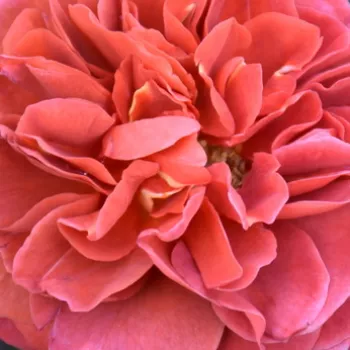
Medium-sized, double, cup-shaped blooms with roughly 26–39 petals borne in clusters; remontant character gives abundant initial flowering followed by strong repeat flushes, especially effective in mass or bedding plantings. |
| Colour data and phenology |
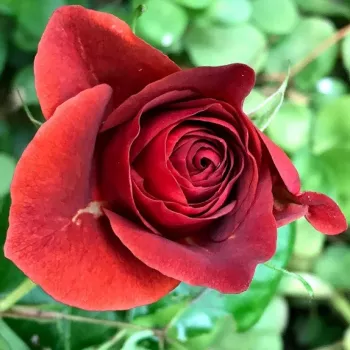
Distinctive deep rust-brown flowers with velvety texture; tones shift subtly from reddish and orange-brown buds to milky coffee-brown before fading, with colour deepening towards chocolate-brown in cool conditions and holding well in sun. |
| Fragrance and aroma |
Very weak fragrance with only a subtle rose scent detectable in still, warm air; chosen primarily for striking, unusual colour and bedding impact rather than for strong perfume in small gardens or mixed borders. |
| Hip characteristics |
Produces small numbers of orange-red, spherical hips 8–12 mm across; decorative effect is modest and usually secondary to the display of repeated flowering during the main garden season. |
| Resistance and winter hardiness |
Hardy to approximately −21 to −18 °C (RHS H7, USDA 6b); disease resistance moderate to black spot, mildew and rust, needing occasional plant protection and good air circulation to maintain foliage quality. |
| Horticultural recommendations |
Best in sunny sites with well-prepared, free-draining soil; plant at 35–40 cm in mass or hedge schemes, at 65 cm as a specimen; suitable for borders, urban containers and cut clusters with regular watering in dry spells. |
BROWN VELVET offers compact structure, long-season colour and proven garden performance on a durable own-root framework, making it a thoughtful, easy-care choice for small, stylish outdoor spaces you plan to enjoy for years.