DELSTROBLA – red-white bedding floribunda rose – Delbard
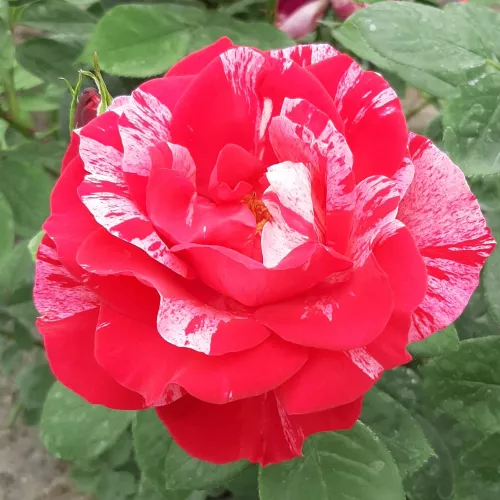
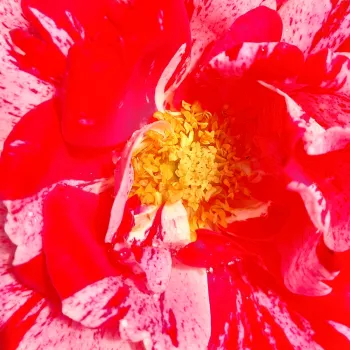
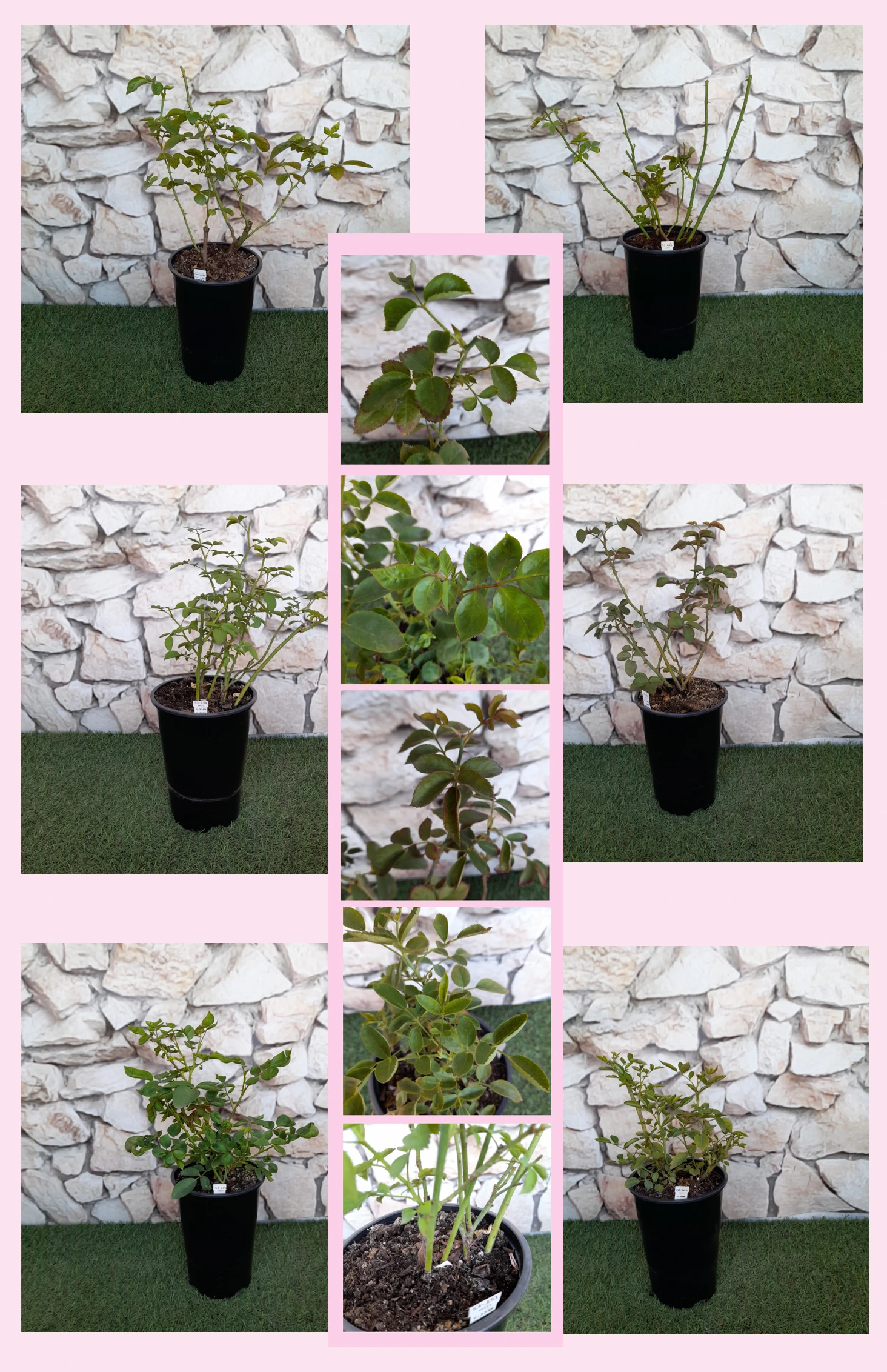
In a compact London front garden or balcony, DELstrobla offers painterly colour and a calm sense of order, its striped blooms recalling an artfully curated border rather than a high-maintenance showpiece. This floribunda’s bushy, upright habit and dense, glossy foliage make it a reliable, structured presence in small family plots, even where winds funnel between buildings and rain falls frequently, helping manage wetter conditions on heavier ground. Clusters of large, fully double blooms bring long-lasting colour through the season, while the fresh fragrance adds a subtle luxury to everyday routines. As an own-root rose, it is bred for longevity and steady regrowth, settling in gradually so that roots establish in the first year, top growth builds in the second, and by the third year it reveals its full ornamental value in your sustainable, rainwater-conscious planting.
Usage options
| Target area |
Reasoning |
| Front garden bedding along a narrow path |
The bushy, upright habit and 75–105 cm height create a defined, welcoming line of colour without overwhelming a small frontage, giving structure that stays readable from the pavement for owners seeking low-fuss kerb appeal for a busy family. |
| Urban rose hedge or repeated rhythm planting |
Regular spacing at 35–40 cm turns the dense, glossy foliage into a semi-formal hedge, while the marbled red-and-white flowers punctuate the green backdrop, suiting householders wanting an ordered, contemporary look with straightforward seasonal trimming for beginners. |
| Feature plant in a small mixed border |
As a specimen at 60 cm spacing, the abundant fully double blooms act as a focal point amongst perennials, maintaining presence even when not in peak flower, ideal for gardeners who want one statement rose that quietly anchors a compact space for urbanites. |
| Containers on patios, balconies and roof terraces |
In a 40–50 litre peat-free pot with good drainage, this upright floribunda keeps a tidy outline and reliable repeat flowering, fitting residents who need impressive colour on hard landscaping yet only have time for basic watering and light pruning for balcony-owners. |
| Season-long colour in family seating areas |
Remontant clusters of large, cup-shaped blooms keep the display going well beyond a single flush, providing a consistent backdrop to everyday use of small gardens for those wanting long, colourful performance rather than complex gardening routines for time-poor. |
| Cutting for informal indoor arrangements |
The long-stemmed, exhibition-bred flowers with painterly striping and medium, fruity fragrance lend themselves to simple home vases, suiting homeowners who enjoy bringing the garden indoors without relying on shop-bought bouquets for homebodies. |
| Structured, low-clutter sustainable front garden |
Dense, glossy foliage and moderate disease resistance reduce bare gaps and visual clutter, supporting a neat, green frontage that sits well with rainwater-conscious planting in areas where frequent showers and stronger winds shape planting choices for eco-planners. |
| Long-term, resilient planting in family gardens |
Own-root plants recover more evenly from winter damage and pruning, avoiding the unpredictability of grafted shoots and supporting a planting that matures steadily over years, particularly suited to householders who want enduring, low-drama structure for planners. |
Styling ideas
- Painterly-border – Combine with Salvia nemorosa and soft grasses to echo the rose’s stripes with vertical accents – ideal for design-aware city gardeners.
- Terraced-elegance – Plant in a narrow front bed with low evergreen edging for a calm, ordered entrance – suited to London terrace owners.
- Balcony-gallery – Grow in a 50-litre container with trailing herbs to soften edges while keeping colour concentrated – perfect for balcony-based beginners.
- Raspberry-scent – Position near a bench so medium, fruity fragrance enhances evening seating – attractive to those who unwind outdoors after work.
- Monochrome-frame – Underplant with white gypsophila and Liatris spicata ‘Alba’ to frame the marbled blooms – appealing to minimalists wanting quiet drama.
Technical cultivar profile
| Characteristic |
Data |
| Name and registration |
Floribunda bed rose, registered as DELstrobla and marketed within the Les Roses de peintres collection, also known commercially as Henri Matisse for exhibition and garden use. |
| Origin and breeding |
Bred by Georges Delbard in France from complex hybrid tea and floribunda parentage, introduced around 1993, reflecting a focus on distinctive striped colour and garden-worthy flowering. |
| Growth and structural characteristics |
Bushy, upright shrub reaching about 75–105 cm in height and 45–65 cm spread, with dense, dark glossy foliage and moderate prickliness, forming a tidy, well-filled outline in beds or containers. |
| Flower morphology |
Large, fully double, cup-shaped blooms with around 26–39 petals, mostly borne in clusters, repeating generously through the season with particularly strong follow-up flowering after the first main flush. |
| Colour data and phenology |
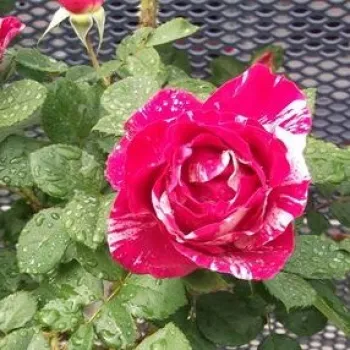
Deep carmine-red base with irregular white streaks and spots; buds show fine pale streaks, then raspberry and creamy tones as blooms mature, with striping remaining visible though lightening in strong sun. |
| Fragrance and aroma |
Fresh, medium-strength perfume with a fruity, raspberry character, noticeable at close range and around seating areas, adding sensory interest without dominating small terraces or compact garden rooms. |
| Hip characteristics |
Hip set is generally sparse due to double flowers, though occasional small ovoid orange-red hips around 8–12 mm may develop, adding discreet seasonal detail in late season if spent blooms are left. |
| Resistance and winter hardiness |
Hardy to approximately −21 to −18 °C (RHS H7, Swedish Zone 3, USDA 6b) with moderate resistance to black spot, powdery mildew and rust, benefitting from basic hygiene and considered watering practice. |
| Horticultural recommendations |
Best in full sun with fertile, well-drained soil; space 35–60 cm depending on use, deadhead to maintain display, and use a 40–50 litre container for long-term pot culture with regular watering and feeding. |
DELstrobla offers long-season colour, a compact upright habit and enduring own-root resilience, making it a thoughtful choice for those planning a long-lived, low-fuss rose feature.