Hybrid Tea rose

52-396-1
52-396-2

Diamond Jubilee

Hybrid tea rose

- – Eugene S. Boerner

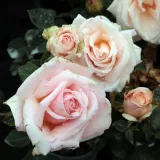
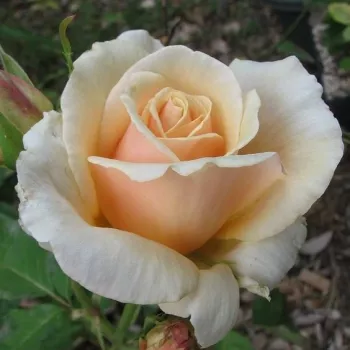
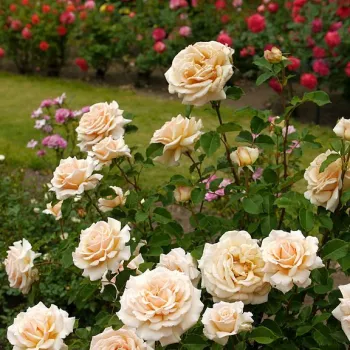
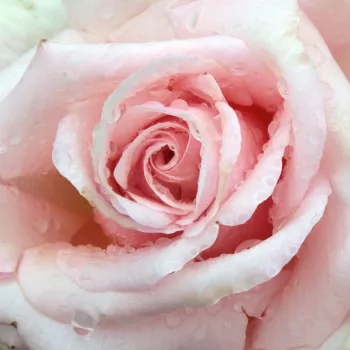
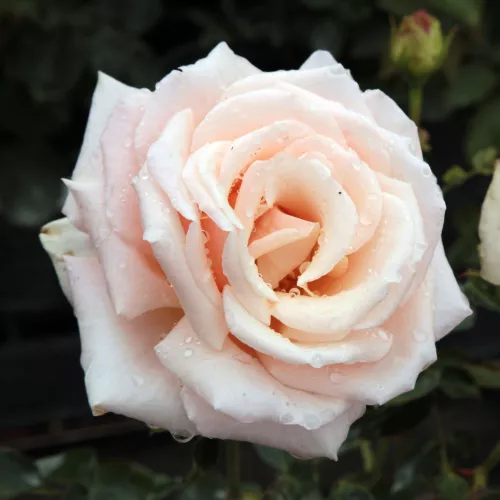
Pale butter-yellow base colour with faint peach shading. - hybrid tea rose - medium-strength, clearly perceptible scented rose - fresh, fruity

– Elegant light-yellow hybrid tea blooms
– Medium-height, upright, well-balanced growth
– Repeats flowering well through the season
– Medium, clearly perceptible fresh, fruity scent
– Proven show quality, AARS award-winning rose
Special feature: Classic 1947 Jackson & Perkins introduction with globular orange-red hips.
Quality-conscious choice – Minimal care
Diamond Jubilee
eleanorROSE® ORIGINAL 2-litre own-root potted rose
19,30 £
Unfortunately, we are currently unable to ship to the United Kingdom; we only deliver to countries within the European Union. For more information, please contact us!
4.5 (6250)
facebook   twitter

Diamond Jubilee – light yellow hybrid tea rose for refined city gardens

With its nostalgic blooms and calm presence, Diamond Jubilee creates a sense of balance even in compact front gardens, coping reliably with breezy sites and soils that can stay heavy after rain. Large, high‑centred flowers in soft buttercream and peach shades open repeatedly from summer into autumn, giving you an elegant, long-lasting display from a single, upright bush. As an own‑root rose it offers reassuring longevity and quiet resilience, steadily rebuilding from the base after pruning or weather damage. You can expect a gentle progression – first year rooting, second year shaping, and by the third year a fully established, beautifully proportioned feature for your rainwater‑smart urban garden.


Usage options

Target area Reasoning
Feature rose by the front door of a London terrace The upright, medium‑tall habit and refined pastel flowers give clear structure without overpowering a narrow approach path. Repeated flushes mean there is often a bloom to greet you, while the medium fragrance offers a gentle welcome rather than a strong perfume cloud, ideal for busy homeowners
Cut‑flower row in a small family garden Originally bred as an exhibition hybrid tea, Diamond Jubilee produces high‑centred, solitary stems that lend themselves to cutting for vases. Regular picking doubles as deadheading, encouraging further flowering, so you gain both garden display and indoor arrangements with minimal extra effort for hobby gardeners
Sunny, rainwater‑fed front border with heavier soil This rose prefers sun and benefits from good drainage, but its moderate vigour and robust root system help it adapt where clay holds moisture after wet spells. A raised strip or gravel‑mulched basin works well for directing roof run‑off while keeping the crown just above standing water, suiting urban eco‑gardens
Mixed pastel planting with lavender, sage or nepeta The light yellow blooms blend smoothly with soft mauves and silvery foliage, creating a cohesive, calming scheme. Surrounding Diamond Jubilee with drought‑tolerant aromatics also improves airflow around the plant, helping to reduce fungal pressure and simplifying seasonal care for beginner gardeners
Formal rose bed or low seasonal hedge Consistent height and an upright framework make it easy to line paths or define boundaries at about one metre. Planted at the recommended spacing, the plants knit into a neat, continuous row that responds well to straightforward winter pruning and light summer trimming, suiting structure‑loving owners
Large container on balcony or paved courtyard (50–70 L) In a generously sized, peat‑free container with regular watering, Diamond Jubilee offers classic rose flowers where ground planting is impossible. Own‑root growth gives long‑term stability in pots, as the plant renews itself from the base instead of depending on a graft union, reassuring balcony gardeners
Long‑term focal point for low‑input family gardens Once established, this own‑root shrub builds a durable woody framework that responds predictably to simple annual pruning. Over time it maintains its form and flowering without complex rejuvenation techniques, supporting an easy‑care approach for households who want lasting value from time‑pressed families
Period‑style planting with a nostalgic atmosphere As a 1940s Boerner introduction and All‑America Rose Selections winner, Diamond Jubilee brings authentic mid‑century hybrid tea character to cottage or heritage‑inspired schemes. Its medium, fruity fragrance and classic bud form subtly evoke traditional rose gardens valued by romantic traditionalists

Styling ideas

  • Pastel Welcome – Underplant Diamond Jubilee by the front path with soft blue nepeta and white alyssum to echo the rose’s buttercream tones – ideal for city terraces wanting a gentle, inviting entrance.
  • Cutting Corner – Create a small cutting bed with a short run of Diamond Jubilee backed by airy grasses, so harvested stems leave the garden looking full – suited to families who enjoy home‑grown bouquets.
  • Clay‑Tolerant Ribbon – On heavier soils, raise a narrow strip and edge Diamond Jubilee with sedum and Cheddar pinks for drainage and texture – a good choice for low‑maintenance, rain‑fed front borders.
  • Balcony Classic – In a 50–70 litre pot, combine this rose with trailing thyme and dwarf lavender for scent and foliage contrast – perfect for balcony gardeners wanting a single, long‑lived statement rose.
  • Heritage Calm – Pair Diamond Jubilee with old‑style perennials such as Lychnis and soft ferns to accentuate its 1940s charm – appealing to those recreating a restrained, nostalgic atmosphere.

Technical cultivar profile
Parameter Data
Name and registration Hybrid tea rose cultivar Diamond Jubilee, also sold as Diamond Jubilee Hybrid tea rose; an exhibition‑type tea hybrid selected for cutting and garden use, verified for cultivar authenticity for eleanorROSE ORIGINAL own‑root production.
Origin and breeding Bred by Eugene S. Boerner for Jackson & Perkins Co. in the United States and introduced in 1947; parentage is ‘Maréchal Niel’ × ‘Feu Pernet‑Ducher’, combining classic form with soft yellow coloration and repeat flowering.
Awards and recognition All‑America Rose Selections winner in 1948, confirming its ornamental quality and performance under varied garden conditions; formerly protected under US Plant Patent 824 (granted 1949), now long established as a proven heritage hybrid tea.
Growth and structural characteristics Upright, medium‑tall bush reaching about 100–140 cm in height and 60–80 cm spread, with moderately thorny stems and matt, mid‑green foliage of medium density, forming a clear vertical accent suited to beds, borders and feature planting.
Flower morphology Medium‑sized, double, high‑centred blooms with 26–39 petals borne mainly singly on stems; pointed, exhibition‑style buds open repeatedly through the season, with an especially generous second flush when plants are well fed and deadheaded.
Colour data and phenology Light butter‑yellow base with soft peach shading; ARS ly, RHS 11C outer and 15D inner petals. Newly opened flowers show pastel yellow with peach tones, fading gradually to creamy yellow or near white with occasional slight pinkish tints in strong sun.
Fragrance and aroma Fresh, fruity fragrance of medium strength, clearly noticeable on still days without being overpowering; suitable for paths, sitting areas and cutting, offering a traditional scented‑rose experience in combination with its classic hybrid tea flower form.
Hip characteristics Due to the full double flower form, hip set is generally limited; where pollination occurs, hips are small, spherical and orange‑red, around 10–14 mm in diameter, contributing modest seasonal interest without significant self‑seeding.
Resistance and winter hardiness Hardy to approximately −21 to −18 °C (USDA zone 6b, RHS H7); tolerates summer heat if watered regularly. Disease resistance is moderate overall, with notable susceptibility to powdery mildew and moderate responses to black spot and rust.
Horticultural recommendations Best in sunny positions with well‑drained, fertile soil; prefers regular watering in dry spells. Space 40–75 cm depending on use, at 4.0–4.6 plants/m² for massing; deadhead and prune annually, with occasional plant protection where disease pressure is high.

Diamond Jubilee offers classic high‑centred blooms, reliable repeat flowering and long‑term own‑root durability in a compact hybrid tea, making it a thoughtful choice for gardeners seeking enduring elegance with manageable care.
Detailed product attributes

Product Identification Data

Product Name: DIAMOND JUBILEE – light yellow tea-hybrid rose - Boerner
Product Type: eleanorROSE® ORIGINAL - 2-litre own-root potted rose
Cultivar Authenticity: Verified:01.06.2025
Item Number: [175] 52-396 (14.02.2026) eleanorrose.co.uk

Name and Registration

Meaning of Cultivar Name: The name "Gyémántjubileum" denotes a commemorative cultivar bred to mark the 75th anniversary of the founding of Jackson & Perkins.
Registered Cultivar Name: Diamond Jubilee
Original Trade Name: Diamond Jubilee
Current Trade Name: Diamond Jubilee Hybrid tea rose Diamond Jubilee
Rose Group: Hybrid Tea
Commercial Type: hybrid tea rose
Commercial Group: Hybrid tea rose
Exhibition Category: cut flower; exhibition tea hybrid
Collection: Hybrid tea rose

Origin and Breeding

Initial Distributor: Jackson & Perkins Co. (United States)
Registration Year: unregistered cultivar
Breeder: Eugene S. Boerner
Breeding Company / Institution: Jackson & Perkins Co (USA)
Breeding Year: United States, 1947
Parentage: ‘Maréchal Niel’ × ‘Feu Pernet -Ducher’

Awards and Honours

Competition and Show Awards: All-America Rose Selections winner (1948); US Plant Patent 824 (1949)

Growth and Structural Characteristics

Height: 3.3-4.6ft (100-140 cm)
Spread: 2-2.6ft (60-80 cm)
Growth Habit: upright
Foliage: The variety has moderately dense foliage, with leaves that have a matt surface and a mid-green shade.
Prickliness: moderately thorny
Self-Cleaning Description: Spent flowers generally remain on the plant and require deadheading.
Self-Cleaning Intensity: self-cleaning: weak

Flower Morphology

Petal Count: 26-39
Flower Fullness: double-flowered
Flower Shape: high-centred, pointed bud (cut-rose type)
Flower Size: M (1,5-2,75 in)
Inflorescence Type: solitary
Colour Code: ARS code: ly RHS code: 11C (outer), 15D (inner)
Repeat Flowering: Repeats well; its second flowering is also abundant.

Colour Data and Phenology

Colour: light-yellow
Flower Colour Description: Pale butter-yellow base colour with faint peach shading.
Closed Bud: Pale yellow tending towards off-white, with a delicate golden-yellow tint at the apex.
Newly Opened Flower: Pastel-yellow outer petals, with a soft peach shading on the inner side.
Full Bloom: Petals of buttery yellow with golden bases, fading to creamy white at the edges.
Before Fading: Fading creamy yellow, in places almost white, with a slight pinkish tint.
Colour Fading Description: In strong sunlight and as the flowering stage progresses, the yellow colour fades to a cream shade.

Fragrance and Aroma

Fragrance Strength: medium-strength, clearly perceptible scented rose
Fragrance Character: fresh, fruity
Pollinator Attraction: Its very double, high‑centred blooms have reduced stamen accessibility and therefore attract pollinators poorly.
Pollinator-Friendly Rating: Its double, high-centred blooms partially conceal the stamens, so its pollinator-friendliness is limited; it is primarily an ornamental variety.

Hip Characteristics

Hip Shape: spherical
Hip Colour: orange-red
Hip Comment: Hip formation is expected to be limited due to the double flowers; where present, hips are globular, orange‑red and 10–14 mm in diameter.

Resistance and Hardiness

Hardiness (°C): -21–-18 °C
Heat and Drought Tolerance Description: Tolerates heat well; requires regular watering during prolonged dry periods.
Disease Resistance: moderate
  • powdery mildew – very susceptible
  • black spot – moderate
  • rust – moderate

Horticultural Recommendations

Recommended Planting Distance: for mass planting 50 cm, for hedging 40 cm, as a specimen 75 cm
Planting Density: in square planting 4,0 plants/m², in hexagonal arrangement 4,6 plants/m²
Partial Shade Tolerance: Preferably for a sunny location
Maintenance Requirement: Maintenance requirement medium; occasionally requires plant protection.
Primary Uses: flower bed, cut flower

Comments

Strengths: Quality-conscious choice – Minimal care
Companion Plants: Lychnis alpina 'Magenta' - alpine catchfly Sedum spurium - Caucasian stonecrop Dianthus gratianopolitanus - Cheddar pink
Comment: -
DIAMOND JUBILEE – light yellow tea-hybrid rose - Boerner
Pale butter-yellow base colour with faint peach shading. - hybrid tea rose - medium-strength, clearly perceptible scented rose - fresh, fruity
Online rose order - light-yellow - Diamond Jubilee - hybrid tea rose - (3.3-4.6ft (100-140 cm))
Inflorescence: solitary Height: 3.3-4.6ft (100-140 cm) Flower shape: high-centred, pointed bud (cut-rose type) Winter hardiness: - light-yellow - Jackson & Perkins Co. (United States) hybrid tea rose - Flower size: M (1,5-2,75 in) Flower size: M (1,5-2,75 in) - Height: 3.3-4.6ft (100-140 cm) Height: 3.3-4.6ft (100-140 cm) - Flower fullness: double-flowered Diamond Jubilee - Roses in the garden | eleanorROSE® Original - standard Eugene S. Boerner

We showcase the external appearance of the roses available for online purchase from our webshop.


Which product type is right for you?


Information

In what condition do we send the rose from our online webshop?

Let us ask ourselves the question: What would I like to use the rose for?
Flower? - Location? - Screening? - Fragrance? - Height? - Breeder? - Rose hip?

Information on buying roses
Methods of payment - Delivery costs - Delivery - Complaints handling

Care guide

Our product is a rose grown with pharmaROSA®’s unique cultivation technology!

2-litre, own-root, potted rose.
With a shoot system appropriate to the season.
With a root system that thoroughly permeates the growing medium.
Quality compliant with the requirements of the E.N.A. (European Nurserystock Association).
Supplied in unique packaging that prevents damage.
Can be planted during frost-free periods.
True-to-variety rose bush with a unique identifier.

The pharmaROSA® own-root potted rose is a well-rooted plant that supports reliable establishment when planted and cared for properly, so it can be planted whenever the soil is not frozen.


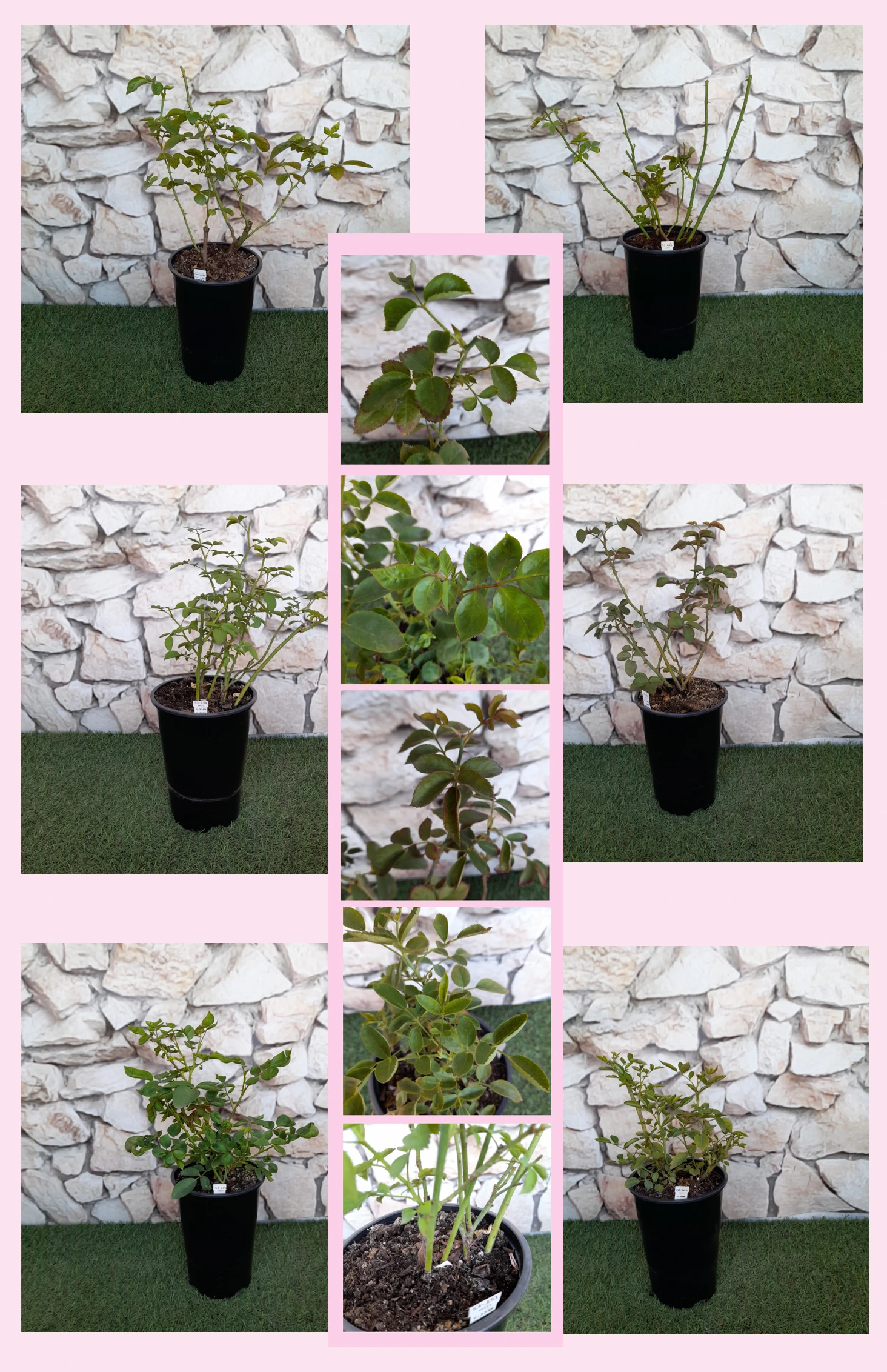
Crop overview: several varieties and growth stages in a short crop section.
Shoot system: intensive growth of fresh basal shoots on a young plant.
Root system: demonstration of a vigorous root system permeating the growing medium, by removing the pot.
Balance: mature plant with root system and shoots in harmony with each other.

Information about the videos
The video series is not a “seasonal showcase”; it illustrates the essence of pharmaROSA® own-root cultivation in a tangible way: how the plant is built up, what the root system is like and how the shoot system regenerates. The recordings were therefore made at different times and with plants at various stages of development, so mixed foliage levels and differing stages of growth may appear in the videos. They are not a ‘sample’ of the batch dispatched, but a visual explanation of how the technology works. The current condition of the rose available to order — typical for the given period and similar to what you can expect to receive in the parcel — is shown in the upper part of the product page.

pharmarosa.compharmarosa.skpharmarosa.ropharmarosa.depharmarosa.co.ukpharmarosa.sipharmarosa.czpharmarosa.atpharmarosa.plpharmarosa.hrpharmarosa.frpharmarosa.itpharmarosa.espharmarosa.bepharmarosa.nlpharmarosa.lupharmarosa.ptpharmarosa.iepharmarosa.grpharmarosa.bgpharmarosa.sepharmarosa.fipharmarosa.lvpharmarosa.ltpharmarosa.eepharmarosa.rupharmarosa.dk

Product types

Pages for private customers
Garden roses for the family garden, with minimal care  → ORIGINAL®
Premium garden roses – instant impact, a truly showpiece garden  → EXTRA®
Pages for professionals and private customers
Roses for public spaces – large areas, sustainable maintenance  → NATURAL®
Roses for projects – hedge and row planting, fast implementation  → RAPID®
For professional partners only
Production – propagation material for garden roses, wholesale  → NEONATAL®

Company details

PharmaRosa Ltd.
Company registration number: 01-09-717479
VAT number: 13075314-2-43
Plant health registration no.: HU130721
Bank account (IBAN):
HU85117631891388688400000000
BIC (SWIFT): OTPVHUHB
Bank name: OTP Bank Nyrt.