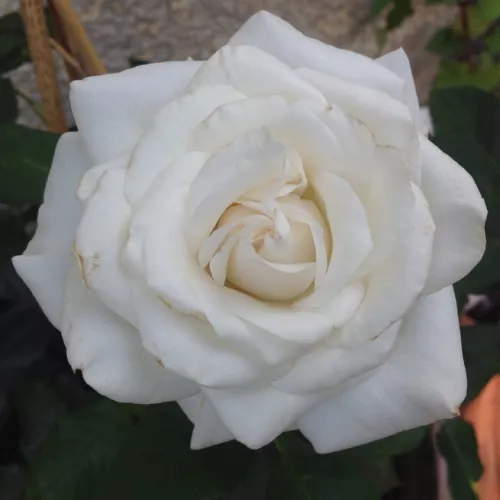
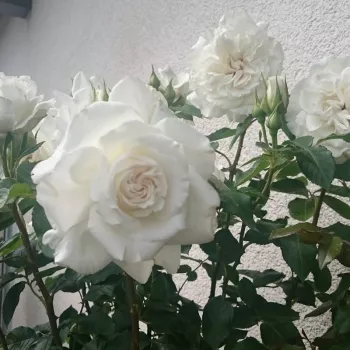
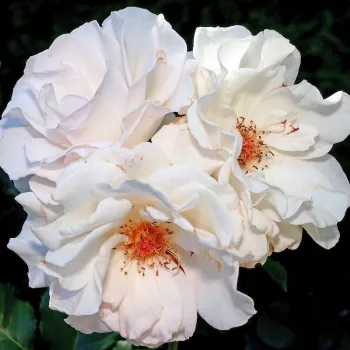
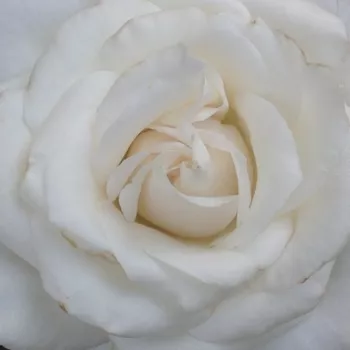
DIE ROSE IHRER MAJESTÄT – white hybrid tea rose
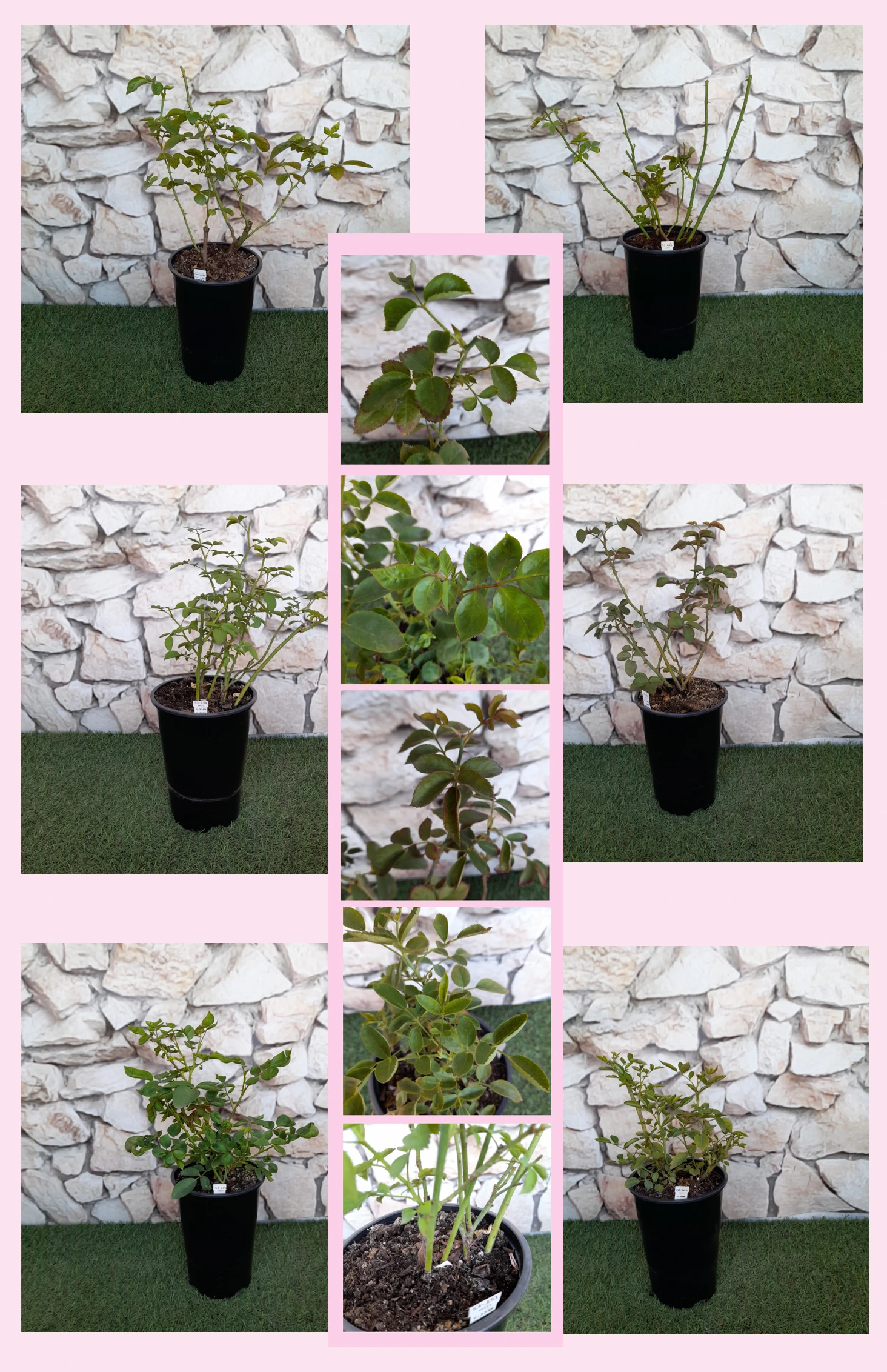
Step outside after summer rain and you will find this rose’s fragrance lingering along the path, its snow‑white blooms bringing a sense of balance to compact city front gardens and balconies. Bred as a classic hybrid tea, it offers elegance in long‑stemmed, cup‑shaped flowers that open repeatedly from early summer well into autumn, so a modest plant can still feel generously abundant. Container‑grown on its own roots, it settles reliably into small London plots where soil may be heavy but improved for drainage, and copes well with regular UK rain and wind. Over the seasons its own‑root system supports a long, steady life and easy regeneration, while the medium‑height, bushy structure suits narrow beds or 40–50 litre pots. With simple planting and routine care, you can expect roots to establish in the first year, stronger shoots the next, and full ornamental impact by the third.
Usage options
| Target area | Reasoning |
|---|
| London terraced-house front garden |
The well-proportioned, bushy habit and 70–100 cm height fit narrow front borders without overwhelming the space, creating a calm white focus against brick or railings for busy urban garden owners. |
| Large container or balcony pot (40–50 litres+) |
Its upright, hybrid tea form and strong repeat flowering give a refined look in sizeable pots, while own-root vigour supports long-term performance when paired with regular watering for beginners seeking pollinator-friendly choices. |
| Rainwater-friendly entrance planting |
Suited to improved heavy clay with good run-off, this rose works beside permeable paths or gravel strips, contributing structure where the soil is occasionally wet yet drains steadily for sustainability-focused front-garden owners. |
| Cutting patch or flowerbed for vase use |
Large, long-stemmed, snow-white blooms with a strong citrus-rose scent are ideal for cutting, offering repeat flushes through the season for simple, home-grown arrangements for homeowners who enjoy seasonal bouquets. |
| Small family garden borders |
Medium maintenance and reliable rebloom make it practical in mixed borders; occasional deadheading and light plant protection keep a tidy, elegant display for those wanting beauty with few gardening tasks. |
| Evergreen-backed focal point |
The pure white flowers stand out against darker shrubs or low hedging, with a moderately dense, mid-green foliage that keeps the plant attractive even between flushes for hobby gardeners planning simple structure. |
| Own-root long-term planting |
Being grown on its own roots supports steady regeneration after pruning or weather damage and avoids graft-related issues, helping maintain a stable look over many years for gardeners seeking long-lived plantings. |
| Partially shaded terrace or side return |
Its suitability for partial shade and strong scent mean it still performs and perfumes the air in east- or west-facing spots that miss full midday sun for urban residents making the most of limited light. |
Styling ideas
- Regal Entrance – Line a narrow path with this rose underplanted with low lavender or nepeta for a white-and-soft-blue scheme – ideal for front gardens seeking calm formality.
- Balcony Calm – Plant one specimen in a 50 litre pot with trailing thyme around the base to soften edges – suited to small balconies needing easy-care elegance.
- Evening Fragrance – Place near a bench or doorway with scented herbs like sage to enjoy its strong citrus-rose perfume after rain – perfect for busy professionals unwinding outdoors.
- White Border – Combine with silver foliage such as dwarf artemisia and soft pink perennials for a restrained, romantic palette – good for compact family borders.
- Cutting Corner – Group three plants in a sunny bed for a steady supply of long-stemmed blooms for the vase – designed for home florists who like simple, reliable crops.
Technical cultivar profile
| Characteristic | Data |
|---|
| Name and registration |
Hybrid tea rose BEAinesza, marketed as DIE ROSE IHRER MAJESTÄT – white tea-hybrid rose – Ruthe; registered 2009 as BEAinesza within the hybrid tea rose commercial group. |
| Origin and breeding |
Bred in Germany in 2006 by Ines von Ruthe from undocumented parentage; later distributed by BKN Strobel GmbH & Co. KG and La Reine des Roses in continental Europe after 2009. |
| Awards and recognition |
Recognised at the Saverne International Rose Competition in 2011 as Students’ Choice for Fragrance, reflecting its notably strong, appealing scent in comparative trials. |
| Growth and structural characteristics |
Medium-height, bushy shrub reaching about 70–100 cm tall and 35–50 cm wide, with moderately dense, mid-green, slightly glossy foliage and a moderately thorny framework. |
| Flower morphology |
Large, double, cup-shaped hybrid tea blooms, typically solitary on stems, with 26–39 petals; strongly remontant, producing generous repeat flushes, though spent flowers may need deadheading. |
| Colour data and phenology |
Crystal-clear snow-white petals (RHS 155C–155D) with minimal fading; buds may show a gentle greenish-white tip, opening to pure white flowers that retain a bright appearance until ageing. |
| Fragrance and aroma |
Pronounced, distinctive perfume combining classic rose notes with a fresh citrus character; fragrance strong enough for close seating areas, entrances and cutting for scented indoor arrangements. |
| Hip characteristics |
Due to its double flowers, hips form only occasionally; when present they are small, spherical, orange-red (RHS 40A), roughly 6–9 mm in diameter, offering modest late-season interest. |
| Resistance and winter hardiness |
Rated H7 and hardy to around −21 to −18 °C (USDA 6b); disease resistance generally medium, so routine, non-intensive care and occasional protection help maintain healthy foliage. |
| Horticultural recommendations |
Suitable for flowerbeds, groups, hedging rhythm, containers and terraces; plant about 40 cm apart in beds, 35 cm in hedges, or use as a 70 cm solitary, in well-drained soil with regular watering. |
DIE ROSE IHRER MAJESTÄT – white tea-hybrid rose – Ruthe offers repeat flowering, refined cut blooms and lasting structure on its own roots; a thoughtful choice if you favour quietly elegant, long-term plantings.