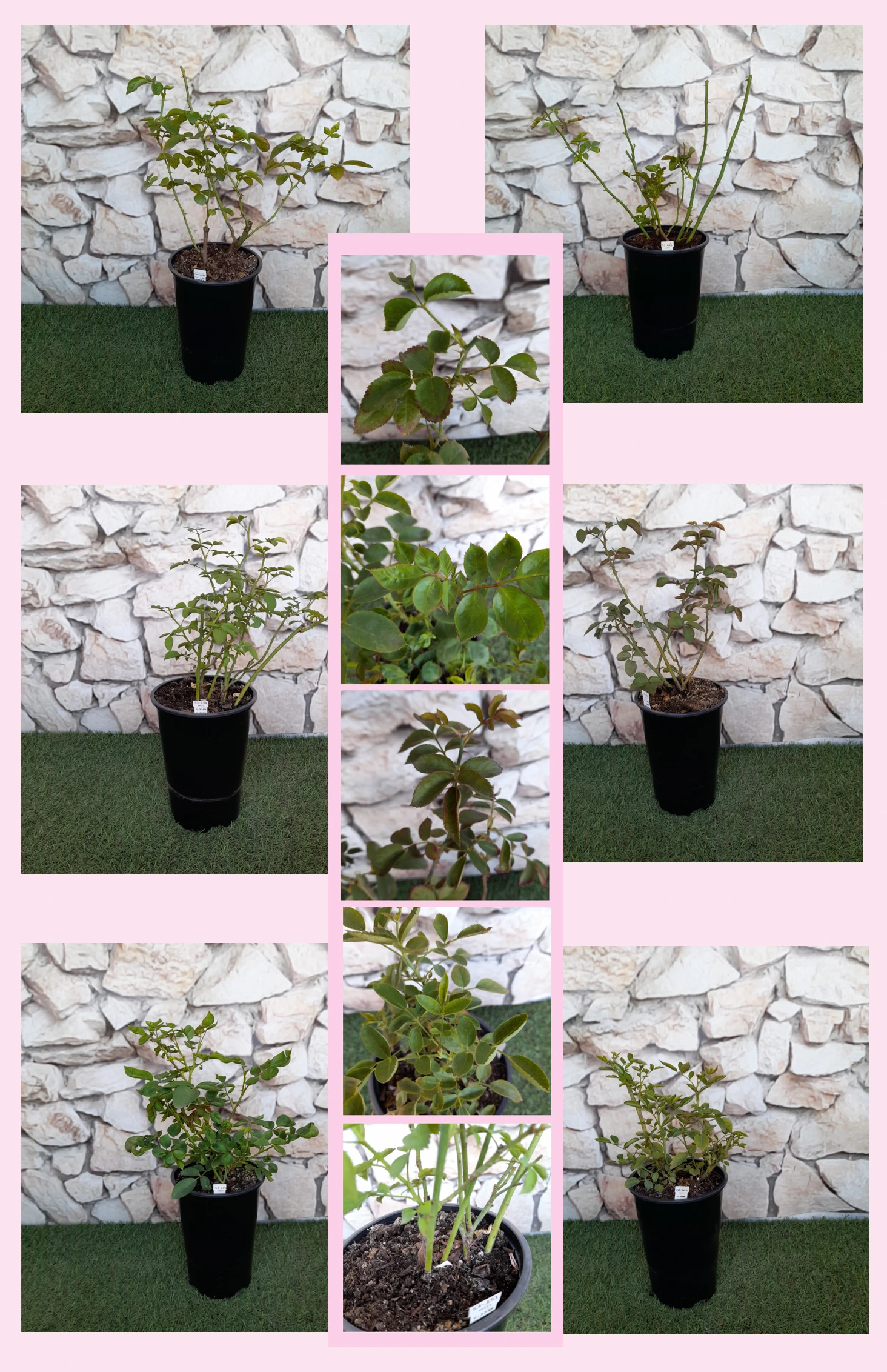
DISCUS AMORINA – orange-red landscape shrub rose – De Ruiter
Step out after rain into a small London front garden and DISCUS AMORINA greets you with a low, colour-rich haze of single blooms, its compact habit thriving even where winds and showers test planting schemes, especially in districts with persistent wet, heavy soils that challenge less resilient roses. Bred as a modern landscape shrub, it offers remarkably easy-care performance: modest pruning, modest feeding, and a reliable repeat flush that keeps borders lively from early summer to autumn. The own-root form builds quietly underneath, promising longevity and strong regeneration, so an initial season of root-building leads into sturdier top growth and then, by the third year, a settled, full display. Dense, glossy foliage frames bright orange-red to coral-pink flowers that leave accessible stamens for visiting bees, making it a gently pollinator-supportive choice in paved, rainwater-fed spaces. Neat proportions suit 40–50 litre planters by the front door or along railings, while high resilience to common rose diseases supports low-input, sustainable planting. Over time, this reliable shrub becomes a calming, balanced feature in family gardens, softening brickwork and gravel without asking for complicated gardening skills.
Usage options
| Target area | Reasoning |
|---|
| Small urban front garden bed |
The compact 40–60 cm height and spread make planting along short front boundaries straightforward, providing a defined, flower-rich line that does not overwhelm narrow pavements or paths, ideal for the time-poor homeowner. |
| Low-maintenance family border |
Bred as a landscape shrub with low pruning and feeding needs, this rose offers dependable structure and colour through the season with minimal intervention, fitting busy households seeking reliable impact for the casual gardener. |
| Rainwater-fed, sustainable planting strip |
Suited to sites where rainfall and runoff can be directed into planting pockets, it copes well with changeable moisture, supporting a greener, less paved frontage that still looks intentional for the eco-conscious city-dweller. |
| Coastal or wind-exposed front garden |
The sturdy, bushy habit and good general disease resistance help it hold its form and foliage even where wind-driven showers and cool, damp air can challenge roses, reassuring the weather-aware buyer. |
| Patio container (40–50 litre minimum) |
In a generous, well-drained 40–50 litre container, roots can develop steadily, supporting season-long flowering near seating areas or entrances without dominating limited space, convenient for the balcony-based gardener. |
| Pollinator-friendly mixed planting |
The single flowers with exposed stamens offer easier access for insects than many double varieties, allowing you to link ornamental effect with wildlife interest in modest spaces, attractive to the nature-aware beginner. |
| Long-lived structural planting in small beds |
Own-root growth promotes steady regeneration from the base and a stable outline over many years, maintaining ornamental value even after harsher winters or pruning, which suits the forward-planning owner. |
| Mass or hedge-style planting in family gardens |
Recommended densities and spacing allow you to form cohesive, low hedges or drifts that read as a single, colourful band, making path edges and play-lawn boundaries look deliberate yet relaxed for the design-conscious householder. |
Styling ideas
- Terraced-Entry Glow – Line a short London terrace front with a single row of DISCUS AMORINA underplanted with low Nepeta, using a permeable gravel path to soak up rainwater – for urban homeowners wanting simple brightness and easy care.
- Soft-Edge Hedge – Plant a loose hedge along a drive or shared pathway at the recommended spacing, weaving in Salvia officinalis for contrast and light scent – for families needing a gentle boundary without hard fencing.
- Rain-Garden Ribbon – Use DISCUS AMORINA in a slightly sunken bed that catches roof runoff, framing it with ornamental grasses and autumn Aster dumosus ‘Apollo’ – for sustainability-minded gardeners managing rain on-site.
- Compact Courtyard Trio – Group three plants in 45–50 litre clay pots with free-draining, peat-free compost and trailing thyme at the rim – for balcony and courtyard users wanting structure without deep flowerbed digging.
- Play-Zone Backdrop – Create a low, colourful strip behind a lawn play area, mixing DISCUS AMORINA with Japanese anemone ‘Fantasy Belle’ for late-season interest – for families after long-season colour with modest maintenance.
Technical cultivar profile
| Property | Data |
|---|
| Name and registration |
DISCUS AMORINA – orange-red landscape shrub rose from De Ruiter’s Amorina collection; modern shrub (landscape shrub) within the bed rose group; exhibition category: shrub rose. |
| Origin and breeding |
Bred by De Ruiter Innovations BV in the Netherlands, breeding year 2019; parentage not disclosed; introduced through De Ruiter Innovations B.V. with a focus on reliable landscape performance. |
| Awards and recognition |
Received a high-scoring award at The Hague rose trials in 2024, confirming its ornamental quality and garden-worthiness under independent trial conditions. |
| Growth and structural characteristics |
Compact, bushy shrub reaching 40–60 cm in height and spread, with dense, mid-green glossy foliage and moderate prickliness, forming a low, even mound suitable for edging and mass planting. |
| Flower morphology |
Small, flat, single blooms with 5–12 petals, produced in clusters; remontant with notably abundant second flowering, ensuring repeated flashes of colour across the main growing season. |
| Colour data and phenology |
Bright orange-red base (RHS 33B outer, 42A inner), opening deep and gradually shifting to vivid orange-red, then soft coral pink as blooms age, creating a gentle multi-tone effect before petal drop. |
| Fragrance and aroma |
Fragrance is very weak and barely noticeable, making it suitable where strong scent is not required or could conflict with nearby seating or windows; interest centres on colour and form rather than perfume. |
| Hip characteristics |
Produces small, spherical rose hips in moderate quantities, around 6–10 mm across, bright red in colour, adding a discreet late-season accent once flowering has eased. |
| Resistance and winter hardiness |
Good overall disease resistance with noted strength against powdery mildew and solid performance against black spot and rust; hardy to approximately –26 to –23 °C (RHS H7, USDA 5b, Swedish Zone 4). |
| Horticultural recommendations |
Best in flower beds, low hedging and park-style plantings; recommended spacing 30–55 cm depending on use, with low maintenance needs and suitability for heat- and stress-prone urban environments. |
DISCUS AMORINA offers compact repeat flowering, good disease resilience and long-lived own-root reliability for effortlessly bright, sustainable front gardens; a thoughtful choice if you prefer enduring structure with modest care needs.