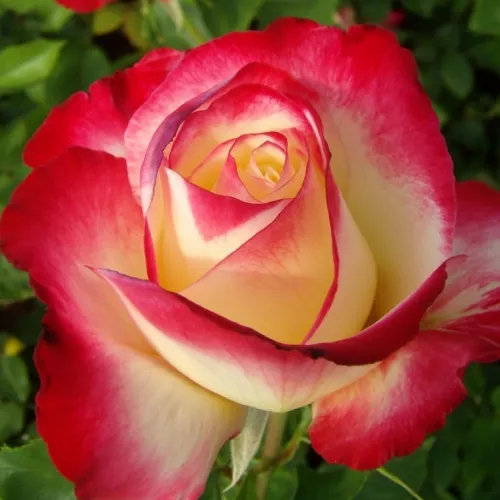
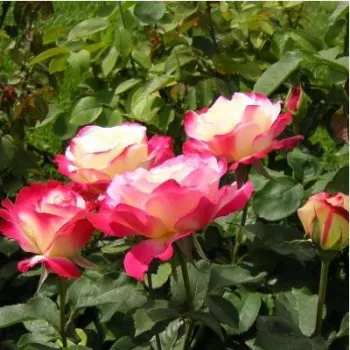
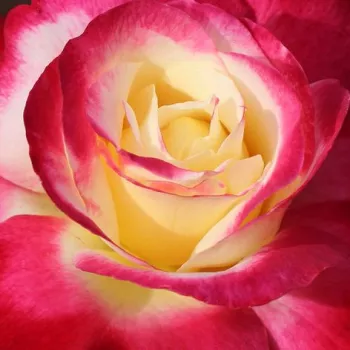
DOUBLE DELIGHT – red-and-white hybrid tea rose
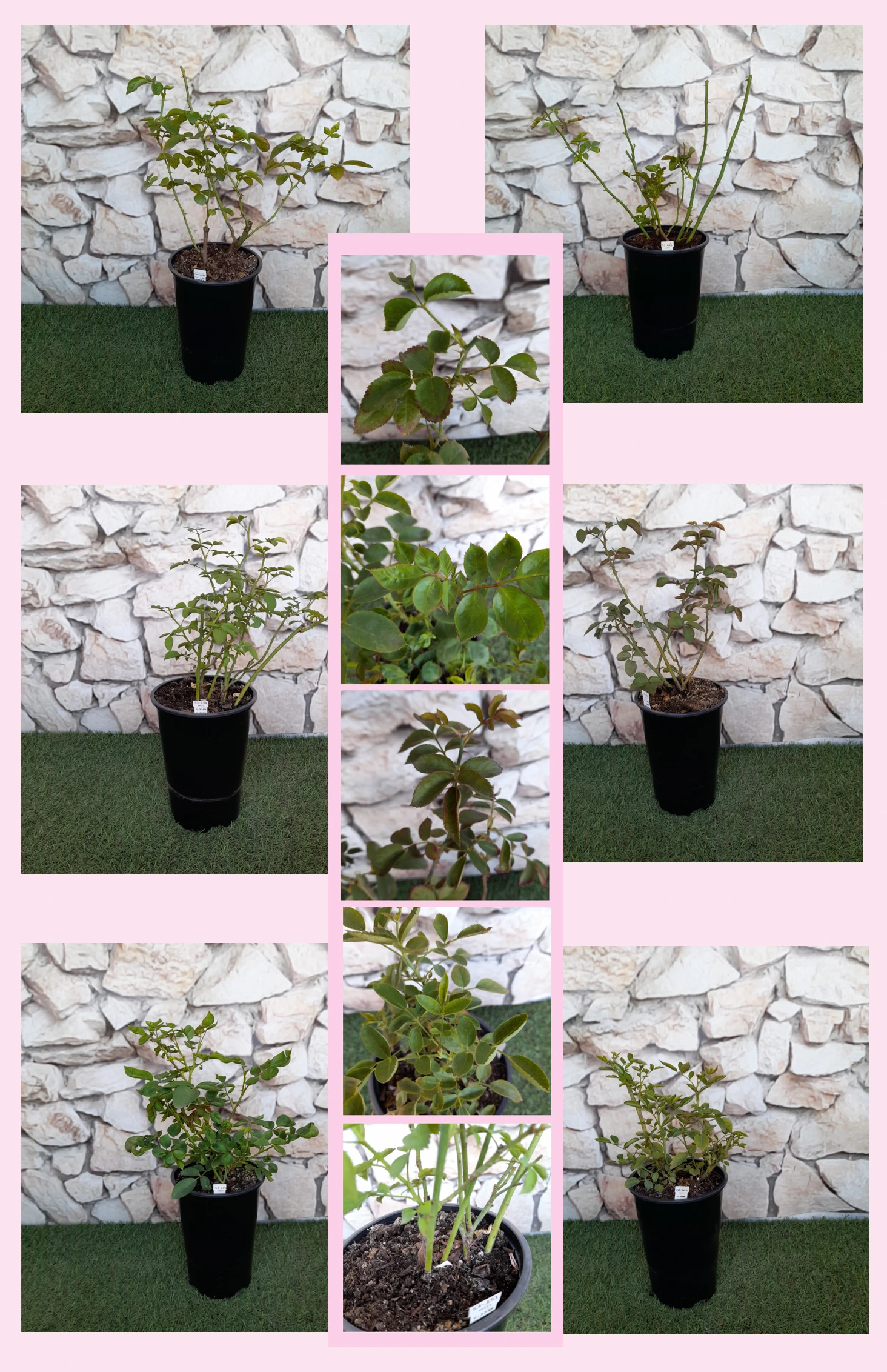
Step out after rain and meet the fragrance that made Double Delight a legend: large, creamy blooms boldly edged in carmine-red, releasing a rich, sweet‑spicy perfume that carries across a small garden. This bushy hybrid tea forms a reliable upright structure with glossy foliage, bred for proven longevity and award‑winning performance. In typical British clay it settles well once drainage is considered for wetter, wind‑exposed plots where rain and breeze often arrive together. Own‑root planting supports steady regrowth, long‑term stability and an easy‑care rhythm: establish the roots in year one, watch confident new shoots build in year two and enjoy full ornamental value from year three. In containers of at least 40–50 litres it offers a showpiece front‑door welcome, while its repeat‑flowering abundance keeps vases and borders filled through summer and early autumn.
Usage options
| Target area | Reasoning |
|---|
| Feature rose for a London terraced front garden |
The large, high‑centred blooms and bold red‑and‑cream bicolour instantly read from the pavement, giving a single bush real street presence in a modest urban plot. Its bushy habit forms a tidy vertical accent without overwhelming the space, ideal for design‑led front gardens seeking strong visual impact for beginners. |
| Statement container on balcony or patio (40–50 L+) |
In a substantial, well‑drained 40–50 litre pot, Double Delight establishes a stable, long‑lived framework of own‑root growth, responding well to consistent watering from collected rainwater. This setup suits paved city spaces that heat up in summer, bringing high fragrance right to seating height for balcony-owners. |
| Cut‑flower source for the home |
High‑centred, exhibition‑type buds and long, straight stems make this cultivar ideal for cutting, with flowers that open slowly and hold both colour and shape indoors. The very strong perfume means just a few stems will scent a room, rewarding routine deadheading with regular vases for homeowners. |
| Low‑intervention family border with busy schedules |
With good resistance to black spot and powdery mildew and a generally low maintenance requirement, Double Delight fits into borders where time is limited. Occasional deadheading and basic feeding are usually enough to keep it blooming, making it realistic for those who want impact without fuss for busy-gardeners. |
| Long‑term specimen shrub in small to medium gardens |
As an own‑root hybrid tea, the plant builds a durable, rejuvenating framework rather than relying on a graft union that can fail over time. This underpins a long lifespan and reliable ornamental value, so one carefully sited bush can anchor a planting plan for many years for long-term-planners. |
| Rain‑aware, clay‑based urban planting |
Once planted into improved, free‑draining clay, the strong root system copes well with typical UK rain patterns, while its bushy habit and firm petals hold up respectably in exposed, breezy streets, supporting designs that manage frequent showers and wind in compact plots for city-gardeners. |
| Season‑long colour focus in a mixed bed |
Remontant flowering with a generous second flush means this rose returns repeatedly from early summer into autumn, with blooms that fade only slightly in sun. This keeps a focal point of colour going between perennials, ensuring borders never look bare for colour-lovers. |
| Lightly shaded or variable‑sun situations |
Its tolerance of partial shade lets you place it where walls or neighbouring houses steal some direct light, a common issue in terraced settings. The strong fragrance still carries, and the bicolour remains vivid even without full‑day sun, making marginal spots feel purposeful for urban-beginners. |
Styling ideas
- Front-door showpiece – Plant a single Double Delight in a wide, 50 L container by the entrance and underplant with soft trailing thyme to soften the rim – ideal for homeowners wanting a fragrant welcome home.
- Romantic ribbon – Line a short front path with spaced bushes and weave between them with Nepeta and pale pink verbena for a “girly”, scented walkway – perfect for terrace residents craving everyday indulgence.
- Sunset mix – Combine Double Delight with Crocosmia ‘Lucifer’ and bronze grasses to echo its red accents while the cream petals lighten the scheme – suited to design-conscious gardeners seeking drama with low care.
- Calm-and-cream – Pair with white gaura and lavender in a narrow border so the bicolour blooms act as soft punctuation amid airy, pollinator plants – good for sustainable urban plots needing gentle structure.
- Cutting corner – Group two or three plants with sage and verbena in an easy‑reach bed, balancing repeat flowering and fragrance with supportive perennials – ideal for hobby florists wanting regular homegrown stems.
Technical cultivar profile
| Parameter | Data |
|---|
| Name and registration |
Hybrid tea rose, commercial type hybrid tea; registered as ANDeli, traded as Double Delight Hybrid tea rose ANDeli; American Rose Society exhibition name Double Delight. |
| Origin and breeding |
Bred in the United States by Herbert C. Swim, A. E. Ellis and A. W. Ellis (Armstrong Nurseries); cross of ‘Granada’ × ‘Garden Party’; introduced and registered in 1977. |
| Awards and recognition |
Highly decorated cultivar: Baden-Baden and Rome Gold Medals (1976), Geneva Most Fragrant Rose (1976), All-America Rose Selections Winner (1977), Rose Hall of Fame World’s Favourite Rose (1985), Gamble Fragrance Award (1986). |
| Growth and structural characteristics |
Bushy, upright shrub reaching around 110–150 cm in height and 75–105 cm spread; moderately dense, glossy medium‑green foliage; moderately thorny stems; self‑cleaning is poor so spent blooms benefit from manual removal. |
| Flower morphology |
Large, double flowers with 26–39 petals, solitary on stems; classic high‑centred, pointed buds of exhibition hybrid tea type; remontant with abundant second flush; ideal for cutting, display and specimen planting in small gardens. |
| Colour data and phenology |
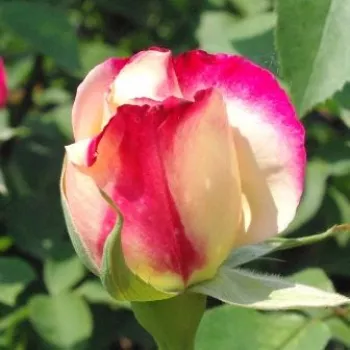
Cream‑white petals edged with intense carmine‑red; red zone deepens in strong sun with very good colour retention; bicolour develops from ivory‑pink buds through raspberry‑edged opening blooms to softly blended red, white and salmon tones. |
| Fragrance and aroma |
Very strong, rich sweet‑spicy rose fragrance, noticeable from a distance; valued in fragrance awards and ideal for perfumed seating areas or cutting; double blooms limit pollinator access so it is primarily an ornamental choice. |
| Hip characteristics |
Rose hips form only occasionally due to fully double flowers; where present, expect small, spherical red hips about 10–14 mm in diameter, offering minor late‑season interest rather than a primary design feature. |
| Resistance and winter hardiness |
Rated H7, hardy to approximately −26 to −23 °C (USDA 5b; Swedish Zone 4); good resistance to powdery mildew and black spot, moderate susceptibility to rust; performs well in warmth but needs regular watering during prolonged drought. |
| Horticultural recommendations |
Suitable for flower beds, specimen planting and cutting; tolerates partial shade; plant 65 cm apart in mass, 55 cm for hedging, 100 cm as specimen; aim for about 2.5 plants/m² square or 2.9 plants/m² hexagonal spacing for cohesive displays. |
DOUBLE DELIGHT – red-and-white hybrid tea rose ANDeli offers legendary fragrance, repeat flowering and long-lived own-root reliability, making it a thoughtful choice for those planning a lasting, characterful garden.