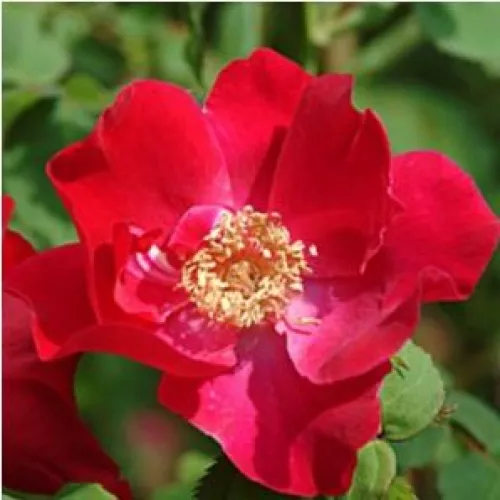
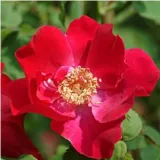
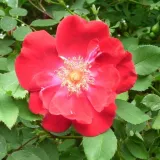
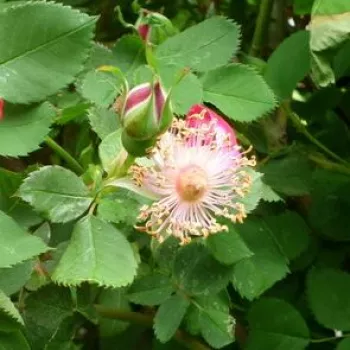
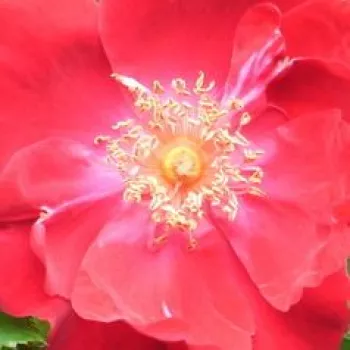
EDDIE'S JEWEL – red wild rose - Eddie
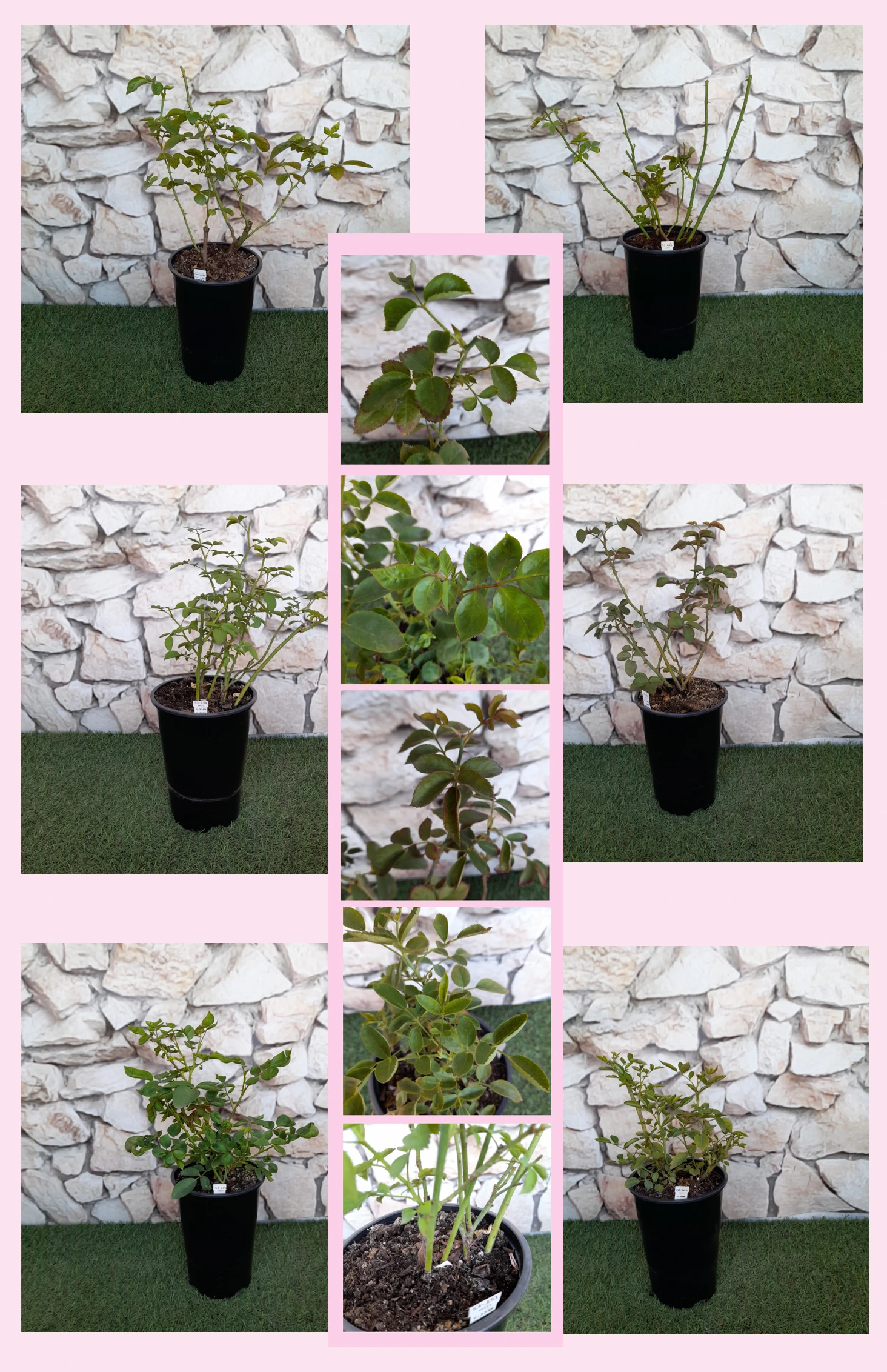
With its natural, upright habit and finely textured foliage, Eddie’s Jewel brings a quietly sculptural presence to small London front gardens and narrow borders, while coping well with exposed sites and persistent rain and wind in British gardens. Its single, open flowers offer pollinators easy access to pollen, then mature into abundant, vivid red hips that extend the display well into winter for a long season of changing interest. As an own‑root rose it offers reassuring longevity, rebuilding from the base if damaged and keeping its shape without graft worries, so you can enjoy reliable structure with minimal intervention. Over time it settles into the garden rhythm – year‑by‑year strengthening roots in the first season, sending more confident new shoots in the second, and by the third year providing its full ornamental impact with arching stems, rich colour and hips that support wildlife. Its barely thorny canes are a practical choice for busy, shared spaces, giving you a more carefree route to a sustainable, rain‑friendly, wildlife‑supporting front garden.
Usage options
| Target area |
Reasoning |
| Pollinator‑friendly front garden |
Single, open flowers and exposed stamens make this rose particularly inviting for bees and hoverflies, giving a strong nectar stop along terraced‑house front paths with very little upkeep for beginners |
| Long‑season wildlife hedge |
Once‑a‑year blossom is followed by masses of bright red hips, providing autumn and winter colour as well as food and cover for birds, building a resilient living boundary appreciated by wildlife‑lovers |
| Low‑maintenance structural backdrop |
The tall, upright shrub form and moderately dense, matt foliage create a calm green screen that needs only periodic thinning, ideal as a quiet backdrop for perennials in family gardens managed by busy‑owners |
| Own‑root, long‑lived specimen |
Supplied on its own roots, it avoids graft failure, ages steadily and can regenerate from the base after hard pruning or weather damage, giving durable value in compact urban spaces for long‑term‑planners |
| Rainwater‑wise clay garden planting |
Well suited to typical UK conditions where wet spells and heavy clay are common, it responds well to improved drainage and rainwater harvesting, fitting neatly into sustainable planting plans for eco‑gardeners |
| Soft, low‑prickle family boundary |
With barely thorny stems, this shrub is easier to maintain along shared paths and play areas, reducing snagging on clothes and making seasonal pruning less daunting for young‑families |
| Partial‑shade city corners |
Tolerating partial shade, it copes with the light levels between buildings or behind railings, still flowering and fruiting reliably where many sun‑loving roses struggle, encouraging experimentation by town‑gardeners |
| Naturalistic park‑style planting |
Its informal, wild‑rose character and self‑retaining hips suit relaxed, lightly managed schemes that echo parkland planting, with moderate disease resistance supporting low‑input care for casual‑gardeners |
Styling ideas
- Pollinator‑path – line a narrow front path with Eddie’s Jewel underplanted with lavender and nepeta to create a bee‑rich walkway – ideal for nature‑minded city homeowners
- Hip‑hedge – plant a loose row along a boundary and let the hips form a red autumn ribbon, paired with ornamental grasses – suited to wildlife‑friendly family gardens
- Rain‑border – position near a downpipe in a prepared, free‑draining bed with sage and thyme, soaking up diverted rainwater – for sustainability‑focused urban gardeners
- Soft‑screen – use as a tall, low‑prickle screen between sitting area and pavement, with airy companions like baby’s‑breath – perfect for overlooked terrace plots
- Shade‑niche – tuck into a light‑shade corner with euonymus groundcover and hardy geraniums for a woodland‑edge feel – good for beginners greening awkward spaces
Technical cultivar profile
| Property |
Data |
| Name and registration |
EDDIE'S JEWEL – Park‑shrub wild rose, shrub rose group, Hybrid Moyesii type; trade names Eddie’s Jewel / Eddie. ARS exhibition name Eddie’s Jewel; collection: Park – shrub rose. |
| Origin and breeding |
Bred by J. H. Eddie, H. M. Eddie and Sons Nursery, Canada; Rosa moyesii hybrid × ‘Donald Prior’. Introduced and registered in 1962 as a hardy shrub for landscape and park use. |
| Growth and structural characteristics |
Upright shrub 210–310 cm high, 150–220 cm spread, moderately dense, matt medium‑green foliage and barely thorny canes; flat flowers in clusters, weak self‑cleaning with hips forming on spent blooms. |
| Flower morphology |
Single to lightly petalled blooms (5–12 petals), small size 0.5–1.5 in, flat shape in cluster‑flowered inflorescences; once‑flowering in early season with a concentrated but striking display. |
| Colour data and phenology |
Strong, saturated ruby‑red flowers (RHS 53A–53B; ARS mr). Buds dark ruby with blackish tone, opening flame‑red, then deepening from carmine to dark maroon; very good colour retention without noticeable fading. |
| Fragrance and aroma |
Very weak floral aroma, often perceived as unscented in garden conditions; primary ornamental value lies in flower colour, natural shrub form and decorative hips rather than fragrance intensity. |
| Hip characteristics |
Produces abundant bottle‑shaped hips 15–25 mm in diameter, in a vivid bright red that persists into winter; hips form readily as spent flowers remain, contributing to wildlife value and seasonal interest. |
| Resistance and winter hardiness |
Hardy to approximately −21 to −18 °C (RHS H7, Swedish zone 3, USDA 6b). Moderate resistance to black spot, powdery mildew and rust; generally reliable with routine monitoring in humid seasons. |
| Horticultural recommendations |
Use as park shrub, specimen, or informal hedge; spacing 110–205 cm depending on role. Tolerates partial shade; prefers improved drainage on heavy clay. Maintenance medium, with occasional pest and disease checks. |
Eddie's Jewel offers pollinator‑friendly flowers, long‑lasting hips and forgiving structure in an own‑root form that matures steadily, making it a thoughtful choice for those planning a resilient family garden.