EMERAUDE D'OR – golden-yellow hybrid tea rose - Delbard-Chabert
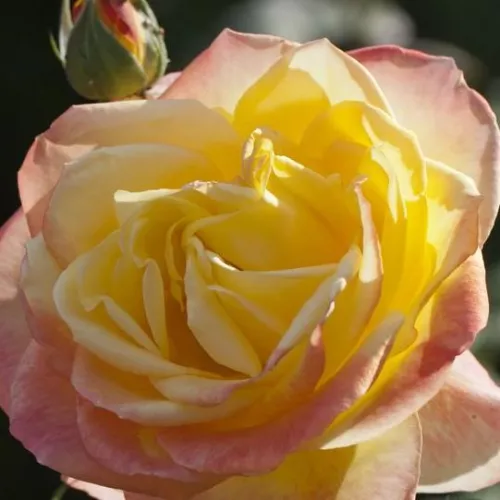
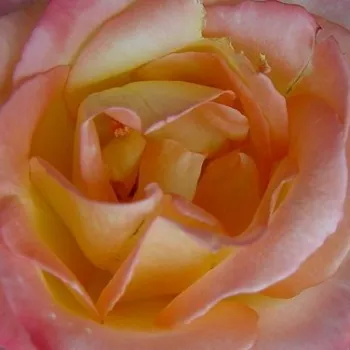
Imagine your front garden glowing after summer rain: EMERAUDE D’OR brings golden, cup-shaped blooms on an upright, very bushy plant that copes reliably with changeable UK weather and heavier soils in breezy, coastal-style gardens. As an own-root shrub it offers long-term stability, quietly building a strong framework for years of flowers with modest, occasional care. Plant once, then watch it move from root-building in year one, to confident height in year two, before reaching full ornamental impact by year three. Its large, exhibition-style blooms open from amber buds, shifting from pure golden yellow to glowing carmine-pink, giving a romantic, “girly” front-door welcome even where space is tight. In larger beds it works as a reliable focal specimen, perfect for homeowners who want classic roses without constant fuss.
Usage options
| Target area | Reasoning |
|---|
| Sunny terraced-house front garden |
The upright, very bushy habit forms a vertical accent that fits neatly into narrow London-style front plots, giving height and colour without taking over the whole frontage, ideal for a simple, tidy look for beginners. |
| Feature rose in a mixed flowerbed |
Large, solitary hybrid tea blooms in changing golden-yellow to pink tones create a strong focal point among perennials, drawing the eye while still pairing easily with purples, blues and soft grasses for design-conscious gardeners. |
| Low-maintenance specimen in a small lawn |
Planted alone at the recommended wider spacing, the plant develops into a tall, upright shrub that looks impressive with only occasional deadheading and routine checks, suiting time-pressed homeowners. |
| Rainwater-friendly clay or chalky beds |
With careful soil preparation for drainage, EMERAUDE D’OR adapts well where rain and wind are frequent companions through the season, providing reliable structure and colour for sustainability-minded urbanites. |
| Informal rose-and-perennial hedge |
At 90 cm spacing it forms a loose, flowering line; the height creates privacy while the moderately dense, dark green foliage with a bronze tint blends attractively with shrubs and small evergreens for families. |
| Cutting patch for home bouquets |
The long, straight stems and solitary hybrid tea flowers are ideal for cutting; you can bring the golden-to-carmine colour shifts indoors for vases without needing specialist florist skills as a hobbyist. |
| Own-root long-term planting in family gardens |
Supplied as an own-root plant, it regenerates well from the base, maintains variety-true shoots and offers steady performance over many years, reducing replacement and replanting needs for budget-conscious gardeners. |
| Large container on a paved front area |
In a 40–50 litre peat-free container with good drainage, the upright habit and showy flowers give a smart welcome beside steps or doors, ideal where there is no soil border but you still want seasonal romance as a city-dweller. |
Styling ideas
- Rain-kissed entrance – Pair EMERAUDE D’OR with lavender in a permeable gravel strip to soak up roof run-off and give a softly scented, low-fuss front door frame – for urban eco-conscious owners.
- Golden focus – Use it as a single specimen in a small lawn circle edged with nepeta and low sage to highlight its colour shifts from yellow to pink – for families who like a clear focal point.
- City rose border – Combine with Penstemon ‘Husker Red’ and blue globe thistle so the dark foliage and blue spheres set off the warm blooms – for design-curious beginners.
- Classic cut-flower row – Plant in a straight line at generous spacing beside a path, allowing easy access for cutting long stems for vases – for hobby florists at home.
- Evergreen frame – Back it with compact Euonymus japonicus and low grasses in a narrow front bed, keeping structure all year while the rose provides seasonal drama – for busy working homeowners.
Technical cultivar profile
| Parameter | Data |
|---|
| Name and registration |
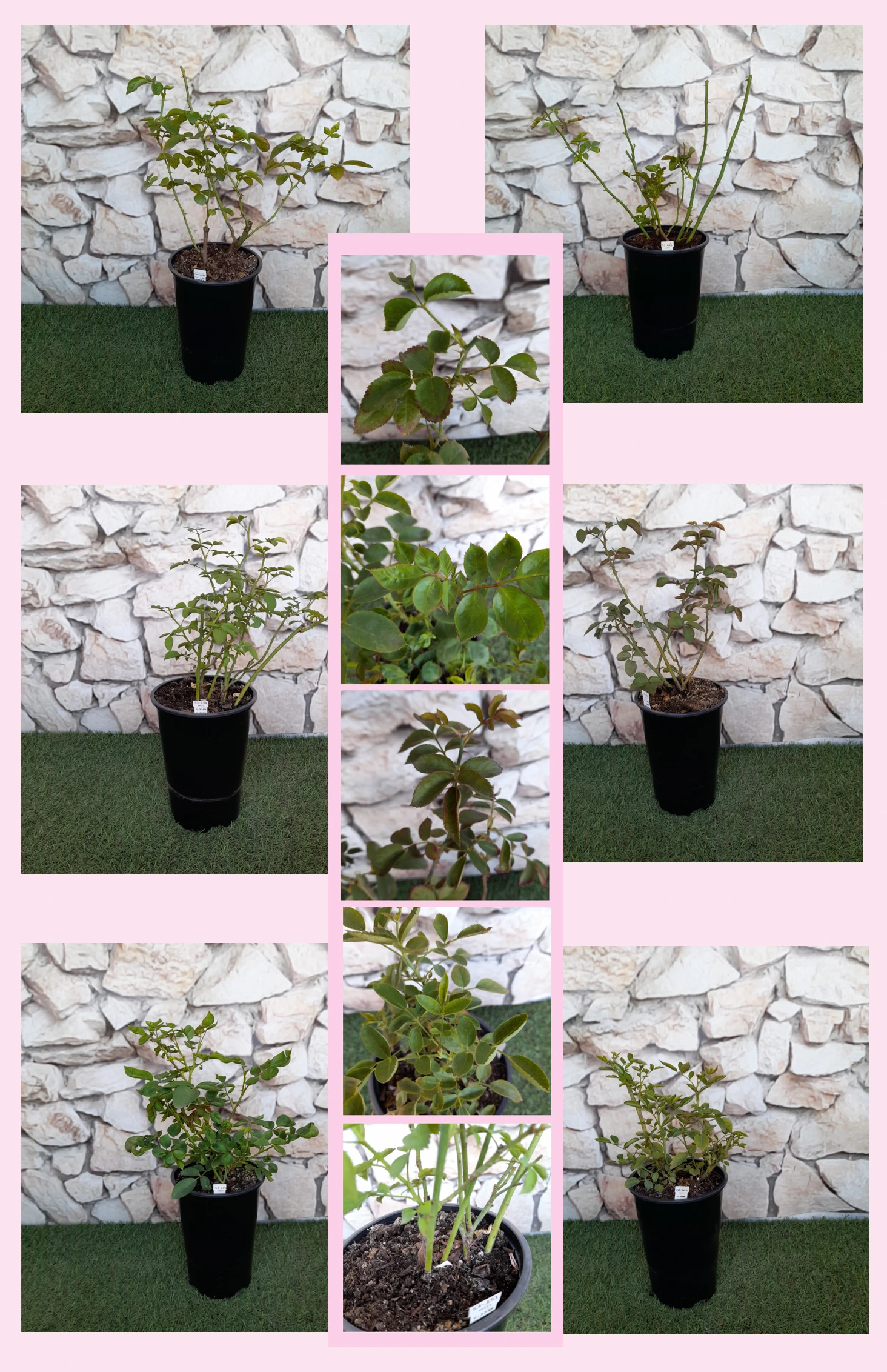
Hybrid tea rose, registered as DELrop, marketed as Emeraude d’Or; a golden-yellow exhibition-type hybrid tea suited to garden use, supplied here as an own-root, container-grown 2-litre plant. |
| Origin and breeding |
Bred by André Delbard-Chabert in France, 1965, from ‘Sultane’ × ‘Queen Elizabeth’; introduced by Pépinières et Roseraies Georges Delbard and distributed in the UK by Cuthbert in the mid-1960s. |
| Growth and structural characteristics |
Strong, upright, very bushy shrub about 140–180 cm high and 100–140 cm wide, with moderately dense, dark green, slightly glossy foliage, moderate prickles and generally neat, vertical garden presence. |
| Flower morphology |
Large, double, cup-shaped hybrid tea flowers with 26–39 petals, borne mainly singly on stems; remontant, giving generous repeat bloom flushes through the season when regularly deadheaded in garden conditions. |
| Colour data and phenology |
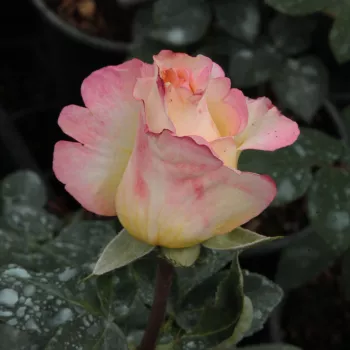
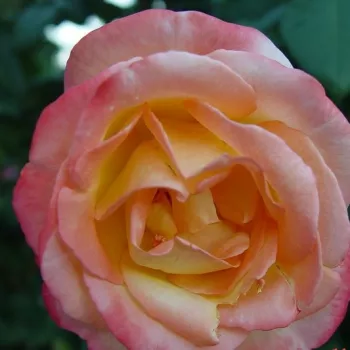
Colour shifts from deep amber buds to golden yellow with pink veils, then stronger carmine and crimson-pink tones; ARS YB, RHS 14A outer and 45B inner, with moderate colour retention and softer beige edging as blooms age. |
| Fragrance and aroma |
Fragrance is very weak and mainly noticeable at close range, with a delicate, classic rose character rather than a strong perfume; chosen primarily for its colour display and flower form rather than scent. |
| Hip characteristics |
Hip set is generally sparse due to the double flowers; where formed, hips are small, spherical, typically 14–22 mm across and orange-red, adding a discreet late-season detail without dominating the plant. |
| Resistance and winter hardiness |
Hardy to around −21 to −18 °C (RHS H7; Swedish zone 3; USDA 6b), with medium resistance to black spot, powdery mildew and rust; benefits from standard UK rose hygiene and timely, preventative care. |
| Horticultural recommendations |
Best in full sun with fertile, well-drained soil; space 90–180 cm depending on use. Deadhead spent blooms, prune annually, and improve heavy clay or chalk with organic matter to support root health and vigour. |
EMERAUDE D’OR offers tall, bushy structure, generous repeat flowering and long-term own-root reliability, making it a thoughtful choice for homeowners seeking enduring colour with moderate care in a family garden.