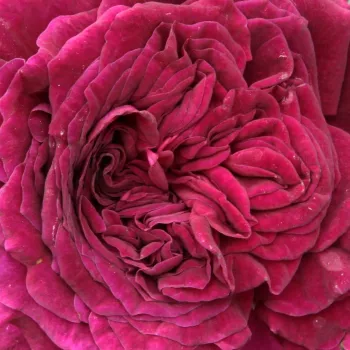
EMPEREUR DU MAROC – crimson historic perpetual hybrid rose - Guinoisseau-Flon
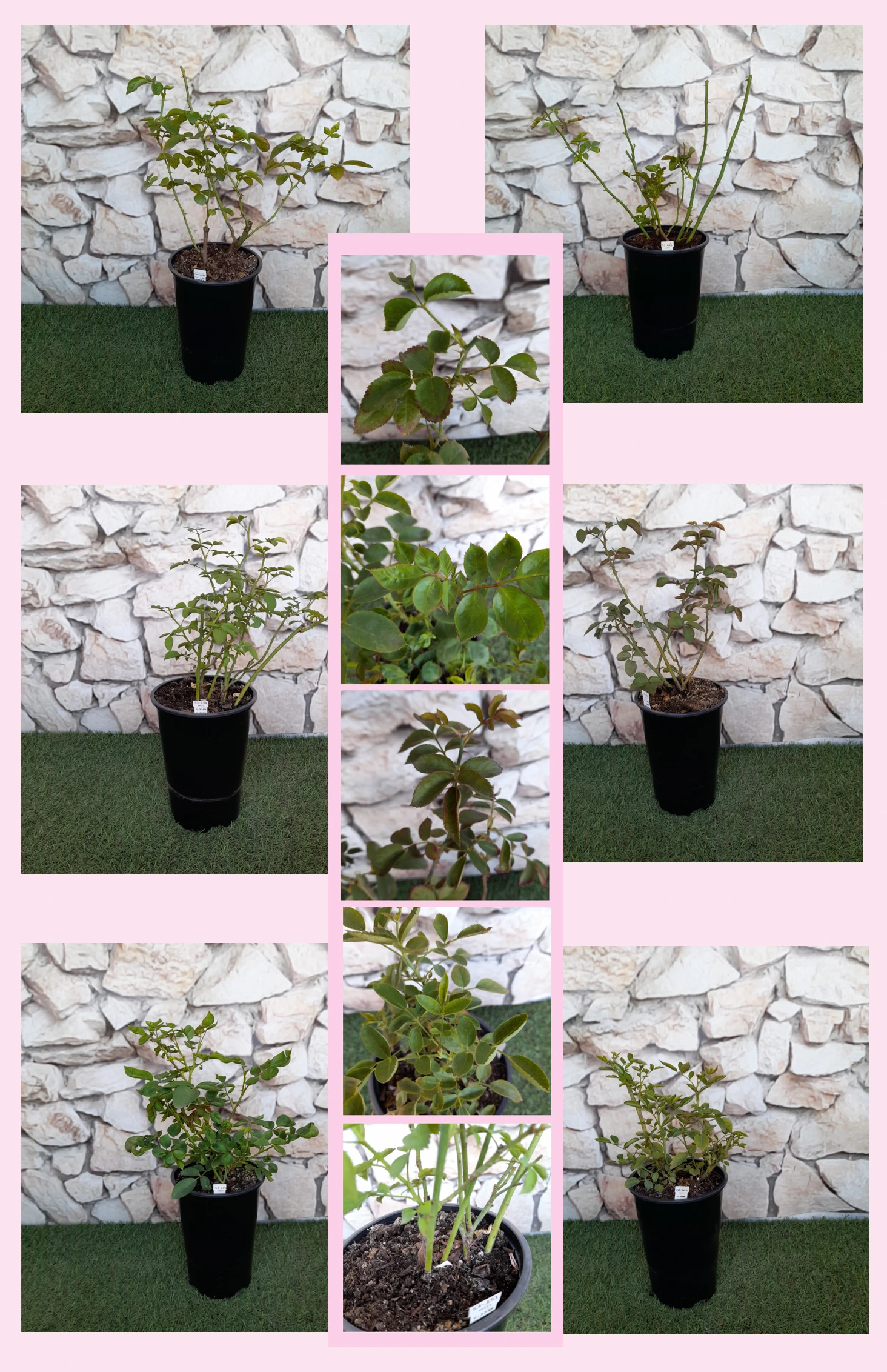
Step out to your small city front garden after rain and you are met by velvet petals and a spicy, enveloping scent, a historic rose that thrives in typical British conditions where cool, damp summers and reliable watering support healthy growth even on heavier soils with challenging drainage. This hybrid perpetual brings a sense of heritage to modern, rainwater-friendly planting, forming an upright, bushy shrub that balances structure with romance in even the narrowest London terrace plot. In its first season it quietly builds roots, in the second it extends strong shoots, and by the third year you enjoy its full ornamental presence, a long-lived, own-root rose designed to settle in and become part of your family garden’s future.
Usage options
| Target area |
Reasoning |
| Feature shrub in a London terrace front garden |
The upright, bushy habit and rich crimson rosettes create an immediate focal point in the limited depth of a small front garden, giving classic character without demanding intricate pruning knowledge, perfect for the time-pressed homeowner. |
| Low-maintenance historic rose collection |
With strong resistance to black spot, mildew and rust, this historic shrub offers the charm of an 1850s hybrid perpetual while sparing you from frequent spraying or complex regimes, ideal for the historically curious collector. |
| Romantic specimen for clay or chalky soil |
Dense, matt mid-green foliage and sturdy growth give a stable framework that copes well with regular rain and heavier garden soils, reducing the need for replanting or staking for the practically minded gardener. |
| Fragrant path-side planting |
Very strong, garden-filling perfume makes this an excellent choice beside front paths and doorways, bringing evening scent after showers and offering daily sensory reward to the busy urban commuter. |
| Rainwater-fed courtyard or front garden |
This rose prefers steady moisture and cooler conditions, so it responds well where downpipes are diverted into planted areas, turning typical UK rainfall into an asset for the sustainability-aware planner. |
| Large container on balcony or paved area |
Planted in a 40–50 litre peat-free container with good drainage, its upright framework and repeat flushes give vertical interest and long-season colour for the space-conscious city balcony-owner. |
| Cut-flower stems for the home |
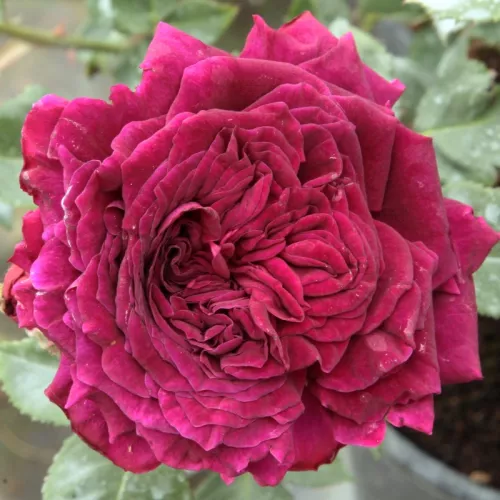
Large, very double, velvety crimson blooms on reasonably long stems lend themselves to cutting, bringing a traditional, richly scented look indoors for the creatively minded arranger. |
| Long-term family garden investment |
The own-root form supports gradual establishment and regeneration over many years, so once settled it offers reliable flowering and enduring structure with comparatively modest routine care for the forward-thinking family. |
Styling ideas
- Victorian – Underplant with lavender and catmint to echo period front gardens, letting the dark crimson flowers rise above soft blue mounds – suited to lovers of traditional streetscapes.
- Rain-garden – Position near a downpipe with gravelled swales and moisture-tolerant perennials, using its strong scent as a reward for managing runoff – ideal for eco-conscious terrace owners.
- Noir – Pair with deep purple salvia and dark-leaved heucheras to emphasise the velvety crimson, creating a dramatic but easy-care entrance – attractive to bold, design-led gardeners.
- Cottage – Mix with soft pink verbena and airy grasses, allowing the rose to provide structure while companions offer movement – appealing to those seeking relaxed, romantic planting.
- Curtain – Place as a solo specimen in gravel with low, silver foliage plants to frame the doorway, keeping maintenance simple yet striking – perfect for busy urban homeowners.
Technical cultivar profile
| Parameter |
Data |
| Name and registration |
Hybrid perpetual historic shrub rose; trade name Empereur du Maroc. Historical rose collection type, exhibition shrub category. Unregistered cultivar; ARS exhibition name Empereur du Maroc. |
| Origin and breeding |
Bred by Bertrand Guinoisseau-Flon, France, 1858; parentage ‘Géant des Batailles’ × seedling. Introduced by Eugène Verdier, reflecting classic nineteenth-century French hybrid perpetual breeding. |
| Growth and structural characteristics |
Upright, bushy shrub to about 110–160 cm tall and 80–120 cm wide, with dense, matt mid-green foliage and strong prickliness; forms a solid structural presence in mixed borders and beds. |
| Flower morphology |
Large, solitary, very double rosette blooms, typically over 40 petals, on upright stems. Repeat-flowering with a strong first flush and lighter subsequent flushes through the season. |
| Colour data and phenology |
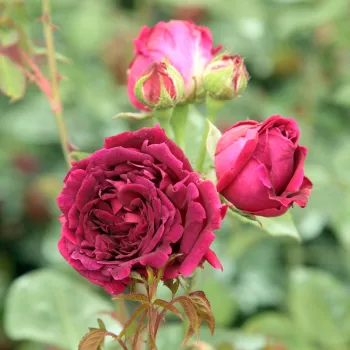
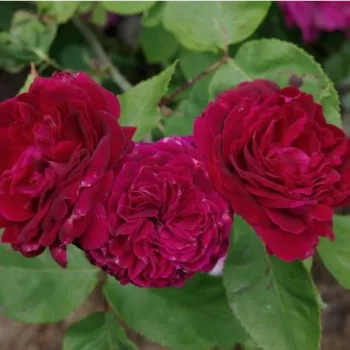
Closed buds almost blackish maroon; newly opened flowers velvety dark carmine-crimson with blackish outer petals. Full bloom deep, uniform dark crimson; colour holds best in cooler, lower-sun positions. |
| Fragrance and aroma |
Very strong, garden-filling perfume with a deeply spicy-sweet character. Best appreciated near paths, seating and doorways where air circulation carries the scent reliably in typical UK conditions. |
| Hip characteristics |
Hip set usually sparse due to very double flowers; where formed, small ovoid orange-red hips around 12–18 mm, contributing modest late-season interest without dominating the plant. |
| Resistance and winter hardiness |
Excellent cold hardiness to around −32 to −29 °C (RHS H7, Swedish Zone 5, USDA 4b). Notable resistance to black spot, powdery mildew and rust; dislikes heat and prolonged drought, needing regular watering. |
| Horticultural recommendations |
Best in cool, moist yet well-drained soil; avoid hot, dry sites. Plant about 100–110 cm apart in beds, wider as specimens. Remove spent blooms, water in dry spells, and mulch annually for sustained performance. |
Empereur du Maroc offers velvety historic blooms, powerful fragrance and dependable disease resistance on a long-lived own-root framework, making it a thoughtful choice for those planning a characterful, enduring garden.