ERINNERUNG AN BROD – crimson historical old garden rose - Geschwind
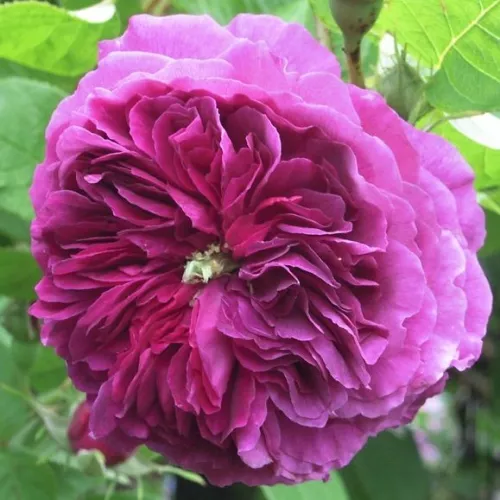
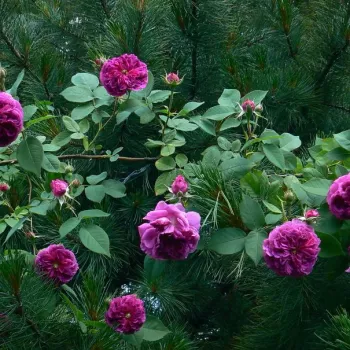
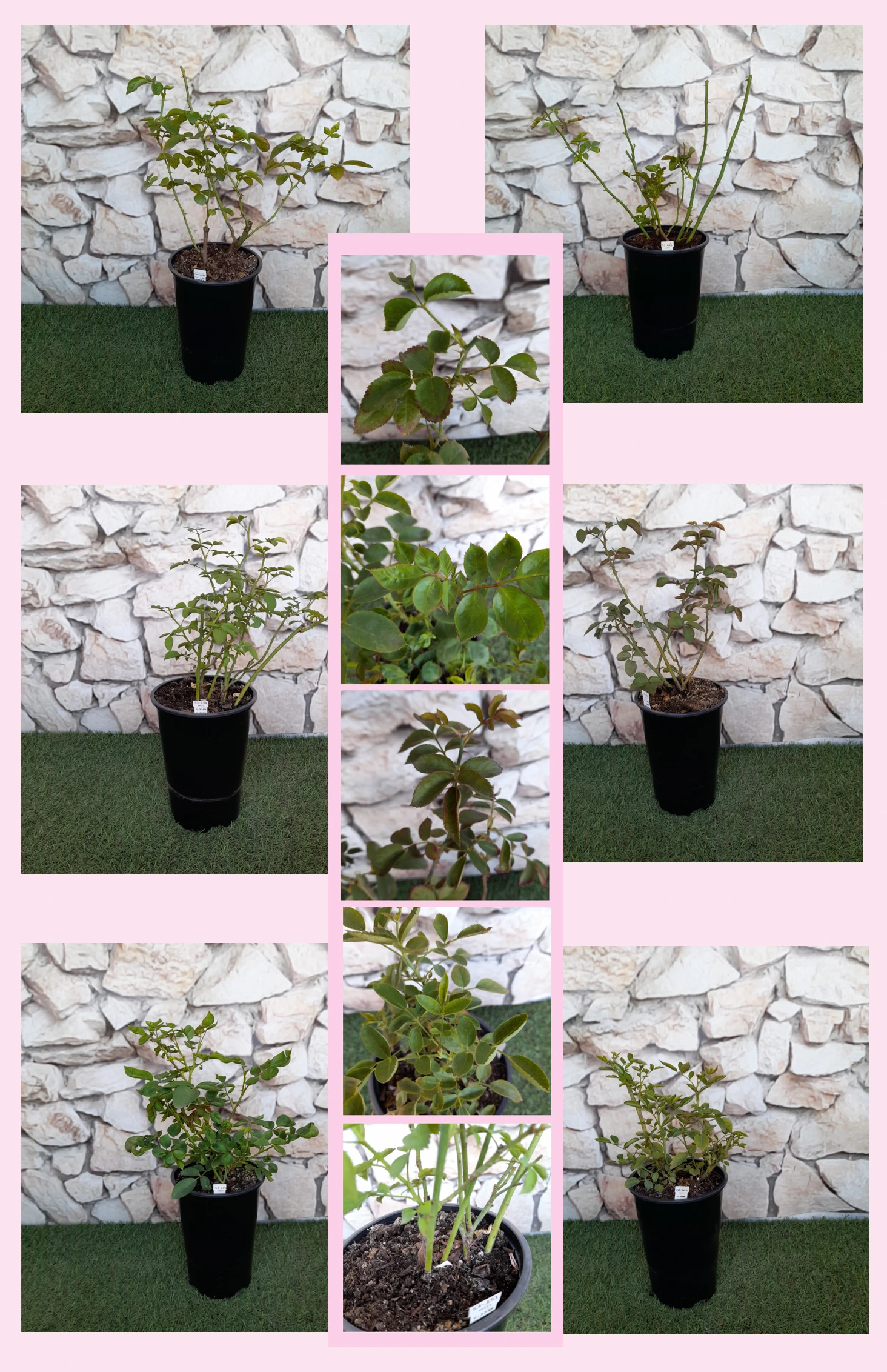
Step out after rain and meet crimson walls of bloom: ERINNERUNG AN BROD brings a once-a-year, unforgettable spectacle of deep, velvety flowers and a strong, perfumed fragrance that drifts along your path. This historic climbing rose, ideal for narrow London front gardens, copes steadily with cool, damp air and the kind of humidity-driven fungal pressure many British plots face, while rewarding even modest care. Own-root planting means a naturally resilient, long-lived framework that can regenerate from the base and keep its character over time. Give it a simple support on a fence, arch or façade and, from a careful first year of rooting through stronger second-year shoots to full presence by the third, you gain a low-fuss, high-impact vertical structure. Its dense, dark foliage stays attractive after flowering, helping you keep a green, climate-conscious frontage that feels both traditional and quietly sustainable.
Usage options
| Target area | Reasoning |
|---|
| Terraced-house front fence or railings |
Trained along metal railings or a front boundary fence, this historic climber creates a dramatic once-flowering summer curtain of crimson, while its dense foliage gives year-round structure with minimal pruning for busy beginners. |
| Arbour or pergola by the front path |
Over an arbour or compact pergola, the long, flexible canes arch to form a scented tunnel, covering the structure in large, double rosettes that make each seasonal display feel like an event for romantic garden-lovers. |
| Wall training in a small urban garden |
On a warm wall with basic support wires, it forms a tall, slim column of growth, ideal where ground space is tight but height is available, giving you generous vertical colour without crowding paving for space-conscious homeowners. |
| Rainwater-conscious clay or chalk front garden |
On improved heavy clay or free-draining chalk, this own-root rose settles gradually into a deep, stable framework that copes well with wet, breezy weather and the kind of rain-heavy British seasons many town gardens experience for sustainability-minded planters. |
| Large feature container by the doorstep |
In a robust 40–50 litre pot with good drainage, it can be grown as a statement container climber, perfect for renters or paved front gardens wanting heritage character and fragrance without major landscaping for flexible urban dwellers. |
| Low-maintenance heritage focal point |
Flowering once keeps deadheading to a minimum, making it easier to manage than many modern repeat-flowering climbers, while its own-root habit supports a long lifespan with fewer replacement worries for time-poor gardeners. |
| Shadier side passage or north-east aspect |
Tolerant of partial shade, it can brighten side returns or less-sunny front aspects, and in cooler, filtered light its rich crimson holds better without bleaching, keeping the display refined and moody for shade-challenged plots. |
| Period or cottage-style family garden scheme |
Its 19th-century Geschwind heritage and old-rose form suit cottages and Victorian terraces, pairing beautifully with lavender, gypsophila or coneflowers to create a soft, feminine planting that still feels authentic for heritage-rose enthusiasts. |
Styling ideas
- Frontage-arcade – Train ERINNERUNG AN BROD over a slim iron arch flanked by English lavender and creeping baby’s-breath for a scented, airy entrance – ideal for London terraces wanting soft, feminine structure.
- Crimson-panel – Use tensioned wires on a brick wall and underplant with nepeta and low grasses to create a vertical crimson tapestry – suited to design-led urban front gardens seeking impact from limited soil.
- Cottage-ribbon – Let the climber run along a picket fence with Echinacea ‘Big Kahuna’ in front, blending heritage roses and prairie colour – perfect for family gardens mixing tradition with wildlife-friendly perennials.
- Shaded-glow – Position in a part-shaded side return where the deep crimson and dark foliage stand out against pale gravel and pots – good for homeowners making use of awkward, narrow spaces.
- Doorstep-column – Grow in a 40–50 litre container with a slender obelisk, softening hard paving and front steps while keeping roots contained – helpful for renters or those with fully paved front drives.
Technical cultivar profile
| Parameter | Data |
|---|
| Name and registration |
ERINNERUNG AN BROD is a historic Hybrid Setigera climbing rose from the Heritage rose collection; commercial type historic old garden rose, also known as Souvenir de Brod in exhibition circles. |
| Origin and breeding |
Bred by Rudolf Geschwind in Austria around 1884 from Rosa setigera Michx × ‘Génie de Châteaubriand’; first distributed by Ketten Frères of Luxembourg, remaining a connoisseur’s heritage climber. |
| Growth and structural characteristics |
Vigorous climbing habit reaching about 240–380 cm high and 160–260 cm wide, with moderately thorny shoots and dense, slightly glossy dark green foliage well-suited to training on arches, walls and pergolas. |
| Flower morphology |
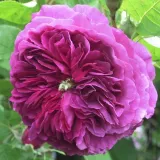
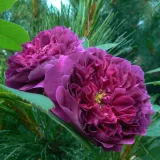
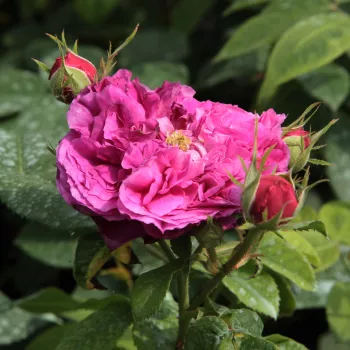
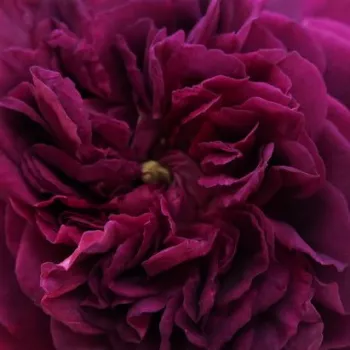
Large, very full, rosette-shaped blooms with over 40 petals, produced mainly singly on stems; non-remontant and once-flowering, offering a concentrated, spectacular early-summer display in a historic style. |
| Colour data and phenology |
Deep velvety crimson-red blooms with darker centres, buds blackish-purple, ageing through greyish mauve and crimson tones; colour holds richer in partial shade and may fade in strong sun or very bright conditions. |
| Fragrance and aroma |
Strong, long-range, full-bodied old-rose perfume that carries on still evenings, enhancing paths and seating areas; primarily grown for ornamental and scent value rather than for cutting or culinary use. |
| Hip characteristics |
Hip set is generally sparse due to the very double flowers, though occasional small, ovoid orange-red hips about 10–15 mm in diameter can develop, adding a discreet autumn accent among the foliage. |
| Resistance and winter hardiness |
Hardy to around -26 to -23 °C (RHS H7, roughly USDA 5b), with moderate tolerance of heat and drought if watered in long dry spells, and moderate resistance to powdery mildew, black spot and rust in typical gardens. |
| Horticultural recommendations |
Best on improved, well-drained soil with support for climbing canes; allow space of roughly 2–3 m between plants, provide occasional pruning and pest checks, and tie in young shoots to shape the framework. |
ERINNERUNG AN BROD offers a once-in-a-season crimson cascade, strong old-rose fragrance and long-lived own-root growth, making it a thoughtful choice if you would like a characterful, low-intervention climber for your garden.