FERDINAND PICHARD – pink historic perpetual hybrid rose - Tanne
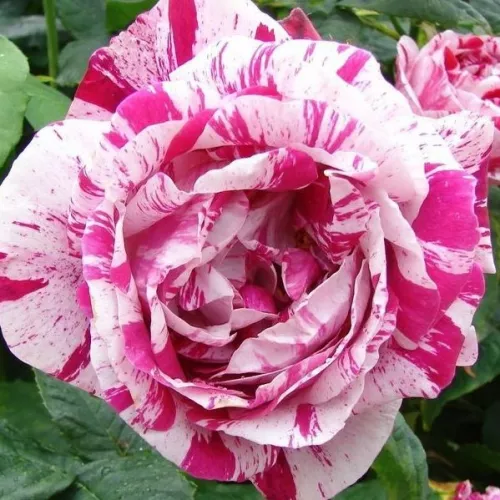
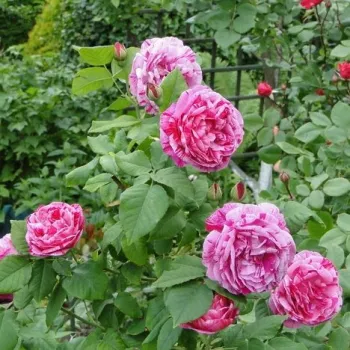
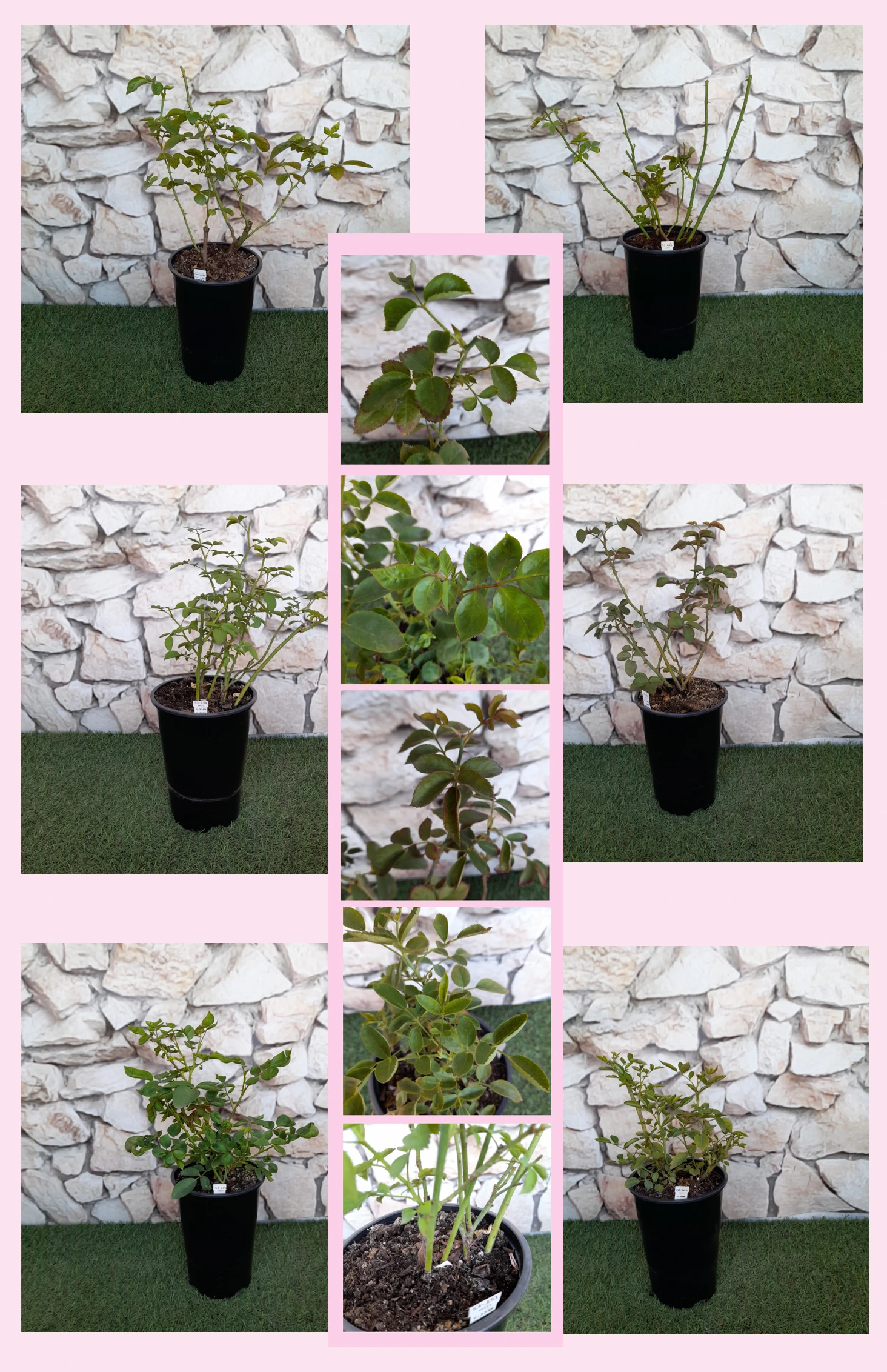
Step off the busy pavement and into a small front garden filled with fragrance, as FERDINAND PICHARD lines your path with strongly scented, striped blooms that thrive in typical British showers and breeze while coping well with cool, damp summers; this historic Hybrid Perpetual settles happily into modest London plots or coastal terraces, rewarding you with classic, cut-worthy flowers for vases indoors and lush colour outdoors from early summer onwards. As an own-root rose it offers reassuring longevity and reliable regrowth after hard pruning or weather knocks, developing deep roots in its first year, then stronger shoots and finally full ornamental impact by the third season, all with medium care needs suited to hobby gardeners and time-pressed urban families.
Usage options
| Target area | Reasoning |
|---|
| Small London front garden feature |
The upright, bushy habit and 120–180 cm height give strong vertical presence in a narrow terraced-house front garden, while the bold pink-and-carmine striping reads clearly from the pavement and front door, ideal for busy city homeowners. |
| Cut-flower border for scented stems |
Large, full, cup-shaped flowers on sturdy stems and a strong classic rose fragrance make this variety excellent for cutting, providing richly scented, striped blooms for the house without complicated pruning routines for casual gardeners. |
| Relaxed heritage hedge or boundary |
Planted at around 110 cm intervals, the moderately thorny, upright bushes knit into a traditional, semi-formal hedge that flowers through summer and offers light screening, suiting those wanting period character with manageable maintenance enthusiasts. |
| Rainwater-conscious clay or chalk bed |
Well-prepared soil and mulching allow the own-root plant to establish steadily where heavy clay or chalk holds moisture, supporting stable long-term growth and ornamental value with straightforward seasonal care for sustainability-minded beginners. |
| Partial-shade side return planting |
This rose tolerates partial shade, so it still flowers reliably along a side passage or between neighbouring buildings, where many modern roses sulk, giving colour and scent without demanding a prime sunny border from space-limited residents. |
| Large patio container by the front door |
In a 40–50 litre peat-free pot with regular watering, the bushy habit and repeat bloom create a welcoming focal point near steps or a doorstep, offering historic charm and fragrance in places without in-ground borders for balcony-focused urbanites. |
| Low-input historical rose collection |
Proven hardiness down to around –30 °C and solid disease performance, including good powdery mildew resistance, help keep interventions moderate, suiting those who want a long-lived, characterful old rose without specialist routines collectors. |
| Family garden scent path |
Planted along a path at 120–150 cm spacing, the strong, long-lasting fragrance and repeat flushes turn everyday walks after rain into a sensory experience, even where wind and wet weather are frequent, delighting relaxed family-garden users. |
Styling ideas
- Doorstep-Drama – Place one plant in a 40–50 litre charcoal pot flanked by creeping Erigeron karvinskianus, letting daisies spill over the rim for a romantic, low-fuss welcome – ideal for busy terrace-dwelling professionals.
- Heritage-Hedge – Create a loose boundary line, underplanting with Ajuga reptans to knit the soil surface and soften the base, blending period character with easy upkeep – suited to families greening narrow front plots.
- Scented-Walk – Line a short path with widely spaced bushes and interplant with low Sedum acre for drought-tolerant edging, enjoying summer perfume on every pass – perfect for hobby gardeners seeking impact per plant.
- Pastel-Partners – Combine with soft blue nepeta or lavender and sage for a bee-friendly, gently contrasting border that sets off the pink striping without visual clutter – appealing to design-conscious urban gardeners.
- Cottage-Corner – Mix this rose with Mexican daisy and other airy perennials in a small bed to evoke a relaxed cottage look in city streets – a good choice for beginners wanting charm without complex planning.
Technical cultivar profile
| Characteristic | Data |
|---|
| Name and registration |
Hybrid Perpetual heritage rose marketed as FERDINAND PICHARD – pink historic perpetual hybrid rose - Tanne; historical exhibition rose for garden and cutting, unregistered cultivar with verified authenticity. |
| Origin and breeding |
Old French Hybrid Perpetual bred by Rémi Tanne and first distributed by Eugène Turbat & Cie in 1921, of unknown parentage, representing a classic striped historical garden and exhibition rose from Normandy. |
| Awards and recognition |
Recognised with the RHS Award of Garden Merit (1993), American Rose Society Victorian Certificates (1998, 2000, 2001), and Best Old Garden Rose at Rosexpo Montréal (1999), confirming long-term ornamental and garden value. |
| Growth and structural characteristics |
Upright, bushy shrub reaching about 120–180 cm high and 100–150 cm wide, with moderately dense, lightly glossy light to mid-green foliage and moderate prickliness; weak self-cleaning so deadheading maintains best appearance. |
| Flower morphology |
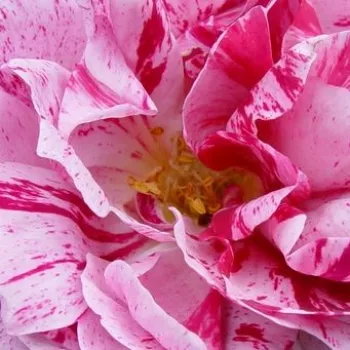
Large, full, cup-shaped blooms (typically 2.75–3.95 in) with 26–39 petals, mainly solitary on stems, remontant with a generous second flush, making them well suited both to borders and to cutting for indoor arrangements. |
| Colour data and phenology |
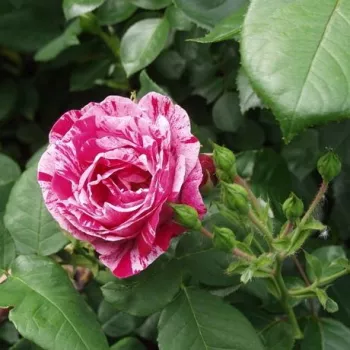
Pale pink base strongly striped and speckled carmine-red; deep pink, marbled buds open to creamy-pink blooms with vivid crimson striping that may fade and blur in strong sun, yet remain distinctive in normal garden conditions. |
| Fragrance and aroma |
Possesses a strong, classic rose fragrance with long-lasting scent in average conditions; primarily ornamental rather than pollinator-focused, as the full, many-petalled flowers limit easy access to nectar and pollen for insects. |
| Hip characteristics |
Occasionally forms small, ovoid, orange-red hips around 12–18 mm across, adding discreet late-season interest without dominating the plant, and generally of minor significance compared with the showy striped flowers. |
| Resistance and winter hardiness |
Cold-hardy to approximately –29 to –32 °C (RHS H7, USDA 4b, Swedish zone 5), with good powdery mildew resistance and moderate black spot and rust tolerance, performing best with reasonable watering in dry spells. |
| Horticultural recommendations |
Suited to beds, hedges, specimens and parks; plant about 110–120 cm apart or as a 200 cm solitary; prefers well-drained yet moisture-retentive soil and medium care, including occasional deadheading and health checks. |
FERDINAND PICHARD offers strongly scented striped blooms, repeat flowering and enduring own-root resilience, making it a thoughtful choice for those planning a long-lived, characterful rose planting.