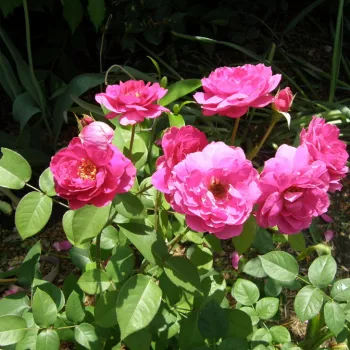
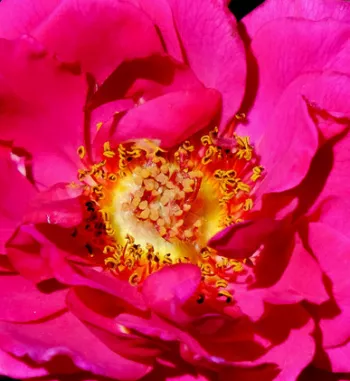
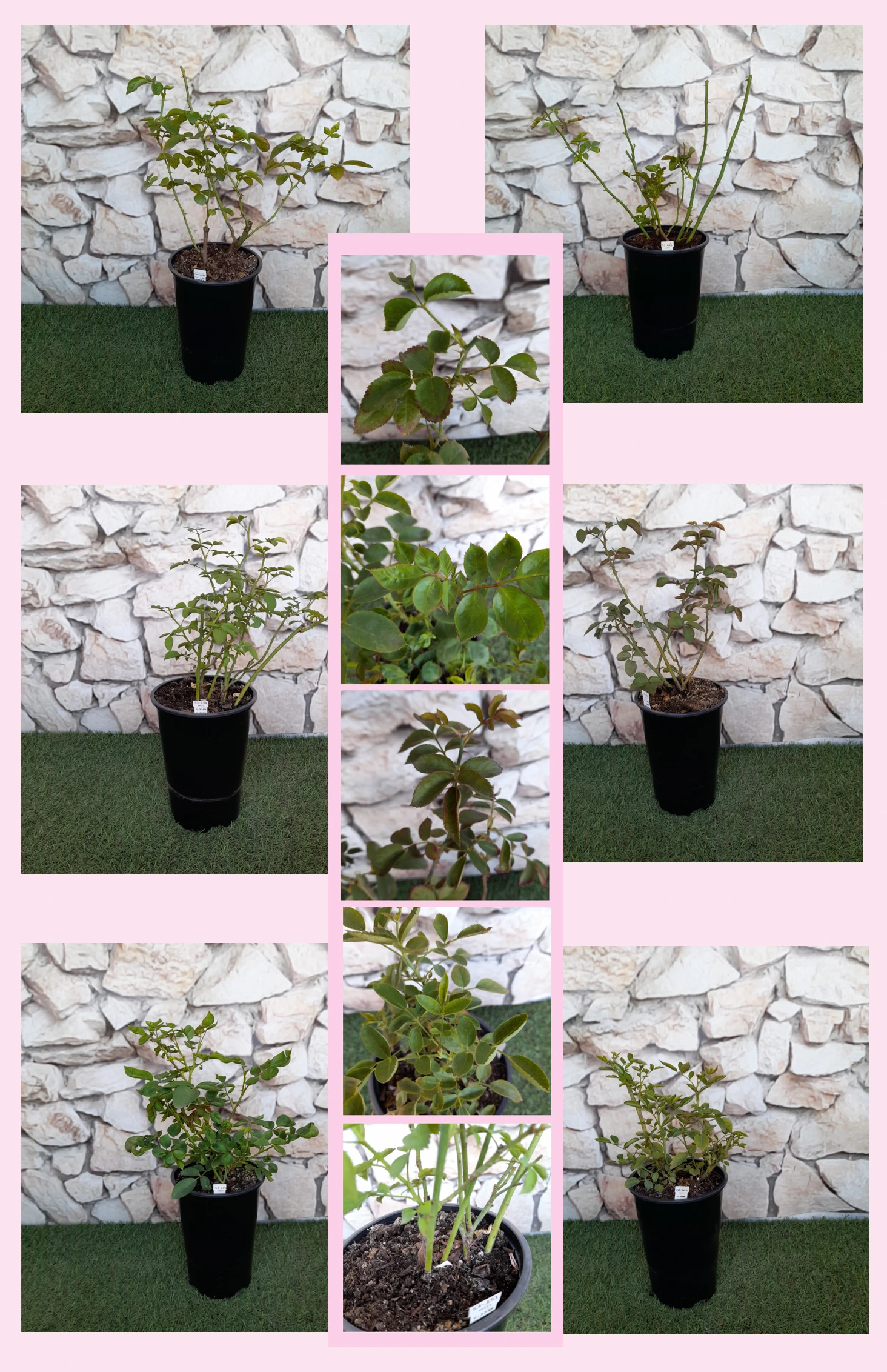
DIAMOND GRAY – light brown hybrid tea rose – Teranishi
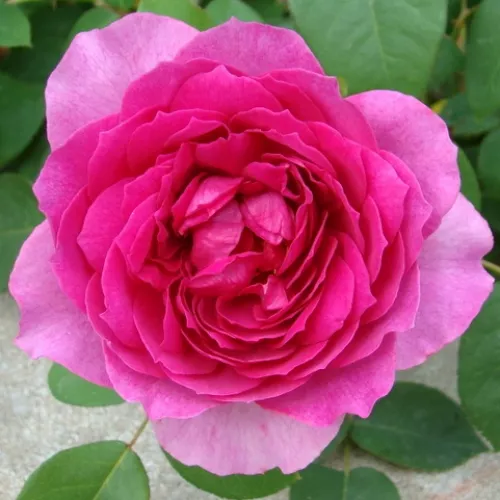
Step closer to balance in a compact front garden with DIAMOND GRAY, a distinctive hybrid tea whose pale taupe‑brown blooms carry a soft grey veil, echoing the muted tones of London brick and paving. This semi‑double, high‑centred flower opens its stamens generously, offering gentle support to bees while you enjoy its restrained, urban‑friendly presence. On its own roots it settles in steadily, forming a durable framework that regenerates well after pruning and rewards patient planting with the natural rhythm of first-year roots, second-year shoots and third-year full display. Ideal where paving meets planting, it copes well with typical British showers and breezy days near the coast, provided you give it a well‑drained spot. Use it to bring a quietly modern, subtly romantic note to small borders, gravel strips and railings‑side beds, or in a large 40–50 litre container to soften hard landscaping with sustainable elegance. Its good heat tolerance and moderate disease resistance keep care routines simple, so your garden time can focus on enjoyment rather than chores, while its unusual colour and useful cutting stems add lasting interest to both house and garden for many seasons of walking that narrow path in post‑rain fragrance.
Usage options
| Target area |
Reasoning |
| London terraced-house front garden border |
The compact, spreading habit fits narrow front beds, while the muted taupe‑grey blooms harmonise with brickwork and railings without overwhelming the space; own-root durability means it becomes a long-term feature for the time-pressed homeowner. |
| Rainwater-friendly gravel strip or soakaway bed |
Good heat tolerance and a preference for sun allow DIAMOND GRAY to thrive beside driveways or permeable paving where rainfall is directed into planted strips, working well in breezy, shower‑prone conditions typical of exposed suburban streets for the eco-aware gardener. |
| Large container on balcony or paved courtyard |
Planted in a 40–50 litre peat-free container, its mid-height framework and repeat-flowering habit give a reliable vertical accent; own-root growth copes better with occasional drying out and repotting, suiting the busy urban resident. |
| Cutting bed for home flower arrangements |
The high-centred, exhibition-style buds with long, straight stems make refined cut flowers in a rare light-brown shade; repeated flushes ensure a steady supply of stems through summer for the creative florist. |
| Mixed border with pollinator-friendly perennials |
Semi-double, open blooms with visible stamens offer moderate forage for bees; when paired with airy companions like feverfew or lamb’s ear, it builds a soft, wildlife-supporting tapestry appreciated by the nature-conscious beginner. |
| Specimen rose in a small family lawn or courtyard |
At 80–120 cm, DIAMOND GRAY is tall enough to stand alone without dominating; the unusual colour becomes a quiet focal point, while own-root resilience supports a long-lived “family rose” for the sentimental collector. |
| Low-maintenance clay or chalk garden bed |
Given improved drainage, its good heat tolerance and moderate disease resistance reduce intervention, so once established it mainly requires light pruning and deadheading, ideal for the practical, low-fuss gardener. |
| Contemporary sustainable front garden design |
The understated palette suits minimalist schemes with grasses and silvery foliage, while its long service life as an own-root planting makes it a thoughtful, resource-efficient choice for the design-conscious urban owner. |
Styling ideas
- Soft-Modern Frontage – Line DIAMOND GRAY along a short path with lamb’s ear and fine grasses to echo stone and concrete tones – ideal for design-conscious terraced-house owners.
- Balcony Showcase – One plant in a 40–50 litre container with trailing nepeta beneath creates a scented, bee-friendly focal point – perfect for busy city-dwelling beginners.
- Cutting Corner – Combine with white feverfew and airy annuals for a small cutting patch of unusual, neutral-toned stems – suited to home florists and creative arrangers.
- Calm-Family Lawn – Plant as a single specimen near a seating area, underplanted with low sage for a serene, low-effort focus – good for families wanting simple structure.
- Rain-Kissed Strip – Use in a gravel-filled rain garden strip with drought-tolerant perennials to soften driveways while soaking up runoff – for sustainability-minded front-garden renovators.
Technical cultivar profile
| Parameter |
Data |
| Name and registration |
DIAMOND GRAY hybrid tea rose by Teranishi; ARS exhibition name DIAMOND GRAY. Commercially offered as a hybrid tea rose for garden and cutting use; former or alternative registered names are not recorded. |
| Origin and breeding |
Bred by Teranishi Kikuo at Itami Rose Nursery, Japan, around 2003, with parentage not documented. Introduced to the trade in 2004 as an unusual light-brown hybrid tea suited to both garden display and cutting. |
| Growth and structural characteristics |
Medium-height shrub, typically 80–120 cm tall and wide, with a spreading habit and moderately dense, mid-green, slightly glossy foliage. Moderately thorny stems; weak self-cleaning so spent blooms generally need manual removal. |
| Flower morphology |
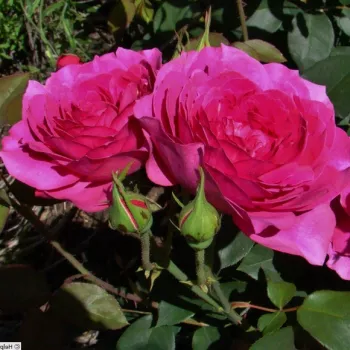
Semi-double, high-centred hybrid tea blooms with 13–25 petals, often borne in clusters on cutting-length stems. Large flower size, approximately 7–10 cm, and remontant performance with notably abundant second flush flowering. |
| Colour data and phenology |
Light mocha to taupe-brown blooms with a grey veil, coded RHS 201A/199D. Colour fades gradually to pale beige-brown, almost straw, more quickly in strong sun. Closed buds sandy-brown, opening to pastel taupe in full bloom. |
| Fragrance and aroma |
Fragrance is mild and restrained, offering a gentle scent rather than a strong perfume. Not primarily selected for aromatic intensity, making it suitable near doors and small seating areas where subtler fragrance is preferred. |
| Hip characteristics |
Produces moderate quantities of ellipsoidal hips, typically 12–18 mm in diameter, ripening to an orange-red shade. Hips add a modest late-season accent but are not a primary ornamental or culinary feature of this cultivar. |
| Resistance and winter hardiness |
Rated to approximately –21 to –18 °C (USDA 6b, RHS H7), suitable for much of the UK. Good heat tolerance but needs watering in drought. Resistant to powdery mildew and black spot, with moderate susceptibility to rust. |
| Horticultural recommendations |
Prefers sunny sites with improved drainage; suitable for borders, specimens and cutting. Plant at 60–110 cm spacing depending on use. Medium maintenance: occasional pest and disease checks plus regular deadheading and seasonal pruning. |
DIAMOND GRAY brings rare taupe-brown blooms, reliable repeat flowering and long-lived own-root resilience to compact, sustainable gardens, making it a thoughtful choice if you value understated elegance and dependable structure.