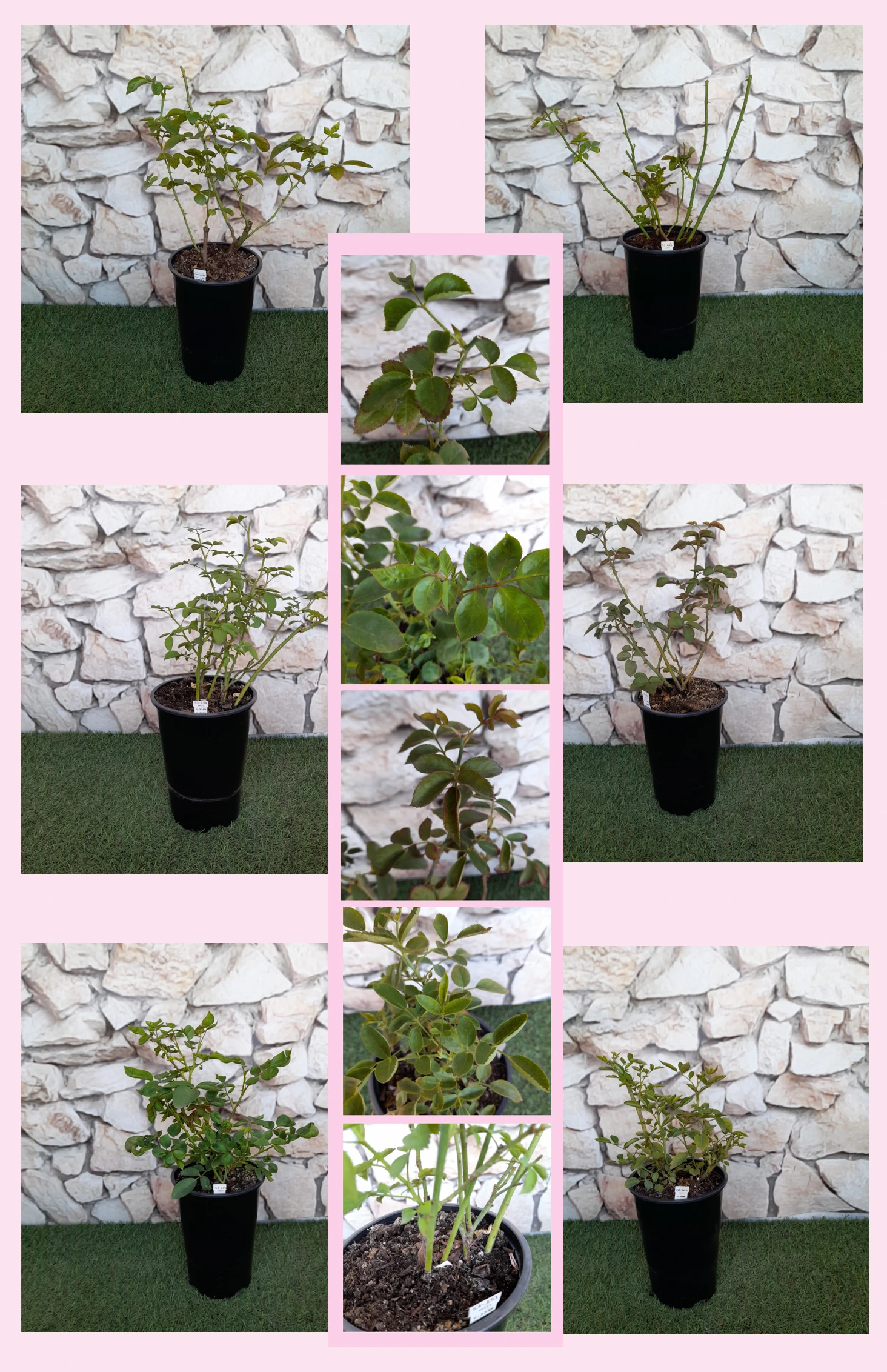
FROTHY – white dwarf-mini rose - McGredy
With its finely rosetted white blooms and compact habit, FROTHY brings a sense of balance and calm to small front gardens and balconies, working especially well where you are managing heavy soil and brisk, coastal-style weather in a typical UK setting. This miniature shrub rose forms a neat, bushy mound ideal for edging, low beds or generous containers, giving you reliable flowering from early summer onwards with minimal fuss. Own-root planting means steady regeneration and a long, stable ornamental life, without worrying about graft union failure over the years. In its first season it focuses on roots, the second on fuller shoots, and by the third it settles into its true character, becoming a quietly impressive, rain-resilient feature for relaxed, sustainable gardens.
Usage options
| Target area |
Reasoning |
| London terraced-house front garden border |
Its compact 45–55 cm height and 40–50 cm spread suit narrow front beds where space is tight but you still want structure and repeat white flowering without complex pruning or specialist rose skills, ideal for the beginner. |
| Rainwater-friendly container by the front door |
Grows comfortably in a 40–50 litre peat-free container, allowing you to capture and use rainwater, while the own-root form builds longevity so you can re-dress the pot seasonally without replanting the rose, reassuring for the busy. |
| Low edging along a garden path |
The dwarf, bushy habit and dense planting distances create a tidy white edging that defines paths without casting shade, staying manageable for family gardens and leaving room for herbs or perennials, attractive to the practical. |
| Small family back garden flower bed |
Neat proportions and medium maintenance needs make it easy to weave into mixed beds with lavender or nepeta, where steady flowering and simple care matter more than exhibition perfection, appealing to the time-poor. |
| Urban balcony planter or roof terrace |
Its modest size and rounded habit adapt well to large planters using harvested rainwater, providing a long-lived focal point that does not overwhelm limited outdoor space, especially helpful for the urban. |
| Clay or chalky suburban front garden |
Performs reliably in typical suburban soils when drainage is improved, coping with cool, damp spells and everyday wind, so you can rely on consistent structure and bloom in less-than-perfect ground, reassuring for the cautious. |
| Child-friendly “girly” play corner |
The low, rounded plant and frothy, rosette flowers create a soft, storybook look at child height, giving gentle seasonal interest without tall, thorny canes intruding into play areas, comforting for the family. |
| Compact white-themed courtyard scheme |
Its uniform white flowers and modest fragrance bring calm, reflective light into enclosed spaces, supporting a simple, long-term design that remains harmonious as the rose matures in changeable wet and windy conditions, ideal for the stylist. |
Styling ideas
- Front-Door Welcome – Position FROTHY in a 50 litre clay pot by a townhouse front door, underplanted with soft grey lamb’s ear for texture – for design-conscious urban homeowners.
- Girly-Edge Border – Line a short path with FROTHY and pale pink nepeta to create a low, “girly” froth of colour that stays neat and easy to manage – for families wanting charm without fuss.
- White-Courtyard Calm – Combine FROTHY with white campanulas and silvery sage in a sheltered courtyard bed for a calm, coherent white palette – for those seeking a balanced, contemplative space.
- Rain-Smart Planter – Use a deep, 40–50 litre half-barrel with a gravel base, planting FROTHY among moisture-loving thyme to make the most of stored rainwater – for eco-minded balcony or patio gardeners.
- Neat-Low Hedge – Plant a short row at 35–40 cm intervals along a front boundary, interspersed with dwarf lavender, to create a tidy, low hedge – for homeowners wanting structure in a small plot.
Technical cultivar profile
| Property |
Data |
| Name and registration |
Miniature shrub rose marketed as Frothy – white dwarf-mini rose, registered as MACfrothy; part of the Mini – dwarf rose collection and classified within the miniature rose exhibition category. |
| Origin and breeding |
Bred by Samuel Darragh McGredy IV (McGredy Roses International, New Zealand) from ‘Chaumant’ × ‘Popcorn’, registered and introduced in 1992, with breeding work completed around 1986. |
| Growth and structural characteristics |
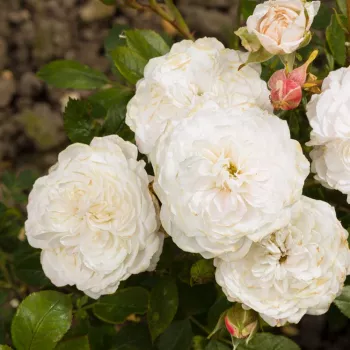
Compact, bushy dwarf shrub reaching about 45–55 cm in height and 40–50 cm in spread, with moderately dense, mid‑green, slightly glossy foliage and a moderate number of prickles on the stems. |
| Flower morphology |
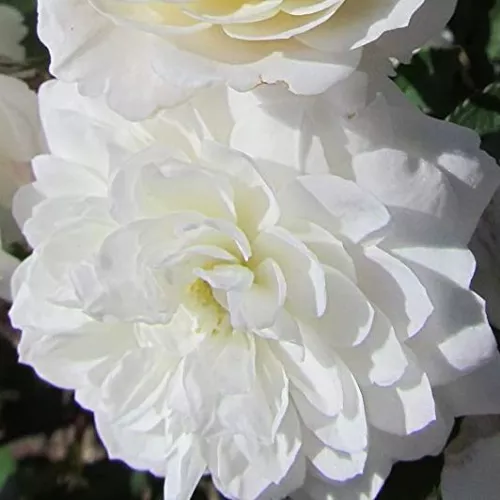
Small, very full rosette blooms of 40+ petals borne mainly in clusters; remontant with a notably abundant second flush, giving repeated seasonal displays of finely packed miniature flowers. |
| Colour data and phenology |
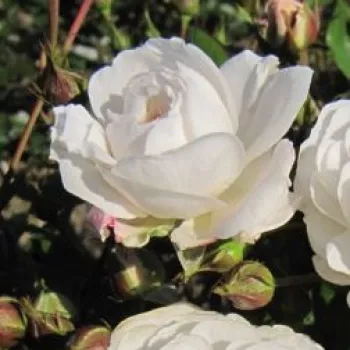
Pure white blooms with a subtle creamy base; buds cream‑white with a yellowish tint, opening snow‑white, then ageing to matt white and finally greenish‑white; ARS white, RHS 155D outer and 11D inner. |
| Fragrance and aroma |
Fragrance is very weak, with only a delicately honeyed note detectable at close range; grown primarily for visual effect and neat structure rather than for strongly scented garden performance. |
| Hip characteristics |
Produces relatively few hips; where present they are small, spherical, orange‑red, typically 5–7 mm across, giving only light autumn interest and not forming a major ornamental feature. |
| Resistance and winter hardiness |
Rated to approximately –21 to –18 °C, corresponding to RHS H7 and USDA Zone 6b; disease resistance is medium overall, with average tolerance to powdery mildew, black spot and rust in normal seasons. |
| Horticultural recommendations |
Well suited to containers, edging and small flower beds in sunny positions, with planting distances of 35–70 cm depending on use; requires moderate care and occasional plant protection where disease pressure is high. |
FROTHY offers compact, reliable white flowering and durable structure in an own-root form that matures steadily into a long-lived feature, making it a gentle, thoughtful choice for small urban and family gardens.