GÄRTNERFREUDE ® – raspberry-red groundcover rose – Kordes
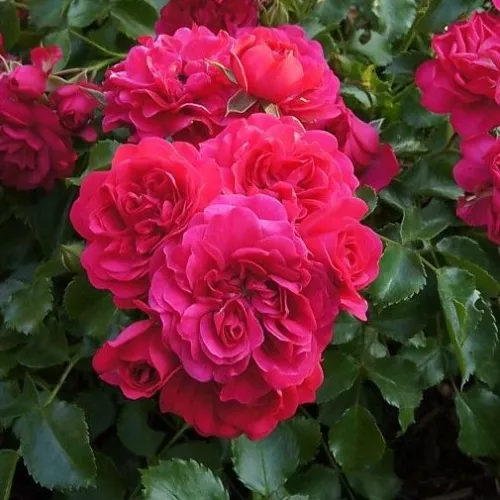
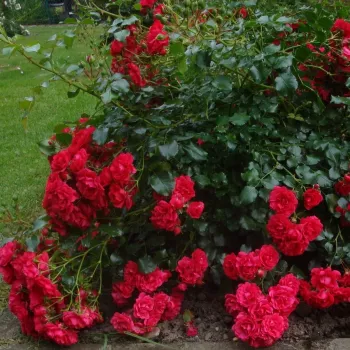
Imagine a London front garden where every shower leaves a low, shimmering carpet of raspberry-red blooms, their gloss undimmed by wind or rain, working quietly in challenging clay soil and humid, disease-prone air. GÄRTNERFREUDE® is bred for effortless coverage and outstanding health, forming a neat, spreading shrub that suppresses weeds and needs minimal deadheading thanks to its naturally self-cleaning flowers. As an own-root rose, it offers reassuring longevity, regenerating from the base if ever cut back hard and settling steadily into urban spaces with little fuss. Warm summers are handled with steady vitality as long as prolonged dry spells are met with simple watering, while the small, very double pompon blooms hold their rich colour without bleaching. Ideal for busy households, its compact habit suits front gardens, low hedging and large containers, letting you enjoy a composed, sustainable planting that becomes fully expressive as roots establish, shoots build up and by the third year delivers its calm, permanent presence.
Usage options
| Target area | Reasoning |
|---|
| Urban front garden groundcover |
Forms a dense, spreading mat that quickly knits together bare soil in small front gardens, reducing weeding and giving a tidy, low-maintenance look along paths or railings; ideal for time-pressed city homeowners and beginners. |
| Low hedge or border edging |
Regular height and controlled spread create a soft, raspberry-red edging along driveways or front boundaries without the clipping regime of traditional hedges, staying neat with minimal shaping for busy-gardeners. |
| Rain‑resilient planting in heavy soil |
Disease resistance and rain‑tolerant blossoms make it dependable where showers are frequent and drainage is imperfect, supporting gardens that cope gracefully with wetter spells and modestly sticky soil for urban-families. |
| Large patio or balcony container |
Performs reliably in a substantial 40–50 litre pot, its spreading habit spilling over the rim to soften hard surfaces, provided basic watering is maintained during longer dry periods by apartment-dwellers. |
| Slopes and difficult-to-mow banks |
Spreading, ground-hugging growth stabilises soil on banks and discourages weeds, reducing the need for mowing or frequent access while still providing colour for practical-owners. |
| Low-maintenance family play spaces |
Compact height and dense, glossy foliage frame lawns, trampolines or seating areas with colour that does not demand constant pruning, fitting households wanting reliable structure with little intervention by parents. |
| Coastal or exposed gardens |
Sturdy foliage and good heat tolerance help it cope with breezier, more exposed spots where other plants may struggle, as long as extended dry, salty winds are balanced by attentive watering from coast-gardeners. |
| Public-facing communal beds |
ADR-level disease resistance and self-cleaning flowers keep shared beds, car-park islands or housing-association borders presentable with very light maintenance, suiting caretakers and schemes overseen by managers. |
Styling ideas
- Raspberry-Ribbon – Line a narrow terrace-front border with GÄRTNERFREUDE® and tuck in lavender or nepeta at intervals for soft scent and movement – ideal for households wanting a composed yet undemanding welcome.
- Clay-Softener – In heavier London clay, mass-plant this rose as a low carpet, weaving in clumps of Echinacea ‘Big Kahuna’ for bolder, upright accents – suited to owners turning a bare patch into a resilient front garden.
- Balcony-Boulevard – Use a 50-litre trough on a balcony, pairing the rose with trailing thyme and compact sage to soften edges and attract incidental wildlife – perfect for flat-dwellers seeking greenery without complex care.
- Rain-Garden – Position the rose near downpipes in a free-draining bed, interplanting with ornamental grasses to catch and slow rainwater while keeping year-round structure – useful for those adapting small plots to wetter spells.
- Play-Frame – Border a family lawn with GÄRTNERFREUDE® in a shallow arc and dot in blue globe thistles for contrast, creating a colourful yet low-work frame – appealing to families wanting order without intricate maintenance.
Technical cultivar profile
| Parameter | Data |
|---|
| Name and registration |
Groundcover shrub rose from the RigoRosen® collection; registered as KORstesgli, marketed as Gärtnerfreude® / Gärtnerfreude ® RigoRosen®; ARS exhibition name Gärtnerfreude® for show classification use. |
| Origin and breeding |
Bred by Wilhelm Kordes III (Germany) from ‘The Fairy’ lines and ‘Amanda’; bred 1991, registered 1998, introduced 1999 by W. Kordes’ Söhne, reflecting modern groundcover breeding priorities. |
| Awards and recognition |
Highly decorated: ADR 2001, Baden‑Baden Gold Medal 1999, Kortrijk Gold 2001 and Silver 1999, Gold Standard Award UK 2008, plus Gerald Maylen Award for best groundcover in Australian rose trials. |
| Growth and structural characteristics |
Low, spreading shrub 40–65 cm tall, 50–90 cm wide, with dense, dark-green, glossy foliage and moderate prickles; naturally compact, forming an even, weed-suppressing carpet in beds, borders and slopes. |
| Flower morphology |
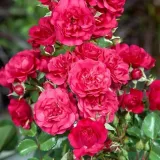
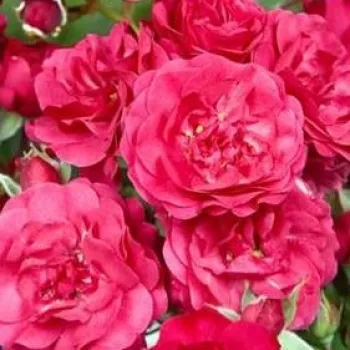
Small pompon clusters with over 40 petals per bloom, very double and spherical; abundant remontant flowering with a strong second flush; cluster-forming sprays give a continuous carpet of colour through the season. |
| Colour data and phenology |
Uniform raspberry-red blooms, ARS code DR, RHS 53A outer and 53B inner; colour holds exceptionally well with minimal fading, shifting only gently towards rose-pink as flowers age, even in strong summer sun. |
| Fragrance and aroma |
Fragrance is very weak and barely perceptible, making it chosen primarily for visual impact, carpet effect and robustness rather than scent; best combined with aromatic companions if fragrance is a design priority. |
| Hip characteristics |
Poor fruit set expected due to highly double flowers; when formed, hips are small, spherical, 4–7 mm, red and unobtrusive, so they do not significantly influence the plant’s overall appearance or maintenance needs. |
| Resistance and winter hardiness |
Excellent health with resistance to powdery mildew, black spot and rust; hardy to about -26 to -23 °C (RHS H7, USDA 5b, Swedish zone 4), combining durability with reliable performance in varied climates. |
| Horticultural recommendations |
Suited to groundcover, beds, slopes, parks and containers; plant 45–95 cm apart depending on use, 3.3–3.8 plants/m² for massing; prefers well-drained soil and watering during prolonged drought; maintenance needs remain low. |
GÄRTNERFREUDE ® offers enduring colour, low-maintenance coverage and robust health in an own-root form that settles in for the long term, making it a thoughtful choice if you seek a reliable, easy-care groundcover rose.