GALLERANDAISE – pink bedding polyantha rose - Rateau
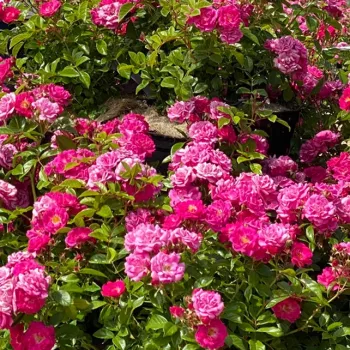
Designed for today’s compact urban plots, GALLERANDAISE brings a carpet of colour to small front gardens, edging and containers with very little effort from you. Its naturally compact, bushy habit keeps paths neat while clusters of semi-double blooms repeat from early summer well into autumn, even where persistent rain and wind test less robust roses. Dense mid-green foliage and reliable health mean fewer sprays and less fuss, ideal if you are balancing gardening with a busy city life. As an own-root rose, it offers reassuring longevity, regenerating from the base after hard pruning and maintaining its shape and flowering quality year after year. In its first seasons it quietly builds strong roots, then extends flowering shoots, before settling into a full, long-lived display that anchors a rainwater-conscious, sustainable planting scheme.
Usage options
| Target area |
Reasoning |
| Front garden edging for terraced houses |
The low, bushy growth and 30–50 cm height create a tidy, flower-packed line along paths or railings without overwhelming narrow London front gardens, keeping maintenance light for the busy urban gardener |
| Small sustainable bedding schemes |
Dense planting at 6.3–7.2 plants/m² quickly forms a durable pink carpet, ideal for replacing hardstanding with permeable, living groundcover that copes well with regular British rain and wind for the eco-conscious homeowner |
| Container or large pot on balcony or patio |
The compact habit suits a 40–50 litre peat-free container where it flowers freely without outgrowing its space, giving long-season colour with only basic feeding and deadheading for the space-limited city dweller |
| Low maintenance family border |
Good resistance to black spot, mildew and rust keeps foliage clean in humid, changeable weather, so you can rely on an attractive front-of-border shrub without complex spraying routines for the time-poor beginner |
| Entrance and driveway planting |
Regular clusters of mid-pink blooms and slightly glossy foliage create a welcoming, orderly look by the front door or parking area, staying neat and compact with simple annual pruning for the house-proud homeowner |
| Long-term structural planting in small gardens |
As an own-root rose it rebuilds from the base after hard pruning, avoiding graft failure and supporting a stable, long-lived presence as the garden matures over many years for the forward-thinking planner |
| Slow-and-steady developing planting plans |
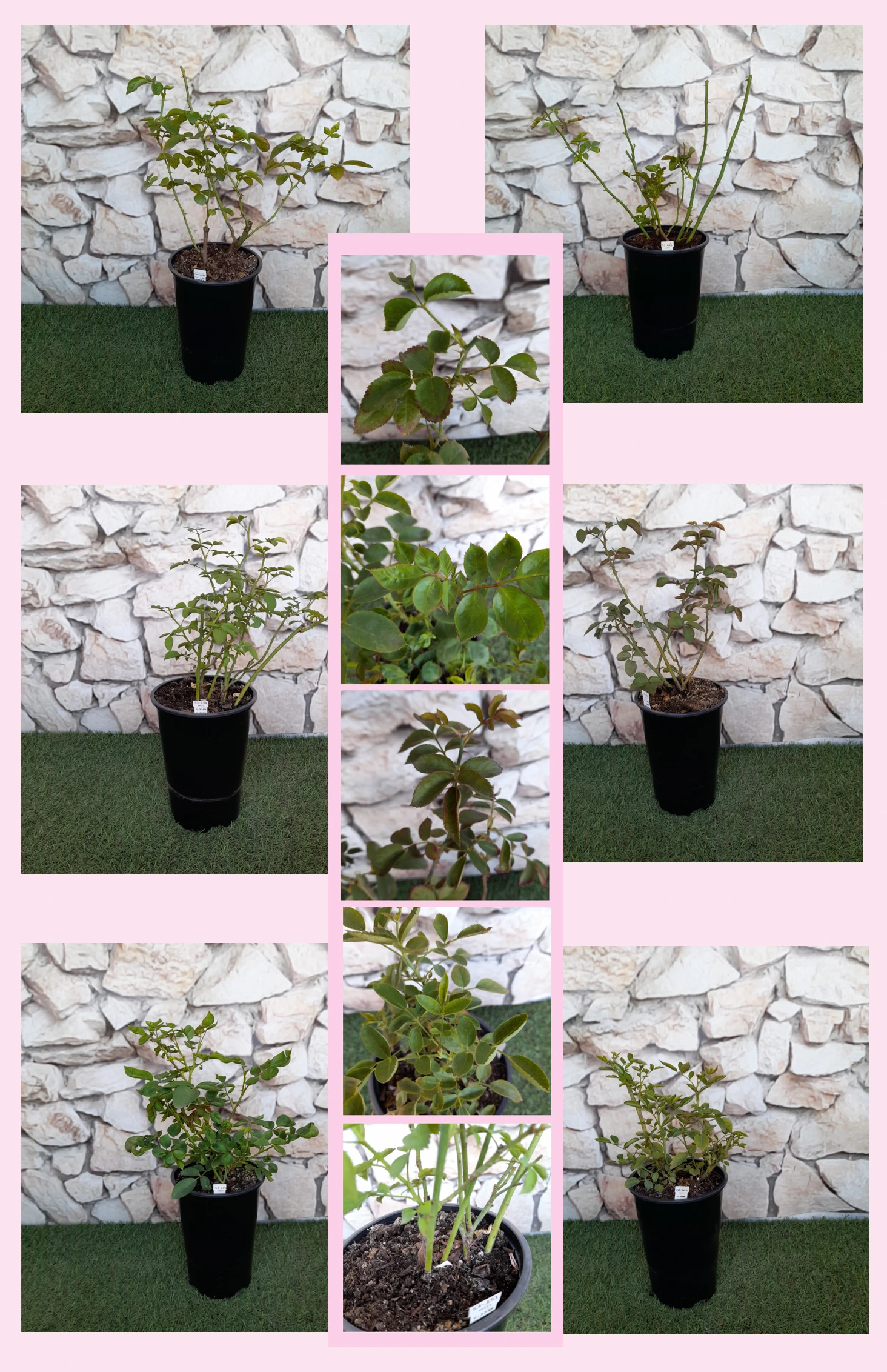
This rose invests first in a solid underground framework, then produces stronger top growth in year two and reaches full ornamental value by year three, suiting patient planting schemes for the thoughtful garden improver |
| Softly colourful rainwater-friendly front gardens |
Its compact spread and robust foliage work well among gravel, permeable paving and drought-tolerant perennials, helping you keep soil open for rain to soak in while still enjoying generous pink flowering for the sustainability-minded gardener |
Styling ideas
- Soft-Edge Border – Line a narrow front path with GALLERANDAISE at 30 cm spacing, underplanting with low thyme to soften paving and reduce weeding – ideal for the busy urban gardener
- Pastel Container – In a 50 litre peat-free pot, combine this rose with airy Gaura lindheimeri for movement and gravel mulch for easy watering – perfect for balcony and patio owners
- Pink Drift – Mass-plant in a small front bed, weaving between clumps of Nepeta and dwarf lavender for a long-flowering, low‑care tapestry – suited to low-maintenance stylists
- Entrance Accents – Flank a doorway with square planters holding GALLERANDAISE and silver sage, echoing brickwork tones while keeping a compact outline – good for house-proud homeowners
- Family-Friendly Strip – Replace a strip of gravel or tired lawn with a neat band of this rose backed by Echinacea for colour children notice and adults can manage easily – great for time-poor family gardeners
Technical cultivar profile
| Property |
Data |
| Name and registration |
Polyantha bedding rose registered as EVEpoldane, marketed as Gallerandaise Bedding rose EVEpoldane; a compact bed rose for front borders, edging and containers in family gardens. |
| Origin and breeding |
Bred by Jérôme Rateau for Pépinières et Roseraies André Eve, France; bred 2013, introduced and registered 2022, reflecting modern disease resistance and compact garden suitability. |
| Growth and structural characteristics |
Compact, bushy habit 30–50 cm high and 35–55 cm wide, with dense, mid-green, slightly glossy foliage and moderate prickliness; ideal for low bedding, edging and smaller containers. |
| Flower morphology |
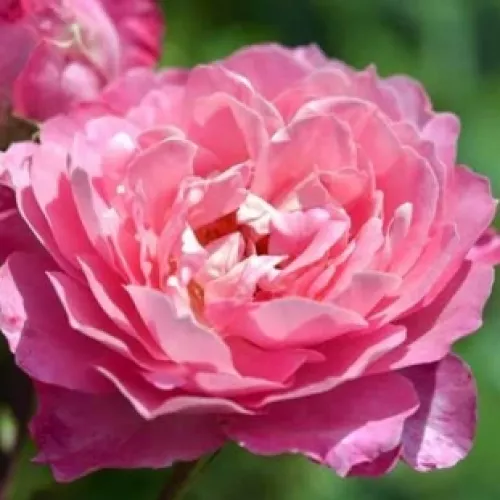
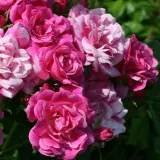
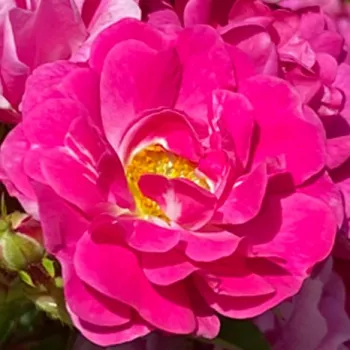
Semi-double, cup-shaped clusters with 13–25 petals, small blooms 0.5–1.5 in, produced repeatedly with abundant second flush, providing long-season colour in a modest footprint. |
| Colour data and phenology |
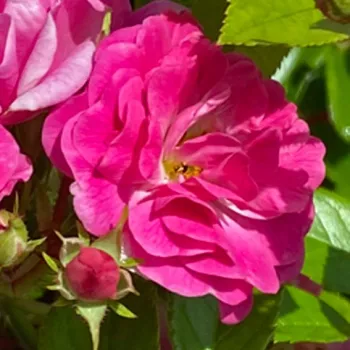
Vibrant mid-pink (RHS 57C outer, 57B inner); buds dark pink, opening brighter then fading to pastel pink with softer edges, giving a gentle, evolving palette across the flowering period. |
| Fragrance and aroma |
No noticeable fragrance; selected primarily for colour effect, compact growth and disease resistance, making it a practical choice where visual impact and low maintenance are priorities. |
| Hip characteristics |
Hip set generally poor due to semi-double flowers; occasional small spherical orange-red hips 5–9 mm in diameter may appear, but are not a significant ornamental feature. |
| Resistance and winter hardiness |
Rated resistant to powdery mildew, black spot and rust; reliably hardy to about −21 to −18 °C (RHS H7, Swedish Zon 3, USDA 6b), suitable for most UK regions with typical winters. |
| Horticultural recommendations |
Best in full sun with well-drained soil; plant 25–45 cm apart depending on use. Low maintenance, with simple annual pruning and feeding sufficient for sustained ornamental performance. |
GALLERANDAISE offers compact, long-season pink flowering with strong disease resistance, reliable own-root longevity and easy maintenance, making it a considered choice for smaller gardens and containers.