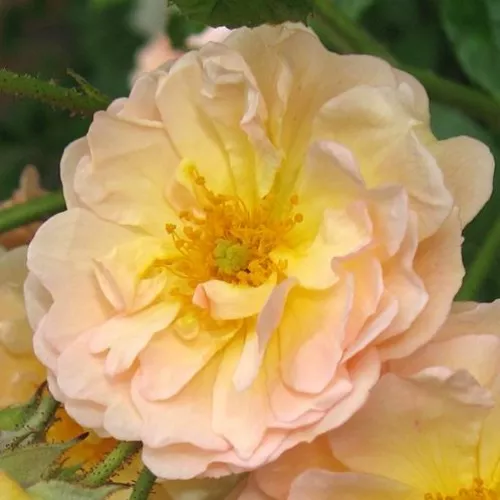
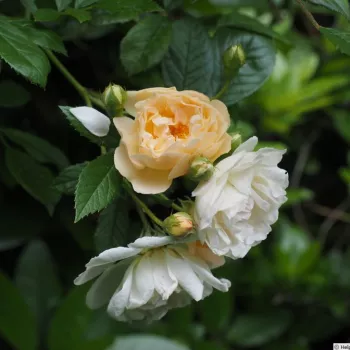
Ghislaine de Féligonde – yellow historic rambler rose
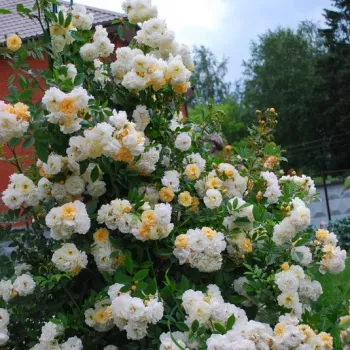
This charming heritage rambler brings a sense of post-rain balance to compact London front gardens, where rain-soaked brick and slate set off its pastel clusters. With semi-double, sweetly scented blooms that gradually reveal pollen, it offers a gentle nod to pollinators without demanding expert care. Trained on an arch, wall or railing, its flexible, barely thorny canes are easy to guide, while dense foliage and repeat-flowering clusters create long seasonal coverage. As an own-root rose, it settles steadily, giving you reassuring longevity instead of short-lived, graft-related decline. From a simple first-year root focus, through more confident second-year shoots, to full ornamental value by year three, it matures into a reliable backdrop for everyday family life. In cooler, breezy gardens it copes well with damp spells and persistent showers, remaining a graceful, medium-maintenance choice for urban beginners who prefer beauty over fuss. For those seeking a softer, more romantic urban screen, it partners readily with other climbers over time.
Usage options
| Target area |
Reasoning |
| Front-garden rose arch or gateway |
The flexible, climbing habit and relatively compact height for a rambler make it ideal to train over an arch framing a small London front door or path, delivering pastel blooms at eye level with medium-care expectations for the busy city gardener |
| Soft screening along railings or low fences |
Dense, slightly glossy foliage and repeat-flowering clusters create a gentle, semi-transparent screen without harsh thorns, giving privacy while still allowing light through, suiting households needing a friendly boundary for family-focused homeowners |
| Rainwater-conscious planting by downpipes |
Performs reliably in British conditions with frequent wet spells and blustery showers, making it a good partner for permeable front drives and rain chains that channel water into beds for sustainability-minded gardeners |
| Historic-style cottage or heritage schemes |
As a 1916 heritage rambler with classic pastel tones, it fits seamlessly into period terraces and cottage-style front gardens, offering long-term character without intensive pruning demands for traditional design enthusiasts |
| Partial-shade side passage or narrow walkway |
Tolerates partial shade, so it can brighten side returns and narrow access paths where sun is limited, softening brickwork while still offering flowers through the season for owners of awkward spaces |
| Wildlife-friendly yet tidy family garden corner |
Semi-double, scented flowers provide some accessible pollen while remaining neat and self-cleaning enough that not every spent bloom needs removing, aiding a relaxed, slightly wilder corner for pollinator-conscious families |
| Long-lived feature on pergolas or rustic structures |
Own-root plants build a durable framework of stems that can be renewed from the base, reducing the risk of graft failure and allowing gradual, low-stress training over pergolas for long-term planners |
| Large container on terrace, balcony or roof-garden |
In a 40–50 litre peat-free container with good drainage, its medium vigour and manageable height allow vertical green interest in paved spaces, giving colour and fragrance close to seating for balcony and roof-garden owners |
Styling ideas
- Pastel Archway – Train over a slim metal arch with lavender or nepeta at the base to echo its soft yellow and pink tones – ideal for front-garden romantics
- Heritage Pairing – Combine with Clematis ‘Amber’ on a shared pergola for layered, old-world charm and extended flowering – suited to period-terrace restorers
- Rain-Garden Rail – Underplant along railings with moisture-tolerant sage and ornamental grasses in a gravel mulch to capture rainfall – perfect for drainage-aware city dwellers
- Soft Screen – Let it form a loose vertical veil behind a low hedge of lavender or rosemary, blending privacy, fragrance and pollinator value – appealing to family entertainers
- Cottage Corner – Weave it through rustic trellis with foxgloves and nepeta beneath for a layered, wildlife-friendly cottage effect – attractive to nature-leaning beginners
Technical cultivar profile
| Property |
Data |
| Name and registration |
Ghislaine de Féligonde, heritage rambler; current trade name also listed as Ghislaine de Féligonde Heritage rose Turbat; unregistered cultivar within historical rambler and climbing rose groups. |
| Origin and breeding |
Bred by Eugène Turbat & Compagnie in Orléans, France, 1916; a historical Hybrid Multiflora / Hybrid Musk rambler from cross ‘Goldfinch’ × unknown seedling, introduced as a garden climber the same year. |
| Awards and recognition |
Recipient of Bagatelle International New Rose Competition Certificate of Merit in 1916 and the Royal Horticultural Society’s Award of Garden Merit, indicating dependable performance in UK gardens. |
| Growth and structural characteristics |
Climbing rambler with arching, flexible canes, height typically 240–420 cm and spread 160–300 cm; dense, light green slightly glossy foliage and comparatively few prickles for more comfortable training. |
| Flower morphology |
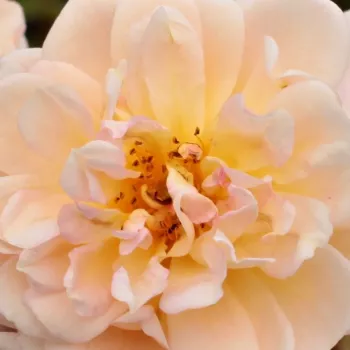
Semi-double, cup-shaped blooms with 13–25 petals, carried in sizeable clusters of small flowers about 0.5–1.5 inches across; remontant habit with a strong first flush followed by lighter repeat flowering. |
| Colour data and phenology |
Buds open warm peach-yellow, becoming soft cream with cool pink tones and a pastel yellow base; outer petals may show a faint rosy veil, fading more quickly to cream-white in hotter summer weather. |
| Fragrance and aroma |
Medium-strength, sweet nectar-like scent noticeable at close quarters, especially in still, humid air; fragrance combines well with other scented plants in small seating areas without becoming overpowering. |
| Hip characteristics |
Occasionally produces small, spherical rose hips, about 5–9 mm across, in a clear red shade (RHS 46A); hips add a discreet seasonal accent but are usually not produced in heavy quantities. |
| Resistance and winter hardiness |
Hardy to approximately −26 to −23 °C (RHS H7; USDA 5b; Swedish Zone 4); disease resistance medium to black spot, powdery mildew and rust, benefiting from good air circulation and regular hygiene. |
| Horticultural recommendations |
Suited to arches, pergolas, walls, fences and solitary specimen use; medium maintenance with occasional plant protection, partial-shade tolerant and best spaced 130–220 cm apart depending on design intent. |
Ghislaine de Féligonde combines easy arch training, gentle fragrance and partial pollinator support with the reassuring durability of an own-root rambler, making it a thoughtful long-term choice for your garden structure.