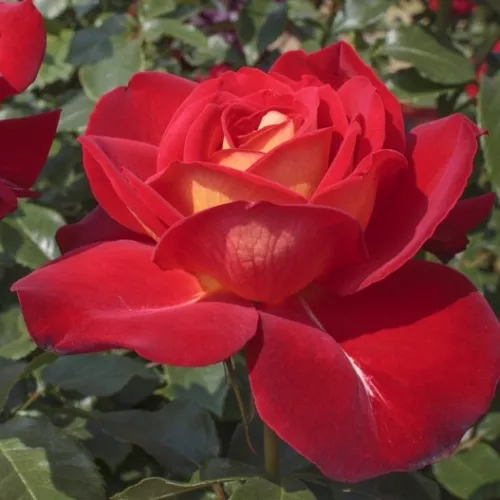
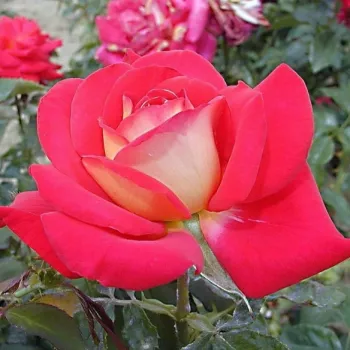
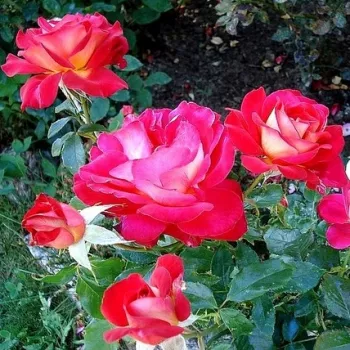
GIPSY – red-yellow flowerbed floribunda rose – Suzuki
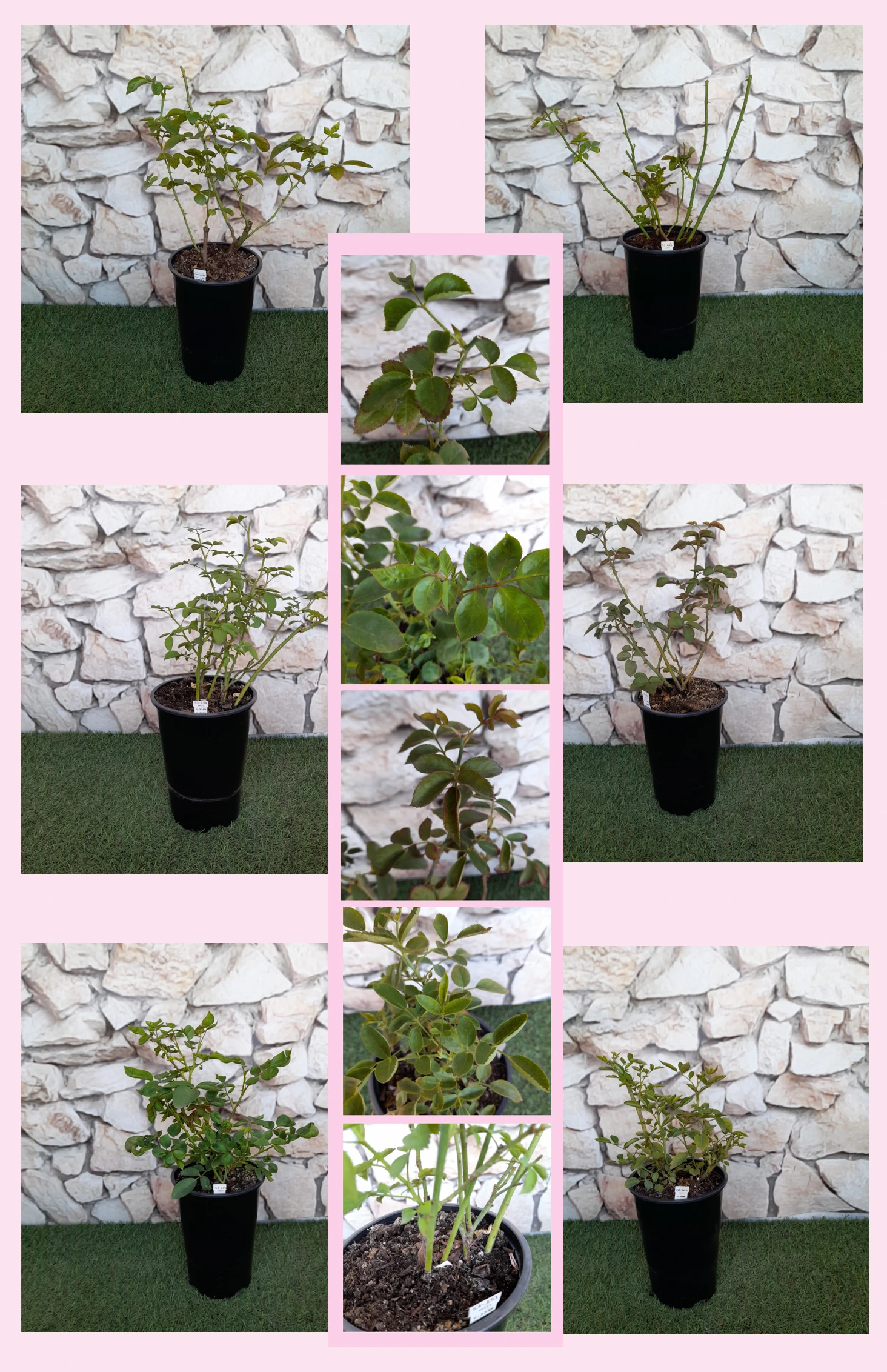
Step through your front gate to a line of compact, jewel-toned blooms that feel at home in a small London terrace or family garden, their red and golden petals creating a playful, girly touch against dark, glossy foliage. GIPSY (Kiboh) settles steadily as an own-root rose, building a reliable structure and long lifespan that suits busy routines and low‑input, rainwater-aware spaces where soil can stay wet after showers and needs thoughtful drainage. Massed in a narrow bed or large container, this floribunda delivers generous, XL clusters from early summer onwards, with a mild, fresh fragrance that lifts the air after rain. Its pedigree from Seizo Suzuki and a string of European gold medals underline long-term reliability in typical UK conditions, while the dense, dark foliage gives year-round presence even between flushes. As an own-root plant, it is designed for gradual establishment, with roots consolidating in the first year, strong shoots and structure in the second, and confident, full ornamental impact from the third season onwards.
Usage options
| Target area |
Reasoning |
| Small front-garden flowerbed |
The compact habit and 70–100 cm height make GIPSY ideal for tight front borders, giving structure without overwhelming the space; repeated clusters of XL, red-and-gold blooms create a welcoming focus for passing foot traffic, particularly appealing to busy urban homeowners. |
| Mass planting in family garden beds |
Regular spacing at 30 cm allows you to create a dense, colourful carpet that reads as one broad sweep of scarlet and gold; own-root plants knit together steadily over time, building a long-lived, resilient planting rhythm well suited to low-fuss family gardeners. |
| Low seasonal hedge or path edging |
A line at 25 cm spacing forms a flower-rich edging that guides the eye and manages space around paths or driveways; the uniform, compact growth and glossy leaves give a tidy outline that needs only light annual pruning, suiting practical front-garden planners. |
| Large containers on terraces or balconies |
Planted in a 40–50 litre, well-drained, peat-free container, GIPSY becomes a stable, long-term feature; its moderate height, dense foliage and bold colour work well in confined urban spots where you want impact without constant replanting, reassuring for space-conscious beginners. |
| Rainwater-friendly, clay or chalky plots |
The robust rootstock-free structure and moderate height make it a reassuring choice for typical British conditions where showers, wind and heavier soils require thoughtful rainwater management and good drainage, especially appreciated by climate-aware city gardeners. |
| Exhibition-style floribunda display |
Raised as an exhibition floribunda, GIPSY offers very full, cupped blooms on stems bearing 1–5 flowers, well suited to those who enjoy orderly, repeat-flowering beds with show-quality heads, naturally attracting detail-focused hobby growers. |
| Cut flowers for the house |
The XL, many-petalled flowers with a warm, fresh fragrance translate well into indoor arrangements; their vivid colour contrast and cupped form bring a dramatic accent to simple vases, rewarding home decorators. |
| Long-term own-root investment planting |
As an own-root rose, GIPSY is bred to regenerate from its own base, maintaining varietal integrity and shape over many years, so even if individual canes age or suffer damage, fresh growth emerges, reassuring forward-planning gardeners. |
Styling ideas
- Terrace Welcome Ribbon – Run a narrow band of GIPSY along a small front path, underplanting with low nepeta to soften edges and highlight its compact habit – ideal for design-conscious terrace owners.
- Gold-Medalist Border – Combine GIPSY with lavender and sage in a mixed bed, letting its award-winning blooms rise above soft greys and purples – suited to gardeners who enjoy structured, long-lived planting.
- Container Jewel Focus – Plant a single GIPSY in a 50 litre pot with trailing thyme for a bold balcony statement that remains easy to look after – perfect for beginners with limited space.
- Family-Friendly Hedge – Use GIPSY as a low flowering hedge along play-lawn edges, punctuated with evergreen Ilex crenata balls for year-round framework – good for families wanting neat, reliable colour.
- Sunset Bedding Mix – Mass-plant GIPSY with Crocosmia and cypress spurge to echo its scarlet and gold tones and extend the warm palette through late summer – appealing to colour enthusiasts.
Technical cultivar profile
| Trait |
Data |
| Name and registration |
Floribunda bed rose registered as ‘Kiboh’, marketed as GIPSY – red-yellow flowerbed floribunda rose – Suzuki; approved exhibition name Kiboh, in the Bedding rose commercial group. |
| Origin and breeding |
Bred by Seizo Suzuki at Keisei Rose Nursery, Japan, from ‘Liberty Bell’ × ‘Kagayaki’; introduced in Europe by Meilland International in 1986 after registration in 1985. |
| Awards and recognition |
Highly decorated bedding floribunda: Gold Medals at The Hague and Monza in 1985, plus Silver Medals at Courtrai (Kortrijk) and Saverne in the same year for garden performance. |
| Growth and structural characteristics |
Compact, bushy plant reaching 70–100 cm in height and 35–55 cm spread; dense, dark green, glossy foliage and moderate prickles create a tidy, upright profile for beds and low hedging. |
| Flower morphology |
Very full, cupped blooms with more than 40 petals, XL size around 3.5 inches across; flowers borne in clusters of 1–5 per stem, remontant with a generous second flowering flush in season. |
| Colour data and phenology |
Vibrant red upper petals with golden-yellow reverse (RHS 46A outer, 13B inner); colour softens from scarlet to carmine and creamy tones as blooms open, retaining a predominantly red impression. |
| Fragrance and aroma |
Mild, fresh fragrance with a lively, clean character; not overpowering near doors or seating areas, making it suitable where strong perfume could be intrusive or where scent-sensitive users prefer restraint. |
| Hip characteristics |
Hip production is usually sparse due to very full flowers; when present, small spherical hips 6–10 mm across develop, displaying an orange-red colour that can add minor seasonal interest. |
| Resistance and winter hardiness |
Rated to approximately −15 to −12 °C (RHS H6; Swedish Zone 2; USDA 7b); disease resistance is moderate to black spot, powdery mildew and rust, benefiting from standard, preventative care in humid seasons. |
| Horticultural recommendations |
Best in flower beds at 25–45 cm spacing depending on use; suits mass planting or specimen roles. Needs moderate maintenance with occasional pest and disease checks and regular deadheading to encourage repeats. |
GIPSY – red-yellow flowerbed floribunda rose – Suzuki offers compact, medal-winning colour, container-ready versatility and a long-lived own-root structure; an assured choice if you value steady impact with modest effort.