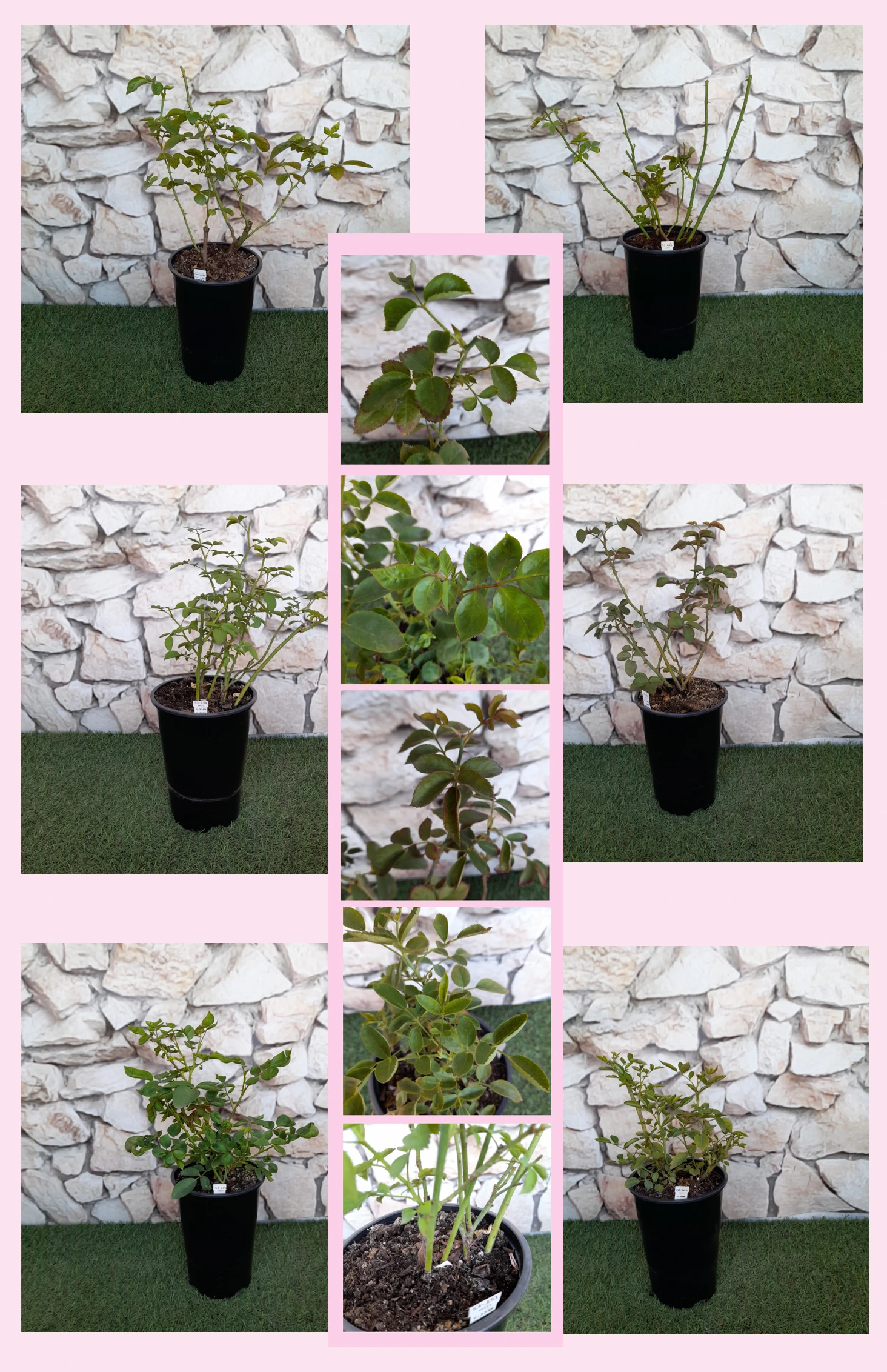
GOLDEN FANCY – golden-yellow bedding floribunda rose - Evers
Step onto your front path after rain and meet a low, compact rose that holds its golden blooms neatly above glossy foliage, coping reliably with blustery showers and heavy soils that benefit from thoughtful drainage in small urban plots. Golden clusters repeat from early summer well into autumn, so your London terrace or suburban border keeps its warm light even when the sky is grey. As an own-root plant, it offers reassuring longevity and the ability to regenerate if cut back hard, building a stable, rounded shape over time. It settles in steadily – first strengthening its roots, then pushing more flowering shoots, until by the third season it delivers its full ornamental impact with a colourful, low-maintenance display that suits busy, sustainability-minded gardeners.
Usage options
| Target area |
Reasoning |
| Front garden bedding strip |
Compact height and dense foliage create a tidy, structured line along paths and low walls, while repeat-flowering clusters keep the space welcoming for months with little more than basic deadheading for beginners. |
| Rain-aware urban border |
Performs well in typical British mixed borders where showers, wind and heavier soils meet; simply plant with added grit or organic matter to improve drainage and it will form a resilient, low hedge for busy-owners. |
| Medium to large container (40–50 L+) |
Its rounded, compact habit suits a substantial pot on steps or balconies; in a 40–50 litre container, roots have room to establish, giving a long-lived, easily managed feature for city-gardeners. |
| Low-maintenance family flower bed |
Reliable repeat bloom and moderate maintenance needs suit family spaces where time is short; own-root vigour means it copes well with occasional hard pruning and everyday play around it for families. |
| Value-conscious sustainable planting scheme |
Long lifespan and stable performance make it a sound investment, reducing the need for plant replacement; own-root structure helps it recover from weather stress, fitting a resource-aware mindset for eco-gardeners. |
| Formal edging or low hedge |
Regular spacing at 50–60 cm forms a coherent, golden edging that reads as one continuous band of colour, ideal for defining paths and borders without complex clipping or shaping for homeowners. |
| Public-facing kerb or communal front space |
Medium maintenance and recognised garden merit mean predictable performance where reliability matters; its neat habit and bright flowers enhance shared entrances with limited routine care from neighbours. |
| Mixed planting with herbs and perennials |
The warm golden-yellow blends naturally with lavender, sage or nepeta, creating soft, pollinator-supportive planting where its semi-double flowers add structure and colour among longer-lived perennials for hobby-gardeners. |
Styling ideas
- Golden-Pathway – line a narrow front-garden path with evenly spaced plants to form a glowing ribbon of colour – ideal for homeowners wanting welcoming kerb appeal.
- Terrace-Pot – plant one rose in a 50 L clay pot with trailing thyme to soften the rim and give year-round structure – suitable for balcony and small-terrace dwellers.
- Honey-Border – weave through drifts of lavender and nepeta so the golden blooms float above cool blues and mauves – perfect for relaxed, cottage-style gardeners.
- Family-Edge – create a low hedge around a lawn or play area, combining with tough groundcovers like barren strawberry – good for families seeking tidy, forgiving planting.
- Urban-Rain – set in a gravel-mulched, rainwater-fed front bed with sedges and pachysandra to manage splash and runoff – aimed at eco-conscious city gardeners.
Technical cultivar profile
| Parameter |
Data |
| Name and registration |
Floribunda bedding rose; registered as TANdolgnil, marketed as Golden Fancy Bedding rose TANdolgnil, with ARS exhibition name ‘Bowled Over’; part of the bedding rose collection. |
| Origin and breeding |
Bred by Hans Jürgen Evers for Rosen Tantau, Germany; introduced and registered in 1999 by Rosen Tantau, with parentage unrecorded but selected for bedding and floribunda performance. |
| Growth and structural characteristics |
Compact, bushy shrub 55–75 cm high and 50–70 cm wide; dense, olive-green, glossy foliage and moderate prickliness; moderate self-cleaning so some old blooms need occasional removal. |
| Flower morphology |
Semi-double, cup-shaped blooms with 13–25 petals, borne in clusters; large-flowered floribunda type with good repeat flowering, producing a noticeably abundant second flush in suitable conditions. |
| Colour data and phenology |
Warm, saturated golden-yellow with subtle amber sheen; buds bright orange-gold, opening to shimmering golden-yellow then fading through honey- and peach-toned edges to softer golden yellow in strong sunlight. |
| Fragrance and aroma |
Very weakly scented rose with a delicately sweet aroma; fragrance is barely noticeable at a distance, making it best chosen primarily for colour effect and bedding structure rather than perfume. |
| Hip characteristics |
Rose hips form only sparsely; where present, they are small, spherical, red fruits around 6–10 mm in diameter, adding limited visual interest and generally not a major ornamental feature. |
| Resistance and winter hardiness |
Hardy to approximately −26 to −23 °C (RHS H7, Swedish Zone 4, USDA 5b); resistant to powdery mildew and black spot, with medium susceptibility to rust; tolerates heat but needs watering in long droughts. |
| Horticultural recommendations |
Best in sunny beds, edging and urban green spaces; plant at 50–60 cm spacing, using 2.8–3.2 plants/m² for mass effect; medium maintenance with occasional pest control and light deadheading as needed. |
| Awards and recognition |
Holds significant awards including a Gold Medal at the Baden-Baden rose trials in 1997 and the RHS Award of Garden Merit in 2012, confirming reliable garden performance and decorative value. |
GOLDEN FANCY offers compact, repeat golden flowering with reliable garden performance, combining long-lived own-root resilience with tidy structure; consider it if you want lasting colour from a straightforward rose.