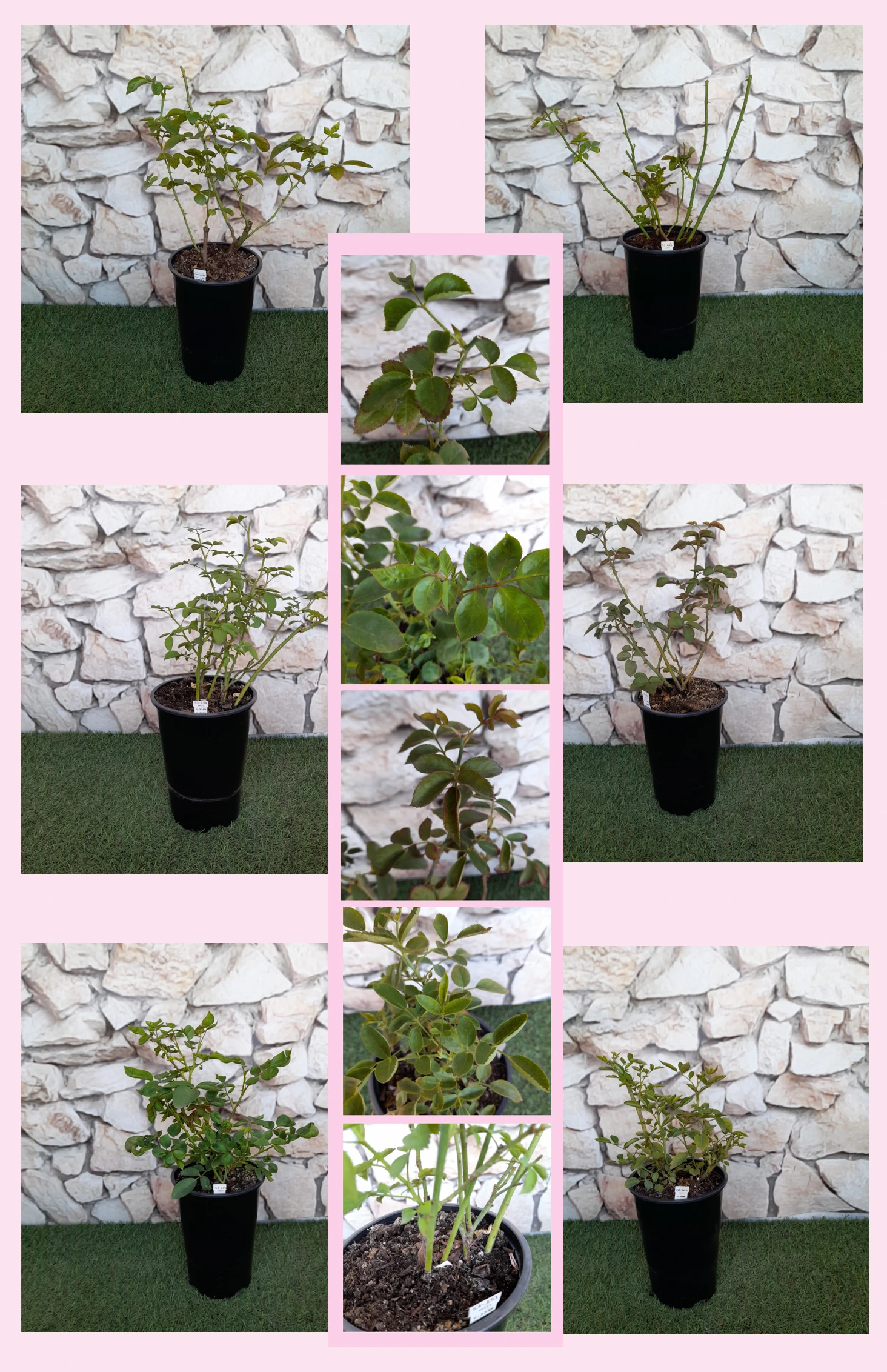
GRANDE AMORE ® – red tea-hybrid rose - Kordes
Step towards balance in your front garden with GRANDE AMORE®, a hybrid tea bred for elegance, reliability and long-term structure in compact London plots. Its upright habit and luminous red blooms make a confident yet restrained focal point, ideal for rainwater-conscious designs where soil copes calmly with blustery showers and persistent humidity. As an own-root rose, it establishes steadily, building a durable framework that responds well to simple, once-a-year pruning and basic feeding. In a narrow terrace border or a 40–50 litre container, you can expect stately, long-stemmed flowers for cutting and display, with colour that barely shifts in strong sunlight or summer heat. From the first year’s quiet root-building to the second year’s stronger shoots and the third season’s full ornamental impact, GRANDE AMORE® offers dependable garden structure with minimal fuss.
Usage options
| Target area |
Reasoning |
| Narrow London front garden border |
The upright, moderately compact habit (around 80–105 cm high) fits neatly into slim beds along paths and railings, giving a structured line of red blooms without overwhelming space; ideal for busy homeowners. |
| Rain-aware, heavy-soil urban plot |
Once established in well-prepared, freely draining soil, its own-root system and H7 hardiness support long-term health where gardens face wet winters and occasional waterlogging, reassuring sustainability-minded gardeners. |
| Statement specimen by the front door |
Large, high-centred, exhibition-style flowers on strong stems create a classic welcome point near steps or porches, offering a smart, formal accent that suits both traditional and contemporary houses for design-focused buyers. |
| Cutting patch for home arrangements |
Solitary, long-stemmed hybrid tea blooms with firm petals and very good colour retention are designed for vases, so even hobby growers can cut armfuls of consistently shaped roses as confident beginners. |
| Mixed border with shrubs and evergreens |
The moderate height, dark glossy foliage and vivid red flowers pair well with yew, dogwood and other structural plants, adding a vertical accent that matures reliably year after year for long-term planning families. |
| Large container on balcony or paved area |
In a 40–50 litre peat-free container with steady watering, this upright rose gives a smart, space-efficient column of colour where ground is scarce, suiting city dwellers who want impact from a single plant as urban residents. |
| Low-maintenance focal point in small garden |
With moderate care needs and simple deadheading, it responds predictably, rewarding occasional feeding with repeat flushes, coloured buds and organised structure that is easy to understand for time-pressed starters. |
| Weather-resilient display in exposed sites |
Firm petals and very good colour-holding mean flowers cope well in wind and rain without fading or shattering quickly, offering a composed look during unsettled coastal-style weather for climate-aware owners. |
Styling ideas
- Doorway drama – Plant as a single specimen by front steps, underplanted with low lavender for scent and soft edging – ideal for image-conscious homeowners.
- Terrace ribbon – Repeat-plant along a narrow front boundary with nepeta or dwarf sage to soften the line – suited to urban terrace gardeners.
- Crimson focus – Combine with dark green yew and pale ornamental grasses to highlight the rich red flowers – perfect for structured design enthusiasts.
- Ceramic pillar – Grow one plant in a tall 50 litre pot with free-draining compost on a balcony or paved area – great for space-limited city dwellers.
- Classic cutting row – Line several plants in a sunny strip for reliable stems to cut, backed with simple perennials – appealing to home florists.
Technical cultivar profile
| Parameter |
Data |
| Name and registration |
Hybrid tea rose from the Eleganza® collection; registered as KORcoluma, marketed as Grande Amore ® Eleganza® KORcoluma, with ARS exhibition name ‘Grande Amore’ for show purposes. |
| Origin and breeding |
Bred by Tim-Hermann Kordes (Germany) from ‘Christoph Columbus’ × unknown seedling; raised in 1995, introduced and registered by W. Kordes’ Söhne in 2004 for garden and exhibition use. |
| Awards and recognition |
Highly decorated cultivar: Golden Rose of The Hague 2004, Gold Medals at Lyon 2006 and Rose Hills USA 2011, RHS Award of Garden Merit 2012, and Portland Best Hybrid Tea 2013. |
| Growth and structural characteristics |
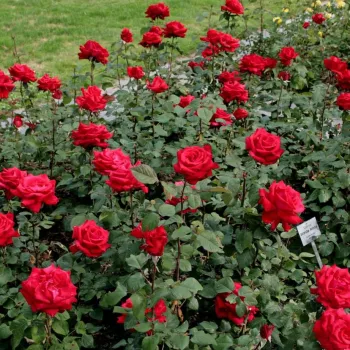
Upright, well-branched habit reaching 80–105 cm high and 50–70 cm spread; moderately dense, dark green, slightly glossy foliage; moderately thorny canes with a formal, vertical overall outline. |
| Flower morphology |
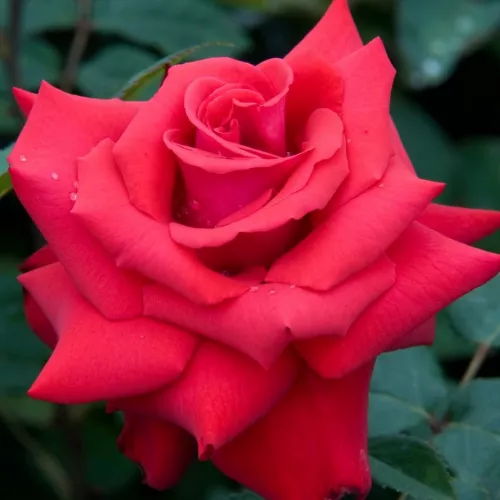
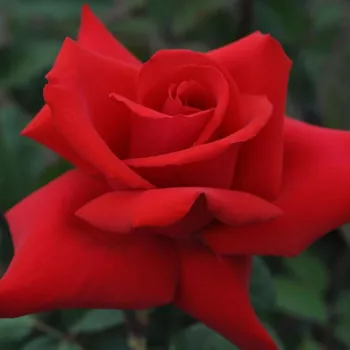
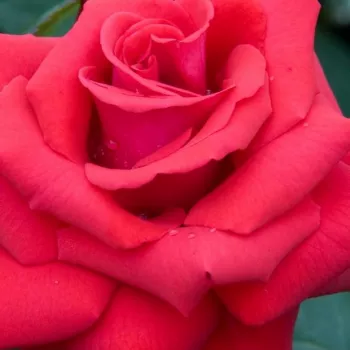
Hybrid tea, high-centred, pointed-budded flowers, 2.75–3.95 in across, double with 26–39 petals; mainly solitary on strong stems, good repeat-flowering with abundant second flush under regular deadheading. |
| Colour data and phenology |
Rich bright red flowers (RHS 45A outer, 45B inner; ARS MR); buds dark red, opening to vivid fire-red with slight wine-red tinge, colour holding strongly in sun and rain with minimal fading at full bloom. |
| Fragrance and aroma |
Delicate, tea-like scent of very weak intensity; fragrance is barely perceptible outdoors, so the variety is chosen primarily for its colour, form and cutting qualities rather than aromatic contribution. |
| Hip characteristics |
Rose-hip set is usually sparse because of the fully double blooms; when present, hips are small spherical orange-red fruits 8–12 mm in diameter, generally of minor ornamental importance. |
| Resistance and winter hardiness |
Hardy to approximately -21 to -18 °C (RHS H7, USDA 6b, Swedish zone 3); moderate resistance to black spot, mildew and rust, benefiting from good air circulation and timely preventative care. |
| Horticultural recommendations |
Best in sunny, well-drained soil with regular feeding; plant 55 cm apart in borders, 45 cm for hedging or 90 cm as specimens; medium maintenance with deadheading and occasional plant protection as required. |
GRANDE AMORE ® offers enduring red blooms, compact structure and award-backed reliability on an own-root framework that settles in for years, making it a thoughtful choice for today’s smaller, design-led gardens.