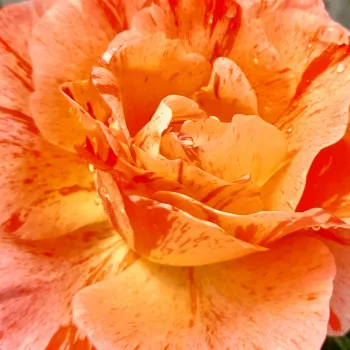
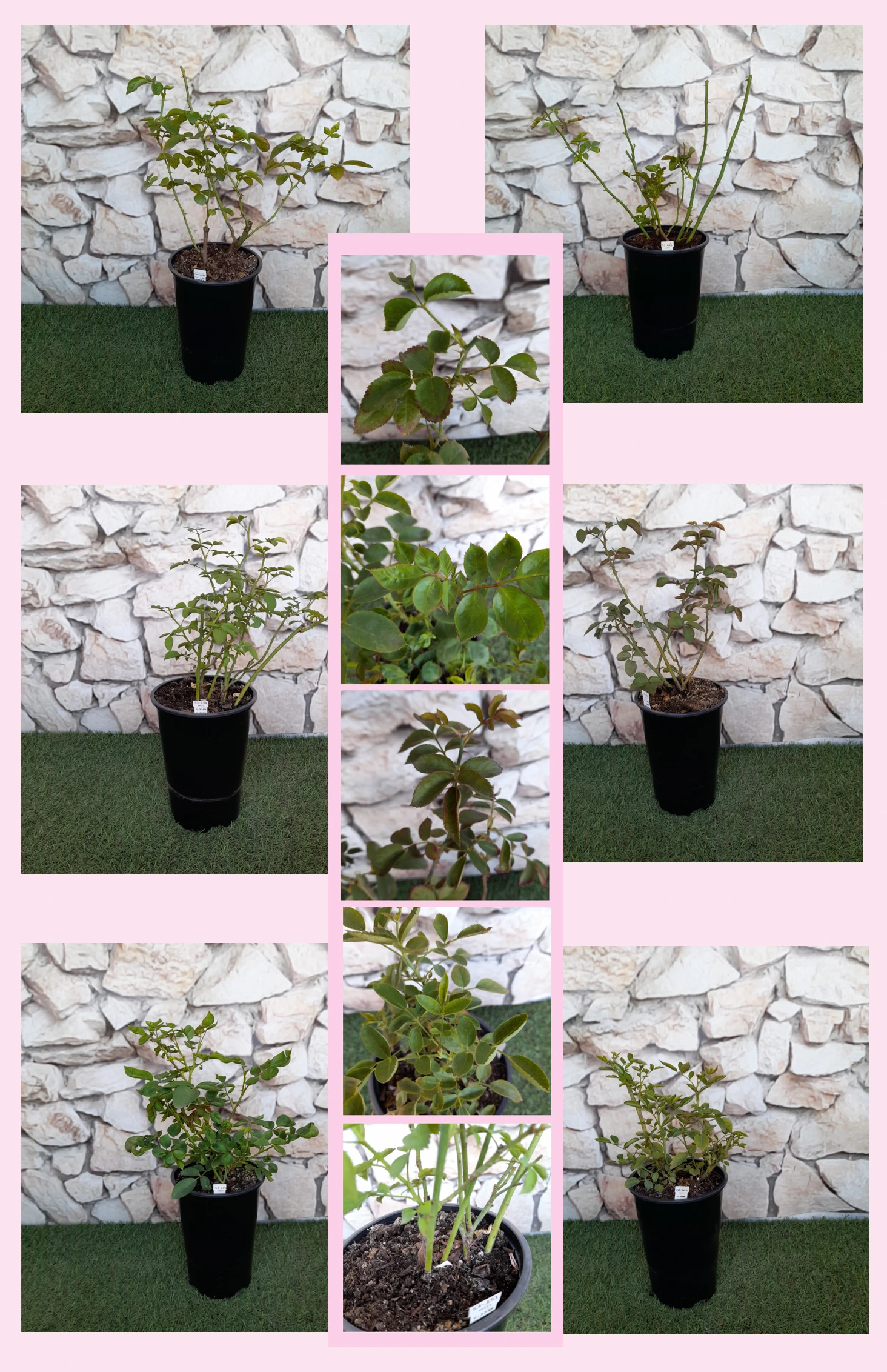
DELstror – salmon-pink bedding floribunda rose
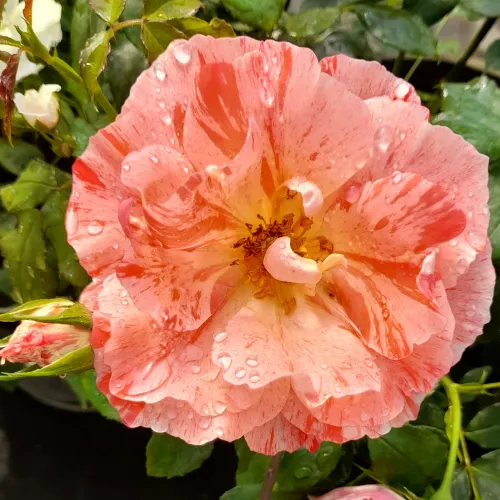
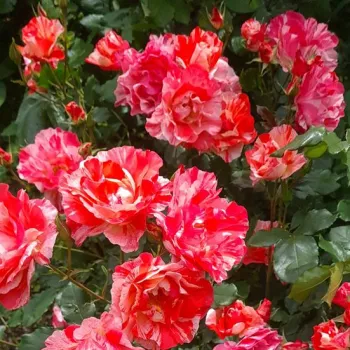
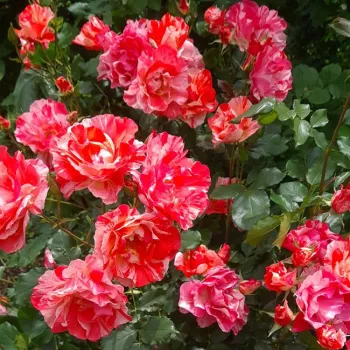
In a compact London front garden or small family plot, this salmon-pink floribunda creates an impression of walking a narrow path after rain, its semi-double blooms catching the light with painterly variegation and a mild, fruity-rosy scent. Its bushy habit and medium height make it easy to place in mixed borders or hedging, and it copes well with blustery, wetter weather and heavier soils where drainage-aware planting is essential. As an own-root rose, it will steadily build a strong framework, regenerating from the base for a long, reliable life. Expect roots to establish in year one, shoots to strengthen in year two, and a full, settled ornamental presence by year three. The clustered flowers offer partially pollinator-friendly access, especially valuable in compact, sustainable planting schemes. For urban gardeners collecting characterful varieties, its Les Roses de peintres® heritage adds quiet prestige to a practical, everyday border, while its hedge potential, container suitability and floribunda flowering rhythm support a sense of calm balance in rainwater-wise, long-lived design.
Usage options
| Target area |
Reasoning |
| Front garden flower bed |
The bushy, medium-height habit and clustered salmon-pink blooms quickly create impact in a small bed, while own-root growth builds a stable, long-lived structure with reliable colour for many seasons for the busy urban beginner |
| Low informal hedge |
Planted at the recommended 60 cm, DELstror forms a soft, flowering boundary, regenerating from the base if stems are cut back and providing a gently scented, long-term edge to paths and drives for the family garden owner |
| Large container on terrace or balcony |
In a 40–50 litre peat-free container with good drainage, the compact, bushy structure and semi-double clusters perform well, while own-root resilience helps recovery if watering lapses or weather swings for the space-conscious city dweller |
| Rainwater-friendly urban planting |
Works well where rainfall and wind test plants, provided the soil or planter drains freely, so it suits permeable front gardens that hold surface water briefly yet avoid prolonged saturation for the sustainability-focused gardener |
| Mixed border with perennials |
The medium height and dark foliage combine well with airy companions such as lilyturf, sedum and hardy geraniums, giving a long-season, layered display with minimal structural pruning for the design-aware home gardener |
| Seasonal cut flowers |
Clustered, painterly blooms on bushy stems lend themselves to short, informal arrangements; own-root plants re-sprout strongly after cutting, helping maintain shape and flower production for the creative home florist |
| Collector’s or themed rose bed |
Its Les Roses de peintres® background, distinctive salmon variegation and Monza awards make it a character piece that will hold form and identity for years as the own-root framework matures for the enthusiast collector |
| Partially pollinator-friendly nook |
Semi-double blooms offer some access to stamens, adding interest alongside more open-flowered perennials; as the shrub fills out over its first three seasons, it becomes a steady, moderate wildlife contributor for the eco-conscious beginner |
Styling ideas
- Painterly-Soft Border – Combine DELstror with nepeta and pale lavender for a hazy, romantic edge that echoes its variegated petals – ideal for front-garden dreamers.
- Urban-Container Focus – In a 50 litre pot with sedum spilling over the rim, this compact floribunda becomes a long-lived focal point – suited to balcony or terrace owners.
- Rain-Kissed Terrace – Pair with liriope and dwarf grasses by permeable paving to enjoy reflected light on wet petals in rainwater-wise schemes – perfect for sustainability-minded city households.
- Gentle-Hedge Ribbon – Run a low line along a path, underplanting with fragrant hardy geraniums to soften the base and extend colour – good for families wanting structure without severity.
- Collector’s-Corner Bed – Group several plants with other artist-themed roses to showcase their award-winning character and subtle fragrance – appealing to rose aficionados.
Technical cultivar profile
| Property |
Data |
| Name and registration |
Floribunda bed rose from the Les Roses de peintres® collection; registered as DELstror, exhibited as Grimaldi, with a salmon-pink, variegated bloom suited to garden and show use. |
| Origin and breeding |
Bred in France in 1990 by Georges and Guy Delbard, introduced 2001 in France and 2002 in the United Kingdom by Pépinières et Roseraies Georges Delbard, with parentage not publicly disclosed. |
| Awards and recognition |
Recognised at Monza with the People’s Choice award in 1998 and Silver Medals in 1998 and 1999, reflecting strong public appeal and solid garden performance in trial settings. |
| Growth and structural characteristics |
Bushy floribunda shrub reaching around 90–115 cm in height and 95–125 cm spread, with medium-density, dark green foliage and moderate prickles, forming a rounded, substantial garden presence. |
| Flower morphology |
Semi-double, cup-shaped, medium-sized blooms (about 4–7 cm) borne in clusters; 13–25 petals; remontant with a notably plentiful second flush, and moderate self-cleaning that still benefits from deadheading. |
| Colour data and phenology |
Salmon-pink base richly streaked with white and pale pink; buds vibrant, flowers lightly fade and soften in strong sun; ARS pb, RHS 36C outer and 155D inner, giving a painterly, variable effect over time. |
| Fragrance and aroma |
Mild, fresh fragrance with a fruity-rosy character; noticeable at close range without dominating nearby seating areas, adding refinement rather than heavy scent in compact gardens and terraces. |
| Hip characteristics |
Produces hips only sporadically; where present they are generally very small, around 0–8 mm in diameter, contributing little ornamental effect and rarely influencing overall appearance or maintenance. |
| Resistance and winter hardiness |
Hardy to approximately −18 to −21 °C (RHS H7, USDA 6b, Swedish Zone 3); disease sensitivity means regular monitoring and protection are advised, especially for rust and black spot in humid conditions. |
| Horticultural recommendations |
Best in sunny to lightly shaded positions with well-drained soil; allow 60–110 cm spacing depending on use, water reliably in dry spells, and apply preventative disease care for consistently healthy foliage. |
DELstror offers painterly salmon-pink clusters, reliable floribunda flowering and long-term structure from its own-root form, making it a thoughtful choice for relaxed, sustainable gardens where you’d like beauty with manageable care.