HANSALAND – red park rose - Kordes
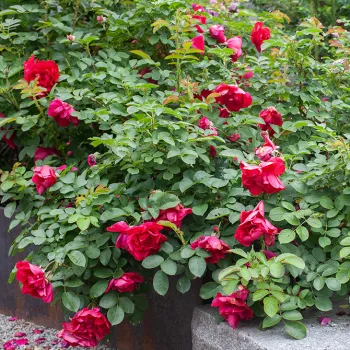
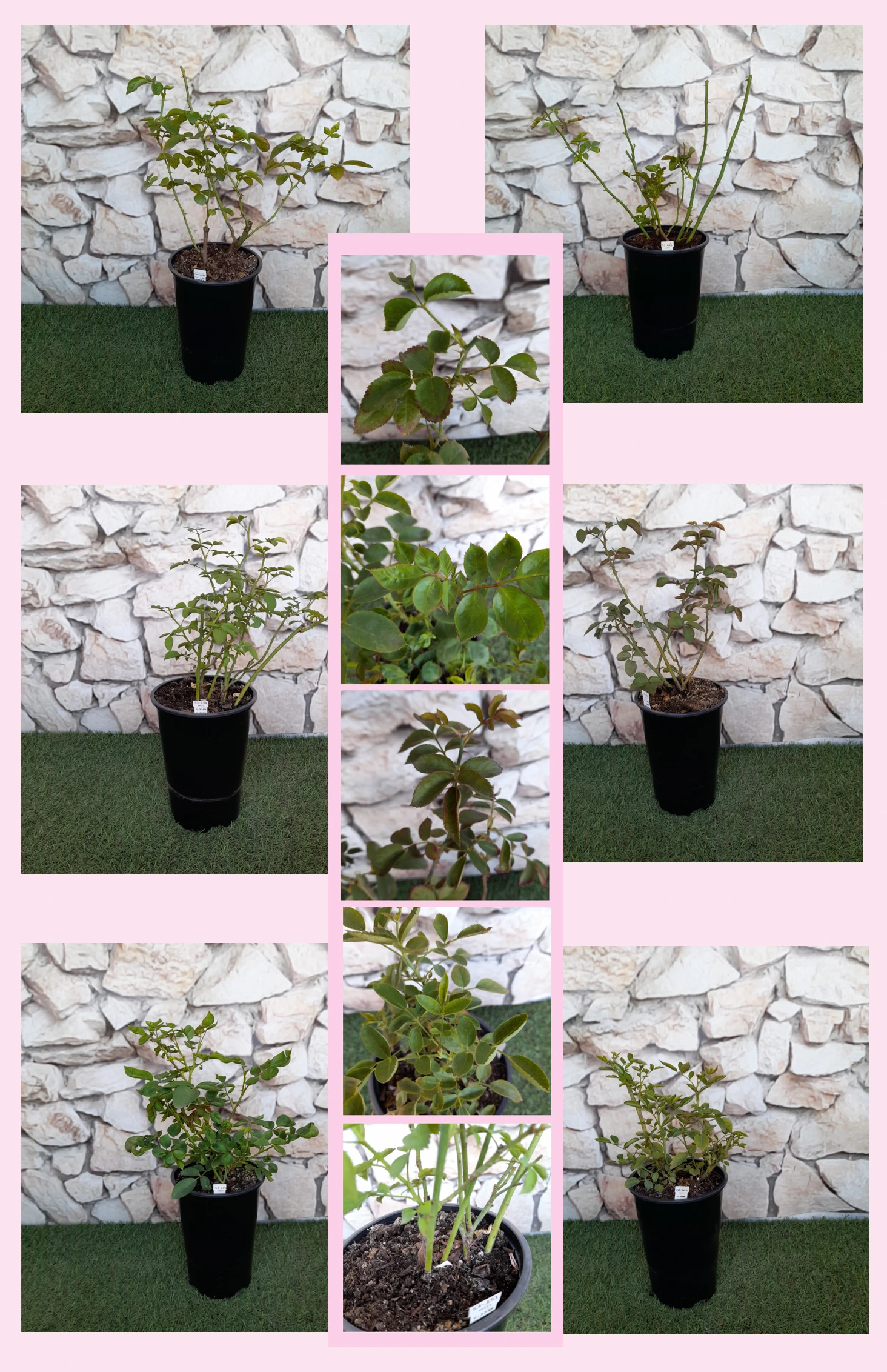
With its vivid scarlet blooms and dark, glossy foliage, Hansaland creates an immediate sense of visual balance in small front gardens and shared family spaces, even where cool summers and frequent showers bring steady rainfall and blustery winds. This upright shrub rose forms a leafy, hedge-like structure that naturally screens paths and terraces, while its semi-double flowers offer moderate pollinator interest through a long season. On its own roots, this rose develops a durable underground framework that quietly regenerates after pruning and weather stress, supporting decades of life in an ordinary family garden. In larger containers of at least 40–50 litres, the vigorous growth quickly fills vertical space, especially when matched with peat-free compost and careful rainwater use. Expect a gentle progression as roots establish in the first year, top growth builds in the second, and full ornamental impact arrives by the third season.
Usage options
| Target area |
Reasoning |
| Front-garden hedge or boundary strip |
The tall, upright habit and dense, dark green foliage create a living screen that suits narrow London front gardens and shared boundaries, offering a long-lasting, structural hedge with vivid red flowering for the privacy-conscious homeowner. |
| Rainwater-conscious urban planting strip |
Deep-rooting, own-root plants handle natural rainfall well and help stabilise heavier soils, making this rose useful where you are slowing and soaking roof run-off along the pavement edge for the sustainably minded city-dweller. |
| Low-maintenance shrub for busy family gardens |
Once established, the good self-cleaning of spent flowers reduces deadheading, while the robust shrub framework needs only basic yearly pruning, supporting an easy-care routine for the time-poor gardener. |
| Season-long colour backbone in mixed borders |
The remontant flowering pattern, with a strong second flush, ensures reliable colour through the main garden season, anchoring borders that combine perennials and grasses for the design-focused planner. |
| Wildlife-supportive, yet tidy, family planting |
Semi-double blooms provide moderate nectar access and the bright autumn hips add seasonal food and interest, giving a compromise between wildlife value and neat appearance for the nature-aware beginner. |
| Large container feature on terrace or balcony |
In a 40–50 litre or larger pot with good drainage, the upright habit creates height without overwhelming small spaces, while own-root resilience supports long-term container culture for the space-limited balcony-owner. |
| Statement specimen in lawn or gravel |
Planted as a solitary shrub, the saturated red flowers and glossy foliage read clearly from a distance, giving a focal point that matures into a permanent, woody presence for the impact-seeking collector. |
| Exposed, wind-prone coastal-style garden |
The sturdy, rugosa-based framework and good heat and drought tolerance cope well with breezier, more open sites and variable summers with regular rain and wind, supporting the practically minded owner. |
Styling ideas
- Classic-Hedge – Plant in a single row along a short front boundary, underplanted with lavender or nepeta to soften the base and highlight the red flowers – ideal for family-house front gardens.
- Urban-Backdrop – Use as a leafy, upright backdrop behind low perennials like sage and hardy geraniums to frame a small seating area – suited to busy professionals wanting simple structure.
- Container-Focus – Grow one plant in a 50-litre clay pot with free-draining, peat-free compost and underplant with trailing thyme – perfect for balconies and paved terraces needing vertical colour.
- Wild-Border – Combine with ornamental grasses and pollinator-friendly perennials, allowing the hips to colour in autumn for a soft, naturalistic look – for gardeners favouring relaxed, wildlife-aware planting.
- Pathway-Frame – Place as paired shrubs flanking a narrow path or doorstep, with pale groundcovers to catch fallen petals – for homeowners wanting a welcoming, “girly” approach without complex maintenance.
Technical cultivar profile
| Property |
Data |
| Name and registration |
Shrub rose marketed as Hansaland, a park-shrub type with the registered cultivar name KORhassi, also recognised by the American Rose Society under the exhibition name Hansaland. |
| Origin and breeding |
Rosa rugosa hybrid bred by Wilhelm Kordes III in Germany in 1993, registered in 2006 and introduced commercially after 2006 by W. Kordes’ Söhne for landscape and garden use. |
| Awards and recognition |
Certificate of Merit from the Royal National Rose Society in 1996, plus Quality Awards at The Hague and Belfast trials in 1997, with additional commendation at the Glasgow International Rose Trials. |
| Growth and structural characteristics |
Upright shrub, typically 140–210 cm tall and 80–130 cm wide, forming a strongly branched, dense, thorny framework clothed in dark green, glossy foliage that gives substantial visual weight in planting schemes. |
| Flower morphology |
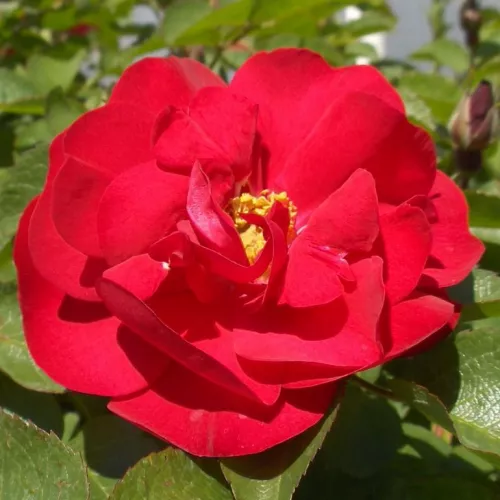
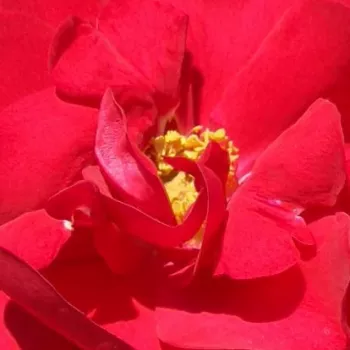
Semi-double, flat, medium-sized blooms with 13–25 petals, produced in clusters, flowering in flushes with a notably generous second display, and benefiting from good self-cleaning of spent blooms. |
| Colour data and phenology |
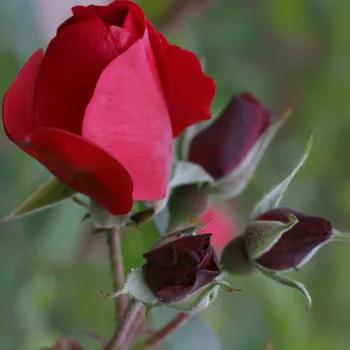
Pure vivid red flowers with a slight purple undertone; buds open deep scarlet, deepen towards dark crimson, then fade only slightly in strong sun, maintaining strong colour impact across the flowering period. |
| Fragrance and aroma |
Fragrance is very weak and barely perceptible, so it is chosen primarily for visual effect, structure and colour reliability rather than for scented display or use in fragranced cut arrangements. |
| Hip characteristics |
Produces moderate quantities of spherical, bright red hips about 18–26 mm across, providing additional late-season garden colour and modest wildlife interest once the main flowering period has passed. |
| Resistance and winter hardiness |
Very hardy shrub rose rated RHS H7, tolerating around −34 to −32 °C; foliage is, however, highly susceptible to major fungal diseases, so preventative care is important in humid or high-pressure areas. |
| Horticultural recommendations |
Best grown in full sun with good air movement; allow 100–110 cm for hedging or mass planting, more as a specimen, and maintain a regular protection and hygiene routine due to its disease susceptibility. |
HANSALAND offers vivid long-season red colour, structural height and moderate wildlife interest on a resilient own-root framework, making it a thoughtful choice if you value lasting presence and can accommodate regular care.