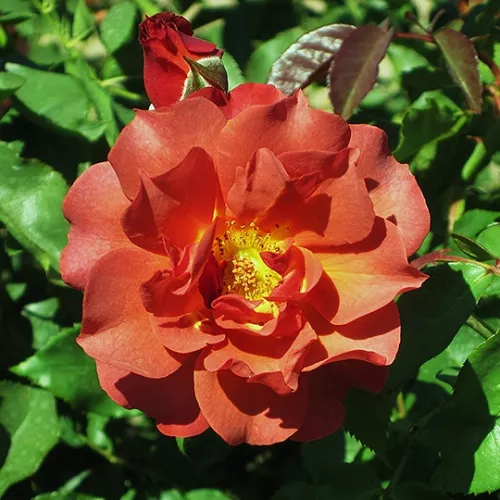
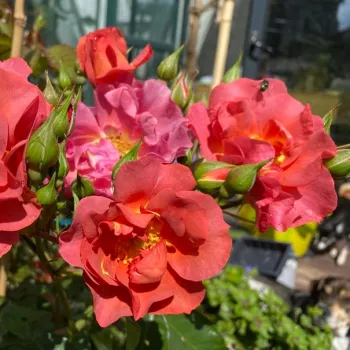
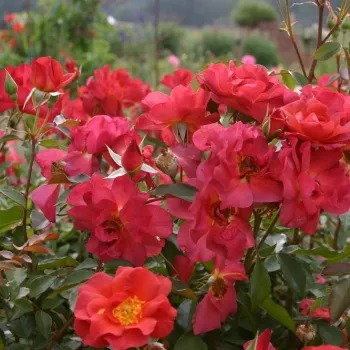
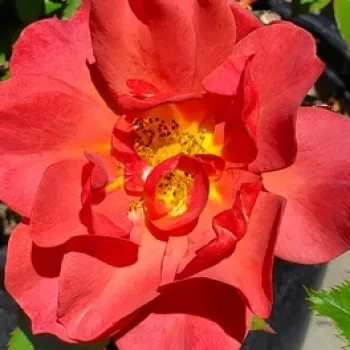
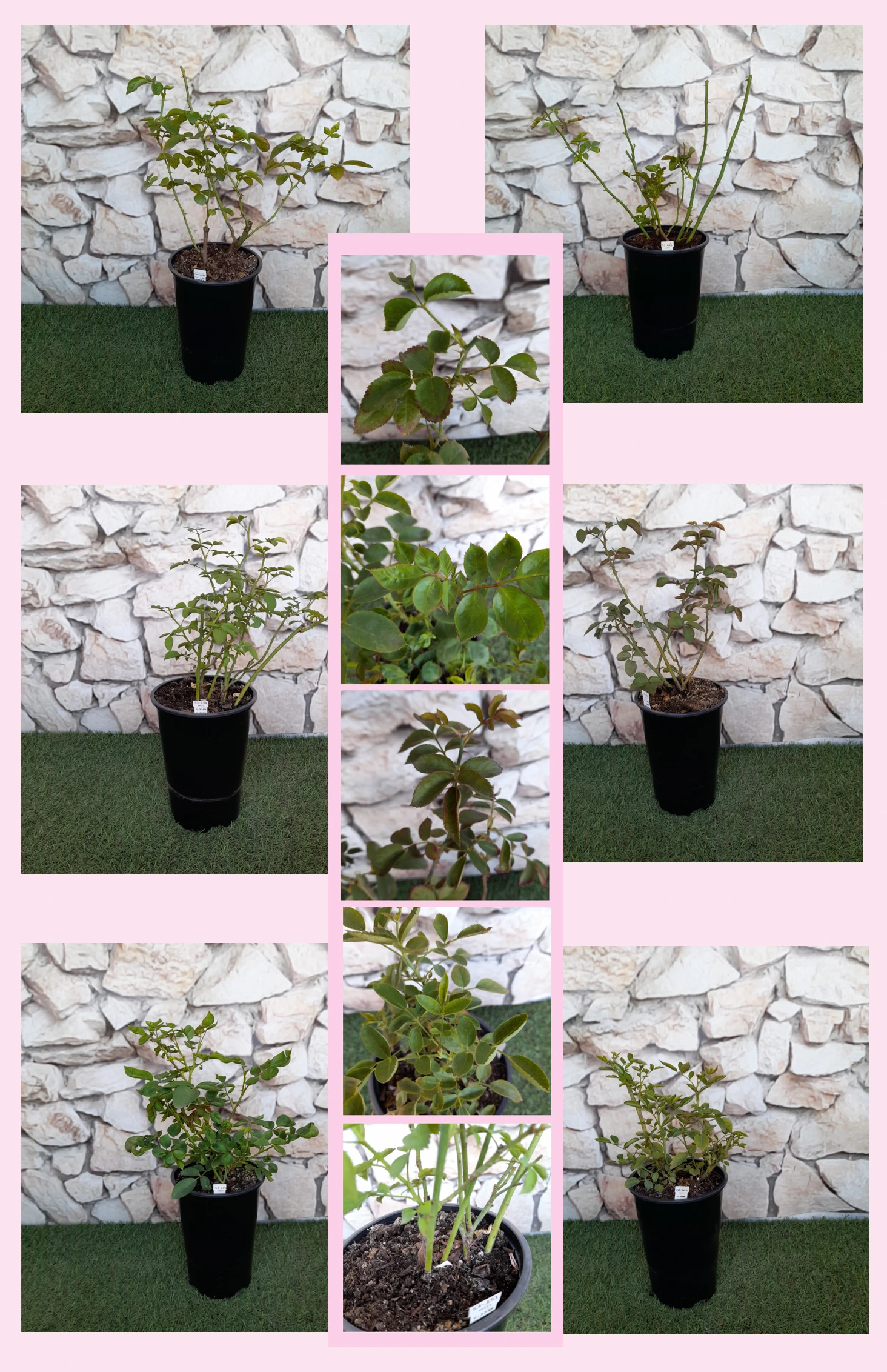
HONEY MAYA – orange bedding floribunda rose
Step from pavement to garden and feel balance in a front bed that glows with colour, as rain beads on glossy foliage and vivid orange-red clusters light up even compact London plots. HONEY MAYA has a bushy, flower-packed habit that fits neatly into small, rainwater-conscious gardens while coping steadily with cool breezes and damp, mixed-weather summers along exposed coasts. Semi-double blooms show golden stamens for a soft, honeyed fragrance and gentle pollinator draw, with petals shifting from fiery orange-red to salmon-coral tones for a long, evolving display. Grown on its own roots, it establishes a durable, regenerating structure that settles in reliably, so you enjoy a clear first-year outline, more generous second-year flowering, and by the third year a full, low-maintenance presence you can simply admire between light-touch, sustainable care.
Usage options
| Target area | Reasoning |
|---|
| Front garden bedding strip |
Compact, bushy growth and clustered medium blooms create a neat, colourful run along railings or paths without overwhelming a small frontage, giving reliable summer structure with minimal pruning for busy urban families who value a low-fuss choice. |
| Mixed floribunda border |
Regular remontant flowering and semi-double clusters provide repeat waves of orange interest amongst perennials, supporting an extended season of colour and structure in average UK conditions for hobby gardeners seeking a dependable favourite. |
| Pollinator-friendly city planting |
Open, semi-double flowers with clearly exposed stamens allow bees easy access, pairing well with herbs like lavender or nepeta to create a softer, wildlife-aware scheme for urban households who want a bee-conscious planting. |
| Rainwater-managed clay beds |
Dense, dark-green foliage and a medium, bushy habit lend visual stability in small beds where improved drainage handles heavier clay, helping planting look intentional despite changeable weather for homeowners preferring a resilient rose. |
| Low seasonal hedge or edging |
Regular spacing at 50–60 cm forms a colourful low hedge, with repeat flowering and tidy height giving definition along paths and parking bays, appealing to families wanting practical yet decorative boundaries. |
| Feature rose in sustainable schemes |
Own-root plants build long-lived frameworks that recover better from damage or hard pruning, offering lasting value and consistent flowering for design-conscious gardeners who prefer a enduring planting choice. |
| Large container on balcony or patio |
Moderate height and bushy habit suit a 40–50 litre peat-free container, where regular watering and feeding reward you with scented, colourful clusters close to seating for balcony and terrace owners seeking a manageable rose. |
| Family garden play-adjacent bed |
Medium maintenance needs and moderate thorniness combine with steady flowering and average disease resistance, supporting attractive planting near everyday play areas without demanding intensive care from time-pressed parents favouring a practical option. |
Styling ideas
- Sunset-Edge Border – combine HONEY MAYA with lavender, sage and soft grasses for a warm-toned ribbon along a front path – ideal for urban households wanting relaxed colour and gentle pollinator movement.
- Terrace-Glow Pot – plant one rose in a 40–50 litre clay container with trailing thyme to frame a seating area – suited to balcony and patio gardeners seeking an easy, fragrant focal point.
- Coral-Curtain Hedge – repeat-plant along a low fence with nepeta and compact heucheras to create a low, semi-formal edge – perfect for families wanting soft boundaries without high maintenance.
- Honey-Breeze Mix – weave among perennials like salvia and gaura for a light, airy border where orange clusters float against dark foliage – for hobby gardeners aiming at a contemporary, wildlife-friendly look.
- Clay-Corner Revival – in improved heavy soil, group with sea thrift and dwarf junipers for year-round texture and seasonal orange blooms – attractive for homeowners upgrading small, tired front beds sustainably.
Technical cultivar profile
| Property | Data |
|---|
| Name and registration |
HONEY MAYA – orange bedding floribunda rose; floribunda/shrub type for bedding use, commercial bed rose group, current trade name from Delbard, marketed in eleanorROSE ORIGINAL 2-litre own-root form. |
| Origin and breeding |
Parentage and breeder data unknown; introduced to the UK market via PharmaRosa Ltd. from Hungary in 2023, supplied as a container-grown own-root rose for reliable garden establishment. |
| Growth and structural characteristics |
Bushy, medium-height shrub reaching about 60–90 cm with a 50–70 cm spread; moderately thorny stems and dense, dark-green glossy foliage give a sturdy, filled-in appearance in beds and small-scale hedging. |
| Flower morphology |
Semi-double, cupped blooms with 16–24 petals, produced in clustered inflorescences; medium flower size offers an airy look while still giving good colour impact, with strong repeat flowering through the season. |
| Colour data and phenology |
Fiery orange-red petals with a golden-yellow centre; ARS code MY, RHS 14B outer and 14C inner, gently fading to salmon-coral pink tones while maintaining overall warmth and good colour retention in garden conditions. |
| Fragrance and aroma |
Medium-strength, clearly noticeable scent with a sweet, honeyed character; enough fragrance to enjoy at close range on paths or terraces without overwhelming nearby seating or neighbouring planting schemes. |
| Hip characteristics |
Produces spherical hips 6–10 mm in diameter, coloured orange-red, forming in moderate numbers and adding subtle late-season interest where spent blooms are not removed too strictly. |
| Resistance and winter hardiness |
Rated to around −21 to −18 °C (RHS H7, Swedish zone 3, USDA 6b); moderate resistance to powdery mildew, black spot and rust, with average heat tolerance and a need for watering in extended dry spells. |
| Horticultural recommendations |
Best in sunny positions; plant 50–60 cm apart for hedging or bedding, 95 cm as a specimen, allowing 2.8–3.2 plants/m² in mass plantings; medium maintenance with occasional plant protection and regular watering in drought. |
HONEY MAYA offers repeat orange flowering, a honeyed scent and a compact, own-root form that matures into a resilient, long-lived feature, making it a thoughtful choice for smaller, sustainable gardens.