KENENDURE – yellow flowerbed floribunda rose - Kenny
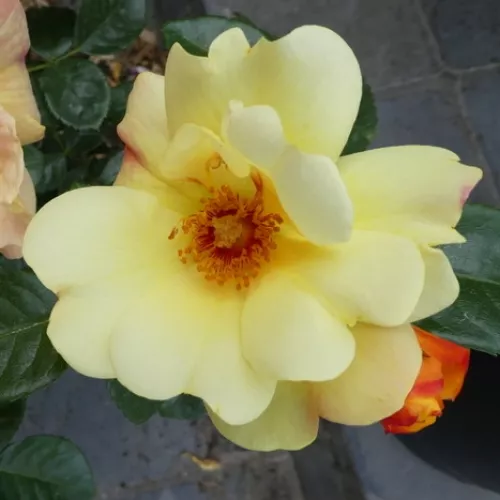
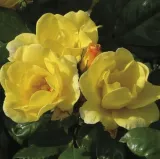
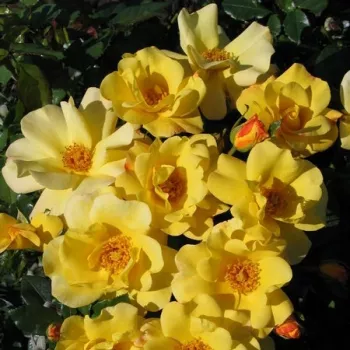
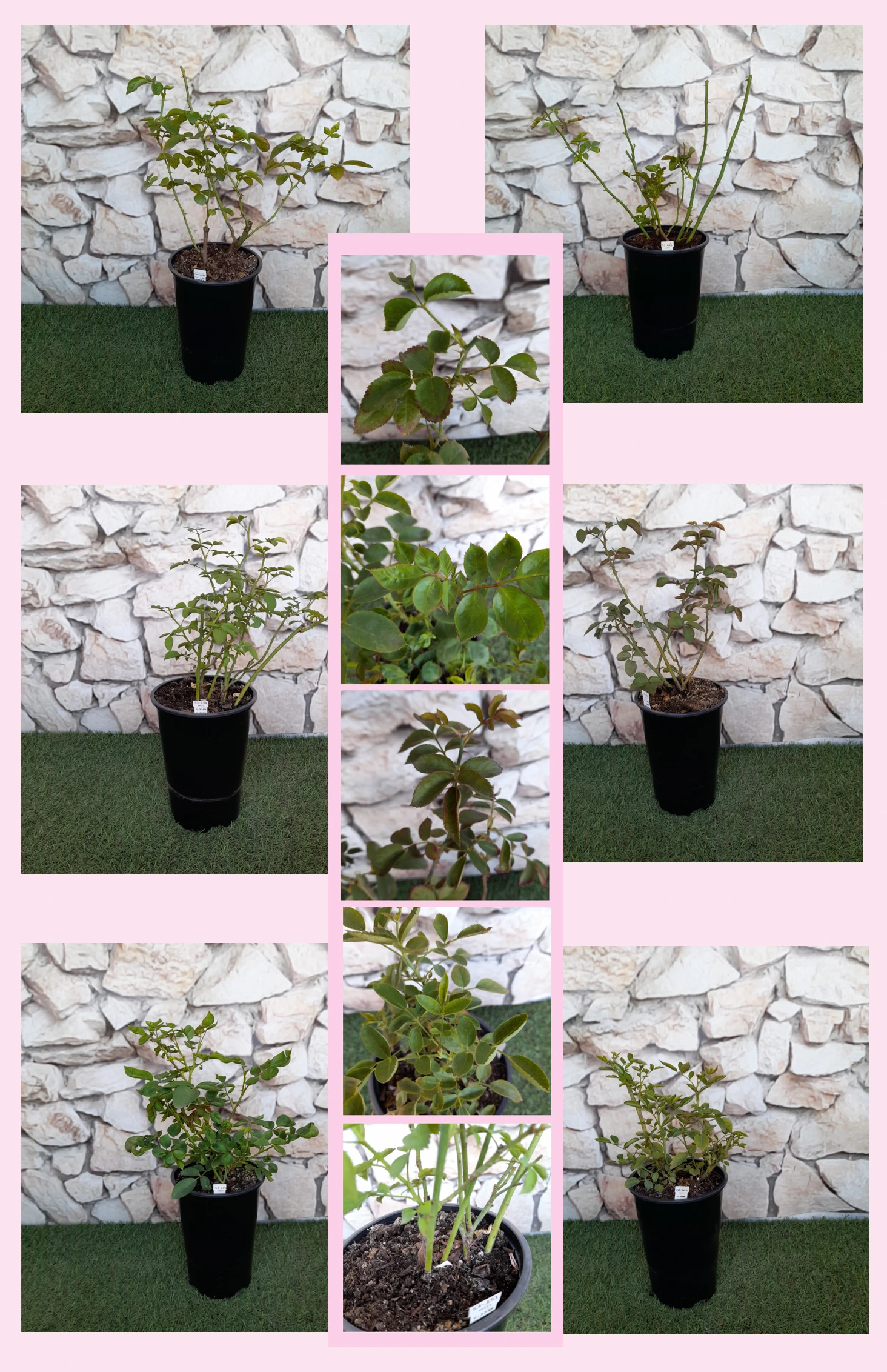
Step out after rain onto your front path and find KENENDURE lighting the garden with clear, sunny-yellow clusters that gently soften to pastel tones through the season, creating a calm sense of balance in small urban spaces. This compact floribunda keeps its flowers coming in generous waves, offering an especially long flowering period that works beautifully in narrow London front gardens where every week of colour counts. Its single blooms leave stamens easy to reach, giving a modest but meaningful boost to visiting bees for a more green approach to ornamental planting. On its own roots it settles steadily, building a durable framework and reliable lifespan that copes well with typical British soils, even where heavy clay just needs sensible drainage rather than constant fuss. In a 2‑litre container it is simple to handle, then it gradually establishes: in the first year it concentrates on roots, in the second on stronger shoots, and by the third year it reaches its full, easy-care ornamental value.
Usage options
| Target area | Reasoning |
|---|
| Front garden flowerbed in a terraced street |
The compact, bushy habit and 60–85 cm height make it ideal for the narrow beds typical of terraced-house fronts, providing a long season of cheerful yellow colour with modest pollinator interest for a busy urban gardener |
| Low, informal flowering hedge along a path |
Planted 35 cm apart, plants knit together into a low, dense line that guides the eye and softens hard paving, while own-root growth helps them recover steadily from any winter dieback for a beginner home-owner |
| Mixed bed with perennials in a family garden |
Its remontant, cluster-flowered display pairs well with nectar plants such as dwarf yarrow or rosemary, offering continuity of bloom between perennials and giving a stable backbone of colour for a practical family gardener |
| Rainwater-conscious front garden design |
Works well where planting beds double as soakaways, since the compact root system is happy in well-prepared clay that simply needs improved percolation to handle wet, windy spells near the coast for a sustainability-minded owner |
| Urban courtyard or patio in a large container |
Grows reliably in a 40–50 litre pot with peat-free compost and regular watering, bringing bright, tidy structure to paved spaces while own-root resilience supports long-term use in the same container for a small-space gardener |
| Low-maintenance, long-term planting scheme |
The own-root form gradually thickens from the base, replacing older wood over time and helping the bed keep its shape and flowering presence for many years with only straightforward pruning for a time-poor gardener |
| Public-facing verge or shared front boundary |
Repeated waves of flowers from early summer to autumn give a consistently welcoming look, while the modest hip set avoids excessive self-sowing, keeping the planting neat in shared spaces for a community-conscious resident |
| Pollinator-supportive decorative strip by a driveway |
The simple blooms, with visible stamens, offer accessible pollen during their long flowering season, fitting well into decorative schemes that also provide food for bees and hoverflies for a wildlife-aware gardener |
Styling ideas
- Soft-urban edging – Line a narrow front path with Kenendure and low dwarf yarrow, letting yellow tones echo off brickwork for a calm, ordered look – ideal for first-time terrace owners
- Pollinator ribbon – Alternate Kenendure with pockets of nepeta or lavender in a slim bed to offer nectar and colour through summer – suited to wildlife-curious families
- Sunny-hedge border – Create a low, flowering hedge backed by evergreen cherry laurel, giving structure in winter and a yellow wave in summer – for homeowners updating older front gardens
- Container courtyard – Plant a single Kenendure in a 50 litre pot with trailing thyme at the rim to brighten small patios and balconies – aimed at renters wanting movable planting
- Pastel-relax – Combine the fading pastel-yellow blooms with soft pink and white perennials for a gentle, evening-friendly palette – perfect for busy professionals seeking a restful retreat
Technical cultivar profile
| Property | Data |
|---|
| Name and registration |
Floribunda bedding rose registered as ‘Kenendure’, marketed as Kenendure Bedding rose Kenendure; floribunda exhibition and shrub rose category, part of the Bedding rose collection. |
| Origin and breeding |
Bred by David Kenny in Ireland in 2008 from complex floribunda parentage including ‘Baby Love’, ‘Flower Carpet’, ‘Golden Wedding’ and ‘Bright Smile’; introduced and registered in 2009. |
| Awards and recognition |
Holds a Gold Standard (UK, 2012) alongside major trial successes: Bronze at The Hague 2009, Certificate of Merit Belfast 2010, and first prize Hradec Králové 2012. |
| Growth and structural characteristics |
Compact, bushy shrub 60–85 cm high and 40–55 cm wide, with dense, mid-green, slightly glossy foliage (RHS 137B) and moderate prickles, forming a neat, low mound for bedding. |
| Flower morphology |
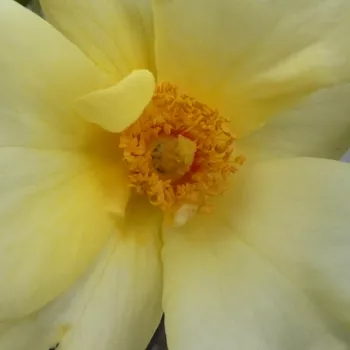
Medium clusters of flat, single flowers, 5–12 petals, around 4–7 cm across; remontant with an especially generous second flush, carried in clusters that cover the shrub in peak season. |
| Colour data and phenology |
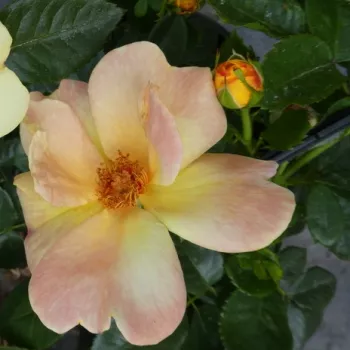
Bright sun-yellow blooms (RHS 14A outer, 14B inner) opening from deep lemon buds, then gently fading to pastel yellow with occasional pink-tinged edges as the flowers age on the plant. |
| Fragrance and aroma |
Fragrance is very weak and barely noticeable, so it is chosen primarily for visual impact and flowering performance rather than scent; useful where colour and reliability are the main design aims. |
| Hip characteristics |
Produces limited quantities of small, spherical orange-red hips about 9–12 mm across, which add a discreet autumn accent without significantly shifting the plant’s overall ornamental focus. |
| Resistance and winter hardiness |
Hardy to approximately −15 to −12 °C (RHS H6, Swedish zone 2, USDA 7b); disease resistance is moderate to weak, needing regular protection, especially against rust and related leaf problems. |
| Horticultural recommendations |
Best in sunny, well-drained beds with good airflow; maintain a preventive fungicide or organic protection regime, prune lightly to keep a dense bush, and allow space of 35–75 cm depending on use. |
KENENDURE offers compact, long-season yellow flowering and modest pollinator interest, with own-root resilience supporting many years of steady garden performance, making it a thoughtful choice to consider for your planting plans.