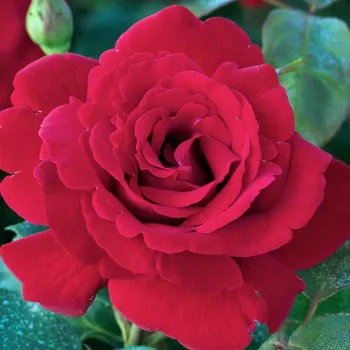
DELCART – dark red tea hybrid rose – Delbard
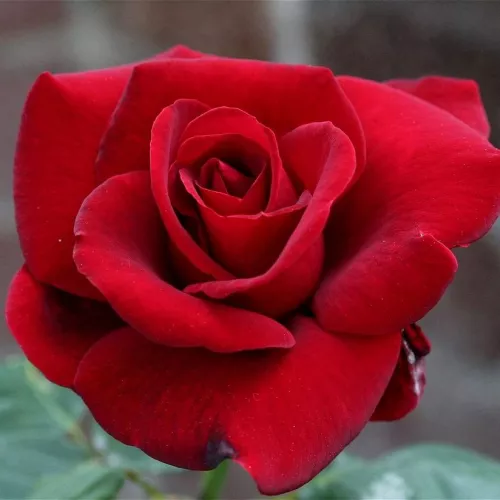
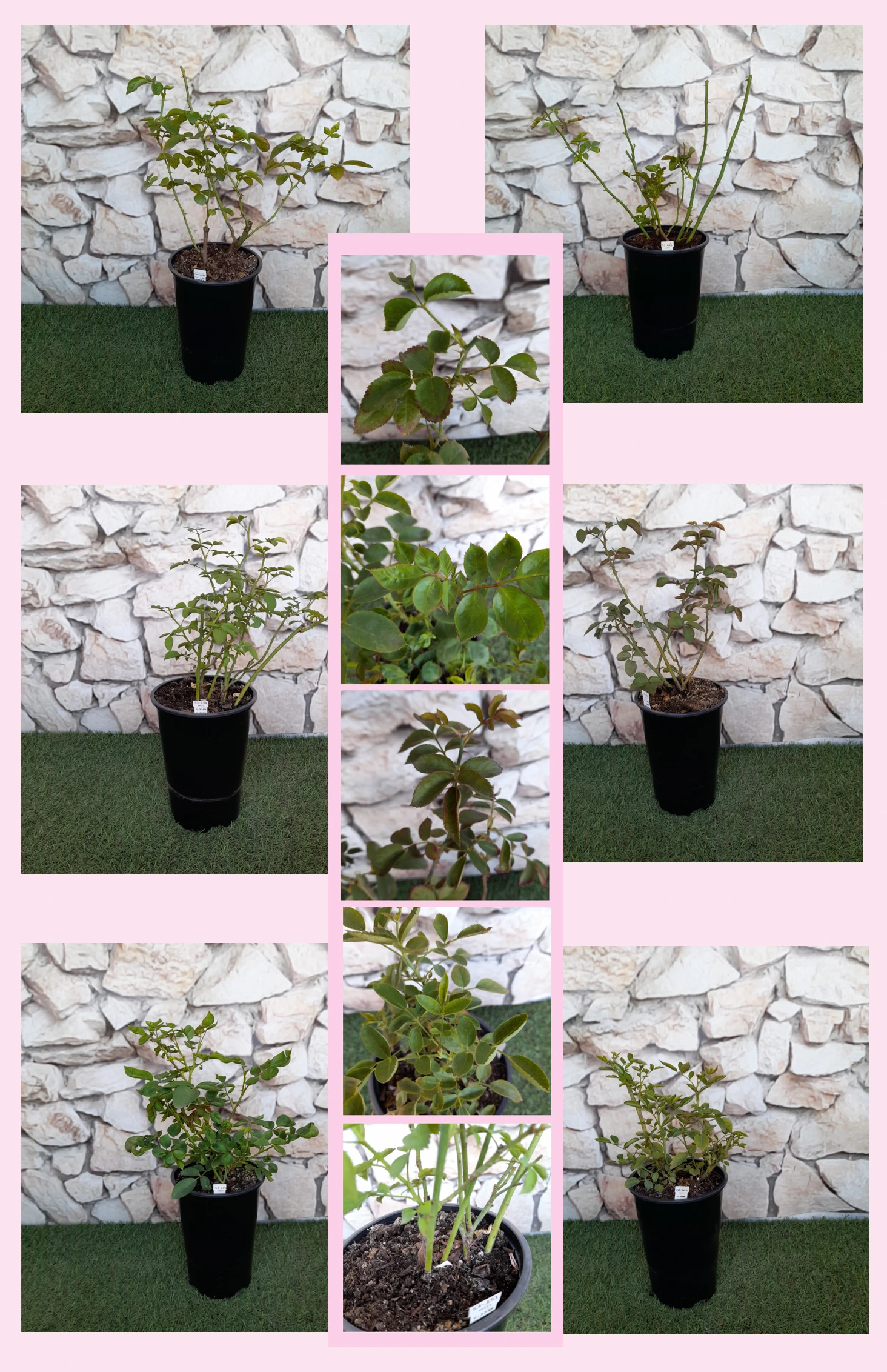
Step out after rain and be met by velvet blooms of deep, dark red, carried on a compact, upright shrub that slips easily into small London front gardens and rain-aware planting schemes designed to cope with wetter spells and sticky clay soils. Bred by Delbard for exhibition-quality, long-stemmed flowers, this hybrid tea offers an indulgent, long-lasting fragrance and reliable repeat flowering, so even a busy gardener can enjoy weeks of colour with minimal effort. Supplied in a manageable 2‑litre pot on its own roots, it is grown for resilience, steady establishment and a long garden life, building strong roots in its first year, more confident growth and flowering in its second, and full ornamental impact by its third season. In a border or a generous 40–50 litre container, this rose is designed for lasting ease in everyday family spaces.
Usage options
| Target area | Reasoning |
|---|
| Feature rose in a small front garden |
The compact, bushy habit fits narrow beds by front doors or railings, giving a refined, dark red focal point without overwhelming tight spaces; regular repeat blooms help keep entrances smart and welcoming for the busy urban homeowner. |
| Cutting rose for home arrangements |
High-centred, exhibition-style flowers on good stems make it ideal for vases, echoing classic florist roses so you can cut luxurious, long-lasting blooms from your own garden for the home flower enthusiast. |
| Specimen rose in a large container |
Performs well as a single specimen in a 40–50 litre pot, where its upright framework and glossy foliage show off the dramatic colour; own-root plants rebuild steadily after any setback for the space-conscious balcony gardener. |
| Mixed border with perennials and grasses |
The velvety dark red flowers pair beautifully with airy companions such as dwarf fountain grass or soft perennials, adding depth and structure while flowering in repeat waves for the design-aware garden improver. |
| Low, formal hedge or repeated accents |
Uniform height and upright growth allow neat rows at recommended spacings, creating a structured line along paths or boundaries that remains attractive over many seasons for the order-loving garden planner. |
| Family garden with moderate maintenance |
Medium disease resistance and remontant flowering mean it rewards basic care—watering in dry spells and occasional deadheading—with dependable colour and scent, without demanding complex routines from the time-pressed beginner. |
| Rain‑aware front garden on heavier soil |
Suited to typical UK conditions where good planting practice—improving drainage in heavier soils and directing roof run-off to beds—helps it cope well with wetter spells and breezier weather for the climate-conscious city gardener. |
| Long-term own-root planting scheme |
As an own-root rose it can live and flower reliably for many years, regrowing from its own wood after hard pruning or winter damage and maintaining a stable shape and colour for the sustainability-minded gardener. |
Styling ideas
- Velvet Entrance – Line a short front path with evenly spaced plants, underplanting with low Ajuga for a rich burgundy-and-deep-green tapestry – ideal for style-conscious terrace owners.
- Midnight Vase – Grow as a specimen near the back door in a large pot, ready for regular cutting so you can fill slim glass vases indoors – perfect for home entertainers.
- Classic Border – Place in a mixed border with dusky salvias and lavender, where the dark blooms add formality while perennials soften the effect – suited to cottage-style gardeners.
- Ruby Rhythm – Repeat single plants at intervals along a low fence, letting their upright shape create a gentle, rhythmic hedge of colour – good for families wanting easy structure.
- Urban Jewel – Anchor a small courtyard with one strong specimen surrounded by ornamental grasses and light gravel, balancing drama and low fuss – designed for busy city professionals.
Technical cultivar profile
| Parameter | Data |
|---|
| Name and registration |
Hybrid tea rose; registered as DELcart, marketed within the Les Grands Parfums collection and exhibited under the American Rose Society name ‘Le Rouge et le Noir’. |
| Origin and breeding |
Bred by Georges Delbard in France, 1973; introduced by Georges Delbard SA in 1974, with parentage not recorded but selected for strong colour and fragrance performance. |
| Awards and recognition |
Recipient of the Lauréate des Roses Parfumées fragrance award in Lyon (1974), acknowledging its notable, long-lasting scent among contemporary garden and exhibition roses. |
| Growth and structural characteristics |
Compact, bushy, upright shrub reaching around 75–105 cm in height and spread, with dense, glossy dark green foliage and moderate prickliness suitable for beds or low hedging. |
| Flower morphology |
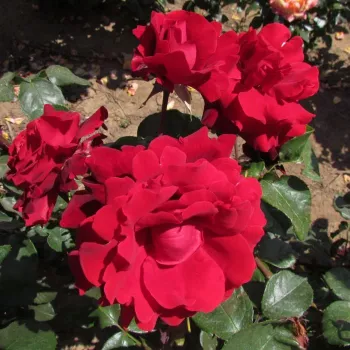
Semi-double, high-centred blooms with 17–25 petals, classic pointed hybrid tea form, mostly solitary on stems, large-flowered and remontant, with a particularly abundant second flush. |
| Colour data and phenology |
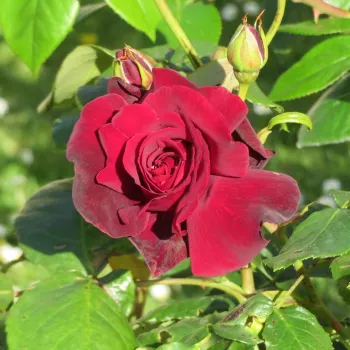
Deep dark red to near-black tones (ARS DR, RHS 187A–187B), buds nearly black, opening ruby-red, then velvety burgundy; colour holds very well in sun with minimal fading across repeats. |
| Fragrance and aroma |
Classed as strongly scented with a long-lasting perfume typical of exhibition hybrid teas, intended for close-up enjoyment in the garden and as a high-value cut flower indoors. |
| Hip characteristics |
Hip set is generally low due to double flowers and regular deadheading; when present, it forms small spherical red hips about 8–12 mm in diameter, adding occasional autumn interest. |
| Resistance and winter hardiness |
Rated to approximately −21 to −18 °C (RHS H7, USDA 6b, Sweden Zone 3) with medium resistance to black spot, powdery mildew and rust; benefits from standard rose care in humid seasons. |
| Horticultural recommendations |
Suited to beds, borders, hedges, specimens and containers; plant 55–100 cm apart depending on use, in well-drained soil with regular watering in drought and occasional plant protection. |
DELCART offers velvety dark red blooms, a compact, versatile habit and a fragrant, repeat-flowering display on long-lived own-root plants; consider it if you favour classic roses that quietly earn their place over time.