LEONARD DUDLEY BRAITHWAITE – crimson-red English rose - Austin
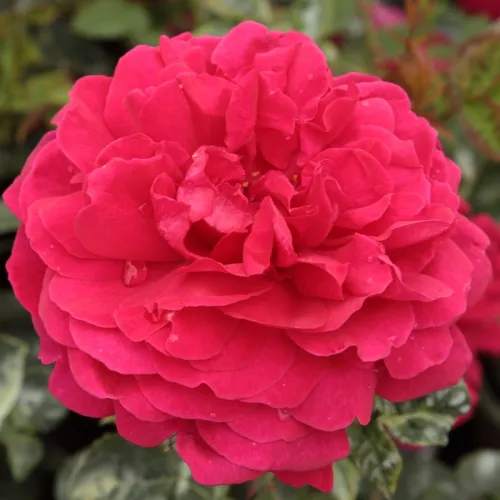
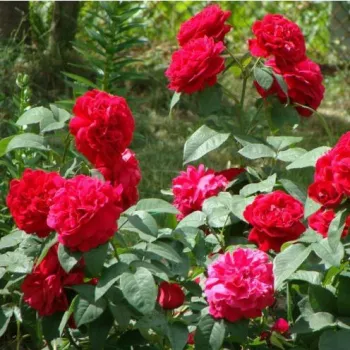
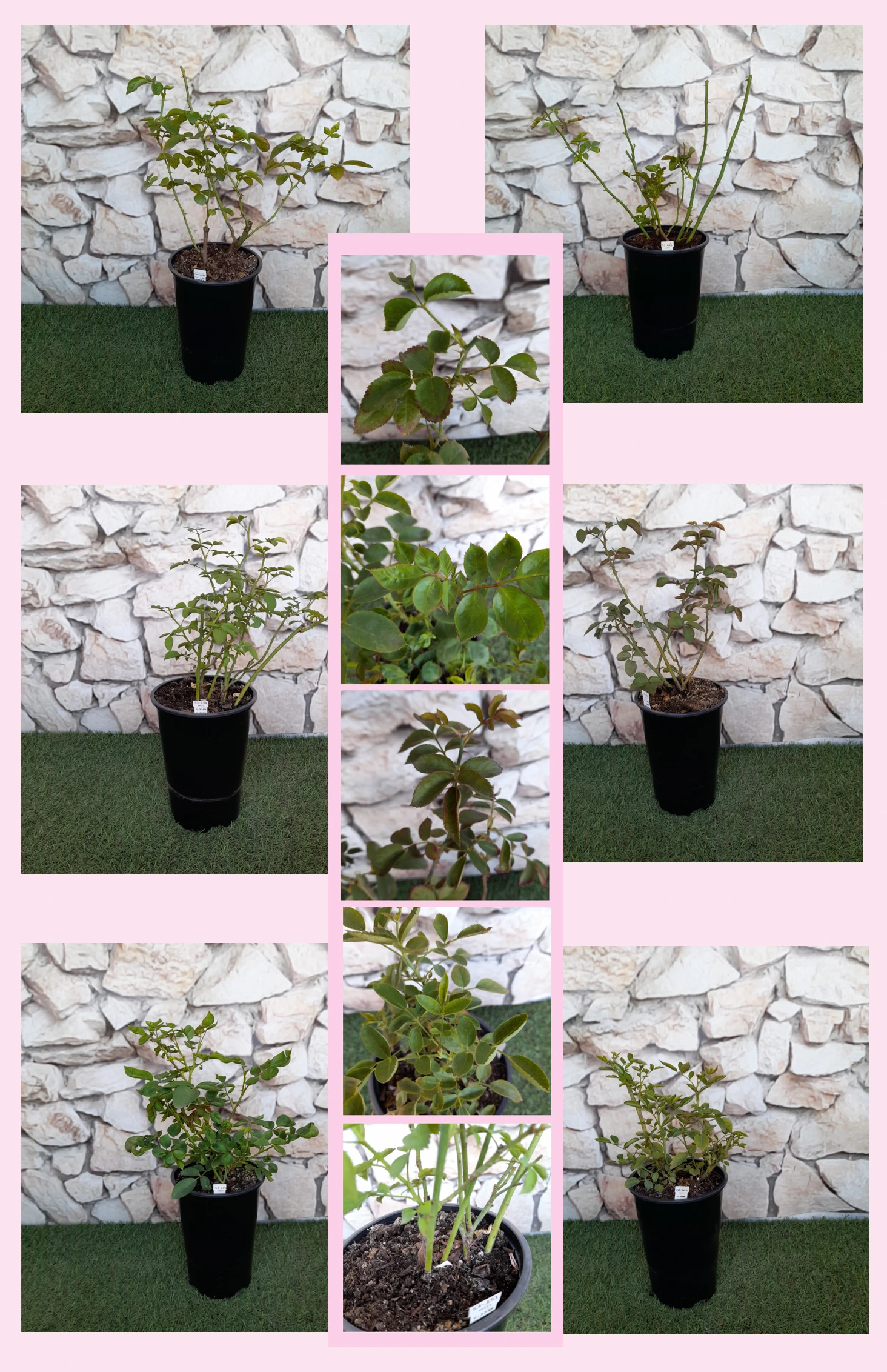
Imagine a narrow London front garden softened by rain, where clusters of velvety crimson blooms glow against dark green foliage and the air is filled with a romantic, long‑lasting perfume. Leonard Dudley Braithwaite is a classic English shrub rose that fits effortlessly into compact, rainwater‑friendly urban plots, coping steadily with blustery showers and the kind of changeable weather that brings both wind and drizzle. Its bushy, upright habit forms a naturally rounded structure, ideal for low hedging or a single focal point, while repeat flowering from early summer into autumn keeps the display reliably colourful. As an own‑root rose in the pharmaROSA® ORIGINAL 2‑litre format, it is bred for longevity and the ability to regenerate from its own base, giving you a stable ornamental value with less long‑term maintenance. In its first year it quietly builds roots, in the second the framework thickens with fresh shoots, and by the third year you can expect its full impact in both flower and scent, all in a way that feels reassuringly sustainable.
Usage options
| Target area |
Reasoning |
| Small urban front garden focal point |
The compact, bushy shrub habit forms a naturally rounded, eye‑catching mound that works beautifully beside a front door or along a short path, giving strong visual structure without overwhelming a narrow London terrace. Ideal for the beginner gardener. |
| Colour anchor in mixed borders |
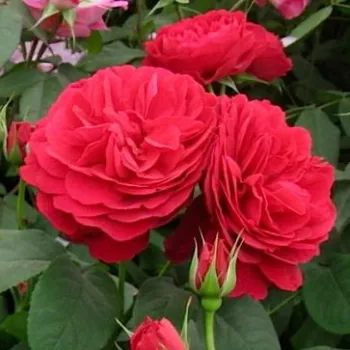
Large, very full, rosette blooms in rich crimson red provide a strong, reliable colour anchor that repeats through the season, pairing well with softer perennials and helping a family border look thoughtfully planted with relatively little planning. Perfect for the busy homeowner. |
| Fragrant seating or balcony area |
The very strong, long‑lasting perfume makes this rose particularly suited to spots where you sit or pass daily, such as a small patio or balcony in a large 40–50 litre container, bringing a sense of calm indulgence. Well suited to the scent lover. |
| Long‑term feature for family gardens |
As an own‑root shrub, it does not depend on a graft union, so it ages steadily, regenerates from its base after pruning, and maintains its character over many years, giving a reassuringly long‑lived feature. A sound choice for the long‑term planner. |
| Low‑effort flowering display |
Medium maintenance with good black‑spot resistance means fewer chemical interventions and simpler care, while repeat flowering gives plenty of bloom for modest input, well suited to an average family schedule. Designed with the time‑pressed gardener in mind. |
| Part‑shade side return planting |
Its tolerance of partial shade lets it perform along side alleys, north‑east aspects or between neighbouring houses where sun is limited, still giving colour and scent where many roses would disappoint. Valuable for the urban homeowner. |
| Rain‑aware, resilient front garden |
The dense foliage and sturdy framework cope well with regular UK showers and breezy conditions, fitting easily into a permeable, rainwater‑friendly design that swaps paving for planting without demanding high care. Reassuring for the sustainability‑minded gardener. |
| Cut flowers for the house |
Clustered, large, fully double blooms on strong stems can be cut for vases, extending the garden’s impact indoors; own‑root vigour helps the plant recover well after cutting, maintaining its generous presence outside. Especially attractive to the home stylist. |
Styling ideas
- Crimson‑and‑lavender classic – Underplant with lavender or nepeta to contrast the deep crimson rosettes with soft blues, creating a traditional yet low‑maintenance front garden – ideal for homeowners wanting easy structure.
- Rain‑softened terrace – Place in a 40–50 litre container by a terraced‑house doorstep with gravel mulch to absorb rainwater, pairing with dwarf grasses for movement – suited to city dwellers with paved frontages.
- Romantic hedge ribbon – Plant at 80–90 cm intervals as a low hedge along a path, weaving in white sage or coreopsis for light contrast – appealing to families seeking a gentle boundary instead of fencing.
- Shaded‑side retreat – Use in partial shade along a side return with ferns and dark evergreens so the rich flowers glow against lush foliage – perfect for those wanting interest where sun is limited.
- Cut‑flower corner – Dedicate a small bed with this rose, backed by tall perennials, to supply scented stems for the house while keeping the shrub as a long‑term focal point – good for creative home decorators.
Technical cultivar profile
| Parameter |
Data |
| Name and registration |
Leonard Dudley Braithwaite (AUScrim), English Rose Collection shrub, Romantic rose group; ARS exhibition name Leonard Dudley Braithwaite; commercial form eleanorROSE® ORIGINAL 2‑litre own‑root. |
| Origin and breeding |
Bred by David C. H. Austin in 1988, United Kingdom; parentage ‘Mary Rose’ × ‘The Squire’; introduced after 1993 by David Austin Roses Ltd., with registration completed in 1993. |
| Awards and recognition |
Holds the RHS Award of Garden Merit (1994, reconfirmed 2012), indicating reliable garden performance; ARS rating 7.9 reflects consistently good ornamental quality for general garden use. |
| Growth and structural characteristics |
Bushy, upright shrub 115–160 cm tall and 100–155 cm wide, densely thorned with dark green, slightly glossy foliage; forms a full, leafy framework that reads as a substantial yet manageable garden feature. |
| Flower morphology |
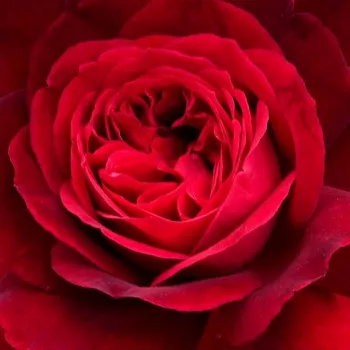
Large, very full, rosette‑shaped blooms with 40+ petals; borne in clusters with good repeat flowering and a notably abundant second flush; weak self‑cleaning, so deadheading spent blooms is recommended. |
| Colour data and phenology |
Crimson‑red flowers, ARS code DR, RHS 53B outer and 60A inner; velvety, deep tones that may shift to magenta in strong sun, while cooler weather preserves a rich, near‑black‑centred crimson character. |
| Fragrance and aroma |
Very strongly scented with a long‑lasting perfume that lingers around seating or paths; although detailed scent notes are not recorded, intensity is high enough to justify planting near frequently used spaces. |
| Hip characteristics |
Due to the very double bloom form, hips are few; where pollination succeeds, occasional small bottle‑shaped red hips 6–9 mm may develop, offering modest late‑season interest without prolific seeding. |
| Resistance and winter hardiness |
Hardy to about −26 to −23 °C (RHS H7, USDA 5b, Swedish Zon 4); black spot resistance is good, with medium susceptibility to powdery mildew and rust; tolerates heat but prefers regular watering in dry spells. |
| Horticultural recommendations |
Suited to beds, mixed borders, hedging and cutting; spacing 80–150 cm depending on use; tolerates partial shade; needs periodic deadheading and pest checks, plus spring frost protection in colder positions. |
Leonard Dudley Braithwaite offers rich crimson blooms, a strong scent and a compact, structural shrub on its own roots for dependable, long‑term garden value; consider it if you want lasting character with manageable care.