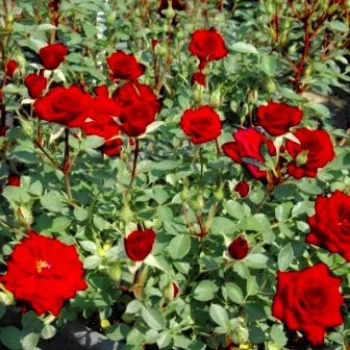
LOLLIPOP™ – red dwarf-mini rose
Along a narrow London front path or balcony rail, LOLLIPOP™ creates a low ribbon of colour and light, its compact habit ideal where every square metre counts and persistent blooms brighten even rain-darkened brickwork in challenging weather and breezy, exposed corners. This miniature remains naturally tidy, with many of its spent flowers dropping cleanly, so You spend more time enjoying and less time clipping. Planted in groups or a low hedge, its glossy foliage and neat structure form a calm, repeating line that fits a sustainable, rainwater‑fed front garden. As an own‑root shrub, it offers reassuring longevity, quietly rebuilding from its base if cut back or nipped by frost. In a 40–50 litre container, its shallow root system is easy to hydrate with stored rainwater while You watch it move from root‑building to strong top growth and then full display over three seasons, a gentle rhythm that suits busy lives. The discreet, barely there fragrance keeps entrances fresh rather than overpowering, while clustered pompon blooms provide steady visual impact for family gardens and small urban plots.
Usage options
| Target area |
Reasoning |
| Terraced-house front garden edging |
The compact, bushy habit and 30–40 cm height create a precise, low edging that will not swamp narrow paths or small gravel strips. Repeating plants at 25–30 cm intervals forms a neat, long-lived line that quietly frames the doorway, suiting the needs of the busy urban gardener. |
| Rainwater-friendly large container |
In a 40–50 litre pot with good drainage, the dwarf root system is simple to keep evenly moist with stored rainwater, even where soils are heavy or paved over, and it copes well with blustery, rain-soaked conditions near exposed streets, fitting the expectations of the sustainability-minded owner. |
| Low mini-hedge along a drive |
Dense foliage, repeat flowering and self-cleaning blooms give a continuous, low-maintenance line of colour along short drives or shared access lanes; own-root growth means gaps infill over time, which appeals strongly to the long-term planner. |
| Small family flower bed front row |
The miniature size and spherical, pompon blooms make an ideal front row to mixed beds, adding structure without shading herbs or perennials behind; children see flowers at eye level, which suits the typical family-garden household. |
| Pollinator-accent planting with herbs |
Though double, the moderately accessible flowers still attract some insects, and pair well with open-flowered herbs like oregano or nepeta that boost nectar, giving a mixed planting that feels wildlife-aware yet orderly for the eco-conscious beginner. |
| Clay or chalky urban soils |
Shallow, compact roots and modest size make it easier to establish in improved pockets of heavy or chalky soil; once drainage is managed, it settles reliably and offers durable structure for the time-pressed homeowner. |
| Minimal-pruning border for beginners |
Good self-cleaning and naturally tidy growth reduce the need for precise pruning; an annual light trim is usually enough to keep shape and flowering strong, making this reassuring for the low-effort gardener. |
| Long-season colour focus near seating |
Remontant flowering with a strong second flush delivers weeks of bright red colour in a very small footprint, without strong scent, so it suits close seating or balcony spots where visual impact matters more than perfume for the style-focused resident. |
Styling ideas
- Front-Path Ribbon – Plant a continuous row along a short terraced-house path, underplanting with low thyme between paving for soft texture and easy step-over – ideal for design-aware city dwellers.
- Mini-Hedge Line – Create a 25 cm-spaced hedge in front of a low fence, weaving in tufted hairgrass to catch evening light and contrast with glossy foliage – perfect for relaxed family front gardens.
- Rain-Barrel Pot – Use a 40–50 litre container near your water butt, mixing LOLLIPOP™ with trailing nepeta to spill over the rim and soften hard surfaces – suited to small, sustainable courtyards.
- Herb-Border Accent – Edge a compact herb bed of oregano and sage with this dwarf rose, letting its red clusters punctuate the silvery-green herbs – appealing for kitchen gardeners with limited space.
- Play-Corner Colour – Tuck a short row beside a lawn or play area, where sparse prickles and low height give safe, bright interest for children – good for young families wanting low-fuss structure.
Technical cultivar profile
| Parameter |
Data |
| Name and registration |
Miniature rose, collection Mini - dwarf rose. Registered cultivar name Lollipop, marketed as Lollipop™. Exhibition miniature, cut and bush forms; ARS exhibition name Lollipop, unregistered internationally. |
| Origin and breeding |
Bred by Ralph S. Moore at Sequoia Nursery, Visalia, California, USA. Parentage 0-47-19 (Rosa wichurana × ‘Floradora’) × ‘Little Buckaroo’. Introduced 1959 in the USA and 1962 in Australia. |
| Growth and structural characteristics |
Dwarf, compact, bushy shrub 30–40 cm high and 25–35 cm wide, with dense, mid-green glossy foliage and sparse prickles. Naturally rounded habit, ideal for edging, low hedges and container culture. |
| Flower morphology |
Small double flowers, 0.5–1.5 inches across, 26–39 petals, spherical pompon form in clusters. Remontant, giving recurrent flowering with an especially abundant second flush under good care. |
| Colour data and phenology |
Uniform mid-red blooms with slight purple depth; RHS 46A outer and 46B inner petals. Buds deep velvety red, later lightening and gently fading in strong sun rather than darkening, retaining an even display. |
| Fragrance and aroma |
Fragrance very weak, barely noticeable, with a discreet, elegant character that does not dominate confined spaces or seating areas. Chosen primarily for ornamental colour and neat effect rather than scent. |
| Hip characteristics |
Occasional small globular hips, about 5–7 mm in diameter, orange-red RHS 41A. Produced sporadically after flowering and generally inconspicuous within the dense foliage and continuous blooming. |
| Resistance and winter hardiness |
Hardy to approximately −21 to −18 °C (RHS H7; Swedish Zone 3; USDA 6b). Disease resistance medium overall, with good black spot resistance and moderate susceptibility to powdery mildew and rust. |
| Horticultural recommendations |
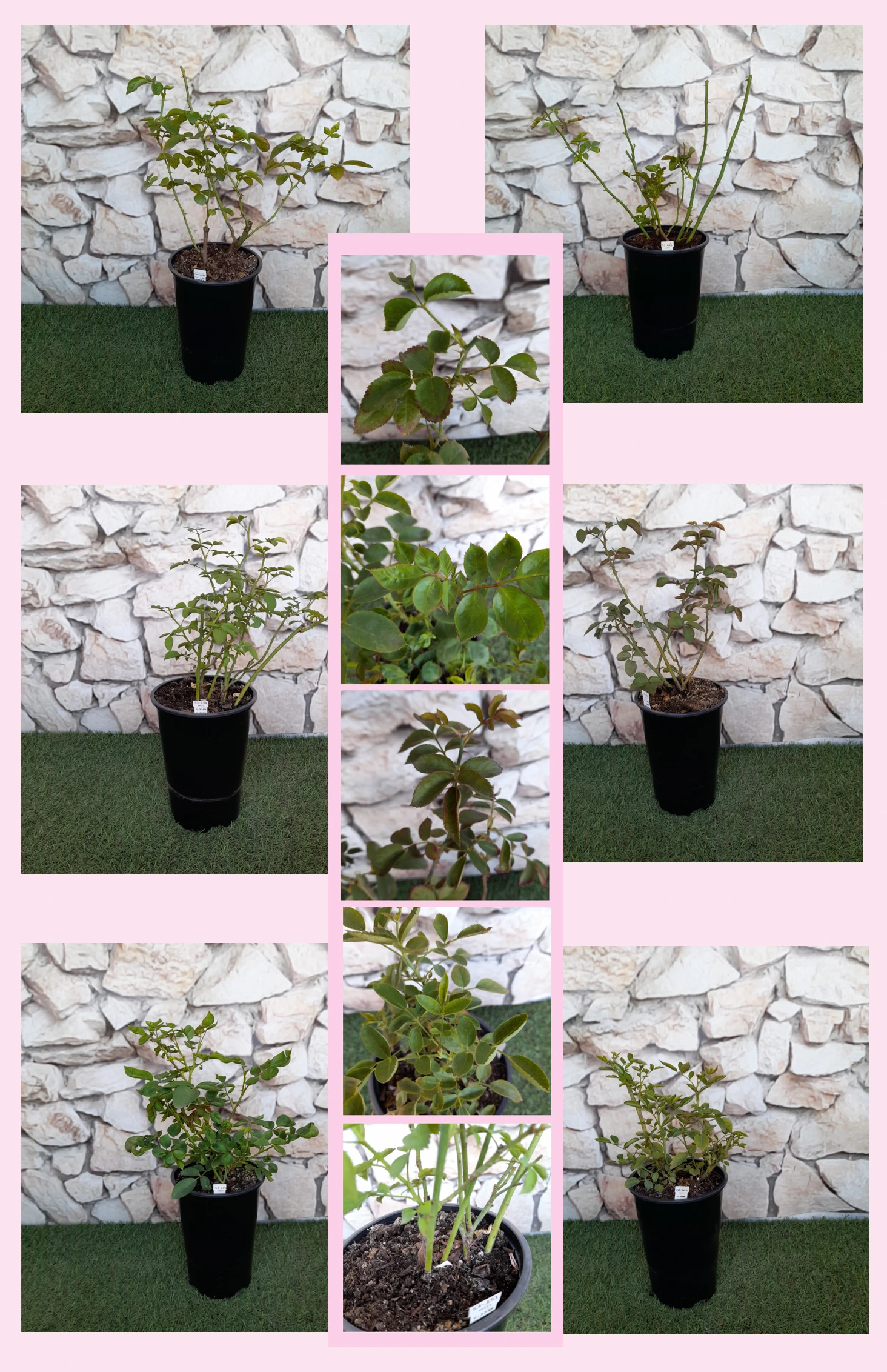
Best in full sun with free-draining soil; water regularly in extended dry spells. Suitable for edging, containers and low hedging at 25–30 cm spacing. Own-root in 2-litre pots for steady establishment and long life. |
LOLLIPOP™ offers compact, repeat red flowering with neat self-cleaning blooms and long-term own-root reliability in small beds or large containers, making it a thoughtful choice for enduring, low-fuss garden structure.