LYKKEFUND – cream-white historic rambler climbing rose - Olsen
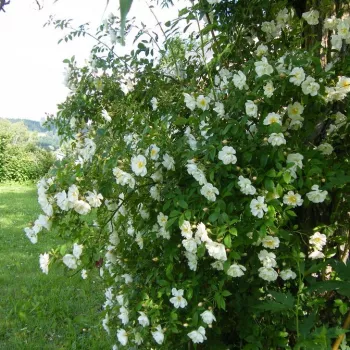
Imagine a London front garden where rain beads on glossy, mid-green leaves and you brush past clouds of fragrance on your way to the door: LYKKEFUND gives you that cool, muscat-scented archway with minimal fuss once established, while coping reliably with blustery, damp spells and heavy air after showers. This historic rambler offers a single, breathtaking wave of summer flowering, covering pergolas, fences or old trees in cream-white, bee-magnet clusters that almost glow at dusk. Trained well, its vigorous growth is easy to guide, yet the canes are only sparsely thorned, making pruning and tying-in markedly more comfortable. On its own roots, it settles for the long term, regenerating from the base and maintaining stable ornamental value as the years pass. In containers, a very large 40–50 litre pot supports its natural vigor and reduces watering stress, especially when you favour saved rainwater over mains. From the first year’s quiet root-building through the second year’s stronger shoots to the third year’s full garden impact, LYKKEFUND steadily becomes a defining, sustainable vertical feature that feels both traditional and quietly modern.
Usage options
| Target area |
Reasoning |
| Terraced-house front pergola or arch |
Ideal where you want a single, dramatic summer display that frames the entrance without constant fuss: one main flowering flush smothers the structure in cream-white clusters and strong muscat scent, creating a seasonal highlight for busy urban gardeners. |
| Rainwater-friendly city garden with saved water |
The variety tolerates heat well and responds positively to deep, occasional watering, making it an excellent match for gardens that rely on collected rainwater in large containers or open soil, reducing reliance on mains for sustainability-minded homeowners. |
| Vertical greening of walls and tall fences |
As a large climber with dense, glossy foliage, it quickly clothes unsightly vertical surfaces, offering long-term structure and seasonal shade while its open flowers provide excellent forage for bees, adding ecological value for pollinator-conscious beginners. |
| Training into an established tree |
Its rambling growth habit and graceful, arching canes make it well suited to scrambling through mature trees, where a single summer cascade of light, scented flowers creates a romantic, historic-garden effect with little ground-level space needed for space-limited garden owners. |
| Large container (40–50 litre) on patio or courtyard |
In a sufficiently large, well-drained container, the own-root plant establishes a durable framework; this allows easier control of height and spread on smaller sites while still offering strong scent and pollinator-friendly blooms for inner-city balcony users. |
| Long-term feature in family garden seating areas |
Planted near a bench or dining terrace, the intense, muscat-like perfume and rustling foliage create an atmospheric evening backdrop; the own-root character supports decades of use as a living “garden room” wall for family-focused garden planners. |
| Informal, wildlife-friendly garden edges |
The simple, open flowers attract bees in summer, and the modest crop of small orange hips provides autumn interest; over time, this creates a lightly structured but wildlife-supportive margin that suits nature-aware householders. |
| Coastal or wind-exposed suburban plots |
Well-anchored on supports, its vigorous canes and dense foliage cope reliably with breezy, moisture-laden air and changeable weather, providing a resilient screen and seasonal flower show that suits exposed-site property owners. |
Styling ideas
- Romantic archway – Train LYKKEFUND over a metal or wooden arch, underplant with lavender and Nepeta to echo the soft cream-and-blue palette and attract more pollinators – ideal for bee-friendly family entrances.
- Tree cascade – Allow canes to climb into a small ornamental tree, then weave Verbena and airy grasses beneath to create a layered, naturalistic “shower” of white blossom – perfect for relaxed wildlife gardens.
- Cream courtyard – Grow in a 40–50 litre terracotta pot in a sunny courtyard, with pots of sage and thyme nearby for scent at ground level – suited to compact, low-maintenance patios.
- Historic front – Combine on a terrace-house facade with Dianthus plumarius at the base and painted railings for a period look that feels quietly curated – appealing to lovers of heritage style.
- Evening pergola – Cover a pergola over a small seating area, adding white-flowered companion perennials and simple outdoor lighting so the pale blooms and fragrance stand out at dusk – designed for after-work unwinding.
Technical cultivar profile
| Characteristic |
Data |
| Name and registration |
Historic rambler rose marketed as LYKKEFUND – cream-white historic rambler climbing rose - Olsen; ARS exhibition name LYKKEFUND; unregistered cultivar traditionally treated as a classic heritage rambler. |
| Origin and breeding |
Bred by Aksel Olsen, Denmark, around 1930 from Rosa helenae × ‘Zéphirine Drouhin’; introduced by Olsen Planteskole, Kolding, and now valued across Northern Europe as a vigorous, scented historic rambler. |
| Growth and structural characteristics |
Very strong, climbing rambler with arching canes, 4.8–7.2 m high and 3.6–5.4 m spread; dense, mid-green glossy foliage; self-cleaning flowers; canes sparsely thorned, easing training and maintenance on supports. |
| Flower morphology |
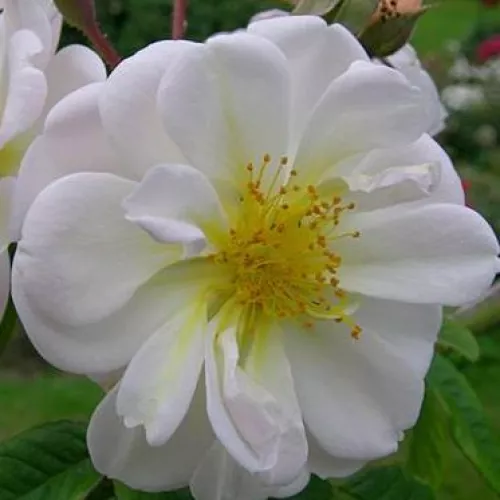
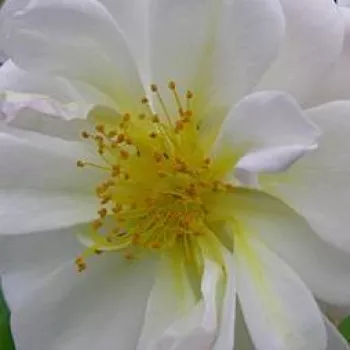
Single to semi-double clusters, 5–12 petals per bloom, flat and small (around 0.5–1.5 in); borne in large, airy trusses; non-remontant, giving one main, prolific flowering in early summer with good natural self-cleaning. |
| Colour data and phenology |
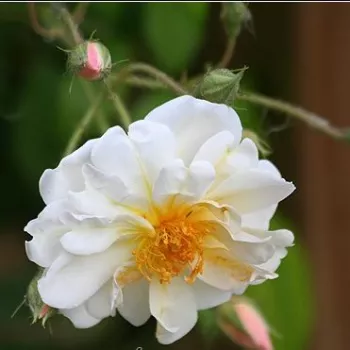
Cream-white flowers with soft yellow tones; buds pale creamy yellow with pinkish tips; newly opened blooms light cream-yellow with faint rosy flush, then almost white at full bloom; colour generally stable with slight lightening in strong sun. |
| Fragrance and aroma |
Strong, sweet, muscat-like fragrance that carries well in still air; scent persists during the main flowering period and is especially noticeable in the evening, giving high sensory value when planted near paths or seating. |
| Hip characteristics |
Produces a moderate number of small, spherical orange hips about 6–10 mm across (RHS 25A); hips may contribute discrete autumn interest and light wildlife value without creating a heavy fruit display. |
| Resistance and winter hardiness |
Hardy to about –26 to –23 °C (RHS H7; USDA 5b; Swedish zone 4); tolerates heat if watered in prolonged drought; foliage is very susceptible to powdery mildew, black spot and rust, so proactive care is essential. |
| Horticultural recommendations |
Best on strong supports: pergolas, arbours, walls or trees; plant 2.5–4.5 m apart depending on use; prefers well-drained soil, sun or light shade; maintain with regular pruning, tying-in and protective spraying where disease pressure is high. |
LYKKEFUND offers a spectacular once-a-year cream-white display with strong fragrance, reliable vertical coverage and the long-term resilience of an own-root rambler, making it a thoughtful choice when you plan a lasting garden feature.