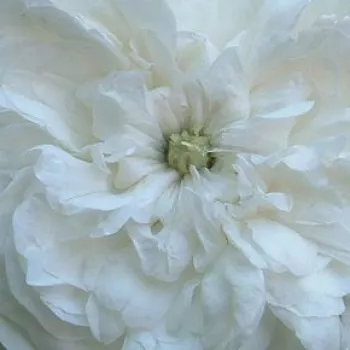
Madame Hardy – historic white Damask shrub rose
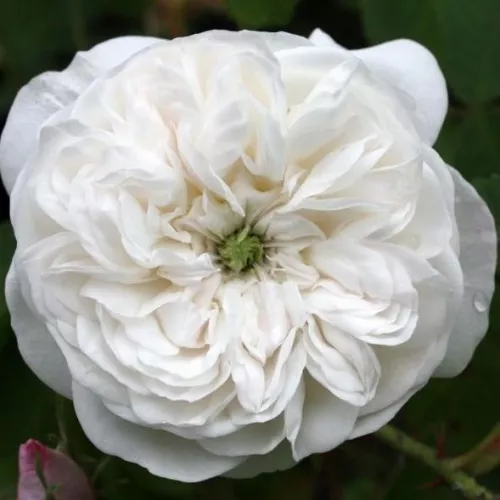
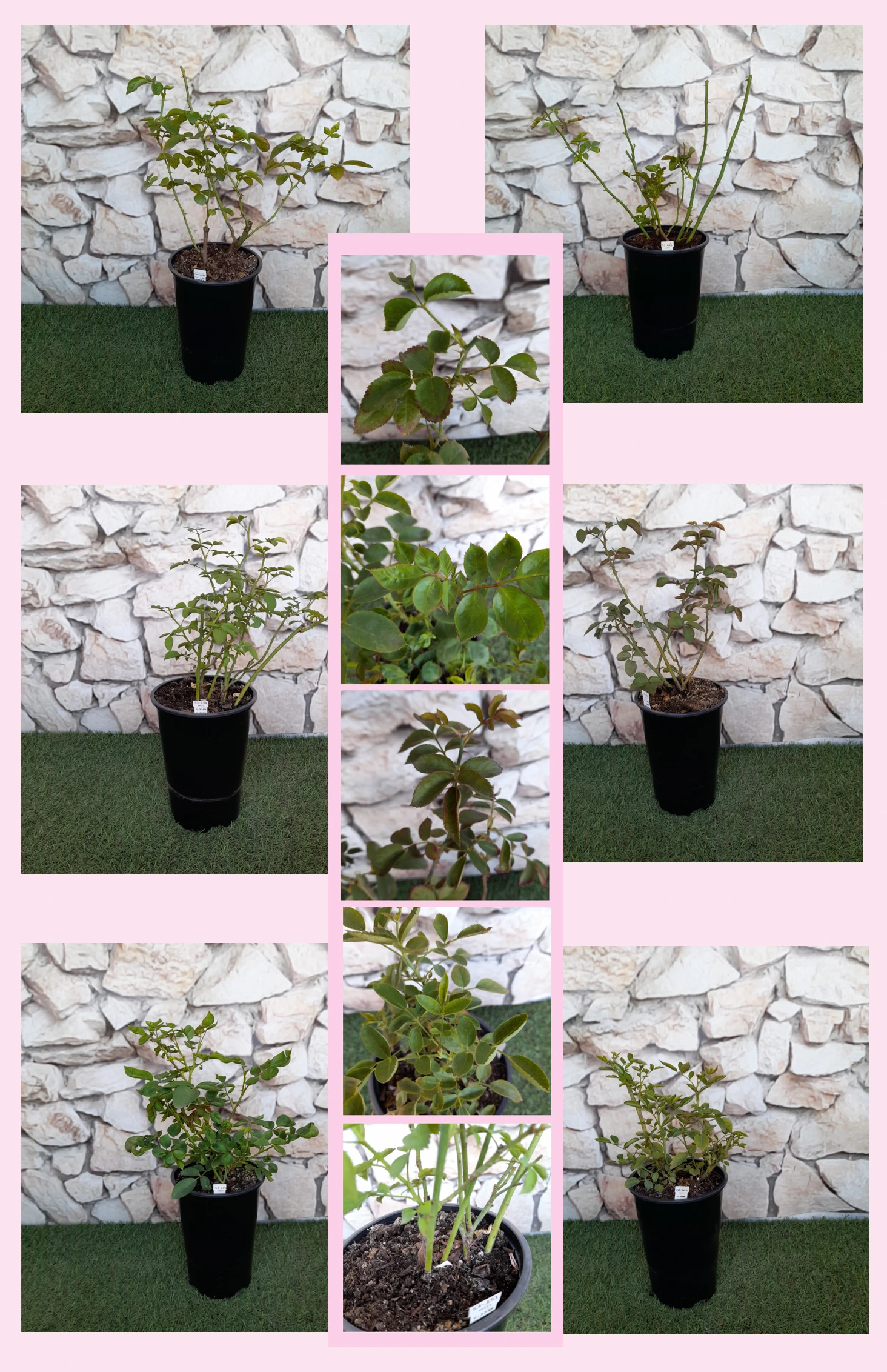
Step through your front gate and into a world of heritage calm with ‘Madame Hardy’, a celebrated 1830s Damask rose that settles naturally into London-style front gardens while coping gracefully with blustery, coastal-influenced, rain-soaked conditions. Its once-a-year flush of pure white, rosette blooms is lavish and memorably fragrant, filling the air after summer showers with a classic damask perfume that makes even a narrow path feel like a scented walk. As an own-root shrub it offers reassuring longevity, quietly rebuilding from the base if stems are damaged and giving you a stable, mature outline for decades with only modest maintenance. Dense, matt mid-green foliage forms an upright, bushy structure that screens bins or parked cars, sits comfortably in heavy clay once drainage is improved, and thrives in cooler, moisture-retentive corners with partial shade. Planted young in the 2‑litre pot, it naturally shifts from establishing roots, to building leafy shoots, to full ornamental presence over three rewarding seasons.
Usage options
| Target area |
Reasoning |
| Feature shrub in a small front garden |
‘Madame Hardy’ grows into a dense, upright shrub, ideal as a single focal point by a front door or low wall where space is tight but vertical presence is needed. Once established, its strong old-rose framework offers long-term structure with only light pruning, suiting those wanting enduring form more than constant tinkering, especially beginners. |
| Low-intervention historic rose bed |
This cultivar combines classic 19th‑century character with genuinely low maintenance: excellent resistance to black spot, mildew and rust means fewer sprays and less worry in humid summers. In a mixed historical bed, it contributes healthy green foliage and one opulent white flush without demanding complex care routines, making it attractive for busy-owners. |
| Scented summer walkway or narrow path |
The very strong damask fragrance is concentrated in its single main flowering, turning even a small path or side return into a seasonal scented event. Planted where you pass daily, the richly double, medium-sized blooms create a memorable sensory moment after rain, particularly appreciated by those who value atmosphere and perfume, such as fragrance-lovers. |
| Long-lived structural planting in a family garden |
As an own-root shrub, ‘Madame Hardy’ does not rely on a graft union, so if winter, children’s games or pruning errors damage stems, it reshoots from its own base, preserving its character over decades. This quiet resilience supports long-term garden plans and stable ornamental value, appealing to future‑minded homeowners. |
| Partial-shade side garden or north-east aspect |
This rose tolerates partial shade and cooler aspects better than many modern hybrids, holding its matt mid-green foliage and flowering reliably away from the fiercest midday sun. It works well where high walls, neighbouring houses or mature trees limit light, giving historic charm to awkward corners valued by practical city-gardeners. |
| Clay or moisture-retentive urban soils |
Once drainage is improved, ‘Madame Hardy’ responds well to heavy, moisture-retentive soils, coping with wet spells and wind typical of exposed, rain‑prone British plots, including coastal fringes. Its robust root system benefits from mulching and collected rainwater, fitting rainwater-conscious front gardens for sustainability-minded urban-dwellers. |
| Large container on balcony or paved front |
Where soil is limited or paving dominates, this variety can be grown in a large, deep container of at least 40–50 litres, using peat-free compost blended with grit for drainage. The upright habit gives height without sprawling, while own-root growth fills the pot steadily, suiting space-efficient, design-aware balcony-owners. |
| Background screen in mixed planting |
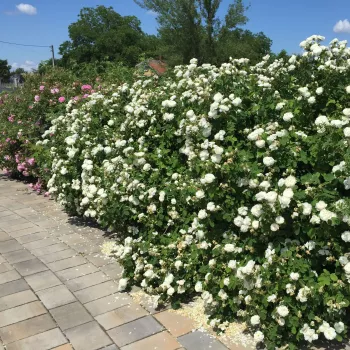
Reaching around 1.6–2.6 m with dense foliage and many thorns, ‘Madame Hardy’ forms an effective, living backdrop for perennials or shrubs, softening fences and boundaries. Its once-flowering display combines well with later-flowering companions that take over the show, an approach appreciated by thoughtful planners. |
Styling ideas
- Regency-Frontage – Underplant with lavender, nepeta and low box to echo period London terraces, using the white blooms as a calm, fragrant anchor – ideal for heritage‑minded homeowners.
- Rain-Garden-Edge – Position near a permeable gravel strip with sage and ornamental grasses, letting roof run-off soak in while the shrub provides vertical structure – suitable for sustainability-focused city gardeners.
- Shaded-Elegance – Combine with hostas and ferns along a side passage or north-east wall, where the rose supplies height and scent above close-textured foliage – perfect for small, part-shaded gardens.
- Historic-Mix – Pair with dark smoke-bush and purple clematis weaving through the framework, creating a dramatic contrast that highlights the pure white rosettes – appealing to collectors of old roses.
- Paved-Courtyard – Grow in a 50‑litre clay pot with airy nepeta at the base, placing it by a bench so the damask fragrance enriches warm evenings – recommended for balcony and courtyard dwellers.
Technical cultivar profile
| Characteristic |
Data |
| Name and registration |
Historic Damask shrub rose, commercial type centifolia-like; current trade name and ARS exhibition name: Madame Hardy. Part of the Historic rose collection; long established but not formally registered. |
| Origin and breeding |
Raised by Julien-Alexandre Hardy in Jardin du Luxembourg, Paris; likely Damask seedling. Bred 1831 in France, introduced 1832 via Hardy, and now a classic old garden rose worldwide. |
| Awards and recognition |
Inducted into the World Federation of Rose Societies Old Rose Hall of Fame in 2006, recognising its enduring horticultural value, historical importance and reliability in gardens across many climates. |
| Growth and structural characteristics |
Strong, upright, bushy shrub 160–260 cm high and 150–250 cm wide, densely thorned with plentiful, matt, mid-green foliage. Forms a solid, leafy mass that reads as a substantial garden structure. |
| Flower morphology |
Medium-sized, very full, rosette blooms with over 40 petals, borne in corymbs. Not remontant: produces one abundant main flush per season, with weak self-cleaning so spent blooms benefit from manual removal. |
| Colour data and phenology |
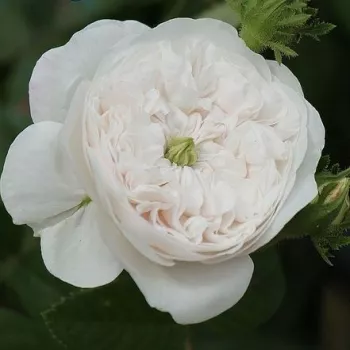
Flowers open ivory white with slight greenish tints, maturing to radiant snow white with a tiny green eye. Colour holds well, though heat may scorch petals; overall effect is a clean, cool white display. |
| Fragrance and aroma |
Very strong, garden-filling damask fragrance typical of historic roses, most intense during the main flowering flush. Suitable where scent is a priority, although blooms are primarily ornamental rather than for cutting. |
| Hip characteristics |
Hip set is limited due to its extremely double blooms; when present, produces small, ovoid, green hips around 12–18 mm in diameter, usually unobtrusive within the dense foliage and old-rose framework. |
| Resistance and winter hardiness |
Excellent resistance to black spot, powdery mildew and rust under garden conditions. Fully hardy to about −29 to −32 °C (RHS H7, Swedish Zone 5, USDA 4b), coping well with typical UK winters without protection. |
| Horticultural recommendations |
Suited to flowerbeds, specimen planting, hedging and parks. Plant 120–220 cm apart depending on use; tolerates partial shade and medium heat but needs water in drought. Benefits from mulching and improved drainage on heavy soils. |
Madame Hardy offers a once-a-season cloud of white, powerfully scented flowers on a disease-resistant, long-lived own-root shrub that gradually builds into a reliable garden structure; an excellent choice if you favour enduring, low-fuss planting.