MILLY™ – Winterjewel® white bedding shrub rose
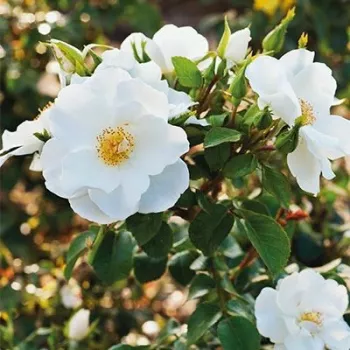
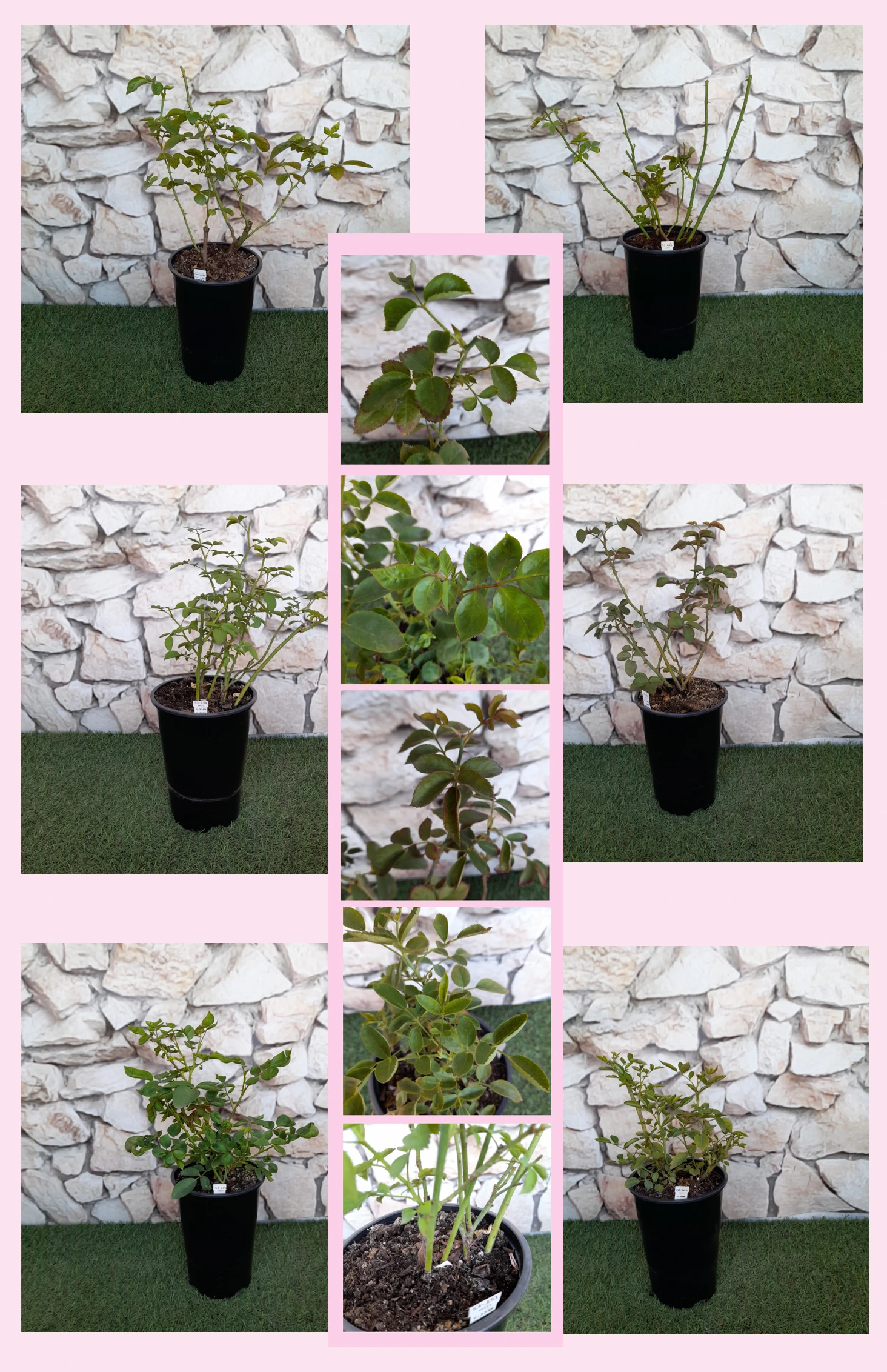
Step out after rain into a front garden softened by white blooms and fine honey fragrance, where compact, bushy plants create a clean, contemporary line along your path and cope well with blustery, wet weather that often challenges urban plots near the coast. MILLY settles quickly in typical London clay, rewarding light-touch care with reliable clusters of self-cleaning flowers that stay snow-pure as they open, then fall neatly away without deadheading. Own-root planting means a stable, long-lived structure that quietly regenerates, so you can enjoy a natural rhythm of growth from root-building in year one, through stronger shoots in year two, to full, balanced ornamental value by year three in a sustainable family garden.
Usage options
| Target area |
Reasoning |
| Front garden flower bed |
Forms a low, even line of snow-white blooms that brightens small front gardens without overwhelming them, while semi-double flowers with open stamens provide gentle interest for bees in busy streetscapes – ideal for the sustainability-minded homeowner |
| Low hedge along a path |
Bushy, spreading growth and modest height allow a soft, informal hedge that frames narrow paths yet stays easy to step past, with self-cleaning flowers reducing the need for constant clipping – well suited to time-poor beginners |
| Rainwater-friendly clay border |
Performs reliably in typical heavy clay once drainage is improved, making it a strong candidate for front gardens that receive roof run-off and gusty showers, even where rain and wind frequently test planting – reassuring for urban garden owners |
| Balcony or terrace container (40–50 L+) |
Compact habit sits comfortably in a large, stable container of at least 40–50 litres, where own-root plants establish into a long-lived, renewable feature, ideal for rainwater-watering routines – practical for container-focused gardeners |
| Family play-space edging |
The low, rounded outline defines lawn or play areas without high thorns at children’s eye level, while dense foliage and moderate maintenance needs keep it looking tidy between school runs and work days – created for busy family gardens |
| Pollinator-friendly mixed white border |
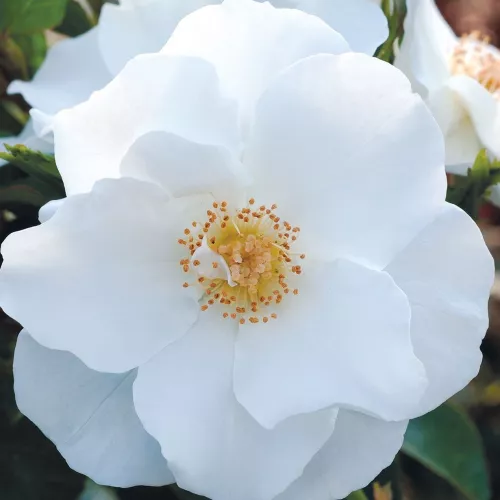
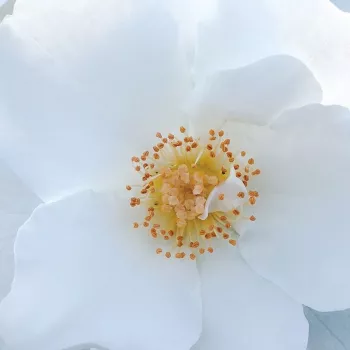
Semi-double, flat blooms with exposed yellow-gold stamens invite visiting insects, combining well with airy perennials to create movement and subtle habitat without looking untidy – appealing to wildlife-aware hobbyists |
| Long-season ground-cover band |
Spreading shrubs planted at the recommended spacing knit together into a flowering carpet, suppressing bare soil and visually anchoring taller planting, with repeat flushes extending the season – suitable for low-input planners |
| Low-maintenance, long-lived scheme |
Own-root structure supports recovery after harsh winters down to approximately -26 °C, helping beds look consistent year after year with modest pruning and occasional health checks – reassuring for long-term-minded owners |
Styling ideas
- Snowlit frontage – Line a short townhouse path with Milly and underplant with low nepeta for a soft white-and-lilac haze – perfect for city-front-garden renovators
- Green-and-white calm – Combine Milly with dark evergreen box or Ilex crenata to echo its glossy foliage and pure blooms – ideal for minimal-design enthusiasts
- Pollinator ribbon – Weave Milly through drifts of lavender and sage so bees move seamlessly between flowers – suited to wildlife-conscious families
- Container spotlight – Plant a single Milly in a 50-litre pot with trailing thyme to frame a doorway – great for balcony and doorstep gardeners
- Rain-garden edge – Use Milly at the front of a shallow, free-draining rain-collecting bed with ornamental alliums – designed for sustainable-planting adopters
Technical cultivar profile
| Parameter |
Data |
| Name and registration |
Modern shrub rose from the Winterjewel® collection; registered as BOZmillwin and marketed as Milly™ Winterjewel®, a white bedding shrub suitable for garden and landscape use. |
| Origin and breeding |
Bred by Biljana Bozanić Tanjga at PhenoGeno Roses, Serbia, from ‘Pouldiram’ × ‘Adelaide Hoodless’; registered in 2017 and introduced commercially after 2017 for broader European markets. |
| Awards and recognition |
Bronze medal in the Plant Novelty Competition at Zieleń to Życie, Warsaw (2014), recognising ornamental value, practical performance and landscape suitability among contemporary shrub rose introductions. |
| Growth and structural characteristics |
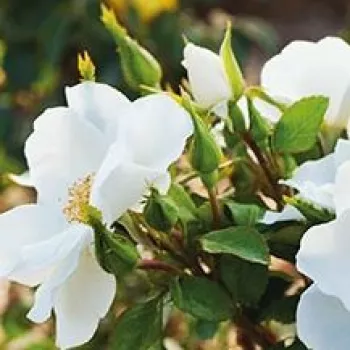
Compact, bushy, spreading habit reaching about 40–55 cm in height and width, with dense, slightly glossy dark green foliage and plentiful thorns, forming a low, cohesive, ground-covering shrub. |
| Flower morphology |
Semi-double, flat, medium-sized clusters of 13–25 petals, borne freely in trusses; remontant with an abundant second flush, and good self-cleaning as most spent blooms drop cleanly from the plant. |
| Colour data and phenology |
Pure, uniform snow-white petals (ARS code W, RHS NN155D) from bud to full bloom, with excellent colour retention and no pink or green tints; contrasting yellow-gold stamens remain bright as flowers age. |
| Fragrance and aroma |
Very light, barely perceptible honey-toned fragrance; scent is subtle and does not dominate small spaces, making the variety suitable near doors, windows or seating where stronger perfumes are not desired. |
| Hip characteristics |
Produces moderate quantities of small, spherical orange-red hips, around 6–10 mm in diameter, which can extend visual interest into autumn and provide a discreet seasonal detail in mixed plantings. |
| Resistance and winter hardiness |
Hardy to approximately -26 to -23 °C (RHS H7, Swedish Zone 4, USDA 5b), with moderate resistance to black spot, mildew and rust; generally heat tolerant but benefits from watering during prolonged drought. |
| Horticultural recommendations |
Best in sunny sites with improved drainage, especially on heavy clay; suitable for beds, edging, low hedges, ground cover and large containers, with moderate maintenance and occasional health monitoring. |
Milly™ Winterjewel® offers compact long-season flowering, partial pollinator appeal and dependable hardiness in an own-root form that matures gracefully over the years, making it a thoughtful choice for your next planting.