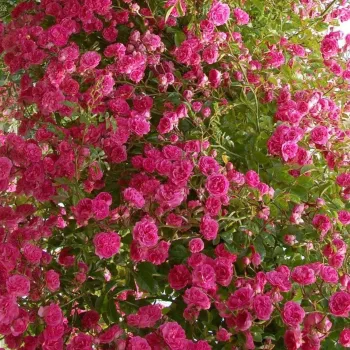
Minnehaha – pink historic rambler for pergolas and green front gardens
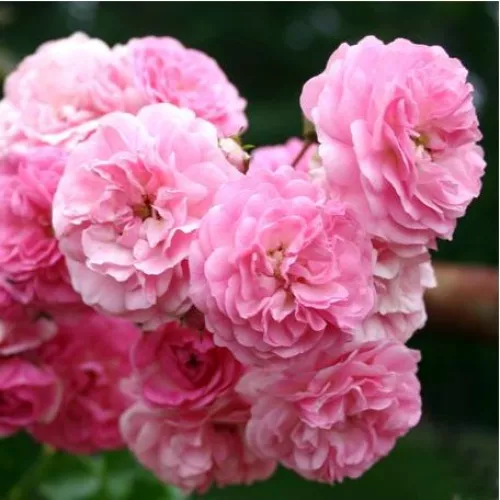
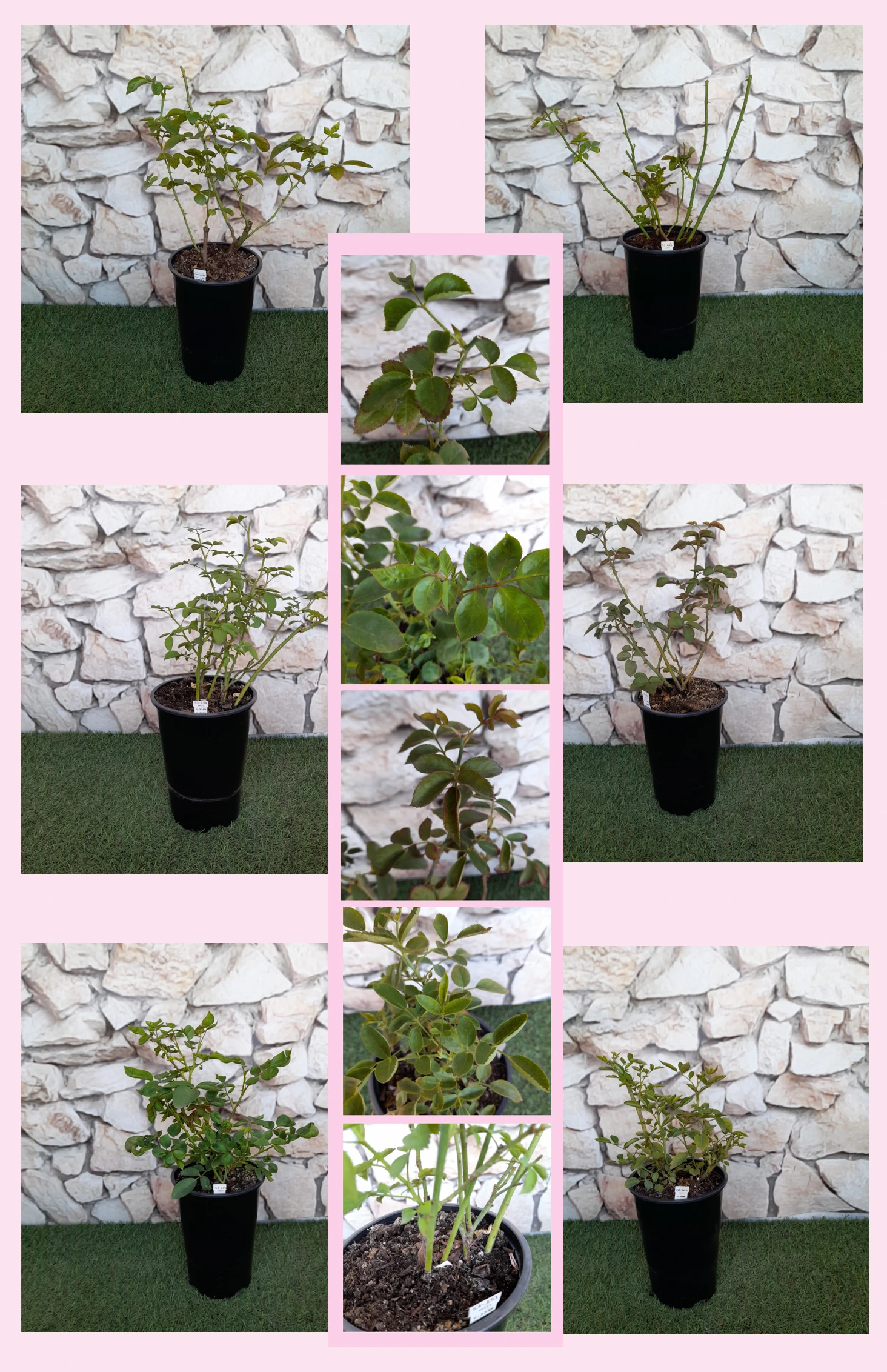
Let Minnehaha transform a small city garden into a soft pink summer cascade, clothing fences, arches and porch rails in thousands of dainty blooms. This early-20th-century rambler offers authentic historic character with modern ease: once established, it needs little more than space to climb and a simple yearly tidy. Glossy dark-green foliage shrugs off typical UK fungal problems, coping reliably even in exposed spots with frequent rain and wind along the coast. Own-root, nursery-grown plants build quietly from roots in year one, strong shoots in year two, to full, spectacular ornamental value by year three, promising long-term garden presence. Plant in the ground or in a generous 40–50 litre container to anchor a sustainable, rainwater-aware, low-input front garden you can simply step out and enjoy.
Usage options
| Target area | Reasoning |
|---|
| London terraced-house front fence |
Trains neatly along railings or low fencing, covering hard boundaries with a curtain of small pink pompon blooms and glossy foliage, while coping well with blustery, rain-lashed urban weather on busy streets for beginners. |
| Pergola or arch over a narrow path |
Long, flexible canes can be fanned over arches to create an immersive flower tunnel for a few magical weeks each summer, giving a romantic, “girly” feel with minimal pruning once the basic framework is in place for homeowners. |
| Climbing accent in a small family garden |
Uses vertical space instead of lawn, rising well above 4 m to frame views and windows without taking up much ground, ideal where play areas and seating compete for room in compact gardens for families. |
| Rainwater-conscious front garden design |
Planted into improved, free-draining soil at the base of downpipes or permeable drives, it turns runoff into vigorous top growth, helping green hard landscaping in a low-input, climate-aware planting scheme for urban-gardeners. |
| Historic or cottage-style planting scheme |
Combines its 1904 heritage with soft pink flowers and arching habit to recreate a period feel against brick, stone or weathered timber, blending naturally with lavender, nepeta and traditional perennials for nostalgia-seekers. |
| Large container on balcony or roof terrace |
In a 40–50 litre pot with a sturdy obelisk, its vigorous yet trainable canes provide height, screening and seasonal drama, while own-root resilience supports long-term use without frequent replacement for city-dwellers. |
| Low-maintenance boundary or wall greening |
Once tied in and established, it forms a dense, leafy cloak with a single, spectacular flush, relying on its good disease resistance to stay attractive with only light annual pruning and checks for busy-owners. |
| Long-lived feature in clay-based family gardens |
With thoughtful planting into improved, well-drained clay, this own-root rambler creates a durable vertical feature that can regenerate from the base after weather damage, giving reassuring continuity over many seasons for planners. |
Styling ideas
- Romantic-arch – Sweep Minnehaha over a metal arch, underplant with lavender and catmint, and let a gravel path crunch beneath for an elegant yet easy-care entrance – ideal for homeowners seeking soft, “girly” structure.
- Soft-screen – Train canes along taut wires on a front boundary, mixing with compact sages and ornamental grasses for a light, airy screen that still feels private – perfect for urban gardeners wanting gentle enclosure.
- Historic-corner – Pair this 1904 rambler with dwarf yew and old-style perennials to evoke a period garden against brick or stone, using its once-a-year flower curtain as a seasonal highlight – suited to nostalgia-loving collectors.
- Balcony-column – In a 50 litre pot, spiral stems around a tall obelisk and soften the base with trailing thyme or helichrysum for fragrance and texture – great for city-dwellers turning small balconies into green retreats.
- Family-pergola – Let Minnehaha ramble across a simple timber pergola, shading a bench or sandpit with dappled greenery and a brief summer flower show – ideal for families wanting impact without weekly maintenance.
Technical cultivar profile
| Property | Data |
|---|
| Name and registration |
Minnehaha – historic rambler rose (Hybrid Wichurana), commercial type climbing–creeping rose; ARS exhibition name Minnehaha; unregistered cultivar used under its long-established trade name. |
| Origin and breeding |
Bred by Michael Henry Walsh, USA, from Rosa wichurana × ‘Paul Neyron’; introduced by Walsh’s Hardy American Roses in 1904, reflecting early American breeding for hardy, vigorous, landscape ramblers. |
| Growth and structural characteristics |
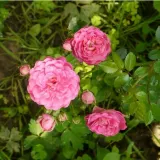
Very vigorous climbing rambler reaching about 4.5–7 m high with a 2–3.5 m spread; dense, glossy dark-green foliage on moderately thorny shoots, ideal for covering arches, pergolas, trees and larger structures. |
| Flower morphology |
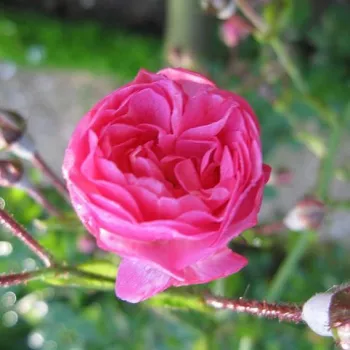
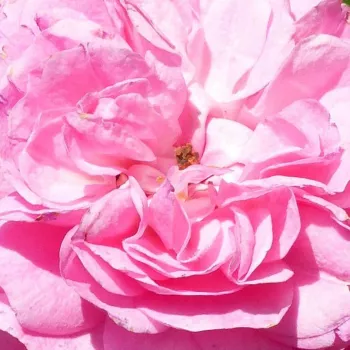
Small, double pompon flowers (approx. 1–4 cm) with 26–39 petals, borne in large, showy clusters; blooms once per season in a single, dramatic flush rather than repeating, emphasising structural and seasonal impact. |
| Colour data and phenology |
Mid- to rich pink flowers, RHS 62C outer, 65D inner petals; colour lightens toward the centre and gradually fades to almost white, producing a soft pastel effect in full bloom during the main early–mid summer flowering. |
| Fragrance and aroma |
Fragrance is very weak, with only a faint rosy character detectable at close quarters; this cultivar is selected more for its visual and structural qualities than for strong scent or aromatic garden use. |
| Hip characteristics |
Limited hip set expected due to fully double flowers; small spherical hips around 5–8 mm in diameter, red (RHS 44A) when formed, adding discreet seasonal interest rather than a dominant ornamental feature. |
| Resistance and winter hardiness |
Good overall disease resistance, showing resistance to powdery mildew and black spot, with only moderate susceptibility to rust; hardy to about −21 to −18 °C (RHS H7, Swedish zone 3, USDA 6b) with spring frost protection advised. |
| Horticultural recommendations |
Best on pergolas, arches, walls, fences or trained into trees; low maintenance once established, requiring structural tying-in and occasional pruning; allow generous spacing, and improve heavy soils for reliable long-term performance. |
Minnehaha offers once-a-year cascades of soft pink bloom, vigorous long-term coverage and resilient own-root growth that settles in for decades, making it a thoughtful choice for gardeners planning enduring vertical features.