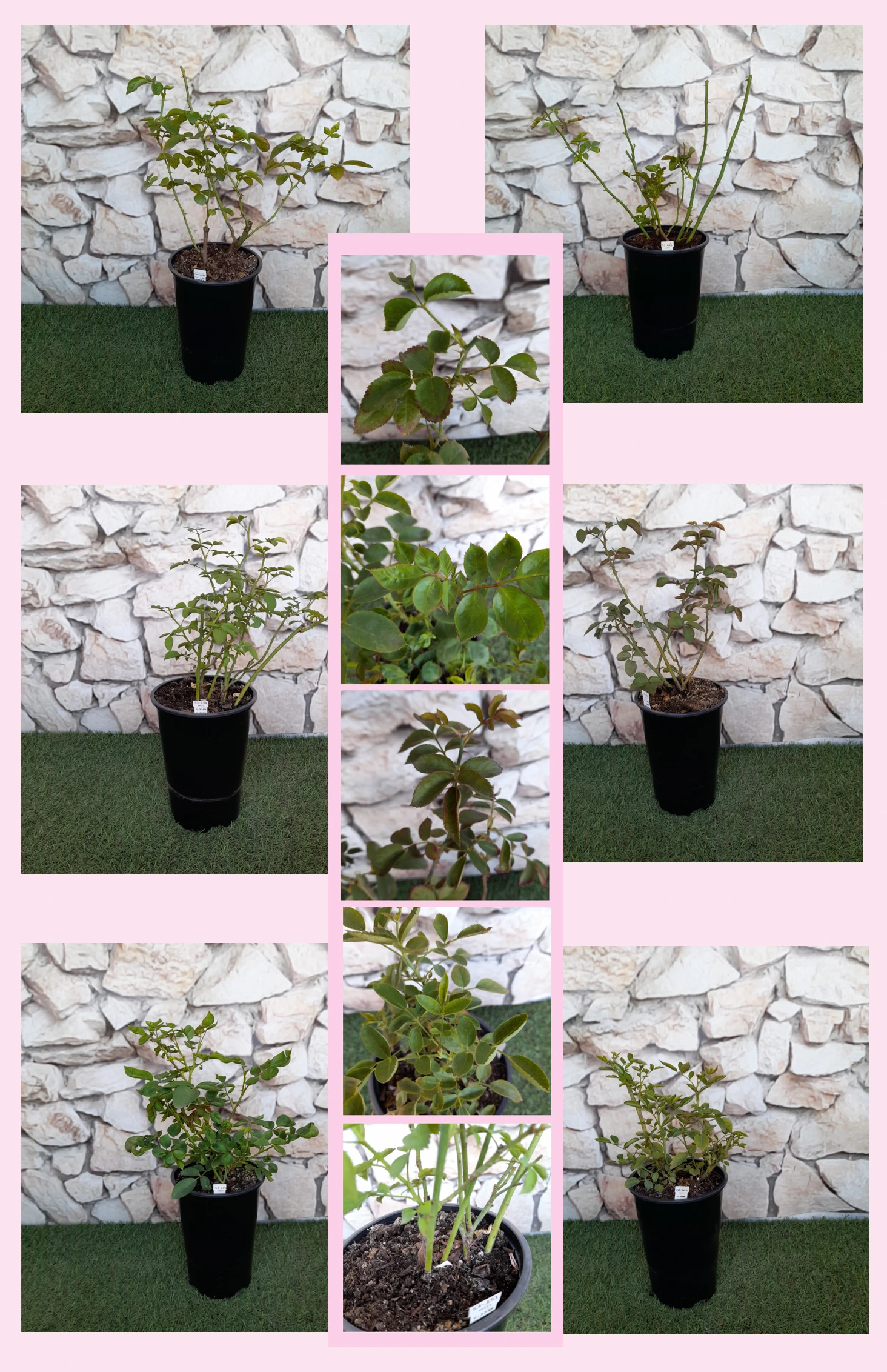
MOONSPRITE – cream-yellow bedding floribunda rose
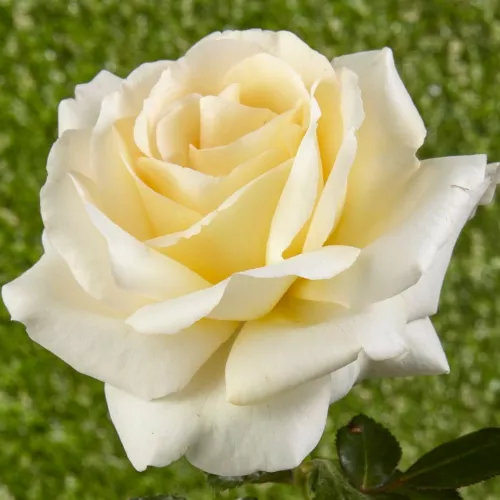
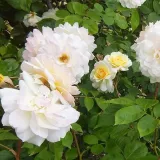
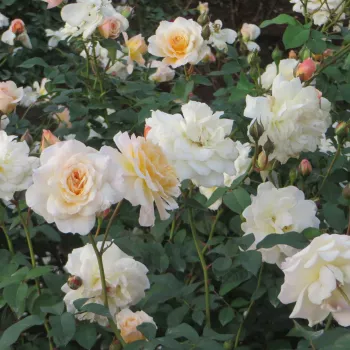
Step into the soft glow of ‘Moonsprite’, a compact floribunda that turns a small London front garden into an intimate evening walkway of fragrance and gentle colour. Clusters of creamy, moonlit blooms carry a strong, fresh, citrusy perfume, ideal beside a path where you can brush past after rain in typical British weather. Its neat, bushy habit suits narrow beds, low hedging and larger containers, while own-root planting supports a long-lived, easily renewed structure. Moderate disease resistance allows for a breathable, lower-chemical approach when combined with good airflow and sensible spacing. Over time, roots establish in Year 1, shoots and shape build in Year 2, and by Year 3 you enjoy its full ornamental impact. Reliable remontant flowering keeps borders bright from early summer well into autumn, with a soft cream-yellow palette that balances bolder planting and feels quietly elegant. Perfect for sustainable, rainwater-conscious city plots and clay-based soils where thoughtful drainage supports lasting health.
Usage options
| Target area |
Reasoning |
| Front garden path in a London terrace |
Compact, bushy plants line a narrow approach without overwhelming the space, while strongly scented, creamy blooms create a calm, evening “welcome home” effect with minimal shaping, ideal for the busy urban gardener. |
| Rainwater-aware clay garden bed |
Works well in typical British clay soils once drainage is improved, forming a stable, resilient shrub whose own-root system copes better with wet winters and drier spells, reassuring the low-maintenance homeowner. |
| Small mixed rose and lavender border |
The soft cream-yellow flowers blend beautifully with lavender, sage or nepeta, while remontant flowering keeps colour going through summer, supporting a balanced scheme for the design-conscious beginner. |
| Low, fragrant edging to a family lawn |
Moderate height and bushy growth create a tidy, semi-formal edging that is easy to keep in shape, delivering long-season scent and colour with only occasional deadheading for the time-pressed family. |
| Large container on a balcony or patio |
Performs attractively in a 40–50 litre peat-free container with regular watering, giving compact structure, repeated flushes of bloom and fine fragrance close to seating for the city balcony owner. |
| Low-input, breathable planting with grasses |
Pairs well with airy companions such as Stipa and bluebeard, its moderate disease resistance and tidy habit suiting schemes that rely on airflow and fewer sprays for the eco-aware gardener. |
| Small flowering hedge along a drive |
Regular, cluster-flowering and bushy, it makes an attractive low hedge at recommended spacing, with own-root plants recovering well from pruning, reassuring the first-time rose grower. |
| Family seating area or evening terrace |
Strong citrus fragrance and creamy blooms are best appreciated near seats, while moderate maintenance and steady flowering complement damp, wind-exposed UK conditions without fuss for the scent-loving homeowner. |
Styling ideas
- Moonlit border – Combine ‘Moonsprite’ with white gaura and silver foliage for an evening-reflective front garden – for householders wanting a soft, luminous street presence.
- Urban ribbon – Plant a single-file run beside a path, underplanted with low thyme to soften edges – for terrace owners seeking a gentle, fragrant walkway.
- Citrus court – Set in a square with lavender and sage to echo the rose’s fresh scent – for beginners wanting an easy, harmonious palette.
- Featherlight mix – Weave among Stipa tenuissima and blue caryopteris for a breezy, low-input display – for eco-focused gardeners preferring movement and texture.
- Balcony focal – Grow one specimen in a generous container with nepeta spilling over the rim – for apartment dwellers seeking one reliable, long-flowering feature.
Technical cultivar profile
| Property |
Data |
| Name and registration |
Floribunda shrub for bedding; registered as ‘Moonsprite’, also sold as Moonsprite Bedding rose Moonsprite; ARS exhibition name Moonsprite; part of the bedding rose commercial group. |
| Origin and breeding |
Bred by Herbert C. Swim at Armstrong Nurseries, California, from ‘Sutter’s Gold’ × ‘Ondine’; introduced in the United States in 1956 as an unregistered but widely grown garden cultivar. |
| Awards and recognition |
Historic show success with a gold medal at Baden-Baden in 1955 and a further gold medal in Rome in 1956, confirming longstanding ornamental merit for bedding and exhibition use. |
| Growth and structural characteristics |
Bushy, moderately dense shrub reaching about 80–105 cm high and 60–85 cm wide, with slightly glossy dark green foliage and moderate prickles; self-cleaning is partial, so some deadheading is beneficial. |
| Flower morphology |
Very double, cup-shaped blooms with more than 40 petals, produced in clusters on floribunda-style trusses; medium size around 4–7 cm, with remontant habit giving a generous second flush after the main flowering. |
| Colour data and phenology |
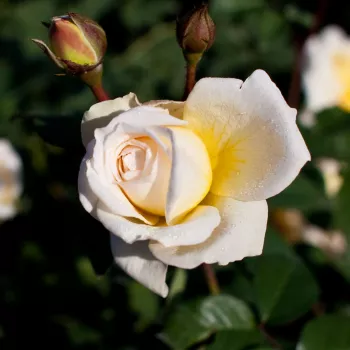
Cream-yellow flowers: buds open buttery yellow with deeper centres, then soften to creamy white, eventually almost white; ARS yb, RHS 11D outer and 12C inner; colour retention is modest in strong sun. |
| Fragrance and aroma |
Markedly strong, fresh citrus fragrance overlaying a classic rose scent, especially noticeable on still, humid evenings and when blooms are used as short-stemmed cut flowers near seating or entrances. |
| Hip characteristics |
Occasional small, spherical hips 8–12 mm across, colouring orange-red by late season; not produced in large numbers and generally of ornamental rather than wildlife or culinary significance. |
| Resistance and winter hardiness |
Hardy to around −21 to −18 °C (RHS H7, USDA 6b, Swedish Zone 3); black spot resistance good, powdery mildew and rust moderate; heat and drought tolerance average, needing watering in extended dry spells. |
| Horticultural recommendations |
Best in full sun with fertile, well-drained soil; plant 40–75 cm apart depending on use; suit front beds, edging and urban greens; medium maintenance with periodic feeding, pruning and health checks. |
MOONSPRITE offers compact, long-season creamy blooms with strong fragrance on durable own-root plants that establish steadily for years of reliable front-garden colour, making it a thoughtful choice for understated urban spaces.