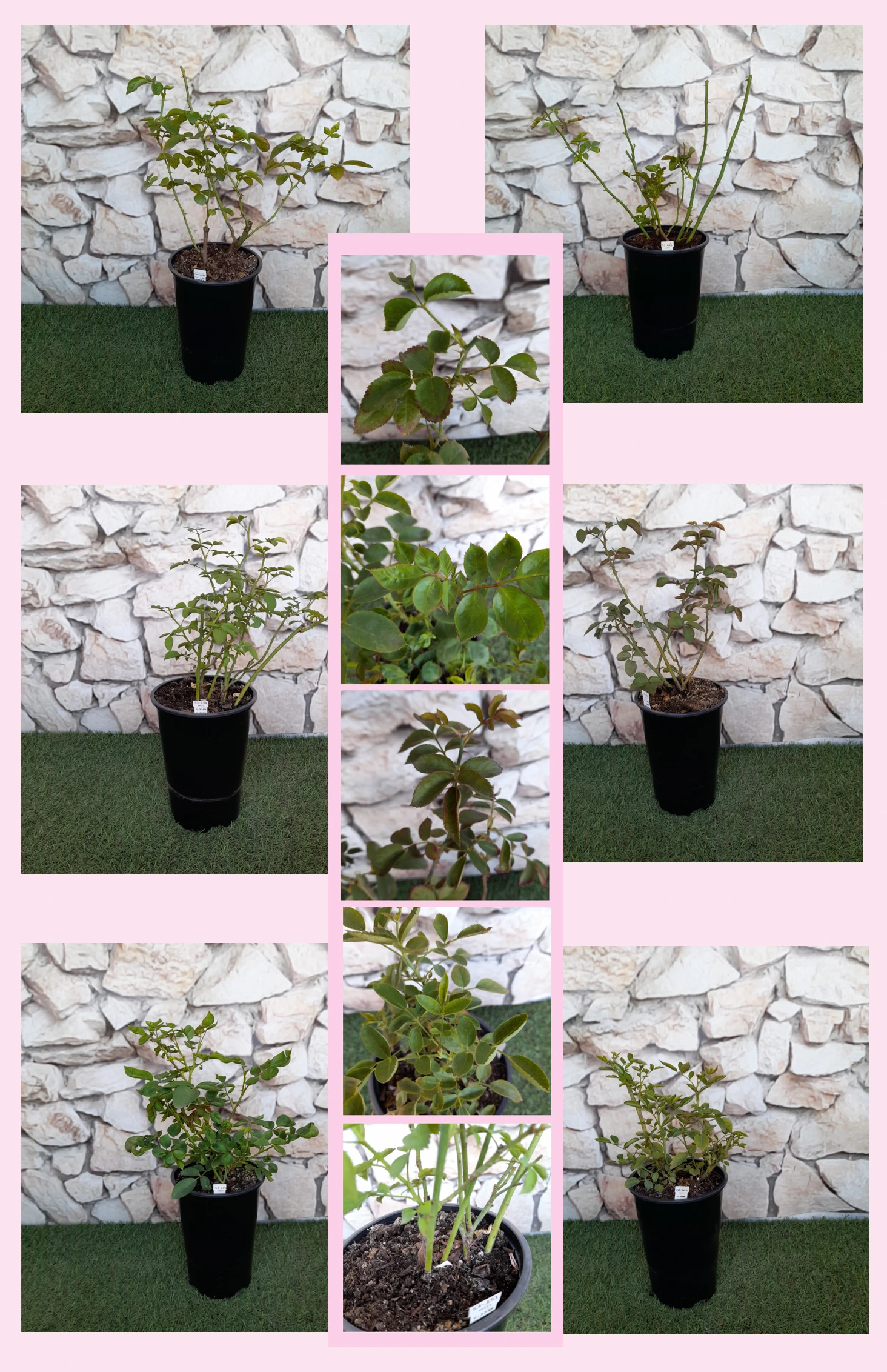
BROWNIE – orange-red bedding floribunda rose – Boerner
Imagine a London front garden after rain, droplets clinging to matt, dark foliage while clusters of warm, chocolate-toned blooms glow against brickwork: Brownie brings this quietly dramatic mood into compact urban spaces with minimal effort. Bred for reliable flowering and low-input care, its semi-double blooms open repeatedly from early summer, offering a gently spicy fragrance and accessible centres that moderately support visiting pollinators. On its own roots, this sturdy floribunda is designed for long-term stability, regenerating well after pruning and settling in for years of dependable colour, even where wind and rain regularly sweep through small, exposed gardens. In its first year it concentrates on roots, the second on fuller shoots, and by the third year it reaches its true ornamental potential.
Usage options
| Target area | Reasoning |
|---|
| Front garden bedding strips |
Compact, upright growth and a height of around 60–80 cm make Brownie ideal for narrow front borders along paths or low railings, bringing structure without overwhelming small plots; its dependable repeat flowering suits time-poor beginners. |
| Low, colourful hedging |
Planted at 35 cm intervals, Brownie forms a low, informal hedge with a continuous run of rusty-brown, chocolate-toned blooms that visually tidy the boundary while staying easy to clip and refresh each winter for urban garden homeowners. |
| Coastal and windy gardens |
Sturdy, upright stems and resilient foliage cope well where frequent showers and brisk winds meet, helping maintain a neat outline and reliable display in exposed, rain-washed front gardens valued by sustainability-minded families. |
| Rainwater-aware planting schemes |
Reliable flowering on its own roots pairs well with permeable, gravel-mulched beds and simple rain chains or rills, allowing you to slow and sink roof run-off without sacrificing colour, particularly attractive to urban gardeners. |
| Mixed pollinator-friendly beds |
Semi-double clusters open to moderately accessible stamens, offering interest to visiting insects when partnered with nectar-rich perennials like lavender, nepeta or yarrow, a thoughtful option for wildlife-curious residents. |
| Long-term, low-maintenance plantings |
As an own-root shrub, Brownie builds a durable framework; if stems are damaged it reshoots true from the base, supporting a calmer maintenance routine for those planning a border to last many seasons, especially busy owners. |
| Statement accents in “girly” front gardens |
The warm, coffee-and-chestnut tones contrast beautifully with soft pinks, creams and airy grasses, creating a chic yet playful entrance that feels curated rather than fussy for style-conscious city-front-door designers. |
| Large containers and roof terraces |
In a 40–50 litre peat-free container with good drainage, Brownie offers season-long clusters of fragrant flowers without complex pruning, giving reliable impact on balconies and terraces for space-limited urban dwellers. |
Styling ideas
- Chocolate-Berry Border – combine Brownie with soft pink roses, nepeta and pale geraniums to highlight its chocolate tones in a feminine, “girly” front garden – ideal for style-led city homeowners.
- Rain-Garden Ribbon – plant Brownie in a gently curving strip with gravel mulch, interwoven with purple sage and ornamental grasses to intercept downpipes – suited to sustainability-focused terrace gardeners.
- Coastal Courtyard Edge – mass-plant along a low wall with echinops and yarrow for a wind-tolerant, textural trio that thrives in exposed, rain-swept sites – perfect for coastal family gardens.
- Balcony Feature Pot – grow a single Brownie in a 40–50 litre container with trailing thyme and dwarf honeysuckle for layered foliage and fragrance – attractive for busy urban renters.
- Warm Welcome Hedge – line a short front path with closely spaced Brownie plants, underplanted with evergreen groundcover honeysuckle to frame the doorway – appealing to front-garden-focused beginners.
Technical cultivar profile
| Property | Data |
|---|
| Name and registration |
Brownie is a floribunda bedding rose from the Boerner breeding line; trade name Brownie Bedding rose Boerner, approved exhibition name Brownie, unregistered but long-established in cultivation. |
| Origin and breeding |
Bred by Eugene S. Boerner for Jackson & Perkins (USA) from ‘Lavender Pinocchio’ × ‘Grey Pearl’; breeding completed 1958, introduced 1959, with a focus on novel brownish flower tones. |
| Growth and structural characteristics |
Compact, upright shrub reaching about 60–80 cm high and 50–70 cm wide; moderately dense, dark grey-olive-green foliage with a matt finish and moderate prickliness, suitable for beds and edging. |
| Flower morphology |
Semi-double, cupped blooms with 13–25 petals in medium-sized clusters; flowers typically 2.75–3.95 inches across and produced repeatedly in abundant flushes throughout the growing season. |
| Colour data and phenology |
Warm reddish-brown blooms with darker edges; mahogany-brown buds open to coffee-brown tones that lighten and grey slightly towards the margins; colour fades modestly as the rusty-brown base deepens. |
| Fragrance and aroma |
Medium-strength, clearly noticeable scent with a warm, spicy character that complements the unusual chocolate-brown colouration, perceptible on still evenings and after rainfall in enclosed gardens. |
| Hip characteristics |
Produces moderately abundant, ovoid hips around 7–11 mm in diameter; hips develop an attractive orange-red colour that adds subtle late-season interest if spent flowers are not removed. |
| Resistance and winter hardiness |
Rated hardy to approximately –23 to –21 °C (RHS H7, USDA 6a, Swedish Zone 3); good resistance to black spot, rust and powdery mildew, supporting low chemical input gardening in most regions. |
| Horticultural recommendations |
Prefers a sunny position with well-drained soil; plant 35–75 cm apart depending on use; ideal for beds and edging; maintenance needs are low, generally requiring only basic pruning and deadheading. |
BROWNIE – orange-red bedding floribunda rose – Boerner offers compact, repeat flowering and warm, spicy fragrance on long-lived own roots, an appealing choice if you seek reliable character with modest maintenance.