NICCOLO PAGANINI ® – deep red bedding floribunda rose - Meilland
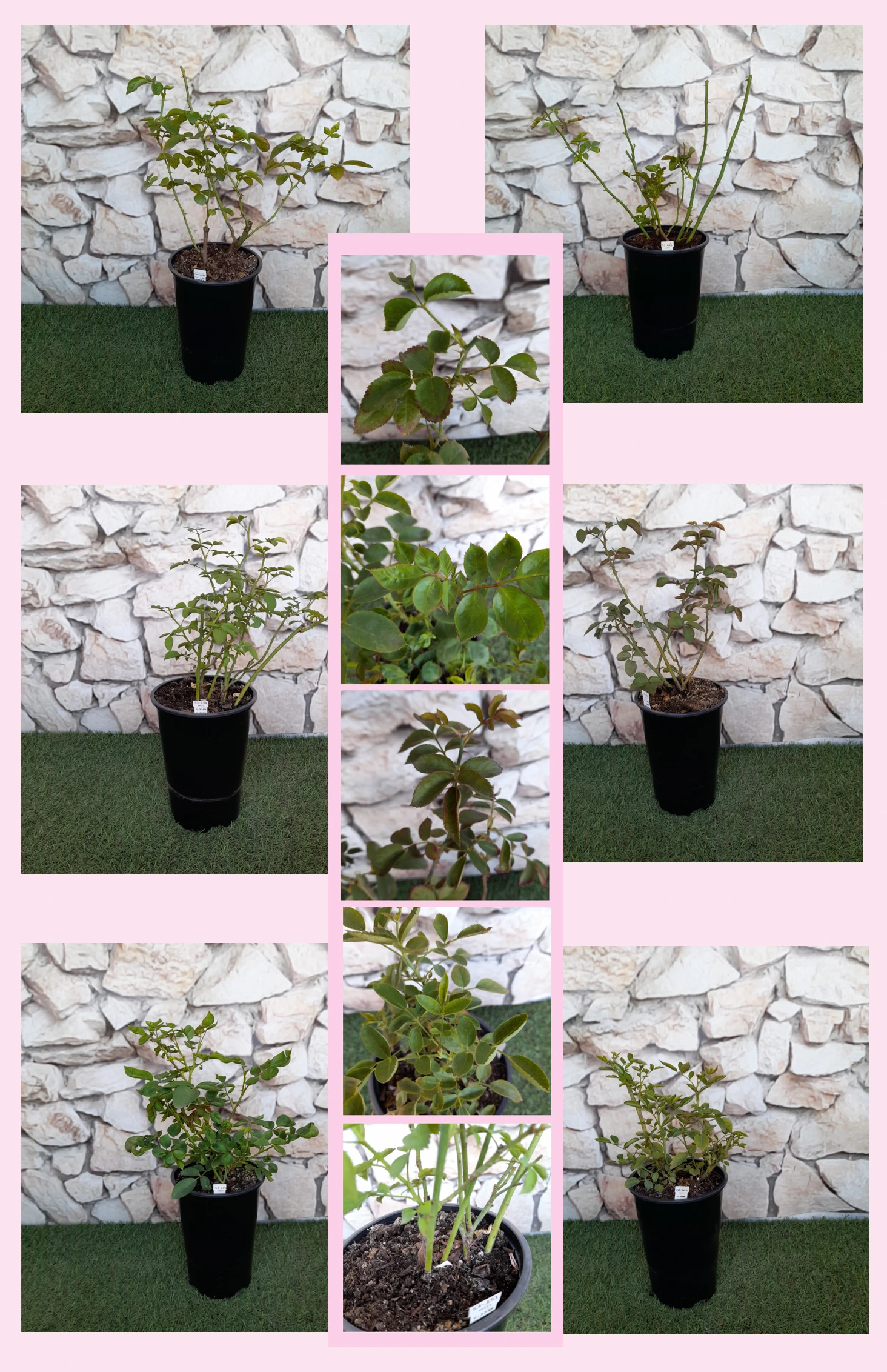
Step from pavement to front garden and meet balance in deep, velvety red – a compact floribunda that settles calmly into small London plots and copes steadily with typical British rain and breezy coastal weather. Its bushy habit and glossy foliage make it a reliable structure plant for narrow beds or low hedging, while medium maintenance needs and moderate self-cleaning keep care routines comfortably simple. As an own-root shrub, it offers reassuring longevity, regenerating well after pruning or weather damage and holding its shape in a long-term plan. Planted once with good drainage on heavier soils, it rewards you with season-long colour that builds from quiet year-one rooting to fuller second-year growth and a rich, mature display by the third summer.
Usage options
| Target area |
Reasoning |
| Front-garden bedding strip beside a town-house path |
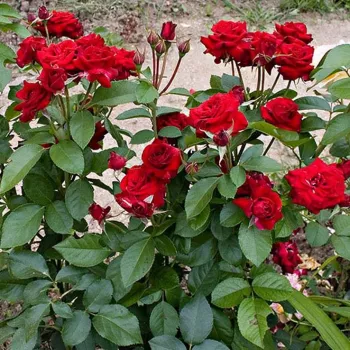
Its compact 65–95 cm height and 40–60 cm spread create a neat, low border that does not swamp narrow paths, while the deep red clusters give strong street-side presence with only moderate deadheading – ideal for the time-pressed homeowner |
| Low flowering hedge along a front boundary |
Regular spacing at 35–40 cm forms a continuous, bushy line that reads as a small hedge, providing structure all year and a long flowering season in summer, so you gain privacy and colour from a planting that stays manageable for the casual gardener |
| Mixed shrub and perennial bed in a family garden |
The rounded habit and dense, mid‑green foliage sit comfortably with herbs and perennials, adding calm, repeated red accents without dominating; its own‑root form recovers well from occasional hard pruning, suiting evolving beds for the experimental beginner |
| Urban rose bed with heavier or clay-inclined soil |
Once planted into improved, free-draining clay, this rose forms a stable root system that tolerates wet spells and short dry periods, fitting neatly into rain-conscious city schemes where robust, long-lived shrubs are preferred by the sustainability-minded planner |
| Rainwater-conscious front garden with limited maintenance time |
Its moderate disease resistance and tolerance of regular summer heat mean that, with sensible spacing and airflow, you can rely on clean foliage and steady flowering while using stored rainwater for irrigation, a practical choice for the eco-aware urbanite |
| Compact feature planting in a 40–50 litre container |
In a generously sized pot, the bushy growth and rich flower colour deliver a strong focal point by the front door; own‑root resilience supports long-term use of the same plant if you refresh compost periodically, appealing to the balcony or doorstep gardener |
| Formal bedding design in small to medium gardens |
The even habit and uniform deep-red blooms lend themselves to repeated blocks or geometric layouts; at recommended densities you achieve a carpet of colour that reads clearly from a distance, rewarding the style-conscious but busy householder |
| Long-term planting scheme for family gardens |
This cultivar’s proven performance since 1990, coupled with own‑root durability and remontant flowering, makes it a dependable element in multi‑year plans, offering stable ornamental value for those wanting lasting results with modest input as a practical planner |
Styling ideas
- Burgundy-Ribbon Border – Run a low line of Niccolo Paganini along a front path, underplant with nepeta for soft blue contrast – for owners wanting neat structure with a romantic edge
- Terraced-City Mix – Combine this rose with lavender and sage in a small front bed to balance deep red blooms with silvery foliage and scent – for urban gardeners seeking classic style in tight spaces
- Contemporary Gravel Frame – Plant in a free-draining gravel strip with feather reed grass and white liatris to give vertical accents and modern texture – for design-led households favouring clean, low-fuss layouts
- Doorstep-Container Focus – Place one shrub in a 50 litre pot, underplant with trailing thyme to soften the rim and echo the spicy fragrance – for busy residents wanting instant welcome at the front door
- Family-Friendly Carpet – Use small groups at 40 cm spacing with pale gypsophila to create a jewel-like red-and-white patch that reads clearly from windows – for families wanting visible colour without complex upkeep
Technical cultivar profile
| Property |
Data |
| Name and registration |
Floribunda bed rose, registered as MEIcairma; sold as Niccolo Paganini ®. Belongs to the bedding rose collection and approved as an exhibition floribunda and shrub rose. |
| Origin and breeding |
Bred by Alain Meilland (Meilland International, France) from MEIjulita × (MEIdanu × Uncle Walter). Introduced and registered in 1990, reflecting classic French floribunda breeding. |
| Awards and recognition |
Highly decorated in France: Lyon Gold Medal 1990, Plus Belle Rose de France 1990 and Medal of the Great Rose of the Century 1990, underlining proven garden and show performance. |
| Growth and structural characteristics |
Bushy, compact shrub 65–95 cm high and 40–60 cm wide with dense, mid‑green, glossy foliage and moderate prickles; moderate self-cleaning, so some faded blooms still benefit from deadheading. |
| Flower morphology |
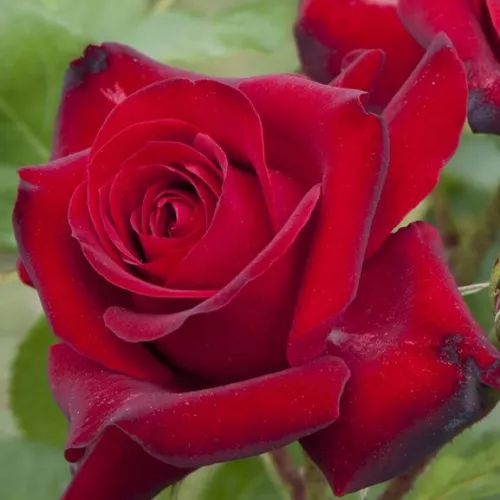
Medium-sized, double, cupped blooms with 26–39 petals, carried in clusters with a defined central cone; remontant, giving an abundant main flush followed by further good flowering later in the season. |
| Colour data and phenology |
Deep, velvety red throughout flowering; buds open dark burgundy, then rich red with good colour retention and only slight darkening in strong sun, maintaining an even, showy effect in beds and borders. |
| Fragrance and aroma |
Mild but noticeable scent with a subtly spicy character; fragrance is refined rather than overpowering, adding an extra dimension at close quarters without dominating nearby seating or windows. |
| Hip characteristics |
Double blooms set hips only occasionally; when present they are small, spherical, orange‑red, around 8–12 mm in diameter and of limited ornamental impact compared with the strong flowering display. |
| Resistance and winter hardiness |
Hardy to approximately −21 to −18 °C (RHS H7; Swedish Zone 3; USDA 6b). Disease resistance moderate to black spot, mildew and rust; benefits from good air movement and occasional preventive care. |
| Horticultural recommendations |
Best in full sun with fertile, well-drained soil; water regularly in dry spells and feed annually. Recommended spacings: 40 cm for bedding, 35 cm for hedging, 60 cm as a specimen in gardens or large containers. |
NICCOLO PAGANINI ® offers compact structure, enduring deep-red colour and proven longevity in an own-root form that rewards patient planting with years of reliable display, making it a thoughtful choice for a long-lived front garden feature.