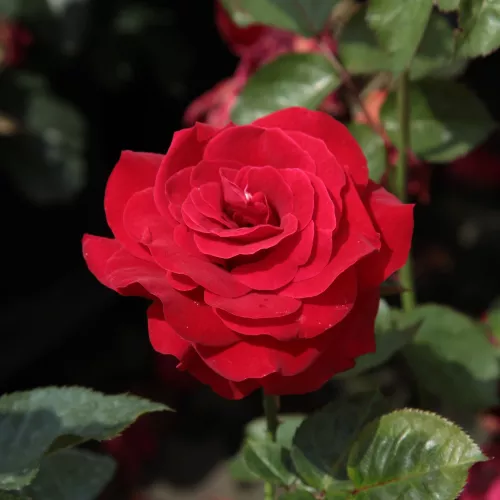
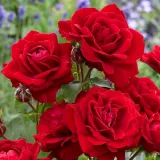
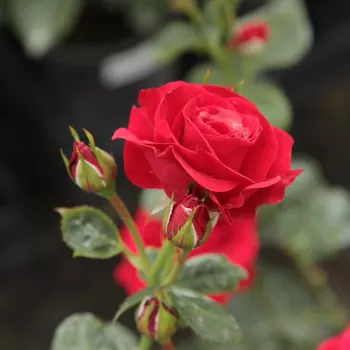
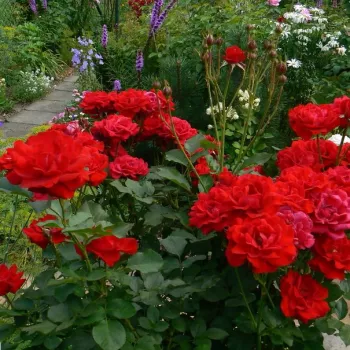
NINA WEIBULL® – dark red bedding floribunda rose – Poulsen
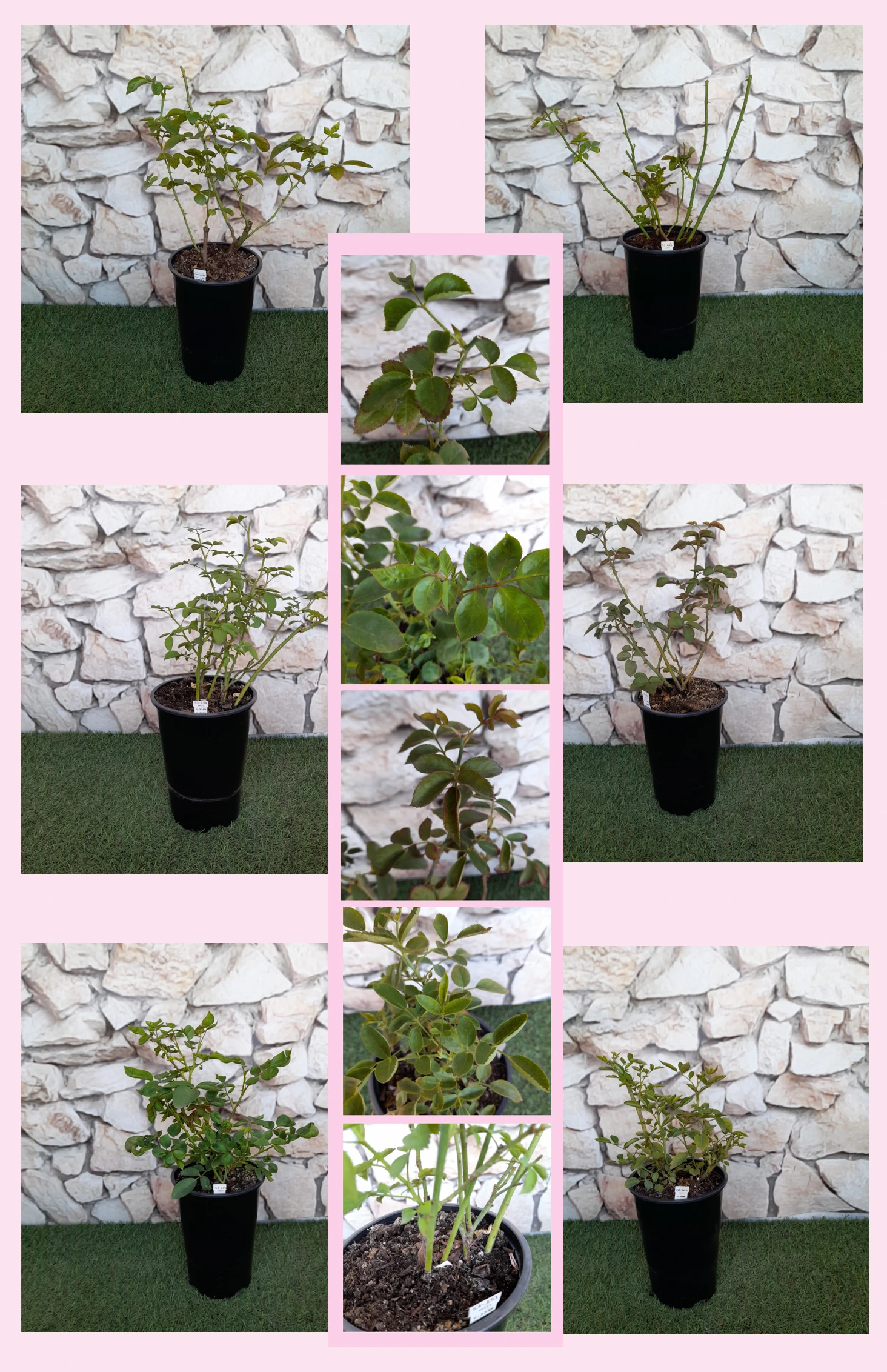
Step from pavement to petals with balance and quietly dramatic colour: NINA WEIBULL® brings compact floribunda structure, reliable repeat flowering and semi‑double blooms that invite bees to shared fragrance. Its dark, glossy foliage and self‑cleaning heads keep a small front garden looking naturally orderly, even on busy weeks. On typical British clay it copes well with rain and wind when planted into improved drainage, settling into a resilient presence for years. Own‑root planting means steady renewal and dependable shape as it matures from root-building in year one, to fuller shoots in year two, towards rich ornamental value by year three, ideal for a sustainable, rainwater‑wise garden.
Usage options
| Target area |
Reasoning |
| London terraced-house front garden bed |
Compact, bushy growth and dense, glossy foliage give strong structure without overwhelming a narrow front border, while the deep red clusters read clearly from the pavement for everyday impact for the busy homeowner. |
| Pollinator-friendly urban planting strip |
Semi-double flowers with exposed stamens are easy for bees to work, providing reliable nectar through repeated flushes in summer, adding ecological value to small city plots appreciated by the environmentally minded gardener. |
| Low-maintenance, self-renewing rose bed |
Good self-cleaning means many spent blooms drop on their own, reducing deadheading and keeping the plant tidy, so your rose area stays attractive with fewer routine tasks for the time-poor beginner. |
| Long-lived, sustainable own-root rose group |
Growing on its own roots supports natural regeneration after pruning or weather stress, building a stable, long-lived planting that can be refreshed rather than replaced, a reassuring choice for long-term-focused planner. |
| Rainwater-conscious, clay-soil front garden |
Works well in typical British heavy soils when planted into improved drainage, partnering with permeable surfaces and rainwater use to support healthier roots and fewer problems for the climate-aware city-dweller. |
| Season-long colour for family gardens |
Remontant flowering with a generous second flush keeps beds colourful over a long season, giving reliable summer interest around play areas and seating for the relaxed family gardener. |
| Container or large pot on a small patio |
Its moderate height and bushy habit suit a substantial 40–50 litre container, where roots have space to establish and support dark red blooms close to seating areas for the balcony or patio owner. |
| Autumn interest mixed planting |
If you leave some flowers uncut, it forms bright red hips that add late-season colour and texture among grasses and perennials, extending the display for the design-conscious garden enthusiast. |
Styling ideas
- Ruby-ribbon – Line a front path with repeating NINA WEIBULL® and low lavender for scent and bee appeal – ideal for urban homeowners wanting simple, elegant impact.
- City-meadow – Mix in drifts with Verbena hastata ‘White Spires’ and airy grasses for a light, pollinator-friendly look – perfect for sustainability-focused front gardeners.
- Clay-courtyard – Plant in improved clay with nepeta edging to soften edges and hide paving – suited to beginners taming a small, hard-surfaced yard.
- Velvet-border – Combine with dusky salvias and dark heucheras for layered burgundy tones – attractive to design lovers seeking drama in compact beds.
- Hip-harvest – Let some stems set hips and underplant with autumn grasses for a soft, textural finish – appealing to wildlife-friendly gardeners who enjoy seasonal change.
Technical cultivar profile
| Parameter |
Data |
| Name and registration |
Floribunda POULSEN® shrub rose; registered as POUlwei, marketed as Nina Weibull®; bedding floribunda bed rose type, feminine given-name cultivar, ARS exhibition name Nina Weibull®. |
| Origin and breeding |
Bred by Svend Poulsen, Poulsen Roser A/S, Denmark, from cross ‘Fanal’ × ‘Masquerade’; introduced and registered in 1961, forming part of the historic Floribunda POULSEN® collection. |
| Awards and recognition |
Belfast Rose Trials 2007: RJ Frizzell Award for Most Fragrant Rose, confirming garden interest despite its otherwise discreet fragrance description and long-standing presence in plantings. |
| Growth and structural characteristics |
Bushy, compact shrub rose reaching about 80–110 cm high and 50–70 cm wide, moderately thorny, with dense, dark green, glossy foliage providing strong structure in beds and mass plantings. |
| Flower morphology |
Semi-double, cupped, cluster-flowering blooms, typically 17–25 petals and medium-sized at around 4–7 cm, remontant with a notably abundant second flush giving prolonged seasonal flowering. |
| Colour data and phenology |
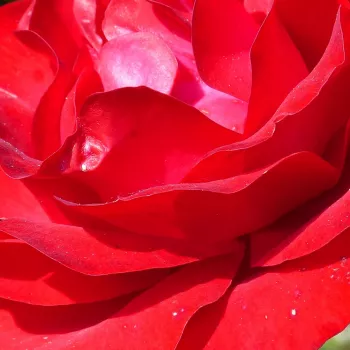
Deep, velvety dark red (ARS DR; RHS 53A outer, 53B inner), intense and uniform with minimal fading; newly opened blooms are fiery dark red, later developing wine-red tones at the petal edges. |
| Fragrance and aroma |
Discreet, very weak rosy fragrance best appreciated at close range; primarily selected for colour, structure and reliability rather than strong scent, but still offering a classic rose character. |
| Hip characteristics |
If not deadheaded it sets moderately abundant, bright red, spherical hips about 8–12 mm in diameter, adding decorative autumn interest and supporting wildlife-friendly planting schemes in mixed borders. |
| Resistance and winter hardiness |
Hardy to about −34 to −32 °C (RHS H7, USDA 4a, Swedish Zon 5); medium resistance to powdery mildew, black spot and rust; tolerates heat and moderate drought but benefits from watering in long dry spells. |
| Horticultural recommendations |
Best in sunny positions for beds, borders, hedging and mass plantings; plant at 35–65 cm spacing depending on use, roughly 5.7–6.5 plants/m² for blocks, and support health with routine, moderate care. |
NINA WEIBULL® offers compact structure, season-long red colour and pollinator appeal in a resilient own-root form that rewards patient establishment, making it a thoughtful choice for enduring, low-fuss garden planting.