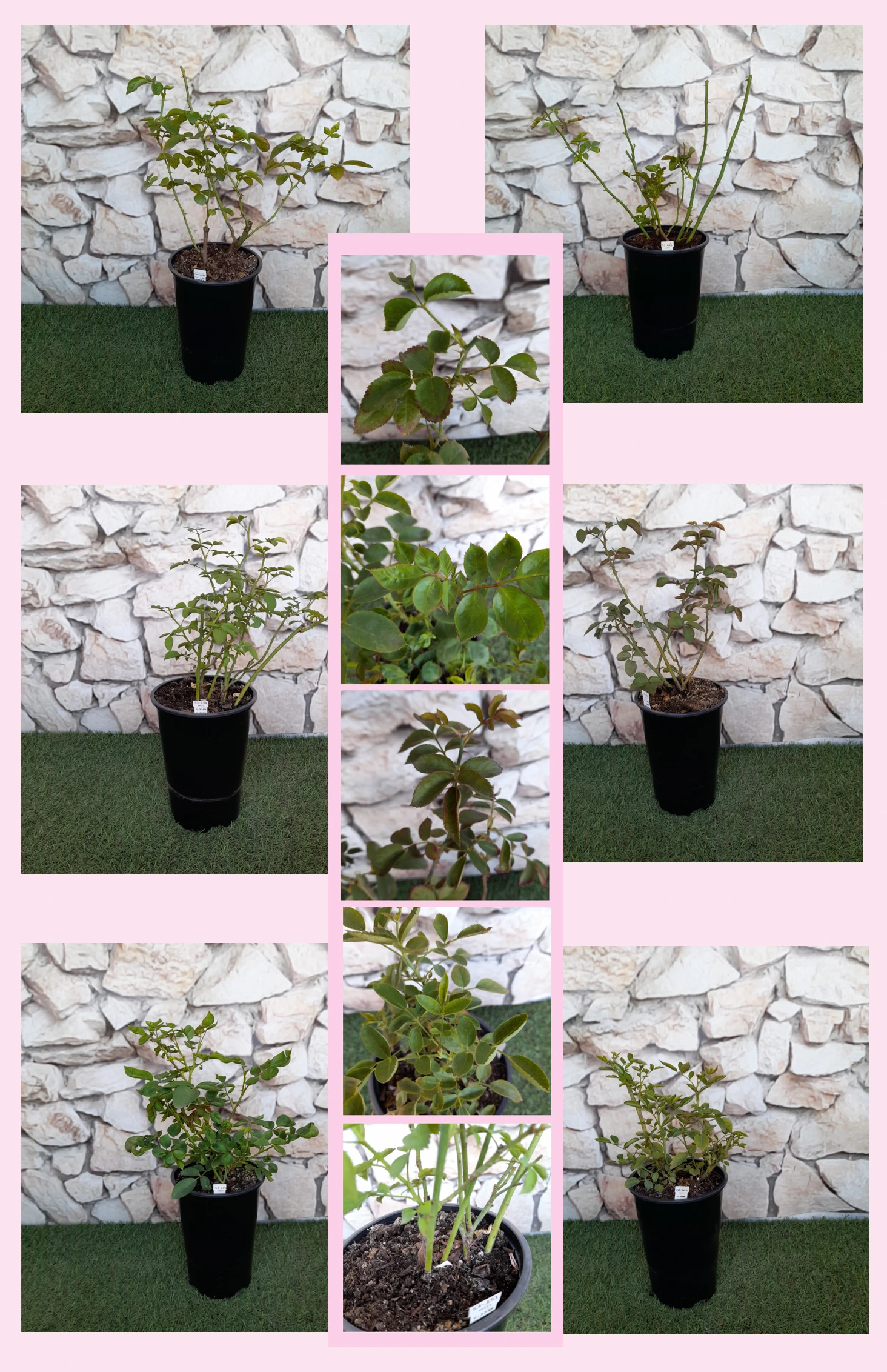
ROSA WATSONIANA – pink ground-covering rose
Step outside after rain and discover how foliage, texture and movement can quietly transform a small London front garden into a calm, sustainable space. Rosa watsoniana is a botanical groundcover rose with naturally airy, spreading growth, creating a soft underplanting that copes well with damp spells and heavy showers in typical British family gardens. Its tiny, single, pinkish-white flowers invite pollinators, then fall cleanly to reveal bright red hips for a long season of discreet interest. Own-root planting gives reassuring longevity and steady regrowth after pruning, with a development that feels natural – first the roots settle, then shoots build up, and by the third year the plant reads as a fully woven, ornamental feature. Easy-care structure, groundcover habit and medium maintenance needs suit busy urban gardeners who favour sustainability and gentle, low-clutter planting.
Usage options
| Target area |
Reasoning |
| Rainwater-conscious front garden groundcover |
The spreading habit quickly knits into a living mulch that softens gravel, stabilises soil and helps slow surface run-off in sloping or paved front gardens, particularly where frequent showers and blustery weather are expected, supporting beginners. |
| Pollinator-friendly city planting strip |
Single, open flowers with accessible stamens are explicitly rated as pollinator-friendly, turning even a narrow kerb-side bed into a useful nectar stop for urban bees and hoverflies throughout its flowering period, appealing to eco-aware homeowners. |
| Low-visual-maintenance family garden edging |
Small blooms that shed cleanly and form neat red hips mean there is very little deadheading needed, so paths and play spaces stay attractive with minimal effort, an advantage where time for gardening is limited for busy families. |
| Feature shrub for unusual foliage interest |
Dense, glaucous, variegated foliage creates an almost fern-like effect that reads as refined and architectural, making a single shrub an intriguing focal point in compact gardens without relying on large or showy flowers for collectors. |
| Own-root, long-lived structural planting |
As an own-root rose it regenerates reliably from the base, keeping its distinctive foliage true to type over many years and reducing worries about graft failure, a reassuring quality for long-term planners and cautious buyers. |
| Medium-care option for thoughtful hobby gardeners |
Vigorous yet rated medium for disease resistance, it suits gardeners who are happy to provide basic preventive care in return for a distinctive, botanical-effect shrub, fitting those who enjoy learning and refining their skills as engaged hobbyists. |
| Mass planting on banks and larger beds |
Recommended spacings and planting densities allow efficient planning of drifts and banks; once established, the groundcover reduces weeding pressure and visually ties larger areas together, helpful for those designing cohesive landscapes. |
| Large-container statement on balcony or terrace |
In a 40–50 litre or larger container, its fine-textured leaves and small flowers offer a subtly wild look without overwhelming tight spaces, offering balcony gardeners a resilient, botanical talking point suited to thoughtful urban residents. |
Styling ideas
- Botanical ribbon – Plant in a loose strip along a front path, weaving between stepping stones and gravel, to give a rainwater-friendly, meadow-like edge – ideal for design-conscious urban owners.
- Textured tapestry – Combine with Alchemilla mollis and low Nepeta for a soft, feathery ground layer where Rosa watsoniana’s hips and foliage provide subtle contrast – suited to relaxed family gardens.
- Foliage focus – Use a single shrub in a simple, wide container with slate top-dressing to highlight its variegated leaves and fine branching – appealing to minimalist balcony gardeners.
- Pastel companions – Underplant tall Iris germanica or soft pink roses so the airy groundcover and hips frame bolder flowers, creating depth in small borders – good for cottage-style front gardens.
- Wild edge – Let it spill over a low wall or gentle bank with interplanted sage or lavender to contrast textures, inviting pollinators while visually softening hard boundaries – perfect for wildlife-friendly homes.
Technical cultivar profile
| Attribute |
Data |
| Name and registration |
Botanical shrub rose marketed as Rosa watsoniana, with American Rose Society exhibition name Rosa alba cymbaefolia; an unregistered botanical rose offered here as an own-root, 2-litre garden plant. |
| Origin and breeding |
Historic Japanese intraspecific mutation of Rosa multiflora, recorded before 1870; precise breeder and introduction date unknown, but long cultivated in collections for its unusual foliage and botanical character. |
| Growth and structural characteristics |
Spreading, groundcover-type shrub with dense, matte, glaucous mid-green variegated foliage and sparse thorns; forms a low, wide cover rather than an upright bush, with naturally arching, graceful shoots. |
| Flower morphology |
Very small, flat, single flowers, usually 5–12 petals, produced in clusters; once-flowering rather than remontant, but numbers of blooms in season create a soft haze of colour before hips develop. |
| Colour data and phenology |
Flowers range from pale pink to pinkish-white, with reddish buds and golden-yellow stamens; colour corresponds to ARS LP and RHS 62D outer, 65C inner; petals dull as they age and stamens brown before drop. |
| Fragrance and aroma |
Fragrance is very weak to negligible and not a key feature; this cultivar is chosen primarily for its foliage texture, botanical look and pollinator access rather than perfume in family gardens. |
| Hip characteristics |
After flowering, self-cleaning blooms leave numerous small, spherical, red hips about 6–8 mm across; these pea-sized fruits are decorative in autumn and can also be harvested where fruit use is desired. |
| Resistance and winter hardiness |
Rated medium for disease resistance, including black spot, powdery mildew and rust; hardy to about -21 to -18 °C (RHS H6, Swedish Zone 3, USDA 6b), with generally good adaptation to typical UK winters. |
| Horticultural recommendations |
Best in sunny positions with well-drained soil; spacing from 60–150 cm depending on use, and around 1 plant/m² in mass plantings; medium maintenance, with basic preventive care advised in humid seasons. |
Rosa watsoniana offers distinctive variegated foliage, gentle groundcover structure and reliable pollinator access in an own-root form that matures steadily into a long-lived feature, making it a thoughtful choice for understated, sustainable gardens.