PAPAGENA™ – orange bedding floribunda rose – McGredy
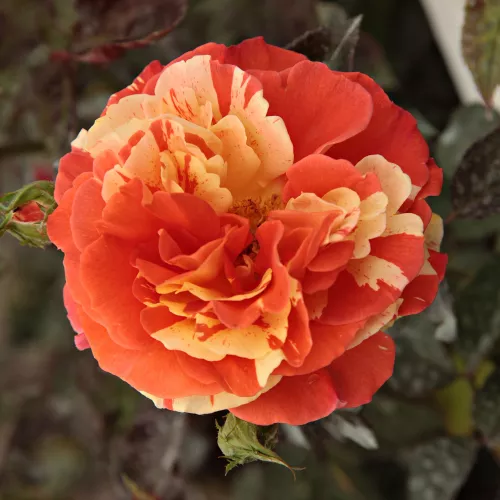
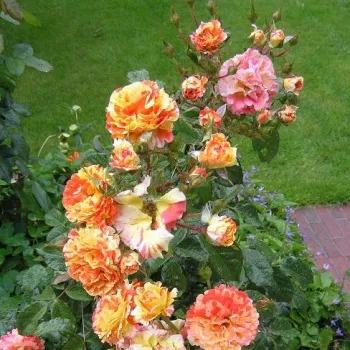
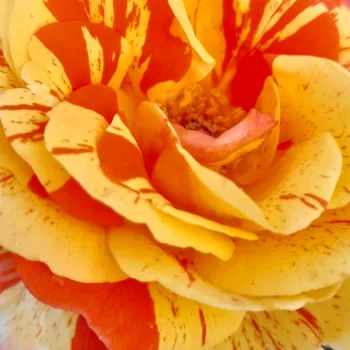
Imagine your front garden after rain: stepping outside into a fresh, lightly citrus-scented cloud, the glossy foliage still beaded with water as this floribunda’s striped blooms glow against brick and paving, naturally coping with blustery showers and heavy soils often found in British family gardens. PAPAGENA™ offers colour and drama from early summer onwards, producing wave after wave of medium-sized, semi-double flowers that open in vivid orange with clear lemon-yellow streaks, then soften towards pink and cream for a changing display. Its upright, slightly arching, bushy habit keeps borders looking orderly and full without constant deadheading, while own-root planting supports a long-lived, resilient shrub that can quietly regenerate from the base. You can rely on this rose to stay visually stable over time, building a stronger root system in the first year, more confident top growth in the second, and full ornamental presence by the third. Ideal for compact beds, rail-side planting and larger containers of at least 40–50 litres, it helps you create a rainwater-wise, low-effort front garden that still feels special, balanced and gently sustainable.
Usage options
| Target area |
Reasoning |
| Small London front garden bed |
The upright, bushy habit and medium height make PAPAGENA™ easy to fit into narrow, street-facing beds without overwhelming windows or paths, while its distinctive orange-and-lemon striping delivers high-impact colour in a compact footprint – ideal for the busy urban garden owner. |
| Rainwater-focused, clay-based border |
Once established, this rose copes reliably with typical British wet spells and heavier soils, provided you improve drainage at planting, making it a strong choice where you want showy blooms yet a shrub that tolerates changeable weather and heavier ground – reassuring for the beginner gardener. |
| Long-season family flowerbed |
Remontant flowering ensures repeat flushes from early summer onwards, so beds stay lively for months with very little intervention, giving continuous visual interest for family spaces where you want colour without weekly fuss – perfect for the time-poor homeowner. |
| Own-root, long-term feature shrub |
Grown on its own roots, PAPAGENA™ matures into a stable, regenerating bush that is less prone to graft failure; you can expect it to invest first in roots, then in top growth, before reaching full show in year three, supporting decades of use for the long-view garden planner. |
| Low-maintenance city front hedge |
Regular planting at 50–55 cm quickly creates a colourful, semi-formal line of upright bushes that need only light pruning and tidying, giving structure and cheer to pavements and terraces while keeping upkeep manageable – well matched to the street-front garden owner. |
| Large patio container (40–50 L+) |
In a generous, well-drained container of at least 40–50 litres, the bushy habit and glossy dark foliage frame the striped flowers beautifully, creating a movable focal point for balconies and paved yards with only routine watering and feeding for the balcony gardener. |
| Cut flowers for the home |
The medium, semi-double blooms on upright stems suit informal cutting; brought indoors, their playful colouring and light, fresh citrus character enliven small vases and kitchen jugs without overpowering a room, appealing to the home bouquet enthusiast. |
| Resilient, low-input mixed planting |
Strong disease resistance to black spot, powdery mildew and rust keeps foliage healthy and glossy even in humid conditions, reducing the need for spraying and simplifying care in mixed borders that you want to enjoy rather than constantly manage – ideal for the eco-conscious planter. |
Styling ideas
- Striped-Opera Border – Pair PAPAGENA™ with soft purple lavender and nepeta to ground its fiery stripes and echo Mozart’s theatrical flair – for culture-loving front-garden owners.
- Citrus-Glow Trio – Combine with silvery Salvia officinalis and creeping thyme to highlight the fresh orange-and-lemon blooms while keeping maintenance light – for low-effort herb-and-rose fans.
- Rain-Ready Rail Line – Plant a loose hedge along a front rail with permeable gravel below so rainwater soaks in while the roses provide cheerful colour – for sustainability-minded terrace residents.
- Balcony Statement Pot – In a 50-litre charcoal container, underplant with fine-textured grasses to contrast with the bold striping and glossy foliage – for style-conscious balcony and patio users.
- Playful Patchwork Bed – Mix with soft pink roses and airy euphorbia for a girly, painterly look that stays vibrant from summer into autumn – for families wanting an uplifting, low-fuss flowerbed.
Technical cultivar profile
| Parameter |
Data |
| Name and registration |
Floribunda bed rose; registered as MACoranlem, marketed as Papagena™ Bedding rose MACoranlem, also exhibited as Oranges ’n’ Lemons™ in bush and floribunda show classes. |
| Origin and breeding |
Bred by Samuel Darragh McGredy IV from ‘New Year’ × unknown seedling; introduced 1992 in New Zealand and 1995 in the USA via Weeks Roses and French partner nurseries. |
| Awards and recognition |
Recognised by the Royal National Rose Society with a Trial Ground Certificate in 1993 and joint Breeders’ Choice award, confirming strong ornamental and garden performance. |
| Growth and structural characteristics |
Upright, slightly arching bushy shrub reaching about 100–140 cm high and 65–95 cm wide, with dense, dark green glossy foliage and moderate prickliness for defined yet manageable structure. |
| Flower morphology |
Semi-double, medium-sized (approximately 4–7 cm) cup-shaped blooms opening fairly flat in clusters; around 13–25 petals, remontant with a generous second flush and good garden presence. |
| Colour data and phenology |
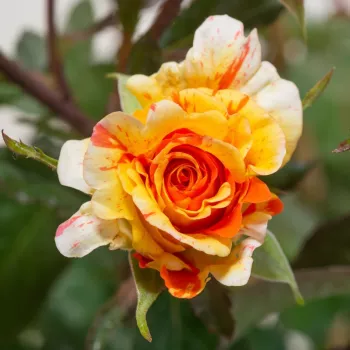
Vivid orange petals boldly striped with lemon yellow (RHS 28A outer, 14B inner), deep orange-red in bud, later softening toward pinkish tones and creamy yellow streaks as flowers mature. |
| Fragrance and aroma |
Mild yet noticeable fragrance with a fresh, citrus-like character; scent adds a light, clean note in close planting or when cut for the house, without dominating nearby seating or paths. |
| Hip characteristics |
Occasional small, spherical orange-red hips about 8–12 mm across; produced sparsely because of the semi-double to double bloom form, providing modest late-season interest for observers. |
| Resistance and winter hardiness |
Rated hardy to around –21 to –18 °C (RHS H7, USDA 6b, Sweden zone 3) with strong resistance to black spot, powdery mildew and rust, and good tolerance of summer heat and humidity. |
| Horticultural recommendations |
Suited to beds, hedging, specimen and large containers; plant 50–55 cm apart, 3.3–3.8 plants/m²; prefers improved, well-drained soil, full sun to light shade and regular watering in dry spells. |
PAPAGENA™ offers long-season, low-effort striped colour on a resilient, own-root floribunda that settles in for years of reliable garden performance, making it a thoughtful choice for understated yet characterful planting.