PAULII – white wild rose – Paul
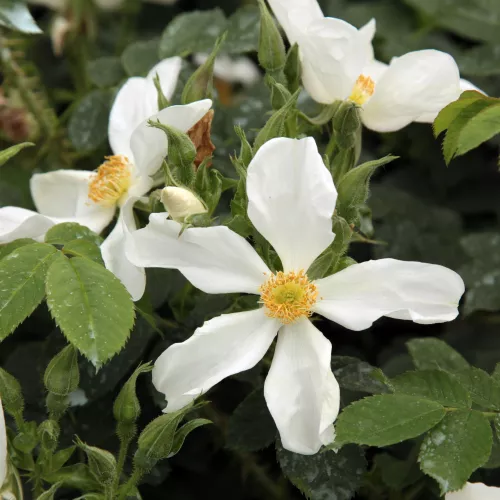
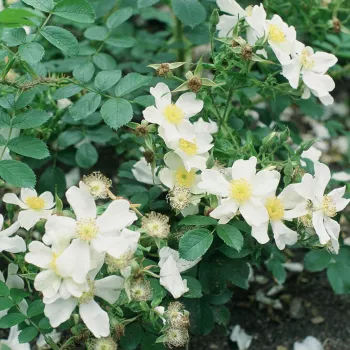
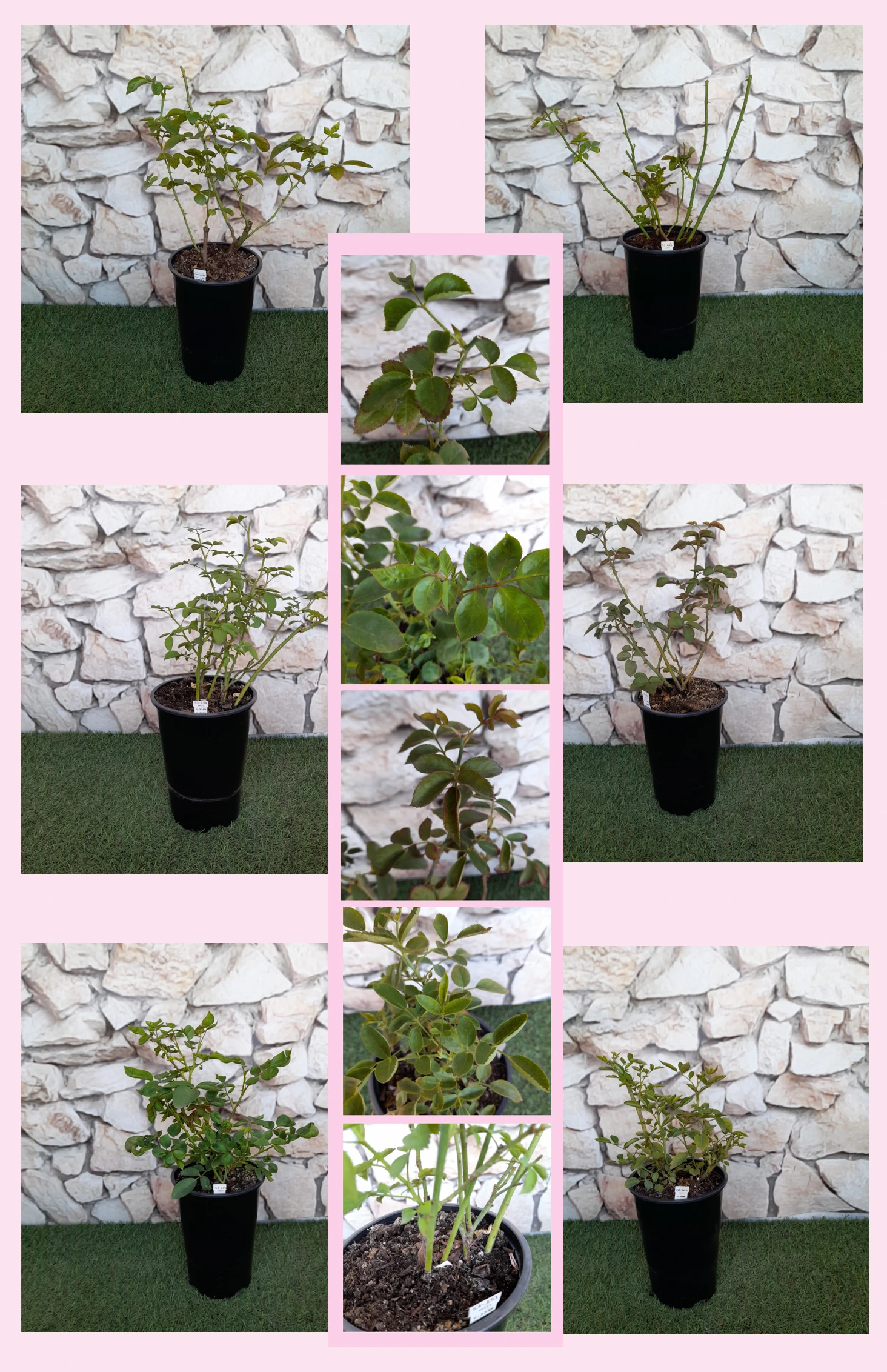
Step off the pavement and into a quietly enchanting front garden with PAULII, a low, spreading wild rose that turns even the smallest London plot into a cool, white after-rain haven, gently coping with heavy soils and blustery coastal weather. Its once-a-year flush of pure snow-white flowers has a subtly spicy scent and needs very little attention, offering a sense of lasting balance in a busy life. As an own-root shrub it settles in steadily, building a deep root system for decades of reliable longevity and easy regrowth after pruning or weather damage. Give it room to arch and weave through perennials and grasses and it will form a soft, wildlife-friendly screen with minimal clipping. In a large 40–50 litre container or a narrow front border, the bushy, spreading habit quickly creates a lush green carpet that suppresses weeds and simplifies maintenance. Over the first three years it quietly knits itself into place – first roots, then shoots, then full ornamental impact – lending your urban garden a calm, sustainable character that feels effortlessly established.
Usage options
| Target area | Reasoning |
|---|
| Low, spreading groundcover for front gardens |
PAULII’s bushy, wide-spreading habit naturally carpets the soil, softly spilling between paving and plants to suppress weeds with very little intervention, ideal for busy householders who need beauty without constant upkeep for the beginner gardener. |
| Long-term structural shrub in family gardens |
With its rugged Hybrid Rugosa heritage and own-root vigour, this rose forms a durable framework that endures hard pruning, winter cold and child play, offering stable shape and flowering year after year for the long-term planner. |
| Easy-care hedge or informal boundary |
Dense prickling and arching shoots make a naturally defensive, low-maintenance hedge; once established it only needs the occasional trim, giving gentle privacy and a clear boundary for small plots and pets for the urban homeowner. |
| Rainwater-friendly planting on heavy or clay soils |
The strong root system and species-cross parentage help it cope with compacted, moisture-retentive soils, supporting more resilient rain-garden schemes that manage run-off gracefully rather than demanding perfect drainage for the sustainability minded. |
| Low-maintenance mass planting in urban green spaces |
Recommended planting distances allow broad, even coverage; once the shrubs knit together, self-cleaning blooms and tough foliage keep maintenance visits short and infrequent, which suits communal and managed spaces for the time-pressed caretaker. |
| Specimen rose for historical or cottage-style displays |
As a Dowager-class historical rose with a single, concentrated flush of white bloom, PAULII brings period charm and authenticity to cottage borders, heritage-inspired front gardens and traditional mixed shrub schemes for the heritage enthusiast. |
| Large container or trough on paved frontages |
Planted in a 40–50 litre peat-free container, its moderate height and generous spread give a substantial presence by a doorway or railings, while the resilient rootstock-free growth responds well to simple seasonal pruning for the courtyard gardener. |
| Low-intervention planting for exposed or coastal sites |
Good drought and heat tolerance, plus reliable resistance to common rose diseases, make it a sound choice where wind, salt-laden air and irregular watering rule out fussier varieties, offering quietly reliable greenery for the coastal resident. |
Styling ideas
- White-hedge – Train PAULII as a loose, low hedge along a terraced-house frontage, underplanting with soft grasses to catch raindrops and mirror its arching habit – ideal for design-conscious city families.
- Clay-haven – Use it in a rain-friendly clay border with Euphorbia ‘Fens Ruby’ and sweet alyssum, letting the foliage knit into a weed-suppressing mat – suited to low-maintenance urban plots.
- Heritage-curve – Allow the shrub to sprawl naturally around an old gate or rail, mixing with pigeon scabious for a historic, slightly wild entrance – appealing to lovers of period charm.
- Courtyard-bowl – Plant a single specimen in a wide 50 litre container and soften the rim with trailing alyssum for a simple, structural statement on paved front yards – perfect for renters or balcony owners.
- Green-buffer – Mass-plant along parking edges as a living, thorny buffer that needs only occasional trimming while covering soil and managing run-off – useful for shared driveways and small car courts.
Technical cultivar profile
| Attribute | Data |
|---|
| Name and registration |
Rose Group: Wild Hybrid Rugosa species cross; commercial type botanical wild rose; current trade name “Rosa paulii Botanical rose Paul”; ARS exhibition name “Paulii”; unregistered cultivar. |
| Origin and breeding |
Bred by George Paul Jr., Paul & Son (Cheshunt, United Kingdom); introduced 1903. Complex parentage from Rosa arvensis, Rosa rugosa and Rosa wichuraiana, combining toughness, spread and traditional charm. |
| Awards and recognition |
Dowager Rose Queen at American Rose Society shows 1998–2001; multiple “Genesis” awards at American district exhibitions 1999–2014, valued for historic character and reliable show performance. |
| Growth and structural characteristics |
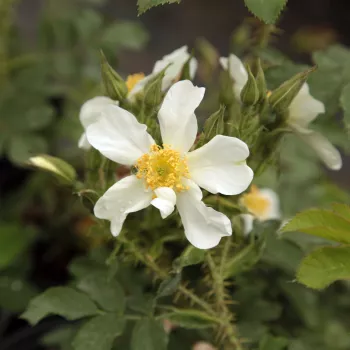
Bushy, spreading shrub 70–130 cm high with a 210–390 cm spread; moderately dense, matt mid-green leaves; densely thorned shoots; good for groundcover, hedging and broad, low structural planting. |
| Flower morphology |
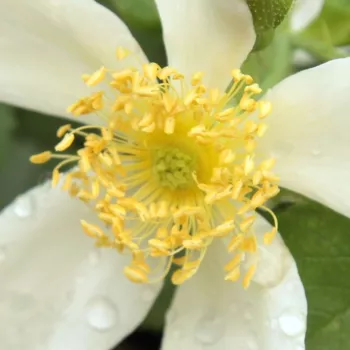
Small, single, flat flowers with 5–12 petals in clusters; size 0.5–1.5 inches; blooms once per season rather than repeating; petals drop cleanly, giving self-cleaning displays with minimal deadheading. |
| Colour data and phenology |
Buds greenish ivory; newly opened flowers creamy ivory, becoming pure snow-white (RHS NN155C–NN155D), then fading translucent with a light beige edge; colour retention modest, enhancing a soft, natural look. |
| Fragrance and aroma |
Mild, pleasantly spicy scent that complements its simple, wild-rose character; fragrance is restrained rather than overpowering, suiting front gardens and seating areas where subtlety is preferred. |
| Hip characteristics |
After flowering, produces small, spherical hips 18–26 mm in diameter; bright red (RHS 43A), adding late-season colour and wildlife interest, especially when left unpruned into autumn and early winter. |
| Resistance and winter hardiness |
Very hardy shrub (RHS H7, approx. –29 to –26 °C; USDA 5a, Swedish zone 4); good heat and moderate drought tolerance; strongly resistant to powdery mildew, black spot and rust in typical UK conditions. |
| Horticultural recommendations |
Low-maintenance, disease-resistant shrub for groundcover, hedging, parks and urban green spaces; suitable for partial shade; recommended spacings 180–330 cm; best in deep, well-prepared, preferably peat-free soil. |
PAULII offers an easy-care, once-flowering white display, durable structure and strong disease resistance in a tough own-root form, making it a thoughtful choice for long-lived, low-intervention family gardens.