PEAR – light pink bedding shrub rose - Tanjga & Cox
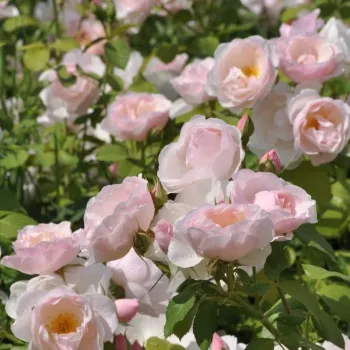
Step out after rain and meet a rose designed for balance, where pastel blooms, culinary petals and compact growth work in harmony with a small London front garden. This medium-sized shrub fits neatly into narrow beds or generous containers and offers petals with a subtle pear-like flavour for inventive patisserie and fresh salads. Its own-root form promises quiet longevity and steady regeneration, supporting a calm, sustainable mood even where soil stays heavy yet well-managed after showers and blustery coastlines. Expect a gentle fragrance, good self-cleaning so you spend less time deadheading, and a structure that settles in over successive seasons as roots, then shoots, then full ornamental impact mature for your urban sanctuary.
Usage options
| Target area | Reasoning |
|---|
| Terraced-house front garden bed |
The compact, upright habit sits comfortably in a narrow London-style front border, giving a soft, light-pink focus without overwhelming the space. Own-root planting supports a long-lived framework that quietly matures over several years, suiting beginners. |
| Rainwater-aware clay border |
In a well-prepared clay bed with improved drainage, this shrub’s moderate size and dense foliage offer reliable structure that copes with frequent rain and wind while still looking ordered, supporting simple, sustainable maintenance for busy homeowners. |
| Culinary picking corner near the kitchen |
The edible petals, with their gentle pear-like nuance, are ideal for decorating cakes and scattering over salads, so a dedicated picking spot close to the house makes harvesting easy and encourages creative use for home cooks. |
| Large container on balcony or terrace |
Planted in a peat-free mix in a pot of at least 40–50 litres, its compact height and repeat-flowering nature bring long-season colour and edible petals to balconies or patios, remaining manageable and accessible for urban gardeners. |
| Low flowering hedge along a path |
At the recommended hedge spacing, plants knit into a low, fragrant line that frames paths with soft pink cups, while own-root durability helps the hedge recover from occasional damage and pruning for family gardens. |
| Pollinator-accented mixed border |
Though only moderately attractive to pollinators, its repeated waves of open, double blooms still add some foraging opportunities, especially when combined with nectar-rich companions like lavender or nepeta to support wildlife-minded gardeners. |
| Formal flowerbed with calm pastel palette |
Even, light pink flowers that hold their colour reasonably well in moderate sun lend themselves to structured pastel schemes, providing a consistent tone that pairs easily with silvers and soft purples for design-conscious owners. |
| Edging for seating or breakfast area |
The compact, cluster-flowered shrub frames seating spots without blocking views, and its restrained scent and continuous self-cleaning display allow relaxed enjoyment with minimal upkeep, ideal for time-poor residents. |
Styling ideas
- CULINARY BORDER – Combine with herbs like chives, thyme and sage so edible petals and kitchen flavours meet in one place – ideal for enthusiastic home cooks who value beauty they can eat.
- PASTEL RIBBON – Plant in a low line with lavender and Nepeta for a soft, hazy edging along a town-house path – suited to urban gardeners wanting a gentle, romantic look.
- CONTAINER FOCUS – Use a single rose in a 50-litre pot with trailing thyme and dwarf Heuchera for foliage contrast – for balcony owners seeking maximum effect from one statement container.
- TEXTURED MEADOW – Weave through Stipa tenuissima and garden pinks to contrast feather-light grasses with calm pink cups – perfect for those aiming at a relaxed, “girly” but modern front garden.
- CALM COURTYARD – Group three plants near seating with soft-grey planters and gravel for a neat, low-maintenance pastel frame – for busy professionals needing order and serenity from limited space.
Technical cultivar profile
| Parameter | Data |
|---|
| Name and registration |
Collection Taste of Love®, medium-sized shrub rose and flowerbed type; registered as BOZedib023, marketed as Pear Taste of Love® BOZedib023 and Flavorette Pear’d® for exhibitions. |
| Origin and breeding |
Bred by Biljana Božanić Tanjga and Peter Cox for PhenoGeno Roses, Temerin, Serbia; introduced 2024 via PhenoGeno Roses and Proven Winners ColorChoice / Spring Meadow Nursery. |
| Growth and structural characteristics |
Compact, upright shrub reaching about 55–85 cm in height and spread, with dense, mid-green, slightly glossy foliage and moderate prickles creating a neat, filled presence in planting schemes. |
| Flower morphology |
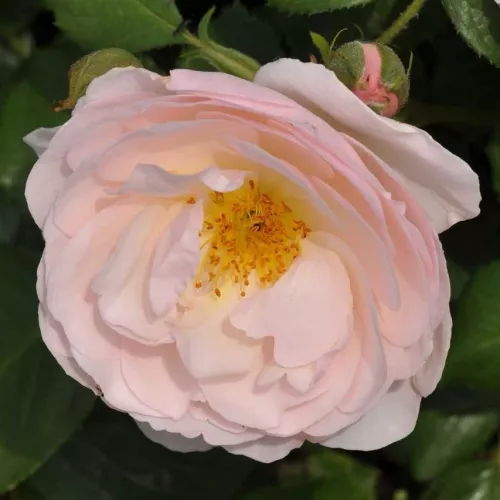
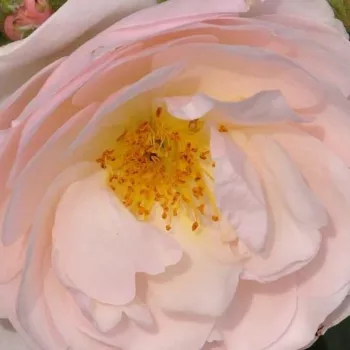
Double, cup-shaped blooms with around 26–30 petals on clusters; large flowers (approximately 2.75–3.95 inches) repeat freely, with particularly strong secondary flush and good natural self-cleaning. |
| Colour data and phenology |
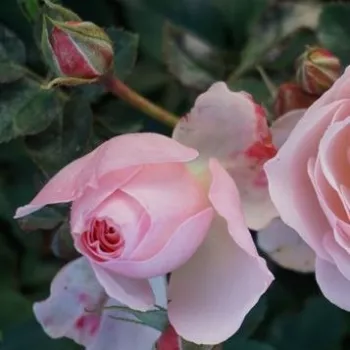
Light pink, pastel tones (RHS 65C outer, 65D inner); buds open from powdery pink to even soft pink, later fading towards pearly white in strong sun yet holding colour better in moderate light. |
| Fragrance and aroma |
Delicate, light fragrance with a soft, restrained character rather than a strong perfume; edible petals noted for a subtle pear-like flavour suited to salads and decorative culinary uses. |
| Hip characteristics |
Limited hip set due to double flowers; small, spherical red hips around 6–10 mm diameter may appear sporadically, adding a discreet autumnal detail without dominating the shrub’s appearance. |
| Resistance and winter hardiness |
Very susceptible to powdery mildew, black spot and rust, needing regular protection; reliably hardy to about −32 to −29 °C (RHS H7, USDA 4b, Swedish zone 5) under typical garden conditions. |
| Horticultural recommendations |
Best in well-drained soil with routine fungicide care; plant 40–75 cm apart, around 4.2–4.9 plants/m² for massing; suitable for beds, edging, hedging, large containers, terraces, cutting and culinary harvest. |
PEAR – light pink bedding shrub rose - Tanjga & Cox offers compact repeat flowering, edible pastel petals and long-term own-root resilience, making it a thoughtful choice if you enjoy combining garden beauty with gentle culinary creativity.