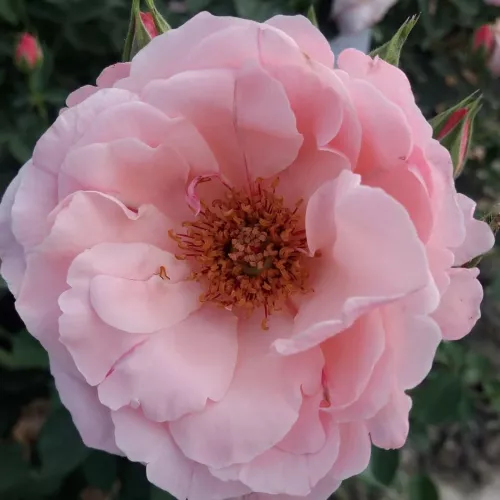
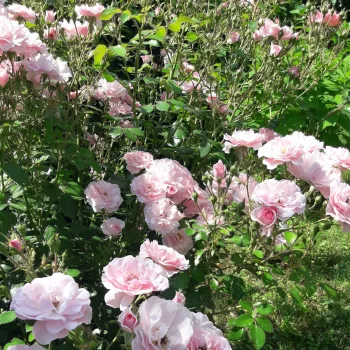
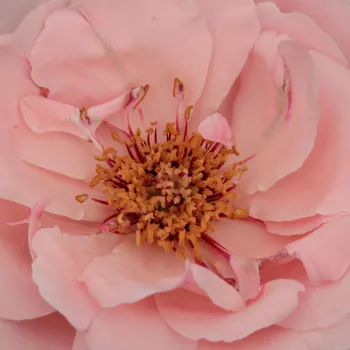
Pink Elizabeth Arden – pale pink bedding floribunda rose – TANtenom
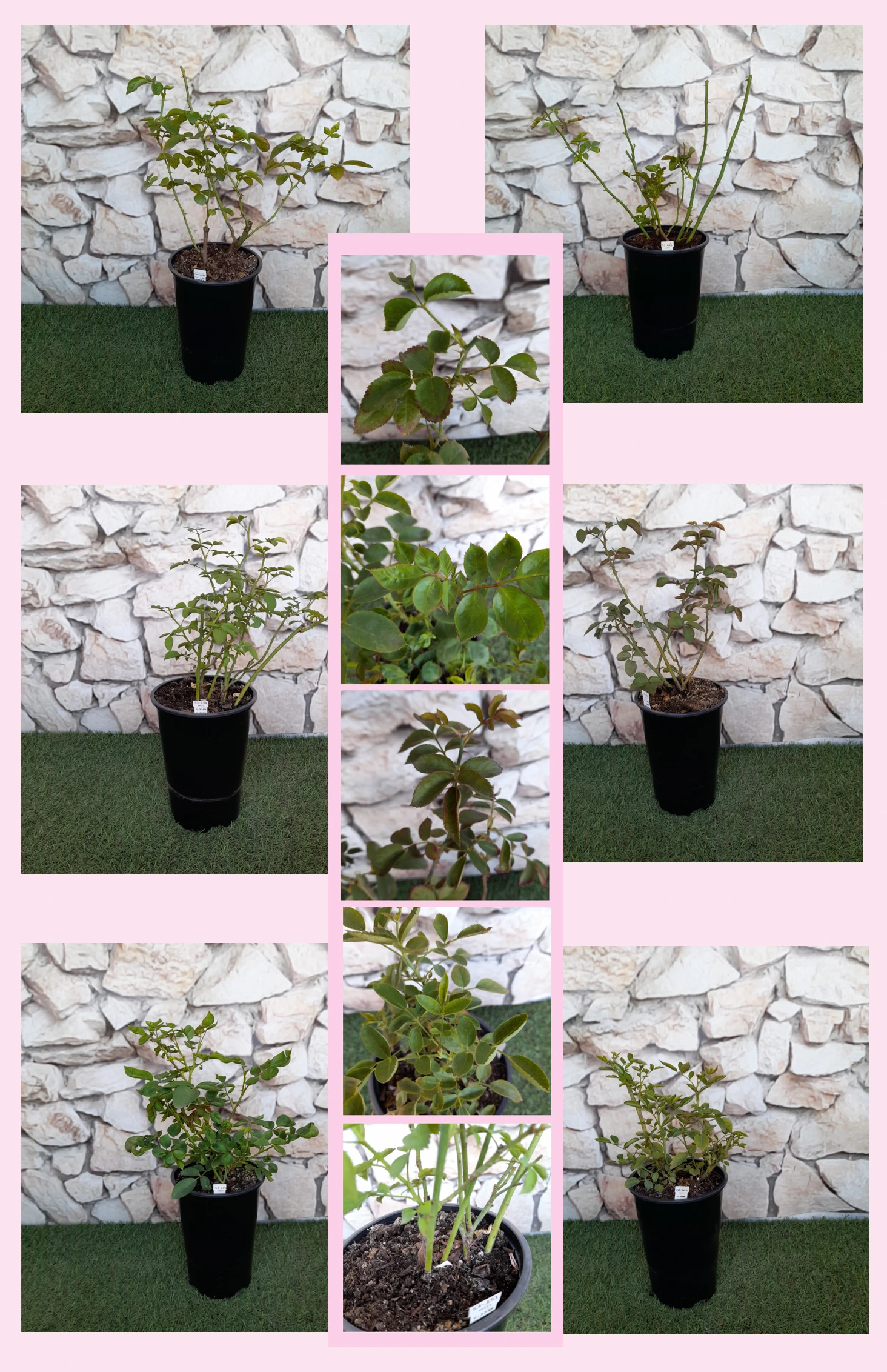
In a small London front garden or balcony, Pink Elizabeth Arden settles in quickly as a dependable, own‑root floribunda that rewards you with clouds of soft, porcelain‑pink sprays from early summer onwards. Its remontant habit means a long season of flowering with minimal fuss, while semi‑double blooms stay open and inviting for visiting bees in a subtly pollinator-friendly display. The bushy, upright plant structure provides stable coverage even in exposed, breezy sites and can cope well with typical British rainfall and heavier soils if basic drainage is considered. Over time, the own‑root system translates into reassuring longevity, quietly rebuilding itself after pruning or weather damage, so there is less need to replace tired plants. You can enjoy gradual development as roots establish in the first year, stronger top growth in the second, and full ornamental value by the third, all from a modest container that slips neatly into a rainwater‑conscious urban garden.
Usage options
| Target area |
Reasoning |
| Front garden bedding rows |
The upright habit and medium height make it ideal for forming neat, repeat‑flowering rows along a path or low fence, giving structure without overwhelming a small plot and suiting those wanting easy-impact borders for the family. |
| Rainwater‑savvy urban borders |
This floribunda handles typical showery British weather and heavier soils if basic drainage is in place, so it works well where downpipes are disconnected into planting areas, appealing to city gardeners aiming for greener, permeable spaces for the homeowner. |
| Low mixed hedges |
Planting at hedge spacing creates a low, pink, semi‑formal line that softens front boundaries and separates drive from doorstep, giving reliable seasonal privacy with less clipping than traditional evergreen hedging for the neighbourhood. |
| Large containers on balconies |
In a 40–50 litre pot with peat‑free compost, its compact spread and steady growth bring a long flush of colour to balconies and roof terraces, with only light deadheading and watering needed across the season for the busy urbanite. |
| Small family gardens with limited time |
Medium disease resistance and moderate maintenance suit households wanting dependable roses without constant spraying or expert pruning, giving good value from each plant over many seasons for the time‑pressed beginner. |
| Pollinator‑aware planting schemes |
Semi‑double, open‑centred blooms offer accessible stamens, so borders can be both decorative and modestly helpful to bees and hoverflies, fitting well with wildlife‑minded planting in compact plots for the eco‑conscious gardener. |
| Season‑long colour bedding |
The remontant flowering and clustered sprays mean beds stay interesting beyond a single flush, with fresh buds following spent blooms, supporting schemes that need reliable performance from early summer into autumn for the colour‑loving collector. |
| Long‑term, low‑replacement plantings |
As an own‑root rose, it regenerates well from the base after hard pruning or winter damage, so borders keep their shape and character for years with fewer replacements, reassuring those planning durable plantings for the thoughtful planner. |
Styling ideas
- Soft-hedge – Line a front path with closely spaced plants, edging with low box or dwarf lavender for contrast – ideal for homeowners wanting a welcoming, subtly formal entrance.
- Balcony-blush – Grow one or two in 50 litre terracotta tubs with trailing nepeta and thyme – perfect for urban balcony gardeners seeking fragrance, movement and bees in a small footprint.
- Rain-border – Position along a shallow swale or raingarden edge with sage and ornamental grasses – suited to city households using rainwater run‑off to green up front drives.
- Pastel-drift – Mass‑plant in drifts with Russian sage and airy gaura for a soft, romantic haze – attractive to beginners wanting an easy, long‑flowering feature from spring to autumn.
- Cottage-corner – Combine with guelder rose, foxgloves and hardy geraniums near a seating area – for families who like a traditional, wildlife‑friendly corner that asks little in return.
Technical cultivar profile
| Property |
Data |
| Name and registration |
Floribunda bedding rose; registered as TANtenom, traded as Pink Elizabeth Arden; exhibition floribunda spray; also known as Geisha in some show and historic catalogues. |
| Origin and breeding |
Bred by Mathias Tantau Jr., Rosen Tantau, Uetersen, Germany; bred and registered in 1964, introduced from 1966 via Rosen Tantau and Roy H. Rumsey Pty. Ltd. in international markets. |
| Awards and recognition |
ADR-Sorte classification in Germany (1965), indicating robust garden performance under trial conditions; Tualatin Valley Rose Society Floribunda Spray first place, USA, awarded in 1998. |
| Growth and structural characteristics |
Upright, bushy habit with dense, dark green, slightly glossy foliage; height about 80–120 cm, spread around 50–70 cm; moderately thorny stems; moderate self‑cleaning, benefits from deadheading. |
| Flower morphology |
Semi‑double, cup‑shaped blooms, typically 13–25 petals; medium size at 1.5–2.75 inches; produced in clusters of 3–5 flowers per stem; remontant, giving a generous second and subsequent flush. |
| Colour data and phenology |
Pale pastel pink with warm undertone; RHS 65C outer, 65D inner; buds soft pink, opening creamy light pink, then fading to very pale pink with near‑white margins as petals age in sun. |
| Fragrance and aroma |
Very weak fragrance with a light rosy character only faintly perceptible at close range; primarily valued for visual effect rather than scent, making it suitable near windows or small seating areas. |
| Hip characteristics |
Produces moderate quantities of small, red, ellipsoid hips about 8–12 mm in diameter; hips can add a discreet late‑season accent and modest wildlife interest once flowering has finished. |
| Resistance and winter hardiness |
Medium resistance to black spot, powdery mildew and rust; copes with normal UK humidity with basic hygiene; winter hardy to around −21 to −18 °C, corresponding roughly to USDA zone 6b, RHS H7. |
| Horticultural recommendations |
Best in full sun and fertile, well‑drained soil; suitable for beds, low hedges, containers and cutting; plant 35–65 cm apart depending on use, using peat‑free compost and regular watering in dry spells. |
Pink Elizabeth Arden TANtenom offers long-season pastel sprays, modest pollinator appeal and enduring own-root reliability; an elegant, low-effort choice you may wish to consider for your garden.