POMPADOUR RED™ – red bedding floribunda rose - Ruiter
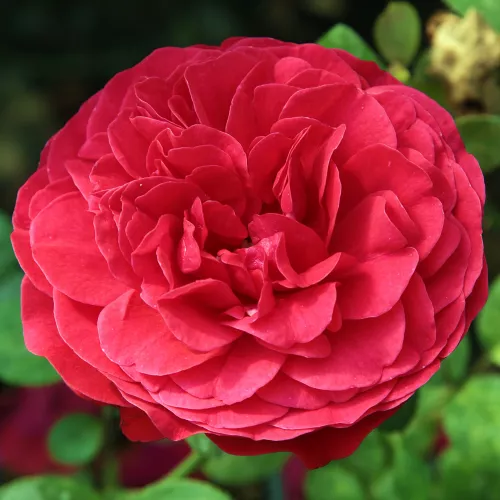
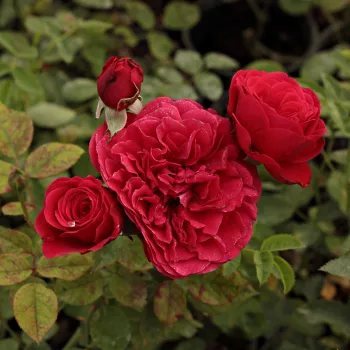
Step through a London front gate after rain and find balance in the rich scarlet of POMPADOUR RED™, a classic floribunda that brings structured rhythm and colour to compact, rainwater-conscious spaces even where clay soils need thoughtful drainage solutions. Bred in the Netherlands in 1951, this upright, bushy rose offers reliable endurance, with own-root plants settling in gradually for a long garden life and steady, low-fuss flowering. Its glossy dark foliage and abundant, cupped double blooms hold their colour well, with only slight softening as the flowers age. Over time the plant builds from strong roots to generous shoots and finally to full ornamental value, creating a composed, lived-in character in small city gardens.
Usage options
| Target area | Reasoning |
|---|
| Front garden bedding strip |
Ideal for narrow front beds where you want strong colour and minimal fuss, its bushy habit and modest height form a neat, welcoming line along paths and low railings, suiting time-pressed city homeowners and beginners. |
| Small flowering hedge |
Planted at hedge spacing, the upright growth and glossy foliage knit together into a low, structured hedge that screens bins or parking without overpowering a terraced frontage, working well for design-conscious urban families. |
| Mass planting for colour impact |
At bedding distances, groups of POMPADOUR RED™ create a carpet of uniform scarlet that reads clearly from the pavement, giving show-garden intensity without complex maintenance for those who favour straightforward seasonal colour. |
| Large container on balcony or patio |
In a 40–50 litre peat-free container, the bushy form and steady repeat flowering provide a long-lived focal point, particularly where ground planting is limited, suiting flat dwellers seeking durable structure in limited outdoor space. |
| Clay or challenging urban soils |
Once established with good planting preparation, its own-root resilience and reliable health make it a solid choice in typical British suburban ground where heavy soils and wet spells test less robust roses, reassuring cautious new gardeners. |
| Low-input family border |
Its disease resistance and modest maintenance needs fit busy households who prefer occasional pruning and feeding over frequent spraying or deadheading, keeping the border tidy enough for everyday enjoyment by active households. |
| Rainwater-conscious planting scheme |
The sturdy framework and dense foliage integrate well into mixed borders designed to handle downpours gracefully, complementing permeable surfaces and simple soakaway schemes for those planning practical yet attractive streetscapes. |
| Long-term structural rose feature |
As an own-root shrub, it can recover from weather damage and light renovation pruning over the years, building a stable presence that rewards patient gardeners who appreciate a plant improving with age and evolving character. |
Styling ideas
- Crimson-Ribbon Border – Edge a narrow front garden path with a single line of POMPADOUR RED™ underplanted with low nepeta for soft contrast – ideal for busy households wanting a clear, easy-care route to the front door.
- Terraced-Elegance Trio – Plant three shrubs in a staggered triangle with lavender and sage behind to frame a Victorian bay window – suits design-led city homeowners after classic structure and modern sustainability.
- Rain-Garden Focus – Use POMPADOUR RED™ as a bold anchor beside a permeable gravel driveway, with ornamental grasses to filter runoff – for urban gardeners integrating beauty with simple rainwater management.
- Balcony-Showpiece Pot – Grow one plant in a 50-litre container with trailing thyme at the rim to soften the edge – perfect for flat dwellers wanting a long-lived rose feature without ground space.
- Family-Friendly Hedgelet – Create a low scarlet hedge along a front boundary, backed by evergreen shrubs for year-round definition – suited to families wanting a tidy, robust rose line with limited upkeep.
Technical cultivar profile
| Trait | Data |
|---|
| Name and registration |
Floribunda bed and florist rose; registered cultivar name Pompadour Red, current trade name POMPADOUR RED™ bedding rose; ARS exhibition name Pompadour Red; part of the Bedding rose collection. |
| Origin and breeding |
Bred by Gerrit de Ruiter in the Netherlands in 1951 from Orange Triumph × Anne Mette Poulsen; introduced by Jackson & Perkins in the USA; unregistered cultivar widely used as a classic bedding rose. |
| Awards and recognition |
Received the RNRS Trial Ground Certificate in 1951, indicating strong garden performance under formal test conditions; remains valued historically as a dependable bedding floribunda with consistent ornamental effect. |
| Growth and structural characteristics |
Bushy, upright shrub reaching about 100–140 cm tall with a 70–110 cm spread; moderately thorny stems carry moderately dense, glossy dark green foliage that forms a cohesive mass in bedding or low hedge plantings. |
| Flower morphology |
Large, cupped, double blooms with 26–39 petals are produced in clusters; remontant with abundant second flush, giving repeated displays through the season; flower diameter typically around 7–10 cm in average garden conditions. |
| Colour data and phenology |
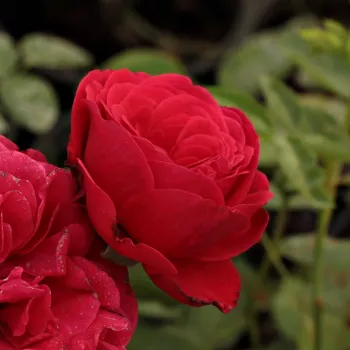
Uniform intense scarlet red (RHS 46B outer, 53A inner; ARS MR); buds deep scarlet and glossy, opening to pure scarlet blooms that fade only slightly and evenly, retaining a coherent block of red throughout flowering. |
| Fragrance and aroma |
Fragrance is mild and restrained rather than prominent; suitable where strong scent is not desired, such as near seating for scent-sensitive users or in mixed schemes where colour and structure take precedence over perfume. |
| Hip characteristics |
Hip set is generally sparse due to the very double, florist-type flowers; occasional small spherical red hips of about 6–10 mm may develop, offering limited wildlife interest without becoming visually dominant. |
| Resistance and winter hardiness |
Good overall disease resistance, noted as resistant to black spot, powdery mildew and rust; winter-hardy to approximately −21 to −18 °C (RHS H7, Swedish Zone 3, USDA 6b), suiting most UK garden conditions. |
| Horticultural recommendations |
Low maintenance needs; generally minimal intervention beyond annual pruning, feeding and watering during establishment; recommended spacings: 65 cm for bedding, 55 cm for hedging, 100 cm as a specimen; own-root plants favour long-term stability. |
POMPADOUR RED™ offers long-lived, low-maintenance scarlet bedding colour on a resilient own-root framework, making it a considered, durable choice for structured urban and family gardens.