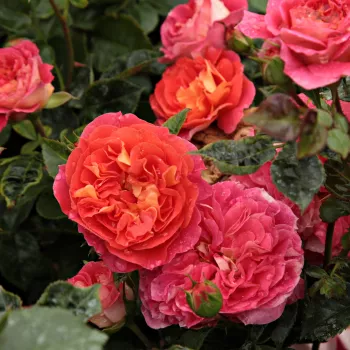
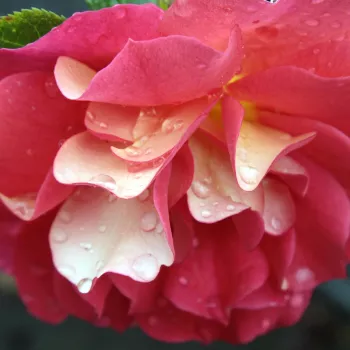
PRINCE IGOR™ – orange-red and yellow bedding floribunda rose - Meilland
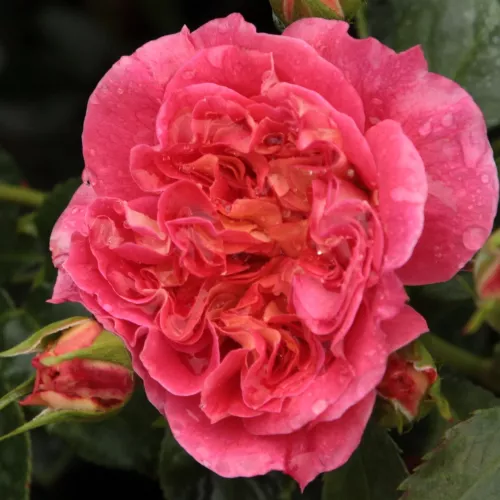
Step out after rain into the colour-washed glow of PRINCE IGOR™, a compact bedding floribunda that turns even a narrow London front plot into a softly scented pathway. Masses of semi-double blooms shift from fiery orange-red to coral tones, creating movement through the season while its reliable, compact habit keeps your entrance neat and welcoming. Bred for good disease resistance, it copes well where wet, heavy soil needs thoughtful drainage and regular showers keep foliage damp. Own-root planting offers quiet longevity, with sturdy growth that matures steadily and maintains ornamental value year after year. Over time its bushy structure and dark foliage provide a calm green backdrop to the warm-toned flowers, ideal for sustainable, low-input beds or rainwater-led planting. In a generous 40–50 litre container or directly into the ground, you can enjoy abundant flowering from late spring to autumn on a rose that is easy to live with, steadily deepening its garden character.
Usage options
| Target area |
Reasoning |
| Front garden bedding strip |
The compact 50–70 cm height and bushy form make this floribunda ideal for tight front borders where you want tidy, structured planting that rarely needs pruning beyond a yearly tidy, suiting busy urban gardeners. |
| Rainwater-conscious city planting |
Plant in well-prepared soil with improved drainage so it handles frequent showers and heavy clay more comfortably, letting you link downpipes to planting and green up paved space with minimal fuss for sustainability-minded homeowners. |
| Long-season colour focal point |
Its strongly remontant habit gives repeat flushes from early summer into autumn, so one well-placed plant can keep a small garden lively for months with very little deadheading, ideal for time-poor beginners. |
| Low-intervention family border |
Good resistance to black spot, powdery mildew and rust means fewer sprays and less monitoring, so you can rely on clean foliage and consistent flowering in a family setting, reassuring for health-conscious garden owners. |
| Urban bee-friendly corner |
The semi-double, cup-shaped flowers often show accessible stamens, offering occasional forage for visiting pollinators, especially when combined with nectar plants like Nepeta, attractive to wildlife-aware city gardeners. |
| Compact rose hedge or edging |
Planted 50–60 cm apart, its dense, dark green foliage and repeated flowering create a colourful, low hedge that defines paths and driveways without overwhelming small plots, convenient for space-limited households. |
| Large container on balcony or patio |
In a 40–50 litre or larger pot with peat-free compost, this rose stays nicely proportioned while flowering generously, giving structure and scent on balconies or steps where in-ground planting is impossible, suiting container-focused gardeners. |
| Long-lived own-root planting |
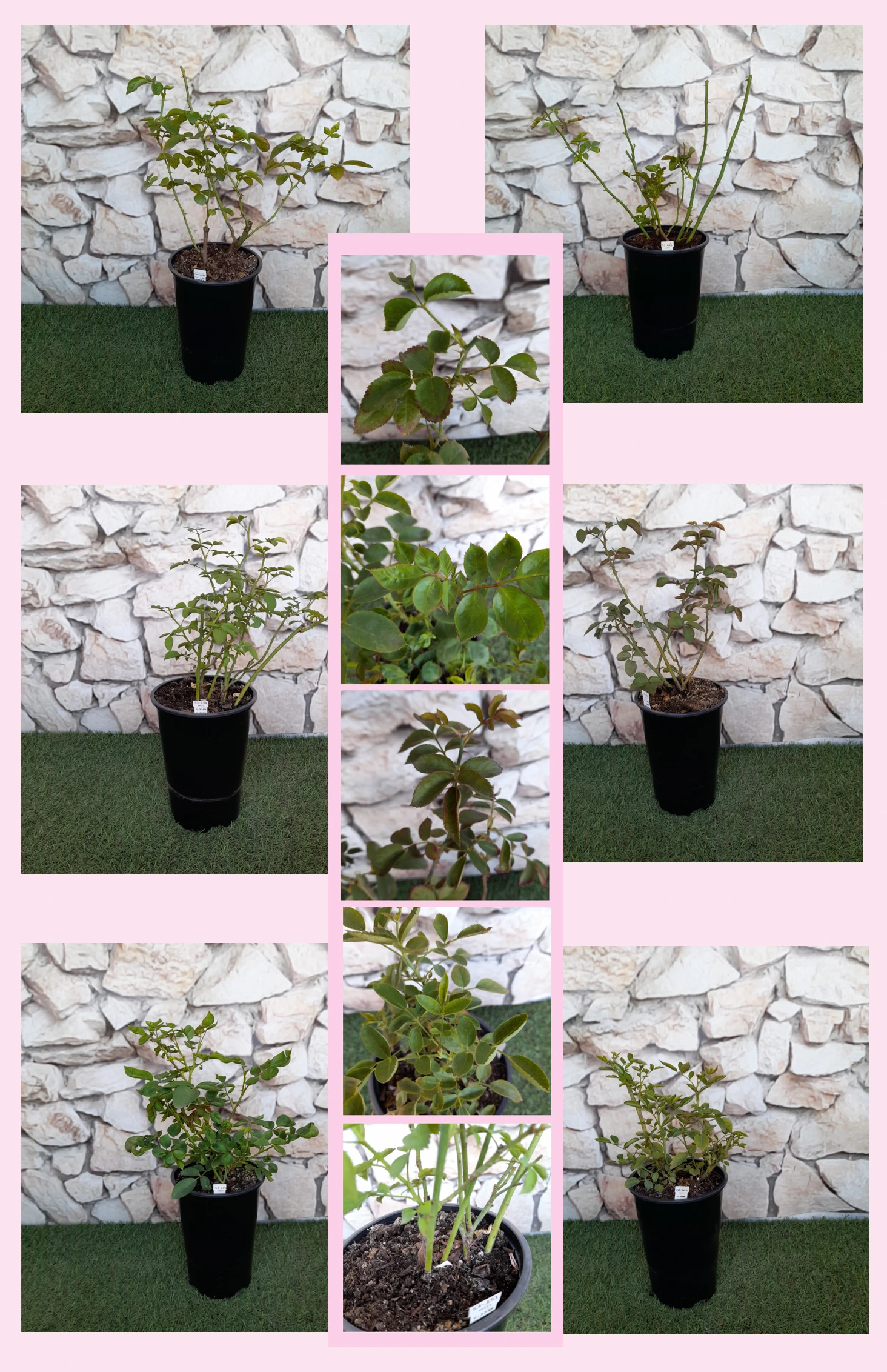
Supplied on its own roots, it establishes steadily, can regenerate from the base after harsh winters or accidental damage, and keeps its flowering character reliably over many years, appealing to forward-planning homeowners. |
Styling ideas
- Opera-glow border – Mass-plant PRINCE IGOR™ in a narrow strip with low catmint and dwarf boxwood edging to echo theatre lights in orange, blue and deep green – perfect for culture-loving city couples.
- Terraced welcome – Flank a London terrace front path with paired shrubs underplanted with creeping Sedum spurium to soften paving while keeping maintenance low – ideal for busy commuters.
- Balcony focal pot – One plant in a 50 litre terracotta container, underplanted with trailing thyme, gives height, scent and colour on compact balconies – suited to first-time flat gardeners.
- Family-friendly hedge – Create a knee-high flowering boundary along a drive or play lawn, mixing in lavender for fragrance and pollinators – good for families wanting soft structure.
- Rain-garden ribbon – Thread plants along a gently sloped, well-drained strip catching roof runoff, interplanted with resilient grasses for movement – designed for sustainability-focused homeowners.
Technical cultivar profile
| Trait |
Data |
| Name and registration |
Floribunda bedding rose, registered as MEIhigor, marketed as Prince Igor™ Bedding rose MEIhigor; ARS exhibition name ‘Frenzy’; group: bed rose, exhibition floribunda. |
| Origin and breeding |
Bred by Marie-Louise Meilland (Meilland International, France) from (Sarabande × Dany Robin) × Zambra, introduced in France in 1970 and later distributed internationally. |
| Growth and structural characteristics |
Compact, bushy shrub 50–70 cm high and wide, with dense, matt, dark green foliage and moderate prickles; forms a low, even mound suitable for bedding, edging and formal planting schemes. |
| Flower morphology |
Semi-double, cup-shaped, medium-sized flowers (about 4–7 cm), carried in clusters; 13–25 petals, strongly remontant with abundant second flushes, giving a lively, textured display in beds. |
| Colour data and phenology |
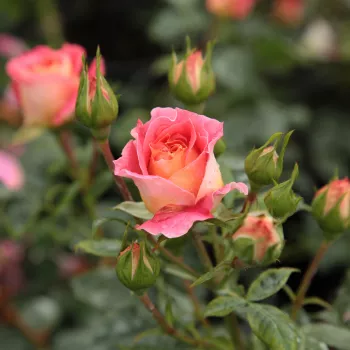
Vivid orange-red with yellow reverses and purplish edges; buds deep orange-red with golden underside; fades through coral red with brick-red mottling; ARS RB, RHS 40B and 13B references. |
| Fragrance and aroma |
Pleasant, medium-strength scent of soft character; noticeable at close quarters along paths and seating areas without becoming overpowering, adding sensory value in compact spaces. |
| Hip characteristics |
Rose hips form only occasionally because of the semi-double to double bloom form; when present, hips are small, around 9–13 mm in diameter, and generally of limited ornamental impact. |
| Resistance and winter hardiness |
Rated resistant to black spot, powdery mildew and rust; hardy approximately to −21 to −18 °C (RHS H7, Swedish zone 3, USDA 6b), performing reliably in typical UK winter conditions. |
| Horticultural recommendations |
Best in well-drained soil with sun for abundant flowering; spacing 50–100 cm depending on use; suits flower beds, hedging and urban green spaces; generally low maintenance once established. |
PRINCE IGOR™ offers compact, repeat flowering, disease-resistant colour on a long-lived own-root shrub that fits effortlessly into small, sustainable gardens; a thoughtful choice if you value enduring structure with seasonal drama.